
Troglocambarus facts for kids
Quick facts for kids Troglocambarus |
|
|---|---|
| Conservation status | |
| Scientific classification | |
| Kingdom: | |
| Phylum: | |
| Subphylum: | |
| Class: | |
| Order: | |
| Family: |
Cambaridae
|
| Subfamily: |
Cambarinae
|
| Genus: |
Troglocambarus
Hobbs, 1942
|
| Species: |
T. maclanei
|
| Binomial name | |
| Troglocambarus maclanei Hobbs, 1942
|
|
The Troglocambarus is a very special kind of crayfish. It's the only species in its group, which makes it "monotypic." This crayfish lives only underground in caves, so it's called a "troglobite." It's also "endemic" to Florida, meaning it's found nowhere else in the world!
This unique crayfish, officially named Troglocambarus maclanei, lives deep below the ground. You can find it in several Florida counties like Hernando, Marion, Alachua, Columbia, Gilchrist, and Suwannee. It got its name from Mr. William A. McLane, who was the first person to find it.
Meet the Cave Crayfish
Scientists believe Troglocambarus is closely related to another group of crayfish called Procambarus. Think of them as "sister groups" – they share a common ancestor. This special crayfish only lives in underground water systems. It was first discovered in a place called Squirrel Chimney. This cave is about 11 miles northwest of Gainesville, Florida.
What Makes It Special?
The T. maclanei crayfish is quite unique!
- It has no body pigment. This means it's usually a pale, almost see-through color. Animals that live in dark caves often lose their color.
- It spends most of its life upside-down. It hangs from the ceiling of the cave!
- It has very large third maxillipeds. These are like extra mouthparts or small legs near its mouth. This feature helps tell it apart from other crayfish.
Scientists are still learning about this creature. For example, it's still a mystery what T. maclanei eats to survive in its dark home.
Is It in Danger?
The Troglocambarus maclanei crayfish needs our protection.
- NatureServe lists it as "imperiled." This means it's in danger of becoming extinct.
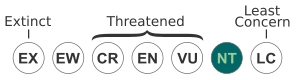
- The IUCN Red List calls it "Near Threatened." This means it's close to being considered vulnerable or endangered. Protecting its underground habitat is very important for its survival.
