
Unmanned ground vehicle facts for kids


An unmanned ground vehicle (UGV), sometimes called an armored robot, is a special kind of vehicle. It moves on the ground without a human driver or operator inside. UGVs are perfect for jobs that are too dangerous, difficult, expensive, or even impossible for people to do.
These robots usually have sensors. These sensors help them "see" their surroundings. They can then control themselves autonomously, or a person can control them from far away using teleoperation. UGVs are like the land version of unmanned aerial vehicles (drones in the air) and unmanned underwater vehicles (robots in the water). Both military and civilian groups use these amazing robots.
The History of Unmanned Ground Vehicles

The idea of controlling vehicles remotely is not new! In 1904, a Spanish engineer named Leonardo Torres Quevedo created a radio-controlled system called Telekino. He first tested it on a three-wheeled vehicle. This was one of the very first unmanned ground vehicles.
During World War I, some early robotic devices were developed in France. These were like small, explosive land torpedoes. Later, in the 1920s, people experimented with radio-controlled cars. They thought this technology could be useful for tanks.
In the 1930s, the Soviet Union created Teletanks. These were small tanks controlled by radio from another tank. They were used in some conflicts. During World War II, Germany used the Goliath tracked mine. This was a small tracked vehicle that carried explosives. It was controlled by a cable to clear obstacles.
A big step forward happened in the 1960s with a robot named "Shakey". This robot could move around, use a camera, and pick up blocks. It was a research project for the U.S. DARPA agency. DARPA later developed the Autonomous Land Vehicle (ALV) around 1985. This was the first UGV that could drive itself on and off roads at good speeds.
More recently, UGVs have become very important. In March 2024, during a conflict in Eastern Europe, UGVs were used for direct attacks on the front lines. This was a significant moment for how these robots are used.
How Unmanned Ground Vehicles Are Designed
UGVs are made up of several key parts. These include the vehicle itself, its sensors, control systems, how you guide it, how it communicates, and how all these parts work together.
Vehicle Platform
The platform is the basic body of the UGV. It can be like a car, truck, or all-terrain vehicle. It includes the wheels, tracks, or legs that help it move. It also holds the sensors and the power source. UGVs can use internal combustion engines, batteries, or hydrogen for power.
Sensors: The Robot's Eyes and Ears
Sensors help the UGV understand its environment. They detect other vehicles, people, and obstacles. They also help the UGV know exactly where it is on its path. Common sensors include cameras, lasers, ultrasound, GPS, compasses, and infrared technology.
Control Systems: Remote or Autonomous
Unmanned ground vehicles can be controlled in different ways.
Remote-Operated UGVs

A remote-operated UGV is controlled by a human. The operator uses a joystick or other controls. They make decisions based on what they see directly or through cameras on the robot. Think of it like a very advanced remote-controlled toy car.
Many remote-operated UGVs exist, such as:
- DOK-ING robots for clearing mines or fighting fires.
- DRDO Daksh for handling dangerous items.
- Foster-Miller TALON robots.
- Gladiator tactical unmanned ground vehicle used by the United States Marine Corps.
- Guardium robots for border security.
- Uran-9 military robots.
- iRobot PackBots.
- THeMIS robots used by the Royal Netherlands Army.
Autonomous UGVs

An autonomous UGV (AGV) uses artificial intelligence to control itself. It doesn't need a human to constantly tell it what to do. The AGV uses its sensors to build a model of its surroundings. Then, its control system decides what to do next.
An autonomous vehicle needs to be able to:
- Find its way using maps to choose a route.
- Spot objects like people and other vehicles.
- Travel to different points without human help.
- Avoid harming people, property, or itself, unless that is part of its specific mission.
Autonomous robots can also learn on their own. This means they can:
- Get new abilities over time.
- Change their plans based on what's around them.
- Adjust to new environments.
- Act responsibly to complete their goals.
It's very important that autonomous robots are programmed carefully. They must always act safely and responsibly, especially when working near people.
Guidance Interface
This is how a person interacts with the UGV. It could be a joystick, special computer software, or even voice commands.
Communication Links
UGVs need to talk to their control station. This can happen through radio signals or fiber optics cables. They might also communicate with other robots.
Systems Integration
All the different parts of a UGV, both hardware and software, must work together perfectly. This ensures the robot does what it's supposed to do.
Many Uses for Unmanned Ground Vehicles
UGVs are used for many different tasks today. They often take the place of humans in dangerous jobs. These include handling explosives or working in places that are too small or unsafe for people.
UGVs in Space Exploration
NASA has used UGVs for exploring Mars. The Mars Exploration Rover project included two famous UGVs: Spirit and Opportunity. Both robots worked much longer than expected! This was thanks to their strong design and careful control.
Opportunity and Spirit were six-wheeled, solar-powered robots. They landed on Mars in January 2004. Spirit worked for over six years. Opportunity was operational for more than 14 years, far beyond its planned three-month mission. The Curiosity rover landed on Mars in August 2012. Its mission was extended until October 2025, showing how long these amazing robots can last.
Civilian and Commercial Uses
UGVs are making many everyday tasks easier and safer.
Helping in Agriculture
.jpg)
UGVs are a type of agricultural robot. Unmanned tractors can work day and night. This helps farmers harvest crops quickly when the time is right. UGVs also help with spraying fields and checking on the health of crops and animals.
Making Things in Manufacturing
In factories, UGVs move materials around. Aerospace companies use them to precisely position and transport heavy parts. This is faster and safer than using large cranes.
Working in Mining
UGVs can explore and map mine tunnels. They use radar, lasers, and cameras to create 3D maps of rock surfaces in open-pit mines. This helps keep human miners safe.
Improving Supply Chains
In warehouses, UGVs are very useful. They can move goods using autonomous forklifts and conveyors. They also help with scanning stock and keeping inventory. Automated guided vehicles (AGVs) are often used for dangerous goods, like corrosive chemicals, or items needing special care, like frozen foods.
Military Uses for UGVs

UGVs are very important in military operations because they help keep people safe. They can handle dangerous tasks like safely removing explosive ordnance disposal (EOD), such as landmines. They also help move heavy items and fix things in tough situations.
The number of robots used by the U.S. military grew a lot in the 2000s. By 2005, they had helped safely deal with over 1,000 dangerous devices. By 2013, the U.S. Army had bought 7,000 such machines. Some UGVs are being developed to carry tools like machine guns or grenade launchers. These could help soldiers in combat by taking on very risky tasks. This raises important questions about how these robots should be controlled and used responsibly.
UGVs can also help with security, watching over areas, and assisting police and military in urban environments to keep people safe. They can go into dangerous areas first to check for threats, keeping people out of harm's way. UGVs were even used to search for survivors after the events of 9/11 at Ground Zero.
Examples of Unmanned Ground Vehicles
SARGE
SARGE is a four-wheel-drive all-terrain vehicle. It's mainly used for remote surveillance. It can go ahead of soldiers to check for potential dangers.
Multi-Utility Tactical Transport (MUTT)
Built by General Dynamics Land Systems, the MUTT comes in different wheeled versions. It was chosen by the US Army in 2019 to transport equipment for soldiers. It helps carry heavy gear, making soldiers' jobs easier.
Talon

The Talon robot is often used for safely dealing with explosives. It can even work underwater, up to 100 feet deep, to search for dangerous items. First used in 2000, over 3,000 Talon units are now used worldwide. By 2004, Talon robots had completed over 20,000 missions. These missions were usually too dangerous for humans, like searching booby-trapped areas or scouting combat zones. The Talon is very durable; one unit even fell off a bridge into a river, but its operators were able to drive it out!
THeMIS
THeMIS (Tracked Hybrid Modular Infantry System) is a ground-based robot built by Milrem Robotics in Estonia. It's designed for many military tasks. Its main goals are to help soldiers understand their surroundings better, gather information, and assist with logistics. THeMIS can carry supplies, detect dangerous devices, and even help assess damage after a battle. It helps reduce the physical and mental stress on soldiers.
THeMIS robots can be equipped with different tools. These include machine guns, grenade launchers, or even anti-tank missile systems. This allows them to provide support for forces on the ground. THeMIS also has advanced sensors to gather intelligence. This helps border guards and law enforcement react faster to situations.
Type-X
The Type-X is a large, 12-tonne tracked and armored robot. It's also made by Milrem Robotics in Estonia. This heavy-duty vehicle can carry a lot of weight. It can be fitted with different weapon systems, like autocannons or missile systems.
Autonomous Small Scale Construction Machine (ASSCM)
The ASSCM is a civilian UGV developed at Van Yüzüncü Yıl University. It's a low-cost machine that can grade soft soil. Once you define an area, the machine can grade it autonomously.
Riderless Bike
A fun example is the coModule electric bicycle. You can control it remotely using a smartphone. Users can make the bike speed up, turn, and brake just by tilting their device. This bike can even drive itself in a closed area.
See also
- 4D-RCS Reference Model Architecture
- Autonomous logistics
- Automated guideway transit
- Black Knight (vehicle)
- Burrowing vehicle
- Crusher
- DARPA LAGR Program
- Driverless tractor
- Goliath tracked mine
- MillenWorks
- Multifunctional Utility/Logistics and Equipment
- Remotely operated underwater vehicle
- Self-driving car
- Unmanned aerial vehicle
- UGV Interoperability Profile (IOP), an official military standard for UGVs based on JAUS
- Vehicular automation
- VisLab, preparing their unique VIAC challenge (driving from Italy to China with autonomous vehicles)
Images for kids
-
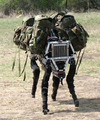
BigDog, a robot designed to carry heavy loads over rough ground.
-
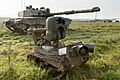
British Army trials of the X-2 UGV.
-
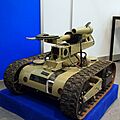
EuroLink Systems Leopardo B UGV.
-
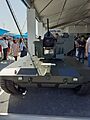
Turkey's unmanned ground vehicle UKAP.
-
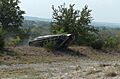
Ripsaw, a combat UGV being tested by the U.S. Army.

.jpg)


