
Nihonium facts for kids
| Nihonium | ||||||||||||||||||||||||||||||||||||||||||||||||
|---|---|---|---|---|---|---|---|---|---|---|---|---|---|---|---|---|---|---|---|---|---|---|---|---|---|---|---|---|---|---|---|---|---|---|---|---|---|---|---|---|---|---|---|---|---|---|---|---|
| Pronunciation | /nɪˈhoʊniəm/ |
|||||||||||||||||||||||||||||||||||||||||||||||
| Mass number | 286 | |||||||||||||||||||||||||||||||||||||||||||||||
| Nihonium in the periodic table | ||||||||||||||||||||||||||||||||||||||||||||||||
|
||||||||||||||||||||||||||||||||||||||||||||||||
| Atomic number (Z) | 113 | |||||||||||||||||||||||||||||||||||||||||||||||
| Group | group 13 (boron group) | |||||||||||||||||||||||||||||||||||||||||||||||
| Period | period 7 | |||||||||||||||||||||||||||||||||||||||||||||||
| Block | p | |||||||||||||||||||||||||||||||||||||||||||||||
| Electron configuration | [Rn] 5f14 6d10 7s2 7p1 (predicted) (predicted) | |||||||||||||||||||||||||||||||||||||||||||||||
| Electrons per shell | 2, 8, 18, 32, 32, 18, 3 (predicted) | |||||||||||||||||||||||||||||||||||||||||||||||
| Physical properties | ||||||||||||||||||||||||||||||||||||||||||||||||
| Phase at STP | solid (predicted) | |||||||||||||||||||||||||||||||||||||||||||||||
| Melting point | 700 K (430 °C, 810 °F) (predicted) | |||||||||||||||||||||||||||||||||||||||||||||||
| Boiling point | 1430 K (1130 °C, 2070 °F) (predicted) | |||||||||||||||||||||||||||||||||||||||||||||||
| Density (near r.t.) | 16 g/cm3 (predicted) | |||||||||||||||||||||||||||||||||||||||||||||||
| Heat of fusion | 7.61 kJ/mol (extrapolated) | |||||||||||||||||||||||||||||||||||||||||||||||
| Heat of vaporization | 130 kJ/mol (predicted) | |||||||||||||||||||||||||||||||||||||||||||||||
| Atomic properties | ||||||||||||||||||||||||||||||||||||||||||||||||
| Oxidation states | (−1), (+1), (+3), (+5) (predicted) | |||||||||||||||||||||||||||||||||||||||||||||||
| Ionization energies |
|
|||||||||||||||||||||||||||||||||||||||||||||||
| Atomic radius | empirical: 170 pm (predicted) | |||||||||||||||||||||||||||||||||||||||||||||||
| Covalent radius | 172–180 pm (extrapolated) | |||||||||||||||||||||||||||||||||||||||||||||||
| Other properties | ||||||||||||||||||||||||||||||||||||||||||||||||
| Natural occurrence | synthetic | |||||||||||||||||||||||||||||||||||||||||||||||
| Crystal structure | hexagonal close-packed (hcp)
 (extrapolated) |
|||||||||||||||||||||||||||||||||||||||||||||||
| CAS Number | 54084-70-7 | |||||||||||||||||||||||||||||||||||||||||||||||
| History | ||||||||||||||||||||||||||||||||||||||||||||||||
| Naming | After Japan (Nihon in Japanese) | |||||||||||||||||||||||||||||||||||||||||||||||
| Discovery | Riken (Japan, first undisputed claim 2004) JINR (Russia) and Livermore (US, first announcement 2003) |
|||||||||||||||||||||||||||||||||||||||||||||||
| Main isotopes of nihonium | ||||||||||||||||||||||||||||||||||||||||||||||||
|
||||||||||||||||||||||||||||||||||||||||||||||||
Nihonium is an extremely rare, man-made chemical element. It has the symbol Nh and atomic number 113. Nihonium does not exist in nature on Earth. Scientists must create it inside high-tech particle colliders. Nihonium is very radioactive. Its most stable form, nihonium-286, has a half-life of about 10 seconds. In the periodic table, nihonium sits in period 7 and belongs to the group 13 elements. It is classified as a transactinide element and a heavy post-transition metal.
The element was first detected during 2003 and 2004 by science teams in Russia, the United States, and Japan. The Russian-American team worked at the Joint Institute for Nuclear Research in Dubna alongside the Lawrence Livermore National Laboratory in Livermore, California. The Japanese team worked at Riken in Wakō, Saitama, Japan. In 2015, the IUPAC/IUPAP Joint Working Party officially awarded the discovery credit to the scientists at Riken. The team named the element after Japan (日本, Nihon).
Only a few individual atoms of nihonium have ever been made. Because it breaks apart so quickly, scientists must use clever tricks to study it. Many of its properties are predicted using supercomputers and knowledge of nearby elements like boron, aluminium, gallium, indium, and thallium.
Contents
What Is Nihonium and How Was It Discovered?
Building a brand new chemical element requires smashing smaller atoms together at tremendous speeds. Superheavy elements are elements with an atomic number higher than 104. They have huge atomic nuclei packed with protons and neutrons. Creating them helps scientists explore the rules of matter.
The Search for Element 113 Begins
In the late twentieth century, nuclear physicists discovered many elements such as bohrium, hassium, darmstadtium, roentgenium, and copernicium. Most of these were produced at the GSI Helmholtz Centre for Heavy Ion Research in Darmstadt, Germany. The German team used a technique called cold fusion. In cold fusion, beams of medium-weight atoms strike targets of lead or bismuth. Bismuth has 83 protons, nearly a magic configuration of 82 protons. This setup creates a combined nucleus with low extra energy.
The German laboratory attempted to make element 113 in 1998 and 2003. They bombarded bismuth-209 with heavy zinc-70 ions. Both experiments ended without finding any new atoms. The chance of the two nuclei fusing together was extraordinarily tiny.
Hot Fusion Experiments in Dubna
A research team led by Yuri Oganessian at the Joint Institute for Nuclear Research in Dubna, Russia, tried a different strategy called hot fusion. In hot fusion, scientists shoot lighter, speedy projectiles into very heavy actinide targets. The Russian scientists teamed up with researchers from the Lawrence Livermore National Laboratory in California.
The team chose calcium-48 as their ideal projectile. Calcium-48 is special because it carries twenty protons and twenty-eight neutrons. Having twenty-eight neutrons makes it doubly magic, giving it extra stability. The extra neutrons help keep the newly formed superheavy nucleus from breaking apart immediately. In 1998, they fired calcium-48 at targets of plutonium-244 to produce flerovium. During these experiments, they noticed hints of decay products that might have been early isotopes of element 113.
In 2003, the Russian and American scientists shot calcium-48 into a target of americium-243. This collision created atoms of moscovium, which is element 115. Within a fraction of a second, the moscovium atom underwent alpha decay, shooting out a helium nucleus. This alpha decay produced element 113, specifically the isotopes nihonium-284 and nihonium-283. The decay chain ended when the nuclei underwent spontaneous fission as isotopes of dubnium.
The Discovery at Riken in Japan

At the same time, a Japanese team at the Riken research center in Wakō, Saitama took on the challenge. The team was led by physicist Kōsuke Morita. Morita decided to stick with cold fusion. He chose cold fusion because it leads to known decay products, making the discovery easier to prove beyond doubt.
In September 2003, the Riken team began firing high-energy zinc-70 ions at a bismuth-209 target. The odds of success were incredibly small. The accelerator ran day and night for months. Finally, in July 2004, the team detected a single atom of element 113, known as nihonium-278.
This solitary atom lasted for only a tiny fraction of a second. It quickly underwent four alpha decays, transforming through roentgenium, meitnerium, and bohrium, before ending in the spontaneous fission of dubnium-262.
Proving the Discovery
To officially prove the existence of a new element, the International Union of Pure and Applied Chemistry and the International Union of Pure and Applied Physics set up a group of judges called the IUPAC/IUPAP Joint Working Party. This committee checks whether experiments are reliable and reproducible.
In April 2005, Morita's team at Riken produced a second atom of nihonium-278. In 2006, scientists at the Heavy Ion Research Facility in Lanzhou, China, produced the decay product bohrium-266, which matched the Japanese observations. However, the international committee wanted even more proof. They wanted the decay chain to link directly to a well-known, indisputable isotope.
In August 2012, after 450 more days of continuous beam operation, Riken produced a third atom of nihonium-278. This time, the atom underwent six continuous alpha decays in a row. The chain passed through bohrium-266, dubnium-262, lawrencium-258, and landed safely on mendelevium-254. Because mendelevium-254 was already well studied, this chain proved the original atom had to be element 113. The chance of this being a random mathematical coincidence was calculated as virtually zero.
Choosing the Name Nihonium
In December 2015, the international committees officially gave the naming rights for element 113 to the Riken team. This marked the very first time an element on the periodic table was discovered and named by scientists in Asia.
Before this victory, the element was temporarily known as ununtrium (symbol Uut), which is Latin for "one-one-three". Scientists also considered names like japonium or rikenium. In the end, Morita chose the name nihonium with the symbol Nh. The name comes from Nihon, the Japanese word for Japan. The name honors the support of the people of Japan and celebrates Japanese science. The official naming ceremony took place in Tokyo in March 2017 in the presence of Crown Prince Naruhito.
How Radioactive Is Nihonium?
All elements with superheavy atomic nuclei are inherently unstable. Understanding how nihonium decays helps nuclear physicists uncover secrets about the basic forces holding atomic nuclei together.
Radioactive Decay and Half-Lives
The stability of an atom depends on the balance between its protons and neutrons. Protons carry a positive electrical charge. Like charges repel each other under Coulomb's law. The strong nuclear force acts like a powerful glue that holds nucleons together, but it only works over short distances. When an atomic nucleus contains 113 protons, the electrical repulsion is massive. Without enough neutrons, the nucleus tears itself apart almost immediately.
The time it takes for half of a sample of radioactive atoms to break down is called its half-life. For nihonium, this time is measured in seconds or thousandths of a second.
- Nihonium-278: has a half-life of only 2.0 milliseconds.
- Nihonium-282: has a half-life of 61 milliseconds.
- Nihonium-283: has a half-life of about 0.12 seconds.
- Nihonium-284: has a half-life of about 0.90 seconds.
- Nihonium-285: has a half-life of about 2.1 seconds.
- Nihonium-286: has a half-life of about 9.5 seconds.
The Island of Stability

Normal superheavy nuclei get more and more unstable as they grow heavier. Above element 101, mendelevium, no isotope lasts longer than thirty hours. Calculations show that without special shell effects, elements with over 103 protons could not exist at all.
Physicists believe that inside atomic nuclei, protons and neutrons arrange themselves into neat energy shells, just like electrons do outside the nucleus. When a shell is completely full, it is called a magic number. A nucleus with filled shells of both protons and neutrons is called doubly magic.
In the 1960s, scientists predicted that an island of stability exists far out in the sea of superheavy elements. This island should center around 114, 120, or 126 protons and 184 neutrons. Isotopes close to this island are predicted to survive much longer, perhaps for days, years, or even millions of years.
Nihonium gives strong evidence for this theory. As scientists add more neutrons to nihonium, its half-life jumps dramatically. Light nihonium-278 lasts only two thousandths of a second. Heavier nihonium-286 lasts nearly ten seconds, which is thousands of times longer. Each added neutron brings the nucleus closer to the island of stability.
What Are the Chemical and Physical Properties of Nihonium?
Because nihonium atoms vanish within seconds, researchers cannot pick up a chunk of nihonium with tweezers. Instead, scientists use supercomputer simulations and quantum mechanics to predict its behavior.
Position on the Periodic Table
Nihonium is the heaviest member of the boron group, also known as group 13. Its lighter family members are boron, aluminium, gallium, indium, and thallium. Except for boron, which is a metalloid, all members of group 13 are post-transition metals.
Under normal expectations, nihonium should share many chemical traits with thallium. However, superheavy elements experience intense spin–orbit interaction and relativistic effects. Because the positive charge of the 113 protons is enormous, the innermost electrons are pulled inward and must orbit near the speed of light. This relativistic contraction changes how the outer valence electrons behave.
Physical Characteristics
Calculations give us a fascinating picture of what bulk nihonium would look like if enough could ever be gathered together:
- Appearance: It is predicted to be a dense, silvery, solid metal.
- Crystal Structure: Its atoms should pack together in a hexagonal close-packed pattern, just like thallium.
- Density: Nihonium is expected to have a density between 16 and 18 grams per cubic centimeter. That makes it much denser than thallium (11.85 g/cm3).
- Melting and Boiling Points: Its predicted melting point is about 430 °C, and its boiling point is around 1100 °C.
- Hardness: Its bulk modulus is predicted to be 20.8 GPa, meaning it would be relatively soft and compressible.
Chemical Behavior and Oxidation States
In chemistry, an oxidation state tells us how many electrons an atom shares, gains, or loses when forming chemical bonds. Group 13 elements often use three outer electrons, giving them an oxidation state of +3. However, as you travel down the group, the outer s-electrons become held tightly in place. This reluctance of s-electrons to bond is called the inert pair effect.
Because of relativistic effects, the inert pair effect is extremely strong in nihonium. Nihonium prefers an oxidation state of +1 rather than +3. In its +1 state, nihonium behaves less like thallium and more like silver or astatine. It is considered a relatively unreactive, noble metal.


Nihonium could also display unique molecular shapes. While boron trichloride forms a flat triangle, nihonium trichloride (NhCl3) is predicted to have an unusual T-shaped molecular geometry. This strange geometry happens because inner 6d electron orbitals get involved in the bonding.
Curiously, nihonium might even accept an extra electron to reach an oxidation state of −1. This is a property typically seen in halogen elements like fluorine, chlorine, bromine, and iodine. This makes nihonium one of the most chemically surprising elements on the entire periodic table.
Laboratory Experiments on Nihonium Atoms
Starting in 2010, scientists at the Flerov Laboratory in Russia began running chemistry experiments on single nihonium atoms. They produced nihonium-284 by letting moscovium decay inside a gas chamber. The atoms were carried along polytetrafluoroethylene (PTFE) tubes toward cold detectors.
These early experiments showed that nihonium does not stick easily to surfaces, meaning it is less reactive than thallium. In 2024, researchers at the GSI laboratory in Germany studied nihonium atoms interacting with silicon dioxide and gold surfaces. Their results showed that nihonium interacts more weakly than thallium, confirming that relativistic effects make nihonium a unique, slightly noble metal.
Summary of Nihonium Isotopes
Here is an overview of the isotopes of nihonium that scientists have produced in nuclear physics laboratories:
- Nihonium-278: Discovered in 2004 at Riken; decays by alpha decay; half-life of 2.0 milliseconds.
- Nihonium-282: Discovered in 2007 at JINR; decays by alpha decay; half-life of 61 milliseconds.
- Nihonium-283: Discovered in 2004 at JINR; decays by alpha decay; half-life of 0.12 seconds.
- Nihonium-284: Discovered in 2004 at JINR; decays by alpha decay or electron capture; half-life of 0.90 seconds.
- Nihonium-285: Discovered in 2010 at JINR; decays by alpha decay or spontaneous fission; half-life of 2.1 seconds.
- Nihonium-286: Discovered in 2010 at JINR; decays by alpha decay; half-life of 9.5 seconds.
- Nihonium-287 and Nihonium-290: Heavier, unconfirmed isotopes created during electron capture decays of flerovium.
Images for kids
-
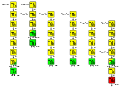
Summary of the radioactive decay chains passing through element 113 on the way to lighter elements.
-
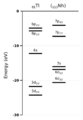
Diagram comparing the atomic electron energy levels of thallium and nihonium.


See also
 In Spanish: Nihonio para niños
