
442nd Infantry Regiment (United States) facts for kids
Quick facts for kids 442nd Regimental Combat Team |
|
|---|---|

Historic distinctive unit insignia of the 442d RCT
|
|
| Active | 1944–1946 |
| Country |  United States United States |
| Branch |  United States Army United States Army |
| Type | Regimental combat team (historical) |
| Role | Infantry |
| Size | ~4,000 |
| Nickname(s) | Purple Heart Battalion belongs to the 100th Infantry Battalion (Separate) |
| Motto(s) | "Go For Broke" |
| Colors | Blue and white |
| Engagements |
|
| Commanders | |
| Notable commanders |
Col Charles W. Pence Col Virgil R. Miller |
| Insignia | |
| Shoulder sleeve insignia |
 |
The 442nd Regimental Combat Team was a special group of soldiers in the United States Army during World War II. This team, which included the 100th Infantry Battalion, is famous for being the most decorated unit in U.S. military history. What made them truly special was that almost all their soldiers were Nisei—second-generation Americans of Japanese ancestry.
These brave soldiers fought mainly in Europe, including Italy, southern France, and Germany, starting in 1944. The 442nd Regimental Combat Team (RCT) was formed on March 23, 1943. Many Japanese American men volunteered to join, even though some of their families were held in special guarded camps in the U.S. Their motto was "Go For Broke," meaning they were ready to risk everything to win.
The unit quickly grew to about 4,000 men by April 1943. Over time, about 10,000 men served in the 100th Infantry Battalion and 442nd RCT combined. In less than two years, they earned more than 4,000 Purple Hearts and 4,000 Bronze Star Medals. They received seven Presidential Unit Citations. Twenty-one of its members were awarded the Medal of Honor. In 2010, Congress honored them with the Congressional Gold Medal. In 2012, surviving members received the French Légion d'Honneur for their help in liberating France and rescuing the Lost Battalion.
When the 442nd RCT arrived in Europe, its infantry and artillery battalions joined the 34th Infantry Division. On June 11, 1944, the 100th Infantry Battalion, another all-Nisei unit already fighting since September 1943, joined the 442nd. The 100th was allowed to keep its original name because of its impressive combat record. Later, the related 522nd Field Artillery Battalion helped free prisoners from a satellite camp of Dachau concentration camp and saved survivors of a forced march near Waakirchen.
General Mark W. Clark, a leader in the Fifth Army, praised them. He said, "these are some the best... fighters in the U.S. Army. If you have more, send them over."
The 442nd RCT was deactivated in 1946. It was brought back as a reserve battalion in 1947 in Hawaii. Today, the 100th Battalion/442nd Infantry Regiment continues its legacy. It is the only active infantry unit in the Army Reserve. This unit has served in the Vietnam War and the Iraq War.
Contents
- Why the 442nd Was Formed
- Training for Battle
- Training for Battle
- Joining Forces: The 100th Battalion
- First Major Battles in Italy
- Fighting in France: The Vosges Mountains
- A Time for Rest and Patrols
- The 522nd Artillery Battalion's Journey
- Breaking Through the Gothic Line
- Amazing Achievements and Legacy
- Life After the War
- The 442nd Today
- Famous Members of the 442nd
- Images for kids
- See also
Why the 442nd Was Formed
Most Japanese Americans who fought in World War II were Nisei. They were born in the United States to immigrant parents. After the attack on Pearl Harbor in December 1941, Japanese American men were first considered foreign and not eligible for military service.
On February 19, 1942, President Franklin D. Roosevelt signed Executive Order 9066. This order allowed the military to create special areas from which people could be removed. This led to the forced relocation of over 110,000 people of Japanese ancestry from the West Coast. Most of these people were U.S. citizens. They were sent to guarded camps.
In Hawaii, military control was put in place. However, mass relocation was not practical because a large part of Hawaii's population was of Japanese ancestry. Their labor was vital to the Hawaiian economy. Removing them would have caused huge problems for the islands.
When the War Department wanted to remove all Japanese American soldiers from active service in early 1942, General Delos C. Emmons in Hawaii disagreed. He allowed over 1,300 Japanese American soldiers in the Hawaii National Guard to stay in service. Some discharged soldiers formed the Varsity Victory Volunteers (VVV). They helped with military construction jobs.
General Emmons later recommended sending these soldiers to the mainland. This led to the formation of the 100th Infantry Battalion (Separate). They were sent to Camp McCoy, Wisconsin, for training.
Training for Battle

The excellent training record of the 100th Battalion and the VVV's work led the War Department to create a Japanese American Combat Team. This team included the 442nd Infantry Regiment, the 522nd Field Artillery Battalion, and the 232nd Engineer Combat Company.
The order stated that all soldiers had to be American citizens of Japanese ancestry. Most officers were white American citizens, but some officers of Japanese ancestry were also appointed. Colonel Charles W. Pence took command of the 442nd Combat Team when it was activated on February 1, 1943.
The U.S. government asked all Japanese Americans in the camps to answer a special questionnaire about their loyalty. Question 27 asked if they would serve in the armed forces. Question 28 asked if they would swear loyalty to the U.S. and reject allegiance to Japan.
Many Nisei answered "Yes" to both questions, showing their loyalty. More than 10,000 men from Hawaii volunteered. The Army revised its call, asking for 2,900 men from Hawaii and 1,500 from the mainland. About 3,000 men from Hawaii and 800 from the mainland joined.
President Roosevelt announced the formation of the 442nd Infantry Regimental Combat Team. He said, "Americanism is not, and never was, a matter of race or ancestry." Later, the draft was used to get more Japanese Americans from the mainland to join.
The 232nd Engineer Combat Company
The 232nd Engineer Combat Company was a unique part of the 442nd Regimental Combat Team. It was formed on February 7, 1943, at Camp Shelby, Mississippi. This was the only company in the U.S. Army made entirely of Japanese Americans. It was also the first to be led by Nisei officers, with Captain Pershing Nakada in command.
The 232nd had about 204 enlisted men and 7 Nisei officers. Their job was to keep supply and communication lines open for the army. They cleared mines, built defenses, and constructed bridges and roads. After training, the 232nd arrived in Italy on May 28, 1944.
In July, they removed German landmines near Luciana. They also cleared paths for infantry. Near Bruyères, France, they cleared a quarter-mile of debris under enemy fire. They fought German machine gun nests with the 100th Infantry Battalion. They spent hours clearing mines and trees.
In August 1944, the 232nd helped prepare to cross the Arno River. They cleared hundreds of mines and built bridges for Allied vehicles. They also helped in the Po Valley Campaign. There, they opened crucial supply lines despite mines and enemy fire.
During the Champagne campaign in Southern France, the 232nd found and captured a two-man enemy submarine. They continued to clear mines and obstacles for other battalions. In January 1945, they disarmed many enemy mines and laid their own. They also set up barbed wire and trip flares. In the Vosges-Rhineland Campaign, they fought alongside the 522nd battalion. They removed Axis defenses quickly, facing heavy enemy fire and booby traps.
Training for Battle

The 100th Infantry Battalion moved to Camp Shelby in Mississippi for advanced training. The 442nd RCT began basic training in April 1943. It had 3,000 volunteers from Hawaii and 800 from the mainland's guarded camps. As a regimental combat team (RCT), the 442nd was a complete fighting unit. It included three infantry battalions, an artillery battalion, an engineer company, and other support units.

Japanese Americans were generally not allowed to fight in the Pacific Theater. However, there were no such limits for Americans of German or Italian ancestry. Many Nisei who knew Japanese were asked to join the Military Intelligence Service (MIS). They served as translators and spies in the Pacific. While the 442nd trained in Mississippi, the 100th went to North Africa to prepare for the invasion of Italy.
Joining Forces: The 100th Battalion

In late 1943 and early 1944, the 100th Infantry Battalion needed more soldiers. They had faced fierce fighting in Italy, especially during the Battle of Monte Cassino. The 442nd Combat Team sent replacements to the 100th.
On May 1, 1944, the 442nd Combat Team sailed from Virginia and landed in Anzio on May 28. The 442nd joined the 100th Battalion in Civitavecchia, Italy, on June 11, 1944. They were attached to the 34th Infantry Division. The 100th was officially assigned to the 442nd as its 1st battalion on August 14, 1944. It kept its original name because of its distinguished fighting record. The 100th Battalion's high number of injuries at Monte Cassino earned it the nickname "Purple Heart Battalion."
First Major Battles in Italy

The newly united Nisei unit fought its first battle together on June 26, 1944. This was at the small town of Belvedere in Suvereto, Tuscany. The 100th Battalion's actions earned it a separate Presidential Unit Citation. The 2nd and 3rd Battalions were the first to fight in a fierce battle.
The 100th Battalion moved to flank the German forces, trapping them in Belvedere. They launched a surprise attack on the German side, forcing them to retreat. The 442nd, with the 100th, continued to push the enemy north. They fought in many small battles until they passed Sassetta. The battle of Belvedere showed the 442nd's strength.
After a few days of rest, the 442nd fought again on July 1. They took Cecina and moved towards the Arno River. On July 2, the 5th Battalion fought hard to take Hill 140. On July 7, the 100th fought for the town of Castellina Marittima.
Hill 140 and Castellina
For the first three weeks of July, the 442nd and the 100th constantly attacked German forces. They killed 1,100 enemy soldiers and captured 331. Hill 140 was a key German defense point. A single German battalion held the hill, using artillery to cause heavy losses.
The 442nd gained little ground at first. The 232nd Engineers helped by clearing landmines. The entire 34th Division faced strong resistance. Hill 140 was called "Little Cassino" because the German defense was so fierce. The 2nd and 3rd Battalions attacked the German sides of the hill. On July 7, the hill finally came under Allied control.
On the same day, the battle for Castellina Marittima began. The 100th attacked the northwestern side of the town. They took the high ground. Company B moved into Castellina, facing strong resistance. With help from the 522nd Field Artillery, they forced the Germans to retreat by 6 PM on July 7. The 100th secured the town and waited for relief.
The 442nd faced strong resistance in every town until July 25. They reached the Arno River, ending the Rome-Arno Campaign. The 100th/442nd suffered 1,272 casualties during this advance. They rested until August 15, then patrolled the Arno. On September 11, the 442nd joined the 36th Infantry Division.
The Antitank Company's Role
On July 15, the Antitank Company joined the 517th Parachute Infantry Regiment. They trained to use gliders for the invasion of Southern France on August 15. These gliders carried jeeps and ammunition or antitank guns. The Southern France Campaign earned the 442nd its second Presidential Unit Citation. The Antitank Company soldiers received the Glider Badge.
After many difficult glider landings, they held their positions. They were later relieved by Allied troops. For two months, the Antitank Company guarded the Seventh Army's right side. They also cleared mines, captured Germans, and protected roads. In late October, the Antitank Company rejoined the 442nd during the battle to find the "Lost Battalion."
Fighting in France: The Vosges Mountains
After leaving Naples, the 442nd landed in Marseille on September 30. For weeks, they traveled 500 miles through the Rhone Valley. On October 14, 1944, the 442nd prepared to attack Hills A, B, C, and D of Bruyères. Each hill was heavily defended and important for taking the city.
The 442nd had fought in open fields in Italy. But the Vosges Mountains were very different. They faced dense fog, mud, heavy rain, large trees, and hills. They also faced heavy enemy gunfire and artillery. Hitler had ordered German forces to fight fiercely. On October 15, 1944, the 442nd began its attack on Bruyères. The 100th Battalion moved on Hill A, and the 2nd Battalion moved on Hill B. The 3rd Battalion was tasked with taking Bruyères itself.
The Battle for Bruyères

After heavy fighting, the 100th Battalion took Hill A by 3 a.m. on October 18. The 2nd Battalion took Hill B hours later. Once Hills A and B were secure, the 3rd Battalion and the 36th Infantry's 142nd Regiment attacked from the south. The 232nd Engineers broke through barriers. The 442nd captured 134 German soldiers. After three days, Bruyères fell, but it was not yet fully safe. Germans on Hills C and D still launched artillery attacks.
The 442nd initially took Hills C and D but lost them again. By noon on October 19, Hills D was taken by the 2nd and 3rd Battalions. The 100th was ordered back to Bruyères for rest. German forces then retook Hill D during the night. Retaking Hill C cost another 100 casualties. Hill D eventually fell back into Allied hands, finally securing the town. The 232nd Engineers worked to clear roadblocks, trees, and minefields during the battle. The 100th then moved to the battle for Biffontaine.
The Fight for Biffontaine
The 100th was ordered to take high ground and then move into Biffontaine. They faced a tough fight when German forces surrounded them. They were cut off from the 442nd, without radio contact or artillery support. The 100th fought constantly from October 22 to October 23. They engaged in house-to-house fighting and defended against many counterattacks. The 3rd Battalion of the 442nd reached the 100th and helped drive out the remaining Germans. Biffontaine was then handed to the 36th Division.
On October 24, the 143rd Infantry relieved the 100th and 3rd Battalion. They were sent to Belmont for a short rest. But nine days of constant fighting continued. They were then ordered to save the "Lost Battalion."
The Rescue of the "Lost Battalion"
After less than two days of rest, the 442nd was ordered to rescue the "Lost Battalion". This was two miles east of Biffontaine. On October 23, Colonel Lundquist's 141st Regiment had attacked the German line. On October 24, 275 men of the 141st were cut off two kilometers behind enemy lines. The "Lost Battalion" was surrounded by German troops. They had to dig in and wait for help.
On October 27, General John E. Dahlquist ordered the 442nd to rescue the trapped battalion. The 442nd had artillery support but made little progress at first. For days, the 442nd fought in the toughest conditions of the war. Dense fog, dark nights, rain, snow, cold, mud, and fatigue made their advance difficult. The 141st continued fighting in all directions.
Airdrops of ammo and food for the 141st were often canceled by fog or landed in German hands. Many Germans did not even know they had surrounded an American unit. The fighting was also intense for the Germans.
The men of the 442nd became hesitant as they moved deeper. But then, something changed. Soldiers from Companies I and K of the 3rd Battalion charged the Germans, screaming. They rushed up steep slopes, firing and throwing grenades. The German defenses broke, and the grenadiers fled. On the afternoon of October 30, the 3rd Battalion broke through. They reached the 141st, rescuing 211 soldiers. This cost the 442nd 800 men in five days.
The fighting continued for the 442nd. They pushed past the 141st until they reached Saint-Die on November 17. They were finally pulled back. The 100th, which had 1,432 men a year earlier, was down to 239 infantrymen. The entire 100th/442nd Regimental Combat Team had fewer than 800 soldiers left. In just three weeks, 140 had been killed, 1,800 wounded, and 43 were missing.
General Dahlquist's Leadership

General Dahlquist's use of the 442nd received mixed opinions. Some officers felt he used their Nisei soldiers without enough care. For example, he ordered the 442nd to take Biffontaine, a town with little military importance. It was also out of artillery and radio range. Lieutenant Allan M. Ohata once refused an order he believed was a suicide mission. He insisted his men would attack "their own way." Lt. Ohata later received the Medal of Honor for his bravery.
On November 12, General Dahlquist ordered the 442nd to stand for an award ceremony. Only 18 surviving members of K Company and eight of I Company appeared. Dahlquist was surprised, not fully understanding the unit's heavy losses. Colonel Virgil R. Miller simply replied, "That's all of K company left, sir."
The 442nd was honored for its efforts in the Vosges Mountains. A painting in The Pentagon shows their fight to reach the "Lost Battalion." Memorials were built in Biffontaine and Bruyères. A road in Bruyères is now named "The Avenue of the 442nd Infantry Regiment" to honor these brave soldiers.
A Time for Rest and Patrols
Following the tough battles in the Vosges Mountains, the 442nd moved to the Maritime Alps and the French Riviera. This was an easier assignment. For the next four months, there was little action. The 442nd guarded a twelve to fourteen-mile section of the French-Italian border. This period was called the "Champagne Campaign" because it was a time for rest and patrols. However, some soldiers were still lost in skirmishes or from landmines.
The 442nd also captured an enemy submarine. A Nisei soldier spotted what looked like an animal in the water. It was actually a one-man German midget submarine. The German and the submarine were captured and given to the U.S. Navy. On March 23, 1945, the 442nd Regimental Combat Team sailed back to Italy. They returned to the Gothic Line.
The 522nd Artillery Battalion's Journey
From March 20 to 22, the 442nd and 232nd shipped to Italy. But the 522nd Field Artillery Battalion went to another part of Europe. They traveled 600 miles north through the Rhone Valley. They stopped at Kleinblittersdorf on the east bank of the Saar River. The 522nd helped the 63rd Division on the Siegfried Line defenses.
The 522nd became a traveling battalion. They supported many army units across Germany, covering 1,100 miles. They completed all 52 of their assignments. The 522nd was the only Nisei unit to fight in Germany. On April 29, scouts from the 522nd found a subcamp of the Dachau concentration camp. They were among the first Allied troops to free prisoners from the Kaufering IV Hurlach satellite camp. Over 3,000 prisoners were held there.
One soldier described the scene: "As we came around the way, there were a lot of Jewish inmates coming out of the camp... They opened the gate and all these German, I mean, Jewish victims were coming out of the camp." He added, "They were all just skin and bones, sunken eyes. I think they were more dead than they were alive." The Nisei soldiers gave the prisoners clothing. They were told not to give them food because it could harm their starved bodies.
As they continued, on May 2, they found survivors of a forced march. These prisoners had been driven from Dachau towards Waakirchen. They had walked nearly 60 kilometers. Another soldier recalled, "Most of them were skeletons or people who had been beaten to death or just died of starvation or overworked or whatever. Most of them I think died from exposure because it was cold."
They found more subcamps and former prisoners wandering. After the German surrender, the 522nd helped with security around Donauwörth. They set up roadblocks to catch Nazis trying to escape. The 522nd returned to the United States in November 1945. A memorial near Waakirchen honors the rescue by the 522nd on May 2, 1945.
Breaking Through the Gothic Line


The 100th/442nd Regimental Combat Team is the most decorated unit of its size in American military history. About 10,000 men served in total. The unit received eight Presidential Unit Citations. Twenty-one of its members were awarded Medals of Honor. In less than two years, members of the 442nd received 18,143 awards, including:
On March 23, 1945, the 100th/442nd shipped from Marseille to Leghorn, Italy. They joined the 92nd Division. The Fifth Army had been stuck at the Gothic Line for five months. The 442nd faced extremely difficult mountains, the Apennines. These mountains stretched across Italy. On the other side was the flat Po River Valley, leading to the Austrian Alps.
For nine months, German Field Marshal Albert Kesselring had built the Gothic Line. They used 15,000 forced Italian laborers. They drilled into rock to make gun pits and trenches, reinforced with concrete. They built 2,376 machine gun nests.
On the Italian Front, the 442nd worked with the only separate African-American combat unit, the 92nd Infantry Division. They also worked with British, French, and Brazilian troops.
General Mark W. Clark welcomed the 442nd. He presented his plan to break the Gothic Line. The 442nd and 100th, without the 522nd, joined the 92nd Division. They launched a surprise attack on the left side. This was meant to distract the enemy. It allowed the Eighth Army to cross the Senio River on the right. Then the Fifth Army could cross on the left.
The 442nd faced mountains code-named Georgia, Florida, Ohio 1, 2, 3, and others. These attacks relied on surprising the Germans. The 100th went after Georgia Hill, and the 3rd Battalion attacked Mount Folgorita. On April 3, the 442nd moved into position under cover of night. The next morning, they were ready. A little over 30 minutes later, Georgia and Mount Folgorita were taken. This cracked the Gothic Line. They achieved surprise and forced the enemy to retreat.
The 442nd pushed continuously against the German Army. Objectives fell quickly: Ohio 1, 2, and 3, Mount Belvedere on April 6, Montignoso on April 8, Mount Brugiana on April 11, Carrara on April 11, and Ortonovo on April 15. The surprise attack turned into a full offensive. The advance was so fast that supply units struggled to keep up.
The Nisei pushed so hard that on April 17, the Germans decided to destroy their defenses. They pulled back to make a final stand at Aulla. The last German defense in Italy was Monte Nebbione. The final push of the 442nd began on April 19. It lasted until April 23, when the 3rd Battalion took Mount Nebbione and Mount Carbolo. On April 25, Aulla fell, and the German retreat was cut off. Germans began to surrender in large numbers. This was the 442nd's final World War II action. On May 2, the war ended in Italy.
Amazing Achievements and Legacy

- 21 Medals of Honor (The first was given to Private First Class Sadao Munemori after his death. Many others were upgraded from different awards in June 2000).
- 29 Distinguished Service Cross (excluding those upgraded to Medals of Honor).
- 1 Distinguished Service Medal
- 371 Silver Stars
- 22 Legion of Merit Medals
- 15 Soldier's Medals
- 4,000 Bronze Stars (plus 1,200 Oak Leaf Clusters for a second award).
- More than 4,000 Purple Hearts
In 1962, Governor John Connally of Texas made the members of the 442nd RCT honorary Texans. This was to thank them for rescuing the Lost Battalion of the Texas National Guard.

On October 5, 2010, Congress approved the Congressional Gold Medal for the 442nd Regimental Combat Team, the 100th Infantry Battalion, and Nisei in the Military Intelligence Service. The medal was presented on November 2, 2011.
In 2012, surviving members of the 442nd RCT were made chevaliers of the French Légion d'Honneur. This honored their actions in liberating France and rescuing the Lost Battalion.
April 5 is celebrated as National "Go For Broke Day". This honors Pfc. Sadao Munemori, the 442nd's first Medal of Honor recipient. He was killed in action on April 5, 1945.
The Japanese American Memorial to Patriotism During World War II in Washington, D.C. honors these veterans. The Go for Broke Monument in Little Tokyo, Los Angeles, also remembers Japanese Americans who served. The "Brothers In Valor" memorial at Fort DeRussy in Honolulu honors these veterans as well.
California has named four state highway segments in honor of Japanese American soldiers. For example, State Route 99 between Salida and Manteca is the 442nd Regimental Combat Team Memorial Highway. The USS Hornet Museum in Alameda, California, has a special exhibit honoring the 442nd.
On November 17, 2020, the United States Postal Service (USPS) announced a postage stamp honoring Japanese American soldiers. This stamp was released in 2021, after a long campaign.
Life After the War

The brave service of Japanese Americans in the 442nd and the Military Intelligence Service helped change opinions. It led to the easing of restrictions and the release of 120,000 Japanese Americans from guarded camps. In Hawaii, veterans were welcomed home as heroes.
However, in the continental U.S., many veterans still faced unfair treatment. They saw signs showing discrimination and were denied service in shops. Their homes were sometimes vandalized.
On July 15, 1946, the 442nd Regiment marched in Washington, D.C. President Truman honored them with the Presidential Unit Citation. At first, some veteran organizations refused to accept Nisei veterans. But white officers from the 442nd helped Nisei veterans form their own posts.
Many Nisei veterans found it hard to find homes. They used federal housing programs. Many also used the G.I. Bill to attend university. They became doctors, dentists, scientists, and politicians.
Anti-Japanese feelings slowly faded over time. The story of the 442nd became an example of courage and loyalty.
The service of Japanese American units helped convince Congress to grant Hawaii statehood. Hawaii became the 50th state in 1959. The phrase "going For Broke" became popular in American slang. It came from the 442nd's motto, meaning to risk everything for victory.
The 442nd Today


The 442nd RCT was deactivated in 1946 but reactivated in 1947 in the U.S. Army Reserve. It was called up in 1968 during the Vietnam War. Today, the 100th Battalion, 442nd Infantry, is the only ground combat unit of the Army Reserve. Its headquarters is at Fort Shafter, Hawaii. Other units are in Hilo, American Samoa, Saipan, and Guam.
In August 2004, the battalion was sent to Iraq. They were stationed at Logistics Support Area Anaconda. They returned home in early 2006. Four members of the battalion were killed in action, and many were injured. During their deployment, one company found over 50 hidden weapons. Unlike in World War II, these soldiers came from many places, including Hawaii, the Philippines, Samoa, and Palau. For their actions in Iraq, the unit received the Meritorious Unit Commendation.
The unit was again deployed in 2009. They were assigned to the 29th Infantry Brigade Combat Team. They conducted patrols into Iraq, leading to two fatalities. During this deployment, many American Samoan service members became naturalized U.S. citizens.
Famous Members of the 442nd

- S. Neil Fujita, a graphic designer who created famous book and album covers.
- Takashi "Halo" Hirose, the first Japanese American to set a swimming world record.
- Daniel Inouye, a U.S. Senator from Hawaii and President pro tempore of the Senate. He received the Medal of Honor.
- Colonel Young-Oak Kim, the only Korean American officer in the 442nd. He was the first officer from an ethnic minority to command a U.S. Army combat battalion.
- Spark Matsunaga, a U.S. Senator from Hawaii.
- Sadao Munemori, the only Japanese American to receive the Medal of Honor during or immediately after World War II.
Images for kids
-
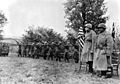
Members of the 442nd RCT fire a salute to honor their fallen comrades at a memorial ceremony.
-
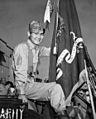
First Sergeant Thomas S. Harimoto displaying the 442nd's colors carrying the unit's Presidential Unit Citation
-
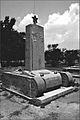
Monument to the 100th Battalion, 442nd Regimental Combat Team, Rohwer Memorial Cemetery
-
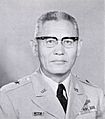
Brig. Gen. Francis Shigeo Takemoto, first Japanese-American general officer (1964) and veteran of both the 100th Infantry Battalion and the 442nd RCT
-
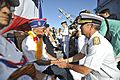
Pearl Harbor (2 July 2014). Adm. Harry Harris Jr., COMPACFLT, thanks Ralph Tomei, a 442nd veteran. Tomei represented his friend Shiro Aoki as French RADM Anne Cullere presents him with the Legion of Honor.
-
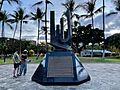
The 'Brothers In Valor' memorial at Ft DeRussy recognizes the sacrifices of the 100BN, 442RCT, 1399BN, and MIS.
-
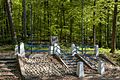
The American monument in Bruyères honoring the Japanese Americans serving in the 442nd
-
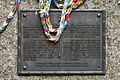
The Congressional Gold Medal awarded to the 100th Infantry Battalion, the 442nd RCT, as well as the Military Intelligence Service


See also
 In Spanish: 442.º Regimiento de Infantería (Estados Unidos) para niños
