
British Rail Class 59 facts for kids
Quick facts for kids British Rail Class 59 |
|||||||||||||||||||||||||||||||
|---|---|---|---|---|---|---|---|---|---|---|---|---|---|---|---|---|---|---|---|---|---|---|---|---|---|---|---|---|---|---|---|

|
|||||||||||||||||||||||||||||||
|
|||||||||||||||||||||||||||||||
|
|||||||||||||||||||||||||||||||
|
|||||||||||||||||||||||||||||||
|
|||||||||||||||||||||||||||||||
The Class 59 locomotives are powerful diesel locomotives built between 1985 and 1995. They were made by General Motors Electro-Motive Diesel (EMD) in the USA. These trains were special because they were the first locomotives bought by private companies in Britain, starting with Foster Yeoman. They were designed to pull very heavy freight trains, like those carrying stone.
Contents
What is the Class 59 Locomotive?
The Class 59 is a type of train known as a diesel-electric locomotive. This means it uses a diesel engine to create electricity, which then powers electric motors that turn the wheels. It has a special wheel arrangement called Co-Co. This means it has two sets of three axles, with each axle powered by its own motor. This design helps the locomotive pull very heavy loads.
How Were These Powerful Trains Built?
The Class 59 locomotives were built by General Motors Electro-Motive Diesel (EMD). EMD is a well-known company from the United States that makes train engines. The first five Class 59 trains were delivered in 1986. More were built later for other companies. In total, 15 of these strong locomotives were made.
Designed for Heavy Loads
These trains were specifically designed to be very strong. They needed to pull huge amounts of stone from quarries in the south-west of England. Their design, called JT26CW-SS, shows they were made for heavy work. They have a powerful engine that gives them a lot of pulling force.
Who Used These Locomotives?
The Class 59 trains were first bought by private companies in Britain. This was a new idea at the time.
Original Operators
- Foster Yeoman: This company bought the first five Class 59s. They used them to transport stone from their quarries.
- ARC (Amey Roadstone Corporation): This company bought four more Class 59s. They also used them for moving stone.
- National Power: This company bought six Class 59s. They used them to move coal to power stations.
Current Operators
Today, many of these Class 59 locomotives are still working. Some have been updated or sold to new companies. They continue to be used for hauling heavy freight across the UK. Some have even been used in other countries like Germany.
Key Features of the Class 59
The Class 59 locomotives are known for their strength and reliability.
Power and Speed
These trains have a very powerful engine, giving them about 3,300 horsepower. This power allows them to pull extremely heavy trains. While they are built for strength, they can still reach speeds of up to 75 miles per hour (120 km/h).
Size and Weight
A Class 59 locomotive is about 21.4 meters (70 feet) long. It weighs around 126 tonnes (about 278,000 pounds). This heavy weight helps the train grip the tracks and pull large loads without slipping.
What They Carry
The main job of the Class 59 is to transport bulk materials. This includes:
- Stone: From quarries to construction sites.
- Coal: To power stations.
- Aggregates: Materials like sand and gravel.
These locomotives are essential for moving these heavy goods around the country.
Images for kids
-
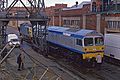
59001 at Southampton Docks after being unloaded in January 1986
-
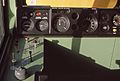
Inside the cab of a Class 59
-
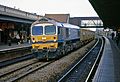
59003 Yeoman Highlander at Reading in 1992
-
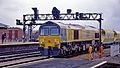
ARC 59104 Village of Great Elm at Reading in 1991
-
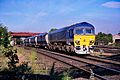
National Power 59202 Vale of White Horse at Knottingley in 1996
-
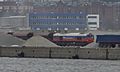
HHPI 259003 in Hamburg, Germany in 2007
-
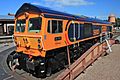
59003 Yeoman Highlander now works for GB Railfreight
-
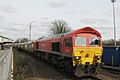
59206 John F Yeoman at Westbury with a train for Whatley quarry
-
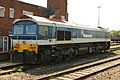
59103 was damaged in an accident near Whatley in 2000, but was repaired. This photo was taken in 2008.
-
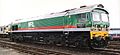
Mendip Rail 59002 (photograph 2000)
-
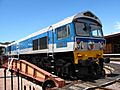
Foster Yeoman 59002 (photograph 2011)
-
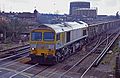
ARC 59101 (photograph 1999)
-
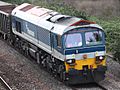
Hanson 59103 (photograph 2020)
-
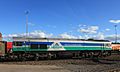
Aggregate Industries 59001 (photo 2016)
-
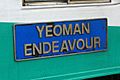
Yeoman Endeavour (59001)
-
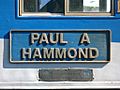
Paul A Hammond (59004)
-
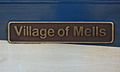
Village of Mells (59103)
-
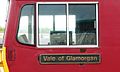
Vale of Glamorgan (59204)
-
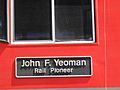
John F Yeoman (59206)


.jpg)


.jpg)


.JPG)


.jpg)
