
British Rail Class 85 facts for kids
Quick facts for kids British Railways AL5British Rail Class 85 |
|||||||||||||||||||||||||||
|---|---|---|---|---|---|---|---|---|---|---|---|---|---|---|---|---|---|---|---|---|---|---|---|---|---|---|---|
|
|||||||||||||||||||||||||||
|
|||||||||||||||||||||||||||
|
|||||||||||||||||||||||||||
|
|||||||||||||||||||||||||||
The British Rail Class 85 is a type of electric train engine. It was built in the early 1960s. British Rail wanted to create a standard electric locomotive. They built five different types (Classes 81-85) to test them out. These tests helped them design the Class 86 engine later on.
The Class 85 engines first used special parts called germanium rectifiers. These were later changed to silicon rectifiers. Forty of these powerful engines were made between 1961 and 1964. They were built by British Rail at their Doncaster factory.
These engines were used on the new electric West Coast Main Line. They pulled trains from Birmingham to places like Crewe, Manchester Piccadilly, and Liverpool. By 1965, the electric lines reached all the way south to London Euston.
Contents
Understanding the Class 85 Name
How Locomotives Got Their Names
When these engines were first made, they had a different name. British Rail called them AL5. The "AL" stood for "AC Locomotive". The "5" meant it was the fifth design of a 25 kV AC electric engine. Their numbers were E3056 to E3095.
New Numbering System in 1968
In 1968, British Rail started a new computer system. This changed how they named their trains. The AL5 engines were then called Class 85. From 1971, their numbers changed again. They became 85001 to 85040.
Special Engines for Freight Trains
Some of these Class 85 engines were changed to carry only goods. These were called the 85/1 series. They were a bit slower, with a top speed of 80 miles per hour.
Images for kids
-
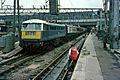
A Class 85 at the front of a train at Euston in 1966, shortly after the introduction of electric services.
-
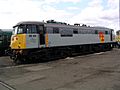
Class 85, no. 85101 'Doncaster Plant 150 1853-2003', on display at Doncaster Works open day on 27 July 2003


