
British Rail Class 86 facts for kids
Quick facts for kids British Rail Class 86 |
|||||||||||||||||||||||||||
|---|---|---|---|---|---|---|---|---|---|---|---|---|---|---|---|---|---|---|---|---|---|---|---|---|---|---|---|

Class 86/6, nos. 86613 and 86610, painted in the new Freightliner livery, at Ipswich on 14th February 2004. Freightliner are now the largest operator of Class 86 locomotives.
|
|||||||||||||||||||||||||||
|
|||||||||||||||||||||||||||
|
|||||||||||||||||||||||||||
|
|||||||||||||||||||||||||||
|
|||||||||||||||||||||||||||


The British Rail Class 86 is a type of electric locomotive. These powerful trains were built in the 1960s. They were designed to pull passenger and freight trains.
A total of 100 Class 86 locomotives were made. They were built between 1965 and 1966. Some were built by English Electric at Vulcan Foundry. Others were built by British Rail (BR) at their Doncaster Works.
These locomotives were very important for the West Coast Main Line. This is a major railway line in the UK. The Class 86 trains helped connect cities like London Euston, Birmingham, Crewe, Manchester, Liverpool, Preston, and Glasgow. They played a big role in replacing older steam locomotives. Steam trains were completely removed from British Rail service by 1968.
Images for kids
-
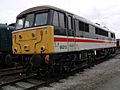
86213 Lancashire Witch at Crewe Works
-
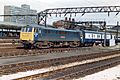
86228 Vulcan Heritage at Crewe station with an express train (date unknown)
-
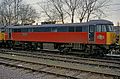
86241 Glenfiddich, in parcels sector livery, at Northampton in 1992
-
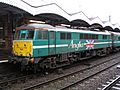
Class 86/2, no. 86227 Golden Jubilee at Ipswich on 31 January 2004. This locomotive was repainted in a special livery by Anglia Railways and named to celebrate the Golden Jubilee of Queen Elizabeth II in 2002.
-
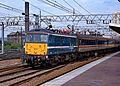
86235 Crown Point passing Stratford with an up express
-
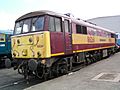
Class 86/2, no. 86261 The Rail Charter Partnership in EWS livery at Doncaster Works open day, 27 July 2003
-
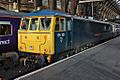
86101 at London King's Cross preparing to depart with a service to Doncaster
-
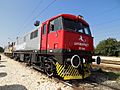
86234 overhauled and renumbered 85006 at Express Service Ruse, Bulgaria in 2017.
-
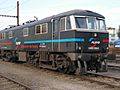
0450 004-1 (previously 86218), owned by the Hungarian Floyd ZRt. in Kecskemét, Hungary
-
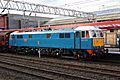
86259, now Peter Pan on one side only, at Crewe, 2017
-
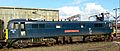
86101 Sir William A Stanier FRS at Crewe

.jpg)


,_Budapest,_H-FLOYD_91_55_0450_004-1,_0006.JPG)


See also
 In Spanish: British Rail Clase 86 para niños
