
Plymouth Colony facts for kids
Quick facts for kids
Plymouth Colony
|
|||||||||||||
|---|---|---|---|---|---|---|---|---|---|---|---|---|---|
| 1620–1686 1689–1691 |
|||||||||||||
 Seal
|
|||||||||||||

Plymouth Colony town locations
|
|||||||||||||
| Status | Self-governing colony of England | ||||||||||||
| Capital | Plymouth Lua error in Module:Coordinates at line 614: attempt to index field 'wikibase' (a nil value). |
||||||||||||
| Official languages | English | ||||||||||||
| Religion | Puritanism | ||||||||||||
| Governor | |||||||||||||
|
• 1620–1621
|
John Carver (first) | ||||||||||||
|
• 1689–1692
|
Thomas Hinckley (last) | ||||||||||||
| Legislature | General Court | ||||||||||||
| Historical era | British colonization of the Americas Puritan migration to New England (1620–1640) |
||||||||||||
| 1620 | |||||||||||||
| 1621 | |||||||||||||
| 1636–1638 | |||||||||||||
|
• New England Confederation formed
|
1643 | ||||||||||||
| 1675–1676 | |||||||||||||
|
• Joseph Dudley is made governor of New England
|
25 May 1686 | ||||||||||||
| 18 April 1689 | |||||||||||||
|
• Massachusetts Charter issued
|
7 October 1691 | ||||||||||||
|
|||||||||||||

Plymouth Colony was one of the earliest English settlements in North America. It was founded in 1620 by a group of English people known today as the Pilgrims. They sailed across the Atlantic Ocean on a ship called the Mayflower.
The Pilgrims settled in a place that Captain John Smith had already explored and named. This settlement became the capital of the colony and grew into the town of Plymouth, Massachusetts. At its largest, Plymouth Colony covered much of what is now southeastern Massachusetts.
Many stories and traditions from Plymouth Colony are now part of American history. These include the American holiday of Thanksgiving and the famous Plymouth Rock.
The Pilgrims were a group of Protestant Christians who wanted to practice their religion freely. They made an important agreement with Wampanoag chief Massasoit, which helped the colony succeed. A Native American named Squanto also helped them greatly. Plymouth Colony played a role in King Philip's War (1675–1678), a major conflict with Native American tribes. In 1691, Plymouth Colony joined with other areas to form the Province of Massachusetts Bay.
Even though Plymouth Colony existed for a relatively short time, it holds a special place in American history. Its way of life and laws were strongly connected to the Pilgrims' religious beliefs and English traditions.
Contents
- Exploring the History of Plymouth Colony
- Life in Plymouth Colony
- Government and Laws
- Economy of Plymouth Colony
- Demographics of Plymouth Colony
- Legacy of Plymouth Colony
- Images for kids
- See also
Exploring the History of Plymouth Colony

How Plymouth Colony Began
Plymouth Colony was started by a group of English people called the Pilgrims. They were a type of Protestant Christians who wanted to worship God in their own way. They faced difficulties for their religious beliefs in England.
In 1608, many of them left England and moved to the Netherlands. They lived in cities like Amsterdam and Leiden. In the Netherlands, they could worship freely. However, they found Dutch life very different from their farming community in England. Their children also started adopting Dutch language and customs.
English authorities continued to cause trouble for them. For example, they tried to arrest William Brewster in 1618. These events made the Pilgrims want to move even further away from England.
In 1619, they received permission to settle in America. They got financial help from a group of businessmen called the Merchant Adventurers. These businessmen hoped to make a profit from the new colony.
With this support, the Pilgrims bought supplies and arranged passage on two ships: the Mayflower and the Speedwell. After some delays, they finally boarded the Speedwell in July 1620 in the Dutch port of Delfshaven.
The Famous Mayflower Voyage

The Speedwell met the Mayflower in Southampton, England, in July 1620. More passengers joined the group there. These included some of the original Leiden congregation and other workers. These workers were often called "The Strangers." Many were indentured servants who worked for a period to pay for their trip.
Important "Strangers" included Myles Standish, the colony's military leader. Christopher Martin was chosen to be the ship's governor during the journey. Stephen Hopkins had experience from an earlier colonial attempt.
The journey faced many problems and delays. The Speedwell had serious leaks and was found to be unsafe. Some passengers gave up, while others crowded onto the Mayflower. These delays meant they had to sail in late autumn. This made the trip much harder.
The Mayflower left Plymouth, England, on September 6, 1620. It carried 102 passengers and about 30 crew members. The ocean journey was rough, with strong winter storms. The ship suffered damage, and conditions were difficult. One passenger, William Button, died during the trip.
After two months at sea, they saw land on November 9, 1620, near Cape Cod. They tried to sail south to their planned landing spot. However, they ran into dangerous shallow waters. With winter coming and supplies running low, they decided to turn back north to Cape Cod Bay.
Earlier Explorations and Settlements

The Pilgrims were not the first Europeans to visit this area. Explorers like John Cabot and Samuel de Champlain had mapped parts of the coast. European fishermen had also been in these waters for many years.
Champlain had explored Plymouth Harbor in 1605. He called it "Port St. Louis." His maps showed a busy Patuxet village where Plymouth was later built. However, a terrible sickness affected the Native American tribes along the Massachusetts coast between 1617 and 1619. It wiped out a large part of the population, including the Patuxets. This sickness meant there was little opposition when the Pilgrims arrived.
Captain John Smith of Jamestown explored the region in 1614. He named the area "New England." He also named the Patuxet settlement "New Plymouth." This was the name the Pilgrims later chose for their new home.
During their first explorations of Cape Cod, the Mayflower settlers found signs that other Europeans had been there before. They found parts of an old fort and a grave.
Landing at Provincetown and Plymouth


The Mayflower dropped anchor in Provincetown Harbor on November 11, 1620. The Pilgrims did not have official permission to settle there. Some passengers worried about their right to claim land. To solve this, they wrote and signed the Mayflower Compact while still on the ship.
This document became the first set of rules for the colony. It created a way for them to govern themselves, similar to an English town. It also helped assure settlers that their land claims would be respected. The Mayflower Compact was signed by 41 men. It promised to create "just and equal laws" for everyone.
After a day of prayer, they first stepped onto land at Provincetown on November 13. Their first job was to rebuild a small boat called a shallop. This boat had been taken apart for the journey.
They sent out several groups to explore Cape Cod. During one trip, they found and took some Native American corn. Another expedition led to a brief conflict with Native Americans near Eastham, Massachusetts. Since they hadn't found a good settlement spot and worried about angering the natives, the Mayflower sailed to Plymouth Harbor.
On December 16, the Mayflower anchored in Plymouth Harbor. After three days of searching, they chose the site of a recently abandoned Patuxet village. They picked this spot because it was easy to defend. The settlement would be built on Cole's Hill, with a cannon on Fort Hill. The land was also already cleared, making farming easier. Fresh water was available from Town Brook. While there's no proof, Plymouth Rock is often remembered as the spot where they first stepped ashore.
The area was already named "New Plymouth" on maps by John Smith. The colonists decided to keep this name for their new home.
The First Winter in Plymouth
_by_Henry_A._Bacon.jpg)
On December 21, 1620, the first group landed at the site of Plymouth. Building houses was tough due to bad weather. Twenty men always stayed on guard while others worked. Women, children, and sick people remained on the Mayflower. Many had not left the ship for six months. Their first building, a common house, took two weeks to finish in the harsh winter.
During this first winter, many colonists suffered greatly. They lacked proper shelter and faced diseases. Forty-five out of 102 Pilgrims died and were buried on Cole's Hill. By the end of January, enough of the settlement was built to unload supplies from the Mayflower.
In February, the men formed a military group, and Myles Standish became their leader. By the end of the month, cannons were placed on Fort Hill for defense. John Carver was elected governor.
On March 16, 1621, the Pilgrims met Native Americans for the first time. Samoset, an Abenaki leader from Maine, walked into the settlement. He had learned some English from fishermen. He told the Pilgrims about the sickness that had affected the Patuxet people. He also introduced them to Massasoit, a powerful Wampanoag chief, and Squanto, a Patuxet who spoke fluent English.
Squanto had been taken to Europe years before but had returned. He helped Massasoit and Governor Carver make a peace treaty. This treaty promised that neither side would harm the other. It also said they would help each other in times of conflict.
The Mayflower sailed back to England on April 5, 1621. Nearly half of the original passengers had died during the first winter. William Bradford, who became governor after John Carver's sudden death, led the colony through its early years.
Early Relations with Native Americans
Massasoit kept his promise, and many Native Americans came to Plymouth to make peace. In July 1621, a group of Pilgrims, including Edward Winslow and Squanto, visited Massasoit's village. They agreed to a special trading partnership. Squanto stayed to help build more trade relationships.
Later, a boy named John Billington got lost. He was found by the Nauset tribe, from whom the Pilgrims had taken corn earlier. The colonists agreed to pay for the corn to get the boy back. This helped improve peace with the local tribes.
The Pilgrims also learned that Massasoit and Squanto had been captured by Corbitant, a leader of the Narragansetts. Ten colonists led by Myles Standish went to help their ally. They found that Squanto had escaped and Massasoit was safe. This show of support earned the Pilgrims respect. Nine powerful Native American leaders, including Massasoit, signed a treaty pledging loyalty to King James.
The First Thanksgiving


In the autumn of 1621, the Pilgrims celebrated a harvest feast. This event is now known as "The First Thanksgiving." About 53 Pilgrims and 90 Wampanoag men, including Massasoit, shared this three-day celebration.
Accounts from the time describe a feast with waterfowl, wild turkeys, fish, and deer. Squanto taught the Pilgrims important survival skills, like using fish to fertilize soil. For the first few years, trading furs with Native Americans was a main source of income.
In 1622, more settlers arrived and founded a new settlement called Wessagussett. This settlement did not last long. A military action by Myles Standish against some Massachusett leaders caused fear among Native American tribes. Many left their villages, leading to hardship and a loss of trade for the Pilgrims.
How Plymouth Colony Grew
In November 1621, the ship Fortune brought 37 new settlers. This put a strain on the colony's resources. The Fortune returned to England with valuable goods, but it was captured by the French. This created more financial challenges for the colony.
More ships arrived in the following years, bringing new settlers. By 1630, the colony had almost 300 people. By 1643, the population was around 2,000. By 1690, just before it merged with Massachusetts Bay, Plymouth Colony had about 7,000 people. While it was the first colony in the region, it remained smaller than the neighboring Massachusetts Bay Colony.
Military History and Conflicts
Myles Standish's Leadership
Myles Standish was the military leader of Plymouth Colony from the start. He led the first explorations and helped design the settlement's defenses. He organized the men into a militia. Standish also led early military actions against Native American groups. Some of these actions helped gain respect, while others caused fear and hurt trade.
The Pequot War and United Colonies
The Pequot War in 1637 was a major conflict in New England. It began over land disputes in the Connecticut River Valley. Settlers from Plymouth and Massachusetts Bay colonies competed with the Dutch for land. Other tribes, like the Narragansetts and Mohegans, sided with the English against the Pequots.
The war involved several attacks and retaliations. Plymouth Colony was not heavily involved in the fighting. After the war, four New England colonies formed a defensive alliance. This was called the United Colonies of New England. Edward Winslow helped create this alliance. It was an early example of colonies working together.
King Philip's War

.jpeg)
Metacomet, known to the colonists as Philip, became the leader of the Wampanoags in 1662. Native leaders like Philip were concerned about the colonists taking more and more land. The founding of the town of Swansea near the Wampanoag capital was a particular worry.
A conflict began in 1675 after a Native American named John Sassamon was killed. Some of Philip's men were accused and found guilty. Philip then began to attack English farms. Governor Josiah Winslow called out the militia.
The war continued with Native American warriors using guerrilla warfare tactics. Captain Benjamin Church eventually convinced leaders to work with friendly Native Americans. Church's combined forces pursued Philip. Philip was eventually killed, and the war ended.
This war had a huge impact. Many lives were lost on both sides. The Native American population in New England decreased significantly.
The Final Years of Plymouth Colony
In 1686, the British Crown reorganized all of New England under one government. This was called the Dominion of New England. It included Plymouth, Rhode Island, Massachusetts Bay, Connecticut, and New Hampshire. Later, New York and New Jersey were added.
The Dominion's governor, Edmund Andros, was very unpopular. In 1689, after news of a change in England's government, the people of Boston revolted. They arrested Andros, and Plymouth's local leaders took back control.
However, Plymouth Colony's self-rule did not last long. In 1691, a new charter was issued. It combined Plymouth Colony with Massachusetts Bay Colony and other territories. This officially ended Plymouth Colony's existence. The new government, the Province of Massachusetts Bay, began in 1692.
Life in Plymouth Colony
Religious Beliefs and Community


John Robinson was the Pilgrims' pastor during their time in Leiden. His teachings shaped the Plymouth church. The Pilgrims were Separatist Puritans. They were Protestant Christians who wanted to separate from the Church of England. They believed in practicing Christianity as it was in the time of the Apostles.
They believed the Bible was the only true source of religious teaching. They opposed many church traditions. Their churches had a democratic structure. Ministers and elders were elected by the congregation. Each church was independent.
Church attendance was required for all residents. The church was the most important social institution. The Bible was central to their laws and daily life. Education was important so children could read the Bible. Parents were expected to teach their children to read the Scriptures.
Churches used two main ways to correct members: censure and being "put out." Censure was a formal warning for bad behavior. Being "put out" meant being removed from church membership. These actions helped maintain social order.
The Pilgrims practiced infant baptism. Marriage was a civil ceremony, not a religious one. They believed the Bible did not require a minister to lead a wedding.
People in Plymouth Colony also believed in the supernatural. While the neighboring Massachusetts Bay Colony had witchcraft scares, Plymouth had very few. Witchcraft was a serious crime, but no one was ever found guilty of it in Plymouth Colony.
Marriage and Family Life
Edward Winslow and Susanna White were the first couple to marry in Plymouth. They both lost their spouses during the first harsh winter. Governor Bradford led their civil ceremony.
In Plymouth Colony, young people often started courtships. As a relationship became serious, parents became involved. They cared about the partner's character and the family's financial situation. A betrothal, or pre-contract, was an early step. This was a promise to marry later.
Couples were expected to wait until marriage for physical intimacy. However, records show that some babies were born less than nine months after a wedding.
Women in Plymouth Colony had more legal and social rights than in 17th-century Europe. They were seen as equal to men in God's eyes. Women typically managed the household and raised children. They could own property and sign contracts. A wife was guaranteed a share of her husband's property if he died. Sometimes, women even served on juries.
Families were generally large. Most families had five to six children living at home. Childbirth was sometimes dangerous for mothers. However, infant mortality rates in Plymouth seemed to be relatively low.
Childhood and Education
Children usually stayed with their mothers until about age 8. After that, it was common for children to live with another family. This was often to learn a trade or to be taught to read and write. It was thought that parents might be too soft on their own children. Living with another family ensured children learned discipline.
There was no specific "teenager" phase in Plymouth Colony. Children started learning adult roles early. They helped with family work or learned trades in foster homes. At 14, orphaned children could choose their own guardians. Males could join the military and were considered adults for legal matters at 16. Men could become full citizens, or freemen, around their mid-twenties.
Formal schools were rare in early Plymouth Colony. The first true school was founded 40 years after the colony began. By 1683, several towns received funding for public schooling.
Most education happened at home with parents or foster parents. The church also played a big role. The main reason for teaching children to read was so they could read the Bible themselves.
Government and Laws
How the Colony Was Organized

Plymouth Colony did not have a royal charter from the King. So, they needed their own way to govern. The Mayflower Compact was their first governing document. It was signed by 41 Puritan men on the Mayflower in 1620. Formal laws were written down in 1636. These laws combined English common law with religious laws from the Bible. The leaders believed that democracy was God's preferred form of government.
Almost all adult men could become citizens, called "freemen." Freemen had full rights, like voting and holding office. To become a freeman, a man needed to be sponsored and accepted by the General Court. Later, some rules were added, like a waiting period and restrictions for Quakers. The minimum age was 21, but most men became freemen in their mid-twenties or early thirties.
The colony also created a fund in 1636 to help veterans who were injured in service.
| Dates | Governor |
|---|---|
| 1620 | John Carver |
| 1621–1632 | William Bradford |
| 1633 | Edward Winslow |
| 1634 | Thomas Prence |
| 1635 | William Bradford |
| 1636 | Edward Winslow |
| 1637 | William Bradford |
| 1638 | Thomas Prence |
| 1639–1643 | William Bradford |
| 1644 | Edward Winslow |
| 1645–1656 | William Bradford |
| 1657–1672 | Thomas Prence |
| 1673–1679 | Josiah Winslow |
| 1680–1692 | Thomas Hinckley |
The Governor was the most powerful leader. He was elected annually by the freemen or by the General Court. Seven Assistants helped the Governor. They appointed Constables for the towns and Messengers for other duties.
The General Court was the main law-making and court body. Freemen elected its members. It met regularly in Plymouth. It also acted as a grand jury, hearing complaints and making accusations. Trials were held with a jury of freemen.
This system of Governor, Assistants, and General Court created a balance of power. It aimed to prevent any one person or group from having too much control. By 1625, the settlers had paid off their debts. The colony became a self-governing republic, based on the ideas of the Mayflower Compact.
Laws of the Colony
The General Court made laws as needed. These laws were first collected and published in the 1636 Book of Laws. They covered things like taxes and land distribution. The General Court controlled how land was given to individuals. It was against the law for settlers to buy land from Native Americans without permission. This was to help maintain peace with the Wampanoag.
The laws also listed crimes and their punishments. There were several serious crimes that could lead to the death penalty. However, this punishment was rarely carried out. For example, some crimes were often punished by public humiliation. Convicted people might have to wear special letters on their clothes.
Laws also dealt with indentured servitude. This was a system where people worked for a period to pay off debts or get training. All indentured servants had to be registered.
The Official Seal
The seal of Plymouth Colony was designed in 1629. It is still used by the town of Plymouth today. It shows four figures inside a shield with St George's Cross. Each figure carries a burning heart symbol.
Economy of Plymouth Colony
The main source of wealth for Plymouth Colony was the fur trade. Problems with this trade caused difficulties for the colonists for many years. They also tried fishing, but they were not very skilled at it. The colony traded with other regions, including the Dutch in New Amsterdam.
The economy improved when cattle arrived in the colony. Cattle became an important source of wealth. The division of land for grazing cattle in 1627 was an early step towards private land ownership. However, the price of cattle dropped when many new immigrants arrived. Besides cattle, they also raised pigs, sheep, and goats.
Farming was also a key part of the economy. The colonists learned Native American farming methods and crops. They planted maize (corn), squash, and beans. They also learned techniques like crop rotation and using fish to fertilize the soil. They successfully grew European crops too, such as turnips, wheat, and oats.
There was little cash in Plymouth Colony. Most wealth was in the form of possessions like fine goods, clothes, and furnishings. In 1652, the Massachusetts Bay Colony started making its own coins to help with a coin shortage. This was seen as an act against the English government.
Demographics of Plymouth Colony
English Settlers
The English settlers in Plymouth Colony fell into three main groups. The Pilgrims were Puritans who wanted religious freedom. They called themselves Saints or First Comers. The Strangers were non-Puritan settlers. They were often workers or indentured servants brought by the Merchant Adventurers. The Particulars were later settlers who paid their own way.
The presence of "Strangers" and "Particulars" sometimes caused disagreements with the Pilgrims. For example, they argued over celebrating Christmas, which the Pilgrims did not consider important.
Historian John Demos studied the population. He found that families grew larger over time. The average family had more children in later generations. Life expectancy was generally higher for men than for women, partly due to the dangers of childbirth.
During King Philip's War, about eight percent of the colony's adult men died. The war also had a big impact on the population of all New England.
Native American Populations
Native Americans in New England were organized into different tribes. These included the Nipmucks, Massachusett, Narragansetts, Niantics, Mohegans, and Wampanoags. Several events greatly changed their populations.
A terrible sickness before the Pilgrims arrived wiped out many Native Americans. Later, military actions and wars, like the Pequot War and King Philip's War, also had a huge impact. These conflicts led to many deaths and forced many Native Americans to leave their homes.
Black and Indigenous Slaves
Some wealthier families in Plymouth Colony owned Black and Native American slaves. Slaves were considered property and could be passed down to heirs. This was different from indentured servants who worked for a set period.
Slave ownership was not common in Plymouth Colony. Very few families were wealthy enough to own slaves. For example, a 1689 census in Bristol showed only one family owned a Black slave. Because there were so few slaves, the General Court never passed any specific laws about them.
Legacy of Plymouth Colony
The founding and history of Plymouth Colony have had a lasting impact on the United States.
Art, Literature, and Film


Artists have depicted the Pilgrims' journey and life. A painting of their departure from Delfshaven was made in 1620. Robert Walter Weir painted Embarkation of the Pilgrims in 1844, which hangs in the United States Capitol. Many other paintings show scenes from Plymouth Colony. The Pilgrim Hall Museum collects many of these works.
Important historical documents from the time have also become literary classics. Of Plimoth Plantation by William Bradford tells about the voyage and early years. Mourt's Relation by Bradford and Edward Winslow also provides key information.
Later works, like The Courtship of Miles Standish by Henry Wadsworth Longfellow, offer romantic stories about the colony. There are also many films and documentaries about the Pilgrims, such as Plymouth Adventure (1952).
The Thanksgiving Holiday

Every year, the United States celebrates Thanksgiving on the fourth Thursday of November. This federal holiday often involves family gatherings and a large feast, usually with turkey. It honors the First Thanksgiving feast held in Plymouth in 1621. This event was first recorded by Governor William Bradford.
The annual Thanksgiving holiday we know today developed over time. In the early 1800s, some states began celebrating an annual Thanksgiving day. Sarah Josepha Hale, a magazine editor, campaigned for a national Thanksgiving holiday. In 1863, President Abraham Lincoln declared the first modern Thanksgiving. It became an official federal holiday in 1941.
Plymouth Rock

Plymouth Rock is a famous symbol of the Pilgrims' landing. It is a large boulder near their landing site. However, early accounts of the landing do not mention the rock specifically. The Pilgrims chose the site for its fresh water and fish.
The first person to identify Plymouth Rock as the landing spot was 90-year-old Thomas Faunce in 1741. His father had arrived in Plymouth a few years after the Mayflower. The rock was later covered by a pier. In 1774, it broke in two during an excavation attempt. The pieces were later reunited and are now protected.
Today, there are several living history museums in Plymouth. These include the Mayflower II, a replica of the original ship. Plimoth Patuxet (formerly Plimoth Plantation) recreates the 1620 settlement. The Wampanoag Homesite shows a 17th-century Native American village.
Political Influence
The democratic government of Plymouth Colony greatly influenced democracy in both England and America. William Bradford's book, Of Plimoth Plantation, was widely read in England. It influenced thinkers like John Milton and John Locke. Locke even mentioned the Mayflower Compact in his writings.
In America, Plymouth Colony started a democratic tradition. This was followed by other colonies like Massachusetts Bay, Connecticut, and Rhode Island. Roger Williams founded Providence Plantations to offer religious freedom. This added the idea of freedom of conscience to Plymouth's democratic model.
The Mayflower Society
The General Society of Mayflower Descendants, or The Mayflower Society, is an organization for people who can prove they are descended from one of the 102 passengers on the Mayflower. The Society was founded in Plymouth in 1897. It estimates that millions of Americans are descendants of these passengers.
Images for kids
-
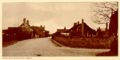
The village of Scrooby, England, around 1911, where the Mayflower Pilgrims lived until 1607.

See also
 In Spanish: Colonia de Plymouth para niños
