
Geometric tortoise facts for kids
Quick facts for kids Geometric tortoise |
|
|---|---|
_2.jpg) |
|
_1.jpg) |
|
| Conservation status | |
Scientific classification  |
|
| Kingdom: | Animalia |
| Phylum: | Chordata |
| Class: | Reptilia |
| Order: | Testudines |
| Suborder: | Cryptodira |
| Family: | Testudinidae |
| Genus: | Psammobates |
| Species: |
P. geometricus
|
| Binomial name | |
| Psammobates geometricus (Linnaeus, 1758)
|
|
| Script error: The function "autoWithCaption" does not exist. | |
| Synonyms | |
|
|

Script error: No such module "Check for conflicting parameters".
The geometric tortoise (Psammobates geometricus) is an amazing little reptile. It is a critically endangered species of tortoise. This animal is one of three kinds in the genus Psammobates. It lives only in a tiny corner of South Africa. Famous scientist Carl Linnaeus first named it in the 1758 edition of his book. Today, it ranks among the rarest tortoises in the whole world.
Contents
What Does the Geometric Tortoise Look Like?

The geometric tortoise has a very neat, patterned top shell. Scientists call this upper shell a carapace. The shell shows off bright yellow stars on a dark background. These yellow stripes spread out like bright rays of sunlight. When seen from above, the shell shows bold shapes. These geometric patterns give the little tortoise its common name.
The bright colors work as great camouflage in nature. They help the small reptile hide among twigs and dried bushes. Its hard shell also provides strong defence against hungry animals. An adult geometric tortoise remains quite tiny throughout its whole life. A full-grown tortoise measures only about 13 to 15 centimetres across. That is about the size of a small saucer!
This tortoise shares several traits with other species in Psammobates. Yet, experts can easily spot the geometric tortoise by special clues. It displays clear, bright yellow stars across its raised shell scutes. It has a tiny nuchal shield right behind its neck. It has a single axillary scale near its front legs. It also lacks buttock tubercles, which are bumps found on related reptiles. Finally, the rear edges of its shell turn up just slightly.
Habitat and Where the Tortoise Lives
The Renosterveld Shrublands
The geometric tortoise lives naturally only in the Western Cape Province. It needs a special kind of shrubland called renosterveld. This unique habitat forms a key part of the famous Fynbos biome. The region enjoys a mild Mediterranean climate with rainy winters and dry summers. Within this biome, plant lovers find a blend of heathlands and shrublands. Experts divide nearby shrublands into types like strandveld and coastal renosterveld.
The geometric tortoise stays in low-lying areas that drain water well. It likes places with lots of thick bushes for cover. In fact, it prefers plants that grow fifty centimetres above ground level. These bushy plants provide shade, yummy food, and safe nesting spots. They also allow the little reptiles to wander safely beneath the leaves.
Historic Range and Shrinking Lands
Long ago, the tortoise lived across a much larger region. Its old home stretched north to Piketberg and south to Gordon's Bay. It also lived eastwards along the lovely Breede River valley. Its habitat gets between 350 and 600 millimetres of rain every year.
Sadly, farming and new towns replaced most of its open homeland. Over time, the wild renosterveld shrank down to tiny bits. Less than three percent of its original habitat remains today. That leaves only about four thousand to five thousand hectares of good land. The last animals near Cape Town died out in Harmony Flats Reserve. For several years, people feared the tortoise was gone forever.
Rediscovery and Current Locations
Scientists thought the geometric tortoise became extinct during the 1960s. Luckily, researchers discovered a surviving wild group in 1972. Today, geometric tortoises live in three separate places in the wild. One group makes its home in the scenic Ceres valley. A second group survives inside the Tulbagh and Worcester valley area. The third group lives along low coastal plains toward the southwest.
These tortoises cannot climb steep, rocky cliffs. Because of this, tall mountains keep the surviving groups separated. Each small group stays isolated inside its own grassy valley.
Diet and What Geometric Tortoises Eat
Native Plants in the Wild
The geometric tortoise eats plants, meaning it is a strict herbivore. Its diet consists of leaves, shoots, and pretty wildflowers. It also eats underground plant stems called geophytes. In its wild home, it eats native shrubs like Crassula ciliata. It also nibbles on clover-like Oxalis plants.
The tortoise loves seasonal geophytes with colourful blooms. These tasty treats include the purple-flowered Cyanella hyacinthoides. It also seeks out Babiana angustifolia and sweet Lachenalia contaminata. In addition, it grazes on green grass species. Common grass meals include red grass, known as Themeda triandra. It munches quaking grass, named Briza maxima, and hearty Cynodon dactylon. It also feeds on Ehrharta calycina, Pentaschistis curvifolia, and tough Eragrostis curvula.
Seasonal Feeding Habits
The tortoise eats at least fourteen different kinds of local plants. In the special Swartland Shale Renosterveld, it selects its food with care. It eats many local shrubs in the genus Aspalathus. It feeds on most kinds of Oxalis found there. It also enjoys spiky, daisy-like plants from the genus Berkheya.
Winter brings welcome rains, causing tender grasses and geophytes to sprout quickly. During these wet months, young herbs provide the main meals. In summer, the heat dries out the small herbs. The tortoise then switches to hardy perennial grasses and succulent leaves. These food plants contain plenty of iron for good health. They are tender and easy for small jaws to break down. When eating, the tortoise grabs leaves firmly and pulls backward. It takes small bites so digestive enzymes can process the food easily.
Why Captivity Fails
Geometric tortoises cannot survive when people take them from the wild. They need their exact native plants to stay healthy. In captivity, artificial pet diets make these tortoises very sick. Without proper soil, humidity, and winter rain, they quickly perish. Because of their special needs, humans must leave them in nature.
Behaviour and Life Cycle
Daily Activity and Seasonal Rest
Geometric tortoises are shy creatures that move quietly through the bushes. They do not like hot afternoons or chilly nights. Instead, they search for food during cooler mornings and late afternoons. If a human or large animal approaches, they quickly freeze. Then, they pull their legs in and seek cover under thick brush.
During harsh weather, they slow down and hide under roots. They often rest quietly from June through September. Scientists call this resting period aestivation. Tortoises also rest this way if their habitat becomes damaged.
Reproduction and Life Cycle
Geometric tortoises hatch from eggs laid by adult females. Scientists still want to learn more details about their wild breeding habits. When ready to lay her eggs, a mother tortoise finds soft dirt. She carefully digs out a nest with her back feet. She places her eggs inside and covers them with soil and grass. This leafy blanket keeps the eggs safe and warm until they hatch. Young hatchlings emerge ready to search for food on their own.
Threats and Predators
Wild and Introduced Predators
Many wild animals hunt the small geometric tortoise. Hungry troop members like the clever baboon can crack shells. Wild predators include the swift jackal and the spotted genet. Large running birds like ostriches will step on or peck them. Sharp-eyed secretary birds hunt them in open fields. Birds of prey like hawks grab young tortoises from the grass. Clever crows and tall storks also hunt baby tortoises.
Animals brought by humans cause even more trouble. Unsupervised pet dogs and feral cats kill them. Pesky rats dig up tender eggs from ground nests. Quick mongooses and rooting swine destroy tortoises and their shelter.
Loss of Natural Habitat
Human activity remains the biggest danger facing this species today. People cut down the wild renosterveld to plant wheat and grapes. Expanding towns also build roads directly across old tortoise paths. Frequent bushfires can sweep through fragments and burn animals alive. Invasive weeds crowd out native food plants that tortoises need. Today, only thirty-one tiny habitat patches remain, including seven nature reserves.
Conservation and Protecting the Tortoise
Legal Protection and Red List Status
The geometric tortoise faces a very high danger of extinction. The IUCN Red List lists it as a critically endangered animal. It is also protected by international treaties. The reptile sits on Appendix I of CITES. This law bans commercial trade of the tortoise across national borders.
South Africa is home to more tortoise species than any other country. Therefore, South African conservation officials work hard to guard these rare treasures. They manage special nature reserves to make sure the species survives.
Science and Reserve Management
Cape Nature Conservation manages four reserves where the tortoises live. Rangers consider this rare reptile an extreme conservation priority. Every year, trained workers walk through reserves to count every tortoise they spot. Counting them helps scientists detect population problems very early.
Scientists also study which plants the tortoises prefer to eat. This research helps workers pull out harmful foreign plants. Private landowners also help through projects known as wildlife ranching. On these private ranches, owners set aside wide open spaces for nature. By working together, people help ensure this patterned tortoise stays safe forever.
Images for kids
-
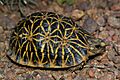
Geometric tortoise showing its patterned shell
-
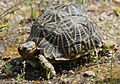
Adult geometric tortoise crawling on the ground
-
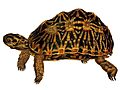
Historical drawing of the geometric tortoise from 1872
