
Platelet facts for kids
Quick facts for kids Platelets |
|
|---|---|
 |
|
| Image from a light microscope (500 ×) from a Giemsa-stained peripheral blood smear showing platelets (small purple dots) surrounded by red blood cells (large gray circular structures) | |
| Latin | thrombocytus |
| Precursor | Megakaryocytes |
Platelets, also called thrombocytes, are tiny parts of your blood. They are like tiny helpers that stop bleeding when you get a cut or injury. Think of them as tiny repair crews for your blood vessels!
Platelets work with other things in your blood to form a blood clot. This clot acts like a plug to seal the injured blood vessel. Platelets don't have a cell nucleus like other cells. They are actually small pieces that break off from larger cells called megakaryocytes. These larger cells live in your bone marrow and lungs.
Platelets are found in mammals, like humans. Other animals, like birds or frogs, have similar cells called thrombocytes. However, these thrombocytes are whole cells, not just fragments.

One of the most important jobs of platelets is to help with hemostasis. This is the body's way of stopping bleeding when a blood vessel is damaged. Platelets quickly gather at the injury site. They stick to the damaged area and to each other, forming a temporary plug.
This process involves a few steps:
- Adhesion: Platelets first stick to the damaged part of the blood vessel.
- Activation: They then change shape and release chemical signals. These signals call for more platelets to join.
- Aggregation: Finally, many platelets link together, forming a strong plug.
This platelet plug is the first step to stop bleeding. After this, other blood factors create a stronger, more permanent clot. Platelets also contain special proteins called cytokines and growth factors. These help heal the wound and repair damaged tissues.
Contents
What's in a Name?
The word thrombocyte means "clot cell." It's sometimes used to mean platelet. However, scientists usually use "platelet" for the tiny fragments in mammals. They use "thrombocyte" for the whole cells found in other animals.
The word thrombus refers to a blood clot. Sometimes it means a normal clot that stops bleeding. Other times, it can mean a clot that forms when it shouldn't, which can be harmful.
Platelet Structure
Platelets are very small, disc-shaped structures. When they are not active, they are smooth. But when they are activated, they grow spiky projections. This helps them stick to things and to each other.
Inside, platelets have different parts that help them do their job:
- Outer Zone: This part has special proteins that help platelets stick and activate.
- Middle Zone: This zone helps platelets keep their disc shape.
- Inner Zone: This area is full of tiny sacs called granules. These granules hold important chemicals for clotting.
- Membrane System: This network helps produce and release chemicals needed for clotting.
How Platelets Develop

Platelets are made from very large cells called megakaryocytes. These megakaryocytes live in your bone marrow.
- A hormone called thrombopoietin controls how many megakaryocytes and platelets are made.
- Each megakaryocyte can produce between 1,000 and 3,000 platelets.
- A healthy adult makes about 100 billion platelets every day!
- Some platelets are stored in your spleen and released when needed.

- Platelets usually live for about 8 to 9 days in your blood.
- Old platelets are removed and destroyed by your spleen and liver.
How Platelets Stop Bleeding
The main job of platelets is to clump together and stop bleeding. This is a complex process, but we can think of it in three main steps:
Sticking to the Injury (Adhesion)
Normally, the lining of your blood vessels (endothelium) is smooth. It also releases chemicals that stop platelets from sticking. But if the lining is broken, a protein called collagen is exposed.
- Platelets have special receptors that bind to this exposed collagen.
- Another protein, von Willebrand factor (VWF), also helps platelets stick firmly to the damaged area.
Getting Active (Activation)

Once platelets stick to the injury, they become active.
- They change shape, becoming spiky to help them grab onto more things.
- They release chemicals from their internal granules. These chemicals do two important things:
- They attract even more platelets to the injury site.
- They help start the process of forming a stronger blood clot.
- One important chemical released is thromboxane A2, which helps activate other platelets.
Clumping Together (Aggregation)
After activation, platelets start to clump together.
- They use special receptors on their surface, like GPIIb/IIIa, to link with each other.
- Proteins like fibrinogen act like bridges, connecting activated platelets.
- This creates a strong platelet plug that seals the wound.

- Platelets also work with other clotting factors in the blood. This forms a mesh of fibrin that makes the clot even stronger and more stable.
Platelets and Your Immune System
Platelets do more than just stop bleeding! They also play a role in your body's immune system.
- They can help fight off infections by trapping bacteria and other germs.
- Platelets can also interact with white blood cells to help control inflammation in your body.
- They release chemicals that can attract immune cells to an infection site.
- Platelets can even help your body remember past infections, which is part of your adaptive immunity.
Checking Your Platelets
How Platelets Are Measured
Doctors can measure the number of platelets in your blood with a simple blood test. This is often part of a complete blood count.
- A normal platelet count is usually between 150,000 and 400,000 platelets per microliter of blood.
- Under a microscope, platelets look like small, dark purple dots, much smaller than red blood cells.
Bleeding Time Test
Years ago, doctors used a "bleeding time" test to check how well platelets were working. They would make a small cut and time how long it took for the bleeding to stop. This test is not used much anymore because there are better ways to check platelet function.
Platelet Problems
Sometimes, platelets don't work correctly, which can cause health problems.
Too Few Platelets (Thrombocytopenia)
If you have too few platelets, it's called thrombocytopenia. This can lead to easy bruising and bleeding.
- Causes can include certain illnesses like immune thrombocytopenia (ITP) or Dengue fever.
- Some medical treatments, like chemotherapy, can also lower platelet counts.
- In rare cases, conditions like aplastic anemia can affect platelet production.
Platelets Don't Work Right
Sometimes, you have enough platelets, but they don't function properly.
- This can be due to inherited conditions like Bernard–Soulier syndrome or Glanzmann's thrombasthenia.
- Certain medicines, like aspirin, can also make platelets less sticky.
Too Many Platelets (Thrombocytosis)
Having too many platelets is called thrombocytosis. This can sometimes increase the risk of unwanted blood clots.
- It can happen as a reaction to an infection, inflammation, or iron deficiency.
- In some cases, it's due to a condition where the bone marrow makes too many blood cells, like essential thrombocythemia.
Platelet Treatments
Platelet Transfusion
If someone has very low platelet counts or their platelets aren't working, they might need a platelet transfusion. This is when healthy platelets from a donor are given to the patient.
- Transfusions help prevent serious bleeding, especially before surgery.
- Platelets can be collected from blood donations in two ways:
- From whole blood donations, where platelets are separated from other blood components.
- Through a process called apheresis, where only platelets are collected from a donor, and the rest of the blood is returned.
- Platelets need to be stored carefully at room temperature and have a short shelf life, usually about five days.
Helping Wounds Heal
Platelets don't just stop bleeding; they also help repair the damage.
- They release special growth factors that encourage new tissue to grow.
- These factors help the body rebuild the injured blood vessel and surrounding tissues.
- Sometimes, doctors use a treatment called platelet-rich plasma (PRP) to help wounds heal faster. This involves taking a patient's own blood, concentrating the platelets, and then applying them to the injured area.
Platelets in Other Animals
As mentioned, non-mammalian animals (like fish, reptiles, and birds) have nucleated thrombocytes. These cells are similar to platelets in function but are whole cells with a nucleus, unlike the fragments found in mammals.
A Look Back in Time
Scientists have been studying platelets for a long time!
- In 1841, George Gulliver was one of the first to draw pictures of these tiny blood components.
- Max Schultze described them in 1865, calling them "spherules."
- In 1882, Giulio Bizzozero gave them the name piastrine, meaning "little plates."
- William Osler called them a "third corpuscle" in 1886.
- James Wright started using the term "platelets" in his writings around 1910.
Images for kids
-
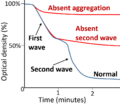
This graph shows how platelets clump together over time.

See also
 In Spanish: Plaqueta para niños
