
Volcan de Toluca pocket gopher facts for kids
Quick facts for kids Volcan de Toluca pocket gopher |
|
|---|---|
| Conservation status | |
Scientific classification  |
|
| Kingdom: | Animalia |
| Phylum: | Chordata |
| Class: | Mammalia |
| Order: | Rodentia |
| Superfamily: | Geomyoidea |
| Family: | Geomyidae |
| Genus: | Cratogeomys |
| Species: |
C. planiceps
|
| Binomial name | |
| Cratogeomys planiceps Merriam, 1895
|
|
| Script error: The function "autoWithCaption" does not exist. | |
Script error: No such module "Check for conflicting parameters".
The Volcan de Toluca pocket gopher (Cratogeomys planiceps) is a small animal that lives underground. It is also called the flathead pocket gopher or Nevado de Toluca pocket gopher. This type of pocket gopher is found only in south-central Mexico. It lives in high places, from about 2,500 to 3,500 meters above sea level. A scientist named Clinton Hart Merriam first described this gopher in 1895.
Contents
What Does It Look Like?
Male Volcan de Toluca pocket gophers are usually between 23.5 and 28 centimeters long. Females are a bit smaller, measuring about 21.5 to 25 centimeters long. Their tails are about 7.5 to 11 centimeters long. Both male and female gophers weigh between 400 and 625 grams. Males are generally heavier, averaging 625 grams, while females can reach up to 600 grams. This difference in size between males and females is called sexual dimorphism. These gophers have dark brown-red fur with a lighter brown color on top. Their stomach area is a buff, or yellowish-tan, color.
What Does It Eat?
The Volcan de Toluca pocket gopher mainly eats tubers and roots from plants. Sometimes, it also eats other parts of plants. These gophers dig special underground rooms to store their food. This helps them save food for later, especially when food is hard to find.
Where Does It Live?
The Volcan de Toluca pocket gopher lives only in the areas around the Nevado de Toluca volcano in Mexico. It prefers the northern slopes of the volcano. Its home is in pine-oak forests and forests with pine, fir, and spruce trees. These forests are found at high elevations, from 2,500 to 3,500 meters.
These gophers build tunnels in open grassy areas. Many gophers might live in the same area, but they keep some distance from each other. Sometimes, groups of these gophers dig their tunnels in agricultural lands, which are farms. When they do this, they can be seen as "pests" because their tunnels can affect human farms and buildings.
How Is It Classified?
For a while, the Volcan de Toluca pocket gopher was thought to be a type of Cratogeomys tylorhinus. That was in 2005. But now, Cratogeomys tylorhinus is known as the Smoky pocket gopher (Cratogeomys fumosus). Scientists later found that the Volcan de Toluca pocket gopher is very different from the Smoky pocket gopher in its genes. Because of these genetic differences, it is now considered its own unique species.
Is It Safe?
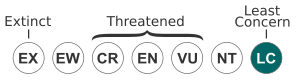
The Volcan de Toluca pocket gopher is listed as "Least Concern" by the IUCN Red List. This means that its population is stable, and it is not currently facing major dangers. There are no big threats to this species right now.
However, some minor threats could affect them. These include wildfires, people clearing land for farms, and humans trying to remove them as pests. Hunting and drought (very dry weather) could also be small problems. These minor threats have not been fully proven to harm the gophers much, but they are common issues for animals in this region.
