
Women in classical Athens facts for kids

The lives of women in classical Athens were very different from the lives of women today. Ancient Athens was a famous city in Classical Greece. It is well known for inventing an early form of democracy, creating amazing marble temples, and staging famous plays. However, only free adult men held full political power in this society. Free Athenian girls and women had separate roles that focused mainly on the home and religious festivals.
Historians learn about Athenian women by studying archaeological discoveries like decorated pottery, marble statues, and old inscriptions carved on stone. They also read ancient writing such as theatrical plays and courtroom speeches. These records show that even though women did not vote or run the government, they were essential to the survival of the city. They managed busy households, made clothing, cared for families, and led important religious ceremonies honoring the gods.
Contents
How Historians Uncover the Past
Learning about people who lived over two thousand years ago can be like solving a giant puzzle. Historians who study ancient Greece examine many different types of evidence left behind.
Ancient Writing by Male Authors
Most written stories, poems, and speeches that survived from ancient Athens were written by men. Ancient historians like Thucydides wrote about wars, while philosophers like Aristotle discussed laws and society. Playwrights wrote famous drama, including tragedy and funny comedy. Courtroom speeches by speechwriters like Demosthenes and Lysias talked about family disputes and property. Because ancient Athenian women did not leave behind books describing their daily thoughts, modern scholars must read these ancient texts very carefully.
Clues from Archaeological Discoveries
Archaeologists dig up physical objects that reveal how ordinary people lived. Beautiful painted vases made of pottery show lively pictures of women spinning wool, celebrating weddings, and attending festivals. Stone carvings called stelae show family scenes and memorials. Inscriptions carved into slabs of stone, known as epigraphy, provide official records of priestesses and sacred temple funds. Scholars also study small clay figurines and toys that belonged to children.
Modern Studies of Ancient Women
During the twentieth century, historians began asking new questions about everyday life in the ancient world. In the 1970s, researchers like Sarah B. Pomeroy wrote important books showing that ancient women played vital roles in their communities. Today, historians around the world continue to study how women, children, and families shaped the ancient world.
Growing Up as a Girl in Athens
Childhood was a special time of learning and play, but it was also a time when girls prepared for their future responsibilities as household leaders.
Toys and Games in the Ancient Nursery

Athenian children loved having fun just like children do today. Archaeological excavations have uncovered many types of ancient toys. Children played with clay dolls that sometimes had moving arms and legs attached by strings. They also enjoyed wooden spinning tops, rolling hoops, and seesaws in their courtyards.
One popular game was playing with knucklebones, which were smoothed animal bones used like modern dice or jacks. Children tossed them in the air and caught them on the back of their hands. A famous carved stone monument for a five-year-old girl named Plangon shows her holding her favorite doll, with a set of knucklebones hanging on the wall nearby.
Learning at Home from Mothers
Boys from wealthy families went to private schools where they learned reading, writing, poetry, mathematics, and athletics. Girls, however, did not attend formal schools. Instead, their mothers, grandmothers, and nursemaids taught them at home.
Girls learned practical skills needed to manage a large household. They practiced carding raw wool, spinning yarn with a spindle, and weaving intricate cloth on large upright looms. They learned how to cook meals, bake bread, store olive oil and grain safely, and use herbal remedies to care for sick relatives. Some vase paintings show young women holding scrolls, which suggests that at least some girls also learned how to read, write, and count.
Child Rites of Passage
When a baby was born, the family hung an olive branch over the front door for a boy or a strip of wool for a girl. On the tenth day after birth, the family held a welcoming celebration called the dekate, where the baby received an official name.
Religious ceremonies marked a girl's journey toward growing up. Young girls took part in special festivals dedicated to Artemis, the goddess of wild nature, hunting, and young people. At a sanctuary in Brauron, young girls performed dances honoring Artemis to ask for protection as they grew into adulthood. When a girl was ready to marry, she dedicated her childhood toys, such as dolls and balls, to the goddess to show that her childhood had ended.
Family Life and the Athenian Home
The family was the foundation of the Athenian community. The home was called an oikos, which included the house, the family members, their property, and household servants.
Arranged Marriages and Dowries
In classical Athens, marriages were arranged by parents rather than by the young people themselves. A girl usually married around the age of fourteen or fifteen, while her husband was often around thirty years old. The bride's father or male guardian, called a kurios, selected a suitable husband from a respected family.
The bride's family provided a gift of money and goods known as a dowry. This money helped support the young woman in her new home. If a marriage ended in divorce, the husband had to return the entire dowry to the woman's family so she could be cared for. Wedding celebrations lasted three days and included feast days, ritual baths with water carried in a special vase called a loutrophoros, and a torchlit parade to the groom's house.
Managing the Household
Once married, the woman became the manager of the home. Running an ancient house took hard work, careful planning, and strong organizational skills.
The mistress of the house oversaw the storage of harvests, including dried figs, wine, grain, and olive oil. She budgeted family resources to make sure supplies lasted through the winter. She assigned daily chores to household helpers and supervised the preparation of all meals.
Making cloth was one of her most important jobs. Clothes were not bought in department stores; families made their own tunics and cloaks out of sheep wool or linen. Athenian women took great pride in their weaving, producing patterned fabrics that kept their families warm.
Inside the Ancient House
Athenian houses were built around an open central courtyard that let in sunlight and fresh air. Thick walls made of sun-dried mud bricks faced the street, with few windows on the ground floor to keep out street noise and dust.
The house had different areas for different activities. An entertainment room called the andron was where the father hosted dinner parties for guests. Other areas, sometimes called the gynaeceum, were used by women and children for spinning wool, sewing, and caring for young children. These private rooms were safe, quiet spaces away from the busy street outside.
Stepping Outdoors and Daily Realities

Writers in ancient Athens often claimed that respectable women should spend most of their time inside the home. However, in daily life, complete seclusion was only possible for the richest families who owned many helpers.
Most women needed to leave the house regularly for essential chores. Homes did not have running water, so women and girls carried heavy clay hydria jugs to public fountain houses to fetch fresh spring water every morning. The fountain house became a friendly meeting place where neighbors chatted and shared news. Women also visited nearby markets, helped relatives during illnesses, and attended neighborhood celebrations.
Legal Status and Civil Society
The laws of ancient Athens treated men and women quite differently. While Athens was famous for its democratic voting system, that system was open only to adult male citizens.
Laws and Guardianship
Under Athenian law, every woman had a legal guardian called a kyrios. When she was a child, her father was her guardian; when she married, her husband became her guardian. The guardian represented the woman in official legal contracts and handled lawsuits in court.
Women were protected by laws regarding their dowries and inheritances, but they could not buy large pieces of land or sign business contracts worth more than a small amount of grain called a medimnos. However, women still found ways to manage family funds and protect their children's futures.
Citizenship and Pericles' Law
Even though women could not vote in the citizen Assembly, they held a special civic status. In 451 BC, the famous statesman Pericles introduced a major new citizenship law. Under this law, a child could only be an Athenian citizen if both the mother and the father were born to Athenian families.
This made Athenian women extremely important to the city's future. Without an Athenian mother, a child could not enjoy the privileges of citizenship, such as owning land in Athens or participating in city decisions.
Resident Foreigners: Metic Women
Athens was a thriving port city that welcomed many foreign residents, who were called metics. Metic women moved to Athens from other Greek cities or Mediterranean regions.
Metic women paid a small yearly tax to live in Athens. Unlike citizen women, metic women had the legal right to run businesses and represent themselves in court for certain business transactions. Many metic families became successful craftspeople, traders, and shopkeepers.
Women in the Economy
While wealthy families preferred women to work strictly within the home, many Athenian women worked outside to earn a living.
Busy Markets and Small Businesses
The bustling central market, called the agora, was filled with women selling useful goods. Athenian law protected market sellers and forbade people from teasing workers about their trades.
Women worked as market traders selling fresh vegetables, fruit, garlic, bread, ribbons, and perfume. Some operated food stalls feeding travelers and port workers. Others ran small workshops producing pottery, leather goods, or woven blankets.
Specialized Occupations
Women took on many specialized jobs throughout the city:
- Midwives helped mothers deliver newborn babies safely.
- Nursemaids cared for young infants in busy households.
- Wool-workers and spinners prepared yarn for textile shops.
- Laundresses washed heavy woolen cloaks and linens using natural cleaning agents.
- Potters and painters helped shape and decorate ceramic dishes in the artisan quarter.
Religion and Festivals

Religion was the one area of public life where women held immense authority, respect, and freedom. Women played central roles in maintaining the favor of the gods, which the Athenians believed kept their city safe.
The Cult of Athena Polias
Athena, the goddess of wisdom, warfare, and craft, was the divine patron of the city. Her most important priestess was the Priestess of Athena Polias, who lived on the famous Acropolis.
The Priestess of Athena Polias was one of the most respected public figures in Athens. She had a permanent seat of honor at the theater, worked closely with city leaders, and presided over major civic ceremonies. In times of crisis, the entire city listened to her advice.
The Panathenaic Festival
Every year, Athens celebrated the Panathenaea to honor Athena's birthday. Every four years, they held an even larger celebration called the Great Panathenaea.
A grand procession marched across the city up to the Acropolis. Young unmarried women from noble families, known as basket-bearers or kanephoroi, led the parade carrying gold and silver baskets of sacred offerings. Behind them marched citizens, musicians, and soldiers.
For months before the festival, a select group of women and girls weaved a magnificent woolen robe called a peplos. The fabric was decorated with mythological battles showing Athena and the Olympian gods defeating mythical giants. During the festival, this sacred robe was presented to Athena's statue.
Festivals Celebrated Only by Women
Several major religious festivals were reserved exclusively for women. Men were not allowed to attend or watch these secret rituals.
The most famous was the Thesmophoria, held every autumn in honor of Demeter, the goddess of agriculture and grain harvests. Married citizen women left their homes for three days and camped on a hill near the city center. They performed ancient agricultural ceremonies to ensure good crops for the coming year.
Another unique festival was the Arrhephoria. Two young girls between the ages of seven and eleven lived on the Acropolis for a year serving Athena. During the festival night, they carried mysterious covered baskets down a hidden underground stairway to an ancient sanctuary near the grove of Aphrodite, returning with secret ritual objects.
Honoring Family Ancestors

Women were also in charge of private family ceremonies and memorials. When a family member died, women prepared the body for burial, washed it with warm water, dressed it in clean white robes, and sang mournful funeral songs.
Long after the funeral, women returned regularly to family graves to honor their ancestors. They brought fresh flowers, tied colorful woolen ribbons around the stone markers, and poured out sweet offerings of honey, milk, and fragrant olive oil from slender jars called lekythoi.
Images for kids
-

Modern writers and thinkers helped encourage new historical research into the lives of ancient women.
-
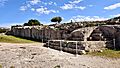
The stone speaker's platform on the Pnyx, where male citizens met to vote in the democratic Assembly.
-
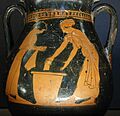
An ancient painted vase showing two women working together to wash clothing.
-
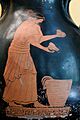
An ancient vase painting showing a market vendor selling goods.


Related Pages
- Classical Greece
- Ancient Greek religion
- Parthenon Frieze
- Women in ancient Sparta
