
Alpine, Texas facts for kids
Quick facts for kids
Alpine, Texas
|
|
|---|---|
| Nickname(s):
The Heart of Big Bend
|
|

 Alpine, Texas
Location in Texas

Alpine, Texas
Location in the United States
|
|
| Country | United States |
| State | Texas |
| County | Brewster |
| Area | |
| • Total | 4.80 sq mi (12.44 km2) |
| • Land | 4.80 sq mi (12.43 km2) |
| • Water | 0.00 sq mi (0.00 km2) |
| Elevation | 4,462 ft (1,360 m) |
| Population
(2020)
|
|
| • Total | 6,035 |
| • Density | 1,245.99/sq mi (481.09/km2) |
| Time zone | UTC-06:00 |
| • Summer (DST) | UTC-05:00 |
| ZIP codes |
79830-79832
|
| Area code(s) | 432 |
Alpine is an exciting desert mountain city located in the western region of the state of Texas. It serves proudly as the official county seat of Brewster County. According to the official count from the 2020 census, Alpine was home to 6,035 friendly residents. The community rests high up on a scenic mountain plateau at a tall elevation of 4,462 feet (1,360 m). Beautiful mountain peaks tower nearby, reaching heights of more than 1 mile (1.6 km) straight up into the open blue sky. Many people warmly describe the welcoming community as "The Heart of Big Bend" because it provides essential services across the region.
The bustling mountain hub serves a giant rural neighborhood covering over 12,000 square miles across deep West Texas. It connects Brewster County with neighboring Presidio County and scenic Jeff Davis County. Students and families often head into town to visit Sul Ross State University, modern health centers, and colorful grocery stores. With great mountain views, starry night skies, and rich Western traditions, it offers visitors a wonderful look at desert living.
Contents
History of the Texas Frontier Hub
Long before modern houses stood on the plain, the region served as a seasonal camping area for working cattlemen. Between 1878 and 1882, early cowboys tended open herds near bubbling freshwater springs found deep within the desert grasslands. In the spring of 1882, hardworking crews arrived to construct a vital route for the Southern Pacific Railroad. The workers pitched sturdy canvas tents beside the tracks, forming a temporary community that was originally called Osborne. The railway needed freshwater supplies for steam locomotives, prompting leaders to negotiate with brothers Daniel and Thomas Murphy.
In exchange for regular spring water rights, the railroad agreed to name the newly platted village Murphyville. In late 1883, the Murphy family officially recorded the town map with the clerk of neighboring Presidio County. Local families soon realized they wanted a name that described the towering peaks framing their beautiful high-altitude home. The citizens signed an official petition, and on February 3, 1888, the town officially changed its name to Alpine. At that time, Alpine featured a dozen cozy homes, a livery stable, a butcher shop, and a small drugstore.
The town grew quite slowly until educational leaders chose the high valley for an exciting new college campus. In 1920, the state established Sul Ross State Normal College, which later blossomed into Sul Ross State University. During the 1930s and 1940s, outdoor enthusiasts arrived in huge numbers to explore newly established Big Bend National Park. By 1927, the thriving mountain town counted 3,000 residents, reaching more than 5,200 people by the 1950 census. In 1995, the ground shook during the historic Marathon earthquake, with shaking centered very close to town.
Historic architecture continues to decorate the wide downtown avenues, giving visitors a glimpse into an earlier desert boomtown era. The grand Holland Hotel was built during a prosperous period of regional mining for valuable mercury ore. Famous regional architect Henry Trost carefully designed the hotel, crafting strong brick arches and elegant, welcoming interior courtyards. Today, family-run craft stores, friendly bookstores, and tasty cafes occupy those early twentieth-century storefronts, keeping the town center lively.
Geography and Desert Landscapes
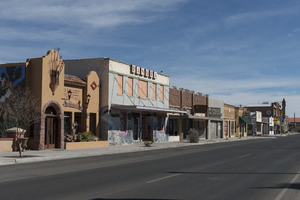
Alpine sits on a high, grassy plateau surrounded by vast plains within the majestic, rugged Chihuahua Desert. High up to the north, travelers can see the jagged peaks of the pine-forested Davis Mountains. Looking south, travelers spot the massive cliffs and volcanic slopes of the scenic and wild Chisos Mountains. Ancient volcanic eruptions millions of years ago left remarkable dark rock layers northwest of town for geologists to study. Wind and rain have worn away soft stone layers over time, uncovering ancient limestone formations beneath towering bluffs.
Just northeast of the original railroad district, a rocky hill rises, which longtime local families call Bollinger Ridge. The ridge was named after an early twentieth-century ranching family who tended herds along the steep hillside. Geographers at the United States Census Bureau measure the city at an area of 4.7 square miles (12.1 km2), consisting entirely of land. Thanks to its mile-high setting, Alpine avoids the extreme baking heat found down in lower desert valleys. Cool mountain breezes glide down across the valley floor in the evening, providing pleasant, starry desert nights.
High-Desert Climate Patterns
According to the famous Köppen climate classification system, Alpine experiences a dry and sunny semiarid climate. Winter afternoons usually stay pleasantly mild, though nighttime temperatures frequently drop right down below freezing under cloudless skies. Spring brings crisp desert sunshine, blooming yellow wildflowers, and windy afternoons across the mountain passes, followed by warm summers. Late summer brings the North American monsoon season, delivering dramatic afternoon thunderstorms that cool off the desert plains. Winter occasionally brings light dustings of powdery snow that paint the surrounding volcanic mountains in brilliant white coats.
| Climate data for Alpine, Texas (Mar 1, 1900–Mar 31, 2013) | |||||||||||||
|---|---|---|---|---|---|---|---|---|---|---|---|---|---|
| Month | Jan | Feb | Mar | Apr | May | Jun | Jul | Aug | Sep | Oct | Nov | Dec | Year |
| Record high °F (°C) | 81 (27) |
89 (32) |
91 (33) |
99 (37) |
102 (39) |
107 (42) |
106 (41) |
103 (39) |
101 (38) |
97 (36) |
87 (31) |
83 (28) |
107 (42) |
| Mean daily maximum °F (°C) | 60.5 (15.8) |
64.5 (18.1) |
70.9 (21.6) |
78.7 (25.9) |
85.4 (29.7) |
90.8 (32.7) |
89.4 (31.9) |
88.5 (31.4) |
83.8 (28.8) |
77.8 (25.4) |
67.8 (19.9) |
61.5 (16.4) |
76.6 (24.8) |
| Daily mean °F (°C) | 46.4 (8.0) |
49.8 (9.9) |
55.5 (13.1) |
63.2 (17.3) |
70.5 (21.4) |
76.8 (24.9) |
76.7 (24.8) |
75.8 (24.3) |
70.9 (21.6) |
63.6 (17.6) |
53.5 (11.9) |
47.7 (8.7) |
62.5 (16.9) |
| Mean daily minimum °F (°C) | 32.7 (0.4) |
35.2 (1.8) |
40.1 (4.5) |
47.5 (8.6) |
55.5 (13.1) |
62.7 (17.1) |
64.0 (17.8) |
63.1 (17.3) |
58.0 (14.4) |
49.5 (9.7) |
39.3 (4.1) |
33.9 (1.1) |
48.5 (9.2) |
| Record low °F (°C) | 0 (−18) |
−2 (−19) |
10 (−12) |
20 (−7) |
29 (−2) |
32 (0) |
52 (11) |
49 (9) |
36 (2) |
21 (−6) |
−2 (−19) |
−3 (−19) |
−3 (−19) |
| Average precipitation inches (mm) | 0.53 (13) |
0.48 (12) |
0.36 (9.1) |
0.50 (13) |
1.24 (31) |
2.30 (58) |
2.75 (70) |
2.65 (67) |
2.57 (65) |
1.30 (33) |
0.51 (13) |
0.60 (15) |
15.80 (401) |
| Average snowfall inches (cm) | 1.3 (3.3) |
0.5 (1.3) |
0.3 (0.76) |
0 (0) |
0 (0) |
0 (0) |
0 (0) |
0 (0) |
0 (0) |
0.1 (0.25) |
0.4 (1.0) |
0.7 (1.8) |
3.1 (7.9) |
| Average precipitation days (≥ 0.001 in) | 3.41 | 2.92 | 2.44 | 2.52 | 5.20 | 7.48 | 8.46 | 8.38 | 7.86 | 4.74 | 2.99 | 3.14 | 60.29 |
| Source: Western Regional Climate Center, Desert Research Institute | |||||||||||||
Community Demographics and People
| Historical population | |||
|---|---|---|---|
| Census | Pop. | %± | |
| 1920 | 931 | — | |
| 1930 | 3,495 | 275.4% | |
| 1940 | 3,866 | 10.6% | |
| 1950 | 5,261 | 36.1% | |
| 1960 | 4,740 | −9.9% | |
| 1970 | 5,971 | 26.0% | |
| 1980 | 5,465 | −8.5% | |
| 1990 | 5,622 | 2.9% | |
| 2000 | 5,786 | 2.9% | |
| 2010 | 5,905 | 2.1% | |
| 2020 | 6,035 | 2.2% | |
| 1850-2000, 2010 | |||
The people who live in Alpine come from many exciting cultural backgrounds, creating a tight-knit and welcoming community. According to official data gathered during the 2020 census, Alpine contained 6,035 residents living across 2,586 households. The median age within the community stood at 37.4 years old. Children under the age of 18 made up 18.5 percent of the total population, while senior citizens aged 65 and older accounted for 19.2 percent. The count showed that 97.7 percent of the residents lived directly within the main urban town boundary.
The population includes diverse heritages, bringing together Western cowboy traditions and deep Mexican-American cultural roots. In the 2020 count, White residents made up 62.9 percent of the town's population. Around 48.7 percent of citizens identified as Hispanic or Latino from various racial groups. Additionally, Black or African American neighbors formed 2.9 percent of the population, and Asian residents accounted for 1.3 percent. American Indian and Alaska Native residents made up 1.7 percent, while Native Hawaiian and Other Pacific Islander citizens totaled 0.1 percent. Around 21.7 percent of residents identified as Two or more races.
Earlier records from the 2000 census counted 5,786 citizens living in 2,429 neighborhood households throughout the city. At that time, 28.7 percent of all households had school-aged children under the age of 18 sharing their home. The average household size was 2.34 people, and the average family size was calculated at 3.04 members. Local workers held jobs in public education, cattle ranching, mountain tourism, park conservation, and county government. City leaders and dedicated charity groups constantly work together to improve public services and support every family in town.
Arts, Culture, and Desert Landmarks
.jpg)
Alpine serves as a cultural hub filled with historic art galleries, traditional music, and exciting regional exhibits. The celebrated Museum of the Big Bend, located on the university campus, teaches visitors all about regional desert history. Guests explore displays containing ancient Native American artifacts, dinosaur fossils, rock minerals, and colorful Western paintings. The museum also shares amazing true stories about frontier stagecoaches, early railroad workers, and legendary Buffalo soldiers. The museum building itself was hand-built in 1937 out of rugged local stone during historic public recovery programs.
Historic architecture stands proudly all throughout the center of town, highlighting the rich heritage of West Texas builders. The handsome Brewster County Courthouse was constructed in 1887 and is protected on the National Register of Historic Places. Right next door stands the old brick county jail, featuring a fortified rooftop parapet designed like a medieval stone castle. Families often enjoy walking through downtown to view classic stone buildings, historic iron lamps, and tall shady trees.
Exciting Community Festivals
- The Texas Cowboy Poetry Gathering takes place every February, celebrating Western cowboy life through storytelling, songs, and poems.
- Trappings of Texas happens every April at the Museum of the Big Bend, displaying handmade leather gear, saddles, and Western paintings.
- The Big Bend Gem and Mineral Show brings rock hounds together every April to explore glittering crystals and rare desert agates.
- Cinco de Mayo fills Kokernot Field in May with marching bands, colorful parades, homemade enchiladas, and exciting cultural dancing.
- Viva Big Bend arrives each July, hosting over fifty talented musical bands performing across Alpine, Marathon, and Marfa.
- The Fourth of July celebration features bright holiday fireworks, community picnics, neighborhood games, and festive parade floats.
- The Big Bend Ranch Rodeo in August allows working cowboys to show off their skills in roping and cattle handling.
- ARTWALK takes place each November, filling sidewalks with bright chalk art, live street music, and fun art displays.
- The Parade of Lights brings glowing holiday cheer through the downtown streets every December with brightly illuminated trucks.
Public Art and the Town Library
Visitors walking through the downtown area will notice colorful wall murals celebrating the area's rich history and desert wildlife. Inside the historic former post office building on West E Street, visitors can admire an extraordinary public mural painted in 1940. Created by talented Spanish painter Jose Moya del Pino, the painting shows three people relaxing outdoors while reading their favorite books and newspapers. In the background of the mural, viewers can spot the famous Twin Sisters peaks and the red brick university towers. The artwork reminds everyone how postal delivery historically brought important knowledge and fun stories to distant ranch families.
The Alpine Public Library offers young readers an amazing place to discover fun books, work on school projects, and use computers. Founded by local volunteers in 1947, the library is run as an independent educational facility supported by community donations. In 2012, the library opened a large building containing modern reading corners, homework tables, and fun educational play areas. Friendly librarians host weekly story hours, summer reading programs, and exciting science workshops for students of all ages.
Exciting Mountain Sports

Alpine has a long and passionate sports history, especially when it comes to America's favorite pastime, baseball. The city is the proud home of the Alpine Cowboys, an independent baseball team playing in the competitive Pecos League. The team plays thrilling home games under bright field lights at historic Kokernot Field, often called the "Jewel of the Desert." Built with beautiful fieldstone and ironwork, the stadium resembles legendary big-league ballparks of the 1940s. Families gather on warm summer evenings to eat hot dogs, cheer for home runs, and support their favorite hometown players.
Outdoor recreation is also very popular among residents and visitors because of the nearby mountain peaks and valleys. Cyclists travel from all across the world in October to challenge themselves in the No Country For Old Men road race. Hikers love exploring nature trails winding up nearby hillsides to find stunning scenic overlooks across the valley floor. Students also participate in exciting youth sports leagues, including soccer, basketball, track and field, and tennis throughout the year.
Education and Schools

Alpine provides wonderful educational opportunities for students ranging from curious kindergarteners up to ambitious college scholars. The town's biggest school is Sul Ross State University, named in honor of former governor Lawrence Sullivan Ross. Sul Ross was a nineteenth-century leader who also served as an early president of Texas A&M. Today, the campus belongs to the respected Texas State University System, welcoming roughly two thousand college students every year. Sul Ross is famous for founding the National Intercollegiate Rodeo Association back in 1949, and its student rodeo team regularly wins championships.
Younger kids receive an excellent education within the caring classrooms of the Alpine Independent School District. More than one thousand local children attend Alpine Elementary School, Alpine Middle School, and Alpine High School. High school sports teams, proudly called the Alpine Bucks, compete enthusiastically in football, volleyball, basketball, and track. Families also have great private schooling choices, including the hands-on Alpine Montessori School and the caring Alpine Christian School. For two-year degree programs and vocational training, the community partners closely with the nearby Odessa College District.
Local Media and Entertainment
Keeping up with community news is easy thanks to several dedicated local media outlets serving the desert valley. The community reads The Alpine Avalanche, a historic newspaper reporting on local school sports, city council decisions, and regional events. Sul Ross State University students also produce an exciting campus newspaper titled the Skyline to share student accomplishments. Over the airwaves, KVLF-AM has broadcast country music, weather alerts, and local news across Brewster County for decades. Listeners can also pick up regional radio broadcasts sent from Fort Stockton and nearby mountain towers.
The striking beauty of the local mountains has attracted Hollywood movie producers looking for dramatic desert filming locations. The award-winning 2014 movie Boyhood filmed several memorable scenes in and around the streets of Alpine and the university campus. Directors love the town because the bright desert sunlight, vintage buildings, and sweeping mountain backgrounds look incredible on screen.
Transportation and Local Services
.jpg)
Alpine remains an important transportation hub connecting small desert communities across West Texas with big cities across America. Major roadways passing straight through town include U.S. Route 90 and scenic U.S. Route 67. Drivers heading north toward the Davis Mountains or south toward Big Bend take Texas State Highway 118. Another important roadway, Texas State Highway 223, helps local vehicles easily navigate around the bustling south side of town.
Rail travel continues to play a major everyday role in keeping the mountain community linked with the rest of the country. Long-distance passenger trains operated by Amtrak, including the famous Sunset Limited, stop three times each week at the Alpine station. The historic railway track was once part of the famous Sunset Line owned by the Southern Pacific Railroad. Today, the giant Union Pacific freight railroad uses Alpine as a major crew change station, keeping tracks active day and night. In earlier decades, trains from the Kansas City, Mexico and Orient Railway also traveled through the area.
Travelers who need to catch long-distance flights can take bus connections from regional transport providers like All Aboard America!. These bus lines link local riders directly to major commercial terminals at Midland International Air and Space Port. For private pilots and medical helicopters, the city operates the convenient Alpine-Casparis Municipal Airport northwest of town. If anyone becomes sick or injured, the skilled medical staff at Big Bend Regional Medical Center provides emergency help and twenty-five patient beds.
Notable People
Many talented leaders, artists, athletes, and scientists have lived in or visited the mountain community of Alpine:
- Carl W. Bauer, dedicated public servant who served as a state senator in the state of Louisiana.
- John Coleman, famous weather expert who helped found the Weather Channel on cable television.
- Pete Gallego, respected attorney who served as a Texas state representative and member of the United States Congress.
- Joaquin Jackson, legendary officer with the Texas Rangers who later appeared in Western films.
- Fritz Kiersch, movie director who created thrilling feature films, including Children of the Corn and Tuff Turf.
- Amanda Marcotte, writer and journalist whose articles have appeared in publications like Slate and The Guardian.
- Eric O'Keefe, skilled author, magazine editor, and storyteller who writes about Western lifestyle and history.
- Bake Turner, talented professional football player who caught passes as a wide receiver in the National Football League.
- Case Keenum, skilled quarterback who played football for Sul Ross coaches before starring in the National Football League.
See also
 In Spanish: Alpine (Texas) para niños
