
Automat facts for kids


An automat is a special type of fast-food restaurant where food and drinks are served through coin-operated or digital vending machines. In a classic automat, customers did not order food from a waiter or a cashier at a counter. Instead, they walked up to a wall filled with small glass compartments, dropped coins into a slot, turned a knob, and lifted a little window to take out their freshly prepared meal.
Behind the wall of machines, a busy team of cooks and kitchen workers prepared the meals. As soon as a customer took an item, a worker in the back quickly loaded a fresh dish into the empty compartment. Automats were famous for being fast, affordable, clean, and fascinating to visit. The world's first automat, named Quisisana, opened in Berlin, Germany, in 1895. During the twentieth century, automats became a major part of city life, especially in New York City and Philadelphia.
Contents
What Is an Automat and How Did It Work?
The Layout of an Automat Restaurant
Traditional automats were designed to handle large crowds of hungry people quickly and efficiently. When visitors walked inside, they entered a spacious dining hall usually decorated with shiny chrome, fancy mirrors, and polished marble counters.
The most important feature of the restaurant was the vending wall. This wall contained hundreds of small, glass-fronted boxes arranged in neat rows and columns. Each box held a specific food item, such as a slice of pie, a sandwich, a bowl of soup, a hot casserole, or a fresh salad.
Below the glass doors were metal coin slots and turn-knobs. Above each door, a small sign listed the name of the dish and the number of coins needed to unlock it.
Step-by-Step Guide to Ordering Food
Ordering a meal at a traditional automat was simple, fun, and completely self-guided:
- First, diners visited a change booth near the entrance to exchange large bills for coins, usually nickels.
- Next, customers walked along the vending wall to view the freshly prepared dishes through the glass windows.
- Once they chose a meal, they inserted the exact number of coins into the slot next to the compartment.
- Turning a knob or turning a handle unlocked the small window latch.
- The customer lifted the glass window, pulled out their food plate, and carried it to an open table.
- For hot drinks like coffee or hot chocolate, customers placed a cup under a metal spout, dropped a nickel in the slot, and watched the liquid pour out automatically from shiny animal-shaped faucets.
Behind the scenes, unseen kitchen staff worked constantly. Whenever a customer opened a door and removed a plate, a kitchen worker on the other side saw the empty compartment, placed a fresh plate inside, closed the back door, and reset the coin mechanism for the next customer.
The Early History of Automats in Europe
The Invention of the Food Machine in Germany

The technology for automatic restaurants began in Germany during the late nineteenth century. An inventor named Max Sielaff teamed up with chocolate manufacturer Ludwig Stollwerck and engineer Theodor Bergmann to create patented vending mechanisms.
In 1895, they opened the first automated restaurant, called Quisisana, in Berlin. The name came from an Italian phrase meaning "here one heals" or "place of health." The restaurant was an instant hit with city residents because it provided quick snacks and drinks without any waiting.
Following the success in Berlin, Quisisana machines spread to other European cities. In 1904, a popular automat opened in Breslau (which is now the city of Wrocław in Poland). People loved the modern feel of putting a coin into a machine and receiving a hot sausage or a cold beverage in seconds.
Automats in the Netherlands


The automat concept became very popular in the Netherlands, where automated snack bars are known as an automatiek. Dutch automats focus mainly on quick, hot fried snacks and finger foods.
Some of the most popular items found in Dutch automats include:
- Kroketten: Deep-fried rolls filled with savory meat ragout covered in breadcrumbs.
- Frikandel: A long, skinless, deep-fried sausage served hot.
- Kaassoufflé: A crispy pastry pocket filled with melted cheese.
- Hamburgers and warm sandwiches.
The most famous chain of automatieks in the Netherlands is FEBO, which opened in Amsterdam in 1941. FEBO locations continue to operate across the country, serving snacks to commuters, students, and travelers day and night. Another well-known chain is Smullers, which operates automated snack bars inside major Dutch train stations.
The Golden Age of Automats in the United States
Horn & Hardart: American Automat Pioneers

The automat found its greatest success in the United States through a partnership between two businessmen: Joseph Horn and Frank Hardart. In 1900, Frank Hardart visited Europe and saw the Sielaff automatic food machines in action. He was fascinated by the speed and cleanliness of the system.
Horn & Hardart ordered patented vending machinery from Berlin and opened the first American automat on June 12, 1902, at 818 Chestnut Street in Philadelphia, Pennsylvania. It was an instant success.
In 1912, Horn & Hardart brought the concept to New York City, opening a giant automat in Times Square. Over the next several decades, the company built a massive network of restaurants across New York and Philadelphia, feeding hundreds of thousands of people every single day.
The Nickel Throwers: Masters of Change
Because early vending machines did not accept paper dollar bills, coins were essential. In every Horn & Hardart automat, a skilled employee known as a "nickel thrower" sat inside a marble change booth in the center of the dining room.
These workers, often women, became famous for their incredible speed and accuracy. A customer could drop a five-dollar bill or a silver dollar onto the marble counter, and with a single flick of the wrist, the cashier would slide a neat stack of nickels directly into the customer's hand without dropping a single coin. They could make change for thousands of diners per hour without using a calculator.
Popular Menu Items and Secret Recipes
Horn & Hardart automats were known for serving high-quality, freshly cooked comfort food at very low prices. The company ran giant central bakeries and kitchens that delivered fresh ingredients to restaurants every morning.
Some of the most famous automat dishes included:
- Freshly brewed drip coffee with cream
- Baked macaroni and cheese with a browned, bubbly top
- Slow-cooked beef pot pie topped with flaky pastry
- Salisbury steak with brown gravy and mashed potatoes
- Creamed spinach and baked beans
- Fresh pies, including apple, lemon meringue, and chocolate cream
- Rice pudding dusted with cinnamon and nutmeg
At its peak, Horn & Hardart served over 45 million cups of freshly brewed coffee each year. The coffee was brewed fresh every twenty minutes to make sure it never tasted bitter or stale.
A Melting Pot for City Life
During the 1920s, 1930s, and 1940s, automats became a cultural gathering place for all kinds of people. Because there were no waiters, customers did not need to leave a tip, making meals affordable for students, factory workers, immigrants, and office clerks.
At the same time, famous actors, musicians, and writers frequently visited automats. Celebrities like songwriter Irving Berlin, newspaper columnist Walter Winchell, and comedian Mel Brooks loved eating lunch alongside regular city residents. Playwright Neil Simon famously called the automat "the Maxim's of the disenfranchised," comparing the affordable self-service restaurant to one of the fanciest dining establishments in Paris.
Automats and Food Automation in Japan
Food Ticket Machines (Shokkenki)
Japan developed its own unique style of automated restaurant service. Many Japanese fast-casual restaurants use a device called a shokkenki (Japanese: 食券機), or food ticket machine.
Instead of ordering food directly from a cashier, diners follow this process:
- The customer selects their desired meal on a touch screen or push-button vending machine outside or near the restaurant door.
- They insert cash, a credit card, or a digital IC train card to pay for the meal.
- The machine prints a small paper ticket showing the order number and food items.
- The diner enters the restaurant, sits down at the counter, and hands the ticket to the chef.
- The kitchen prepares the dish immediately, allowing the restaurant to serve food quickly without handling money in the kitchen.
Conveyor Belt Sushi (Kaitenzushi)
Another famous Japanese innovation in automated dining is kaitenzushi, or conveyor belt sushi. Invented by Yoshiaki Shiraishi in 1958, these restaurants place plates of sushi on a moving mechanical conveyor track that winds past every table and counter seat.
Customers can pick any dish they like directly off the belt as it passes by. In modern kaitenzushi restaurants, diners can also order special dishes on a digital touch screen tablet at their table. A high-speed miniature train track then zips straight from the kitchen to deliver the exact dish to the customer's seat.
Automats on Passenger Trains
During the middle of the twentieth century, several railroad companies installed automat cars on long-distance passenger trains to provide fast, low-cost meals on the go.
British Rail
In the United Kingdom, the Great Western Railway planned to introduce vending buffet cars in 1945. After British railways were nationalized, an automat buffet car was officially introduced on the Cambrian Coast Express in 1962, allowing travelers to buy tea, sandwiches, and snacks during their journey.
American Railroads
In the United States, several major railroad lines replaced traditional, expensive dining cars with automated food cars:
- The Pennsylvania Railroad introduced automat cars between New York Penn Station and Washington Union Station in 1954.
- The Southern Pacific Railroad added automat buffet cars to famous trains like the Coast Daylight and the Sunset Limited in 1962.
- Amtrak converted four buffet cars into automats in 1985 for use on the Auto Train, which carried passengers and their personal cars between Virginia and Florida.
- The final automat car in regular American railroad service ran on Amtrak's Lake Country Limited in 2001.
Swiss Railways
In Switzerland, the Bodensee–Toggenburg railway introduced automat cars in 1987. These self-service railway cars offered hot drinks, pastries, and regional snacks to passengers traveling through scenic mountain routes.
Why Did the Classic Automats Disappear?
The Rise of Modern Fast-Food Chains
Starting in the 1950s and 1960s, fast-food chains like McDonald's and Burger King began expanding rapidly across North America. These restaurants offered drive-through windows, paper wrapping, and low prices that competed directly with traditional automats.
Unlike automats, which were usually built in dense downtown city centers, modern fast-food restaurants were built near highways and suburban neighborhoods where families with cars could easily visit.
Inflation and the Coin Problem
For decades, automat machines operated strictly on nickels, dimes, and quarters. A customer could buy a complete meal for less than a dollar.
However, during the 1970s and 1980s, economic inflation caused the cost of food, rent, and labor to rise significantly. As a result, dishes that once cost 10 cents began costing $1.50 or $2.00.
Because early vending machines did not have bill validators that could scan paper money, inserting 30 or 40 individual nickels to buy a hot lunch became frustrating and slow for diners.
Changing Urban Demographics and Tastes
During the late twentieth century, many city residents moved to suburban areas. Downtown lunch crowds changed, and many customers began looking for different types of foods, such as salads, international dishes, and customized sandwiches.
At the same time, maintaining antique mechanical vending walls became very expensive. Replacement parts were hard to find, and food quality began to drop. Horn & Hardart gradually closed its locations or converted them into standard fast-food franchises. The very last Horn & Hardart automat in New York City, located at 42nd Street and Third Avenue, closed its doors on April 9, 1991.
Modern Revivals and High-Tech Automats
The Return of Automated Food Lockers
Although classic mechanical automats disappeared, the idea of picking up fresh food from an automated compartment has returned in modern formats using microchips, mobile apps, and touchscreens.
- Bamn! (2006–2009): A retro-style automat opened in Manhattan's East Village, serving Dutch-style snacks, mini burgers, and dumplings using coin and card slots.
- Eatsa (2015–2019): A high-tech restaurant chain started in San Francisco where diners ordered quinoa bowls through an app. When the food was ready, it appeared inside a cubby with a transparent LCD screen door that lit up with the customer's name. The company later renamed itself Brightloom to build automation software for other restaurants.
- Automat Kitchen (2021–2022): Opened in Jersey City, New Jersey, this restaurant allowed guests to order freshly cooked gourmet dishes online and retrieve them from contactless smart lockers.
- Brooklyn Dumpling Shop: Founded in New York in 2021, this chain uses heated and chilled automated pickup lockers controlled by barcode scanners on customer phones, expanding to cities like Philadelphia.
Comparing Historic Automats with Modern Smart Lockers
| Feature | Historic Automat (1902–1990) | Modern Smart Locker Restaurant |
|---|---|---|
| Ordering Method | Browsing glass wall in person | Smartphone app or digital touchscreen |
| Payment Method | Nickels, dimes, and quarters | Credit cards, mobile payments, digital wallets |
| Display Screen | Simple metal labels and price tags | Transparent LCD or LED smart glass |
| Door Mechanism | Mechanical knob turned by customer | Automatic electronic sliding doors |
| Behind the Scenes | Large kitchen staff refilling slots | Robotic arms or human prep cooks |
Gallery
-
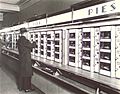
An automat operating on Eighth Avenue in Manhattan, New York City, in 1936.
-
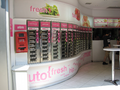
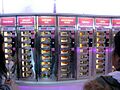
A modern retro-style automat restaurant in Manhattan's East Village, c. 2007.
-
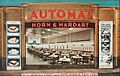
A Horn & Hardart automat dining hall at 1165 Sixth Avenue in New York City during the 1930s.
-
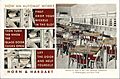
A 1930s postcard explaining how customers selected food from automat compartments.
-
The storefront of the Bamn! automat restaurant in New York City, 2006.
.jpg)


See also
- Automated convenience store
- Automated restaurant
- Automated retail
- Cafeteria
- Conveyor belt sushi
- Full-line vending
- Virtual restaurant
- The Automatde:Automatenrestaurant
