
Glyptostrobus pensilis facts for kids
Quick facts for kids Glyptostrobus pensilis |
|
|---|---|
 |
|
| A young Chinese swamp cypress tree | |
| Conservation status | |
Scientific classification  |
|
| Kingdom: | Plantae |
| Clade: | Tracheophytes |
| Division: | Pinophyta |
| Class: | Pinopsida |
| Order: | Pinales |
| Family: | Cupressaceae |
| Genus: | Glyptostrobus |
| Species: |
G. pensilis
|
| Binomial name | |
| Glyptostrobus pensilis (Staunton ex D.Don) K.Koch, 1873
|
|
| Script error: The function "autoWithCaption" does not exist. | |

Script error: No such module "Check for conflicting parameters".
Glyptostrobus pensilis, commonly known as the Chinese swamp cypress, is a very rare tree. In China, people call it 水松 (Shuǐ sōng), which means water pine. It is a special type of conifer in the cypress family, known as Cupressaceae. This amazing plant is the only living member left in its genus, Glyptostrobus. It is currently endangered and needs careful protection to survive.
Contents
What Does the Chinese Swamp Cypress Look Like?
The Chinese swamp cypress is a medium to large tree. It can grow up to 30 meters tall. Its trunk can become quite thick, often measuring up to 1 meter across.
The leaves are soft and delicate. They are deciduous, which means they fall off during cold autumn months. Most other cypress trees keep their needles all year round. The leaves grow in spiral shapes along the small twigs. They twist at the base so they spread out flat. These flat needles are usually 5 to 20 millimeters long. Up in the higher branches, the leaves look tiny and scale-like.
Cones and Reproduction
Like many cone-bearing plants, this tree reproduces by making cones. The female cones start out green and look like a small pear. As they ripen, they turn a warm yellow-brown color. Each cone is about 2 to 3 centimeters long.
When the cones dry out, their scales open up. They release tiny seeds into the wind. Each seed has a tiny wing that helps it glide through the air. These winged seeds are about 5 to 20 millimeters long. They can float on water until they find muddy soil to sprout.
Special Breathing Roots
This tree has an amazing superpower for living in wet areas. Normal roots would drown in muddy water because they need oxygen. The Chinese swamp cypress solves this problem with special structures.
It grows bumpy wooden bumps called 'cypress knees', or pneumatophores, above the soil. These knees stick up out of the mud and water. Scientists believe these wooden knees act like snorkels. They help take in air and move oxygen down to the deep roots. The related tree genus Taxodium makes similar breathing knees.
Where Does the Chinese Swamp Cypress Live?
The Chinese swamp cypress is native to the subtropical areas of southeastern China. Long ago, it grew wild from Fujian all the way to Yunnan. It also grows naturally in a few swampy spots in Central Vietnam. Small patches also grow in Laos, especially around the Nakai-Nam Theun region.
This tree loves very wet ground. It is naturally built to handle lots of moisture. You can find it growing along the edges of a river, or near a pond. It loves to stand directly in deep swamps. It can even thrive in standing water that is 60 centimeters deep.
Conservation and Why It Matters
Sadly, this amazing plant is nearly extinct in the wild today. For many years, people harvested the tree heavily. The tree makes scented wood that resists rot and decay. People cut down far too many trees to make buildings and furniture.
An ancient wild forest in the Pearl River delta was lost during historical battles. Over time, wild trees disappeared from China entirely. In Vietnam, only a few wild trees remain, and they rarely produce seeds. Luckily, scientists found a healthy group growing wild in central Laos.
Helping Farmers Prevent Erosion
Even though wild trees are rare, people plant them on purpose. Farmers place them along wet paddies where they grow rice. The thick roots hold onto the banks of the muddy fields. This stops soil erosion from washing useful farming land away into the water.
Protecting Trees in Botanical Gardens
Many people are working hard to protect this rare cypress from disappearing forever. Expert plant scientists care for these trees in botanical gardens worldwide.
Sometimes, people confuse this tree with its American relatives. Visitors once thought that four trees in Bank Hall Gardens in Lancashire, United Kingdom, were Chinese swamp cypresses. Scientists later checked them and found they were actually bald cypress trees, known as Taxodium distichum.
Remarkable Specimens Around the World
Some planted trees have grown to very large sizes in safe gardens. The largest cultivated specimen lives in the Christchurch Botanic Gardens in New Zealand. This giant tree is over 25 meters tall and more than 12 meters wide. It shows that with care, these trees can live long and healthy lives.
Gallery
-
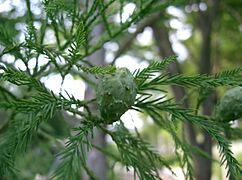
Unripe cone
-
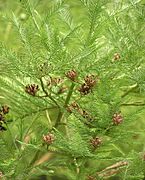
Ripe cones
-
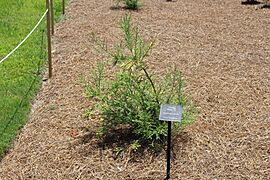
Seedling in the Coastal Georgia Botanical Gardens, US
-
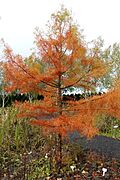
Young tree in the Oregon Garden in autumn; it is deciduous
-
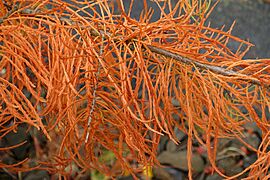
Close-up of autumn foliage
-
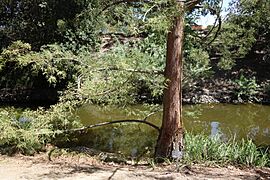
A wet environment
-
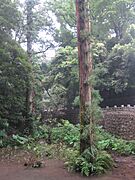
400- to 500-year-old trees in Nanhua Temple
-
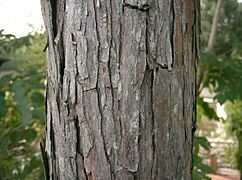
Bark of trunk


