
Kilim facts for kids

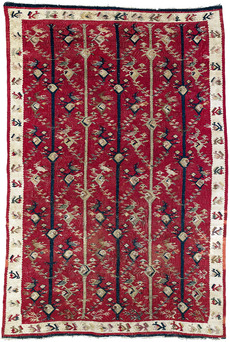
A kilim is a special kind of flat rug or carpet. It's made using a weaving method similar to tapestry. Kilims have been traditionally crafted in many countries, especially those that were once part of the ancient Persian Empire, like Iran and Turkey. You can also find them in the Balkans and other Turkic countries.
Kilims can be used just for decoration, making a room look beautiful. They can also serve a purpose, like being a prayer rug. Today, many people around the world enjoy having modern kilims as colorful floor coverings in their homes.
Contents
What is a Kilim?
Where Does the Word "Kilim" Come From?
The word kilim comes from the Persian language. In Persian, the word گلیم (pronounced gilīm) means 'mat', 'blanket', or 'floor covering'. This word is connected to an older Aramaic-Syriac word, גלימא (galīmā), which means the same thing. Both of these words were borrowed from ancient Greek, where κάλυμμα (kálymma) meant 'cover'. It came from the Greek verb καλύπτω (kalýptō), meaning 'to cover or conceal'.
A Look Back: The History of Kilims


Kilims have a very long history, just like other types of woven carpets. People have been making them for thousands of years! An explorer named Aurel Stein discovered some kilims in Hotan, China, that were made as far back as the fourth or fifth century CE. That's over 1,500 years ago!
It's rare to find very old kilims because they are not as strong as rugs with a thick pile. The pile helps protect the threads. The ancient kilims found by Stein were woven in a way that is almost exactly like how modern kilims are made today. They had narrow stripes with small geometric patterns in blue, green, yellow, and red.
How Kilims Are Woven

Kilims are made by tightly weaving two sets of threads together: the warp (vertical threads) and the weft (horizontal threads). This creates a flat surface without any fuzzy pile. This weaving style is called a tapestry weave. In a kilim, the horizontal weft threads are pulled very tightly. This makes them hide the vertical warp threads completely.

When the weaver reaches the edge of a color area, the weft yarn is turned back. If the edge of a color is a straight up-and-down line, a small gap, or "slit," forms where the two different colors meet. This is why most kilims are called "slit woven" textiles. Collectors love these slits because they make the designs look very sharp and clear, highlighting the geometric shapes. Other weaving methods can avoid these slits, but they often make the design look a bit softer or more blended.
The weft threads, which create the colorful patterns you see, are almost always made of wool. The hidden warp threads can be either wool or cotton. You usually only see the warp threads at the very ends of the kilim, where they form the fringe. This fringe is often tied in small bundles. This helps keep the weave from coming apart.
Secret Messages: Kilim Motifs and Their Meanings

Kilims are full of interesting symbols, called motifs, and each one has a special meaning! Weavers often used these motifs to express their hopes, fears, and wishes for their families. Here are a few examples:
- The elibelinde motif looks like a stylized female figure. It represents motherhood and new life.
- To protect their animals from wolves, weavers might use the wolf's mouth or wolf's foot motif (Turkish: Kurt ağzı, Kurt izi).
- For safety from a scorpion's sting, they might weave in the scorpion motif (Turkish: Akrep).
- Many motifs aim to protect the family from the evil eye (Turkish: Kem göz). This is a belief that a jealous look can bring bad luck. Symbols like a cross (Turkish: Haç), a hook (Turkish: Çengel), a human eye (Turkish: Göz), or an amulet (Turkish: Muska) can be used to ward it off. An amulet woven into a rug isn't just a picture; it's believed to actually offer protection.
- Other symbols represent new life, like the trousseau chest (Turkish: Sandıklı) or the fertility motif (Turkish: Bereket).
- The running water motif (Turkish: Su yolu) shows the importance of water.
- To symbolize a strong bond between family members or lovers, the fetter motif (Turkish: Bukaǧı) might be used.
- For good luck and happiness, you might see a bird (Turkish: Kuş) or a star (Turkish: Yıldız).
- The ancient symbol of yin and yang is sometimes used to represent love and coming together (Turkish: Aşk ve birleşim).
-
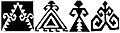
The "Hands-on-hips" female figure (Elibelinde), symbolizing motherhood and new life
-
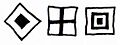
The Eye (Göz), used to protect against the evil eye
-
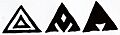
An Amulet (Muska), for protection and good luck
-
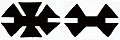
The Wolf's Mouth (Kurt Ağzı), meant to protect farm animals from wolves
-

The Scorpion (Akrep), for protection from its sting


Kilims in the Modern World

Kilims are often more affordable than rugs with a thick pile. Because of this, many people who start collecting carpets begin with kilims. For a long time, some people thought kilims were not as important as pile carpets. However, in recent years, kilims have become very popular collectibles. High-quality kilims can now be quite valuable.
Originally, many kilims were made for families to use themselves, not for selling. This meant their designs stayed true to local traditions. When collectors started to appreciate these authentic village weavings, kilims became very popular.
However, this popularity also brought some changes.
- First, new types of synthetic dyes were introduced in the late Victorian era. Traditional rugs often had slight color variations, called abrash, because the yarn was dyed by hand in small batches. These new dyes were very bright but often faded over time, and they made the colors too uniform.
- Second, many nomadic communities in Central Asia began to settle down. When people stopped moving around, the unique tribal styles of their weavings sometimes changed.
- Third, as kilims became popular to sell, they started to be made for export and money, rather than for personal use. This meant that patterns and colors were sometimes chosen to suit what buyers wanted, instead of following old traditions or reflecting the weaver's own hopes and fears for their family.
Special Turkish Kilims
Perhaps the most famous and highly valued kilims come from Anatolia (modern-day Turkey). These kilims are often named after the areas, villages, or cities where they were made, such as Konya, Malatya, Karapınar, and Hotamis. Most Anatolian kilims use the "slit woven" technique.
Larger antique kilims were often woven in two or three separate, long strips on small looms. Then, these strips were carefully sewn together, matching the patterns, to create a wider rug. These types of kilims are still made in small numbers by nomadic tribes for their own use and are known as cicims.
- Cicim (or Jijim or Jajim) are kilims made from narrow strips sewn together.
- Zili is a rough weaving method that adds extra weft threads for decoration. It's used for practical items like mats, sacks, cushions, and tents.
See Also
- Jajim, a woven item similar to a Kilim but often used more like a blanket
- Anatolian rug
- Chiprovtsi kilim
- Pirot kilim
- Neiriz Kilim Collection
- Shahsevan rug
