
National Register of Historic Places listings in Columbia County, Wisconsin facts for kids
This page lists the amazing historic places in Columbia County, Wisconsin, that are part of the National Register of Historic Places. These special spots are recognized for their history and unique architecture. You can even see their locations on a map!
There are 56 properties and districts in Columbia County that are listed on the National Register. Let's explore some of them!
Contents
- Historic Homes and Buildings in Columbia County
- Columbus's Architectural Treasures
- E. Clarke and Julia Arnold House: A Unique Home
- Albert M. and Alice Bellack House: A Style Change
- F. A. Chadbourn House: A Family Legacy
- Columbus City Hall: A Grand Building
- Farmers and Merchants Union Bank: A "Jewel-Box" Bank
- Gov. James T. Lewis House: Home of a Governor
- Frances Kurth Sharrow House: A Prairie Style Gem
- Lodi's Historic Spots
- Wisconsin Dells' Landmarks
- Portage's Significant Sites
- Church Hill Historic District: A Neighborhood of Styles
- Fort Winnebago Site: A Frontier Fort
- Fort Winnebago Surgeon's Quarters: A Restored Museum
- Fox-Wisconsin Portage Site: An Ancient Pathway
- Zona Gale House: A Writer's Home
- Henry Merrell House: A Greek Revival Gem
- Old Indian Agency House: A Historic Frame Building
- Portage Canal: A Dream of Commerce
- Pardeeville's Notable Places
- Other Interesting Sites
- Columbus's Architectural Treasures
- Historic Districts in Columbia County
- Images for kids
Historic Homes and Buildings in Columbia County
Columbus's Architectural Treasures
E. Clarke and Julia Arnold House: A Unique Home
The E. Clarke and Julia Arnold House is a very special home in Columbus. It was designed by the famous architect Frank Lloyd Wright in 1955. This house is a "Usonian" style home, which means it was built to be affordable and practical. It overlooks beautiful farmlands. The house was first designed in a V-shape, but when the Arnolds had twins, Wright agreed to add a third wing, making it a Y-shape!

Albert M. and Alice Bellack House: A Style Change
Also in Columbus, the Albert M. and Alice Bellack House is the only "Mission style" house in the city. It was originally built in 1897 in the "Queen Anne style," which has lots of decorative details. But in the 1920s, after the Bellacks traveled to the southwest, they changed their home's look to the simpler Mission style. Albert Bellack owned a men's clothing store and helped start the Columbus Canning Company.

F. A. Chadbourn House: A Family Legacy
The F. A. Chadbourn House in Columbus is a beautiful "Tudor Revival" home with wood siding and a carriage house. It was designed by Van Ryn & DeGelleke and built in 1900. The Chadbourn family was very important in Columbus, involved with the First National Bank, and they built several homes in the area.

Columbus City Hall: A Grand Building
The Columbus City Hall is a grand building made of cream-colored brick. It features a bell and clock tower and was designed by Truman D. Allen. Built between 1891 and 1892, it's an example of "Richardsonian Romanesque" architecture, known for its strong, heavy stone look.

Farmers and Merchants Union Bank: A "Jewel-Box" Bank
The Farmers and Merchants Union Bank in Columbus is a small but very special bank building. It has beautiful "terra cotta" (a type of clay) decorations. It was designed by the famous architect Louis Sullivan and built in 1919. This was the eighth and last of his unique "jewel-box banks," known for their intricate details.

Gov. James T. Lewis House: Home of a Governor
The Gov. James T. Lewis House in Columbus is a cream-brick "Italianate" home with decorative eaves and a small tower on top. It was built between 1854 and 1856 for James T. Lewis, who later became the Governor of Wisconsin during the end of the American Civil War. Later, it was bought by Fred Stare, who led the Columbus Canning Company.

Frances Kurth Sharrow House: A Prairie Style Gem
The Frances Kurth Sharrow House is considered the finest "Prairie style" house in Columbus. It was built in 1916-17 from plans by Walter J. Keith. John Kurth, a local brewer, had the house built as a wedding gift for his daughter Frances. She married Lloyd Sharrow, who was a pharmacist and later the mayor of Columbus.

Lodi's Historic Spots
Clara F. Bacon House: A Well-Preserved Home
The Clara F. Bacon House in Lodi is an "Queen Anne style" home built in 1899. It's known for its decorated "bargeboards" (carved boards under the roof edge) and interesting shingle patterns. It's still very well-preserved today. Clara was the wife of a businessman from Baraboo, but she returned to Lodi to build this house after her husband passed away.

Daniel and Nellie Byrns House: An Immigrant Story
The Daniel and Nellie Byrns House in Lodi is a very well-preserved "bungalow" style home built in 1915. The Byrns family were immigrants from Ireland. They first farmed nearby and then ran a grocery store in Lodi.

Goeres Park: A Community Effort
Goeres Park in Lodi is an 8-acre park along Spring Creek. It was mostly designed by Franz Aust and his students from the UW-Madison between 1937 and 1942. The work was funded by the WPA (a government program during the Great Depression) and the local community. The park is named after T. O. Goeres, a local dentist and community leader.

Job Mills Block: A Historic Store
The Job Mills Block in Lodi is a 2-story brick and "brownstone" commercial building with "Richardsonian Romanesque" details. It was built in 1895 and expanded over the years. Job Mills was a local farmer, businessman, and postmaster. The building first housed E.J. Cain's jewelry store and the Lodi Post Office, with apartments upstairs.

Richard W. and Margaret Mills House: A Fine Queen Anne Home
The Richard W. and Margaret Mills House in Lodi is described as a "very fine and very intact" "Queen Anne-styled" house. It was built between 1895 and 1896. Richard was a grain dealer, working with his brother Job and his uncle.

Joel M. Pruyn Block: A Butcher Shop and Newspaper Office
The Joel M. Pruyn Block in Lodi is a remarkably well-preserved 1-story brick store with "Romanesque Revival" details. It was built in 1881 by Joel Pruyn (a grocer and butcher) for his son's grocery store. Later, it housed a butcher shop and then the Lodi Enterprise newspaper.

Wisconsin Dells' Landmarks
H. H. Bennett Studio: Photography History
The H. H. Bennett Studio in Wisconsin Dells is the studio of H. H. Bennett, a photographer whose pictures in the late 1800s made the Dells famous. It might even be the oldest working photography studio in the United States! Today, it's a museum that you can visit.

Bowman House: A Prairie School Home
The Bowman House in Wisconsin Dells is a "Prairie School" style house built in 1904 for Abram Bowman. His father was an early lawyer, banker, and lawmaker in Kilbourn (now Wisconsin Dells). From 1934 to 1977, this house was a vacation spot for older working women. Now, it's a historical museum.

Kilbourn Public Library: A Carnegie Library
The Kilbourn Public Library in Wisconsin Dells is a small "Carnegie library." These libraries were built with money donated by Andrew Carnegie, a wealthy businessman. This library was designed by Claude & Starck in the "Prairie Style" with "Arts and Crafts" details and built in 1912.

Jacob Weber House: First Postmaster's Home
The Jacob Weber House in Wisconsin Dells is a "Greek Revival" style home built in 1863 by Jacob Weber, who was the first postmaster of Kilbourn City. H. H. Bennett, the famous photographer, bought the house in 1891, and his family lived there until 1971.

Portage's Significant Sites
Church Hill Historic District: A Neighborhood of Styles
The Church Hill Historic District in Portage is an old neighborhood just north of downtown. It's named for the five churches located there. You can see many different architectural styles, like the 1855 "Greek Revival" Methodist Episcopal Church, the 1876 "Gothic Revival" Fulton house, and the 1883 "Italianate" Thomson house. It's like a walk through history!

Fort Winnebago Site: A Frontier Fort
The Fort Winnebago Site near Portage was an important U.S. Army fort from 1828 to 1845. It was located in the wilderness between Green Bay and Prairie du Chien. Its purpose was to keep peace with Native American tribes, control the "portage" (a land route for carrying boats) between the Fox and Wisconsin rivers, and encourage people to settle in the area. Even Jefferson Davis, who later became president of the Confederacy, was stationed here!

Fort Winnebago Surgeon's Quarters: A Restored Museum
The Fort Winnebago Surgeon's Quarters is a house made of hand-hewn logs. It was built as a fur trader's home between 1818 and 1828, then used as a "sutler's store" (a store that sold goods to soldiers). In 1834, it was improved to house the fort's surgeon. Today, it's a museum restored to how it looked in 1834.

Fox-Wisconsin Portage Site: An Ancient Pathway
The Fox-Wisconsin Portage Site is a 2-mile crossing between the upper Fox River and the Wisconsin River, which then connects to the Mississippi River. This route was used by Native Americans, French fur traders, and explorers like Jacques Marquette and Louis Jolliet long before there were roads or railroads in Wisconsin. It was a vital travel route.
Zona Gale House: A Writer's Home
The Zona Gale House in Portage is a grand "Neoclassical" home. Portage author Zona Gale had it built in 1906 for her parents and herself. Her writing desk faced the Wisconsin River, providing inspiration for her work.

Henry Merrell House: A Greek Revival Gem
The Henry Merrell House in Portage was the home of Henry Merrill (also spelled Merrell), who was a "sutler" (storekeeper) and postmaster for Fort Winnebago. Built between 1835 and 1839 in the "Greek Revival style," it was originally located across the canal from the fort.

Old Indian Agency House: A Historic Frame Building
The Old Indian Agency House in Portage is a "Federal-style" house built in 1832. It was built for John Kinzie, who was an "Indian subagent" (a government official working with Native American tribes) for the Winnebagos, and his wife Juliette Augusta Magill Kinzie. Now a museum, it's one of the oldest and finest surviving wooden frame buildings in Wisconsin.

Portage Canal: A Dream of Commerce
The Portage Canal is a 2.1-mile canal that connects the Fox and Wisconsin rivers. Construction began in 1835. Developers hoped this "Fox–Wisconsin Waterway" would become a major route for trade, connecting the Great Lakes (via the Saint Lawrence Seaway) with the Mississippi River. However, it never quite became the busy trade route they imagined.

Pardeeville's Notable Places
Belmont Hotel: A Historic Hotel and Museum
The Belmont Hotel in Pardeeville is a three-story hotel made of concrete blocks. It has a wide porch and was built in 1909 near the CM&SP train depot. It was designed by Charles Williams and built by the Neck brothers. Today, this historic hotel serves as a museum.
_September_2013_02.jpg)
Angie Williams Cox Library: A Philanthropist's Gift
The Angie Williams Cox Library in Pardeeville was originally an "Odd Fellows" lodge built around 1900. In 1934, Angie Williams Cox bought the building and had it renovated with a "Georgian Revival" front designed by Leon Stanhope. Angie Cox was a generous person from Pardeeville whose husband made a lot of money in the chewing gum business.

Pardeeville Presbyterian Church: A Unique Style
The Pardeeville Presbyterian Church is a "Greek Revival" church built in 1864. It has a spire and a low-pitched roof, which is an unusual style for churches in Wisconsin. The land for the church was donated by John Pardee, who the town is named after.

Other Interesting Sites
Durward's Glen: A Creative Retreat
Durward's Glen near Merrimac is a beautiful ravine along the Wisconsin River. In 1862, frontier painter and poet Bernard Durward and his family settled here. They built a cabin, a chapel, art studios, and "stations of the cross," living a creative and peaceful life.

Merrimac Ferry: Wisconsin's Last Highway Ferry
The Merrimac Ferry crosses the Wisconsin River at WI 113 near Merrimac. In 1844, Chester Mattson started an overhead-cable ferry at this spot. Since 1933, the Wisconsin DOT (Department of Transportation) has provided the ferry service for free. It's now the only ferry left in Wisconsin's state highway system!

Nashold 20-sided Barn: A Round Barn
The Nashold 20-sided Barn near Fall River is a very unique "roundish" barn built around a 40.5-foot tall silo. It had space for 24 cows, a bull, calves, and 5 horses, plus a milkhouse. Built in 1911, it's an example of the "round barn" era, which was popular from 1880 to 1920.

Kingsley Bend Mound Group: Ancient Earthworks
The Kingsley Bend Mound Group near Wisconsin Dells is a collection of ancient Native American mounds. These include an "effigy mound" shaped like a water spirit, another shaped like a bird, and several other animal shapes. These mounds are important historical sites that tell us about the early people who lived in this area.

Historic Districts in Columbia County
Historic districts are areas with many buildings that are important together.
Columbus Downtown Historic District
The Columbus Downtown Historic District is the old commercial center of Columbus. It includes many cream-brick buildings built by Richard Vanaken and Henry Boelte. You can see buildings like the 1852 Corner Drug store, the 1858 "Italianate" Whitney Hotel, and the 1892 "Richardsonian Romanesque" Hotel Tremont. The City Hall, library, and Farmers and Merchants Bank are also part of this district.

Lodi Street-Prairie Street Historic District
The Lodi Street-Prairie Street Historic District in Lodi is a residential neighborhood. It features homes like the 1855 "Italianate" McCloud house, the 1897 "Queen Anne" Seville house, and the 1915 Posta "bungalow." It's a great place to see different styles of homes from Lodi's past.

Portage Industrial Waterfront Historic District
The Portage Industrial Waterfront Historic District includes six commercial buildings along the Portage Canal. These buildings show the industrial history of the area, like the 1862 Wentworth Grain Elevator, the 1881 Portage Hosiery complex, and the 1891 Portage Iron Works.

Portage Retail Historic District
The Portage Retail Historic District is the business area on the hillside northwest of the canal. It includes buildings like the 1866 "Italianate" City Brewery, the 1889 "Queen Anne" Hillyer Block, and the 1927 "Art Deco" City Bank of Portage. It shows how the downtown area of Portage grew over time.

Society Hill Historic District
The Society Hill Historic District in Portage is a large residential area where many important families of Portage have lived. You can find homes in various styles, such as the 1855 "Greek Revival" Corning-Clark house, the 1877 "Second Empire" Cochrane house, and the 1892 "Queen Anne" McDuffie house. It's also where historian Frederick Jackson Turner lived as a boy.

Images for kids
-
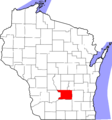
Location of Columbia County in Wisconsin
-
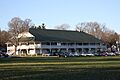
The Columbus Fireman's Park Complex, including a pavilion and "Rest Haven."
-
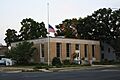
The Art Moderne style Columbus Post Office.
-
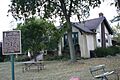
The cottage-like Prairie Style Columbus Public Library.
-
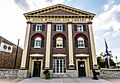
The Angie Williams Cox Library, renovated in Georgian Revival style.
-
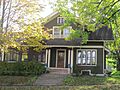
The highly intact bungalow of Daniel and Nellie Byrns.
-
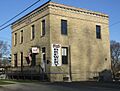
The limestone office building of Kurth Brewery.
-
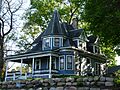
The fine Queen Anne home of Frank T. and Polly Lewis.
-
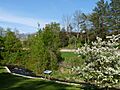
The terraced hillside of the Lodi School Hillside Improvement Site.
-
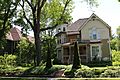
A home in the Lodi Street-Prairie Street Historic District.
-
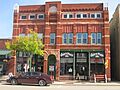
The Job Mills Block, a commercial building with Romanesque Revival touches.
-
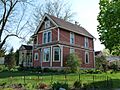
The "very fine and very intact" Queen Anne-styled house of Richard W. and Margaret Mills.
-
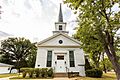
The Greek Revival Pardeeville Presbyterian Church.
-

The Portage Canal, connecting the Fox and Wisconsin rivers.
-
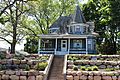
A home in the Portage Street Historic District.
-
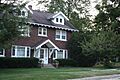
A home in the Prairie Street Historic District.
-
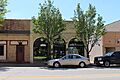
The remarkably intact Joel M. Pruyn Block.
-
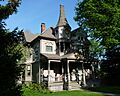
The elaborate Queen Anne home of John A. and Martha Robertson.
-
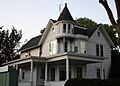
The very intact Queen Anne home of Reinhard and Amelia Schendel.
-
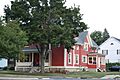
A house in the South Dickason Boulevard Residential Historic District.
-
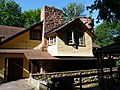
The Shingle-style summer home of Horace A.J. Upham, now Camp Wawbeek.
-
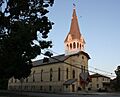
The High Victorian Gothic Zion Evangelical Lutheran Church and its Italianate parsonage.


