
Occidental Refinery facts for kids

The Occidental Refinery was a large oil refinery planned for Canvey Island in Essex, England. It was meant to process about six million tonnes of oil each year. Construction started in 1970 but stopped in 1975, and the refinery was never actually used. Everything built there was taken down between 1996 and 1997.
Contents
Why was the Occidental Refinery planned?
In 1970, a company called Occidental Refineries Limited, which was part of an American company, wanted to build an oil refinery on Canvey Island. They planned to use a large marshy area of land. The idea was to make heavy fuel oils there.
However, the local government said no to the plans. Occidental then appealed this decision, which led to a public inquiry. A public inquiry is like a big meeting where people can share their opinions and concerns about a project. During this inquiry, many people living nearby worried about things like air and water pollution, health risks, fire and explosion dangers, and too much traffic.
Even with these worries, the person in charge of the inquiry suggested that the project should go ahead. The government agreed in November 1971, and Occidental got permission to build the refinery.
How would the refinery have worked?
The refinery was designed to take crude oil from huge ships. These ships would come up the River Thames and unload the oil at a long jetty, which is like a pier for ships. The refinery would have stored a massive amount of crude oil – enough to fill about 3.75 million barrels! This oil would have been kept in ten very large storage tanks.
The refinery would then have used different processes to turn the crude oil into useful products. Some of these processes included:
- Crude oil desalting: Removing salt from the oil.
- Primary distillation: Heating the oil to separate it into different parts.
- Product desulphurisation: Taking out sulphur, which can cause pollution.
- LPG distillation: Making Liquefied Petroleum Gas (LPG).
- Sulphur production: Turning the removed sulphur into a useful product.
The refinery was planned to make many different products, including:
- Propane and Butane (types of LPG)
- Petrol (for cars)
- Kerosene (for lamps and heating)
- Jet fuel (for aeroplanes)
- Diesel fuel (for diesel engines)
- Fuel oil (heavy oil for power plants or ships)
- Sulfur
These products would have been stored in about 70 different tanks on the site. They would then have been sent out by road, ship, or even through pipelines. There were also plans for a railway line to help transport some of the products.
Why did construction stop?

Occidental started building the refinery in 1972. They managed to build about twenty oil storage tanks, a very tall concrete chimney (137 metres high!), and the long jetty.
However, construction stopped suddenly in 1975. The company had already spent £55 million, but they realised the refinery probably wouldn't make money. This was mainly because of the 1973 oil crisis. During this time, the price of oil shot up from $2 to $11 per barrel between 1970 and 1974. This made it much more expensive to buy crude oil and also reduced the demand for petroleum products. So, the project was put on hold.
Around this time, local people formed a group called the Refinery Resistance Group. They campaigned against dangerous industrial developments on Canvey Island. The local Member of Parliament, Bernard Braine, also spoke in government about the risks of having so many dangerous industries close together on the island.
In 1977, Occidental tried to change their plans to make different types of fuels, but the local council said no again. This was because the Health and Safety Executive (HSE), a government body that checks safety, was looking into all the risks on Canvey Island. The HSE found that the refinery would store huge amounts of dangerous liquids and gases. Because of the extra costs and safety concerns, Occidental decided not to go ahead with these new plans.
Later, in 1980, Occidental tried another plan to build a smaller refinery. But again, this didn't happen. The Iranian Revolution caused oil prices to jump even higher, from $13 to $34 per barrel between 1979 and 1981. This made the project too expensive and risky, so no more work was done on the site.
What happened to the site?
.jpg)
The unused tanks and the tall chimney were taken down in 1996 and 1997. Only the concrete bases of the tanks and the jetty remain today. Even though £55 million was spent, no oil was ever stored or processed at the Occidental Canvey Refinery.
Today, part of the refinery site has become a special place for nature called Canvey Wick nature reserve. It was named a Site of Special Scientific Interest (SSSI) in 2005 because of its important wildlife.
Were other refineries planned for Canvey Island?
Yes, besides the Occidental refinery, several other oil refineries were planned for Canvey Island. However, none of them were ever built because they weren't expected to make enough money.
For example, an Italian oil company called AGIP got permission in 1965 to build a refinery. Many local people were worried about pollution and signed a petition against it. Even though the government initially refused permission, it was later granted because of national economic reasons. But still, no construction ever started.
Later, another company called United Refineries Limited (URL) also tried to get permission for a refinery in 1970 and again in 1972. These plans also faced strong opposition from local people and environmental concerns. Although permission was eventually granted for the 1972 plan, the oil crises of the 1970s made it too difficult to go ahead.
In the end, all these plans for refineries on Canvey Island were stopped because of economic problems and growing concerns about safety and the environment.
See also
Images for kids
-
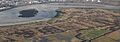
The refinery site in 2009
-
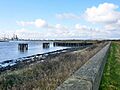
The site's jetty in 2015
