
Shinzo Abe facts for kids
Quick facts for kids
Shinzo Abe
Junior First Rank
|
|||||
|---|---|---|---|---|---|
|
安倍 晋三
|
|||||

Official portrait, 2012
|
|||||
| Prime Minister of Japan | |||||
| In office 26 December 2012 – 16 September 2020 |
|||||
| Monarch | |||||
| Deputy | Tarō Asō | ||||
| Preceded by | Yoshihiko Noda | ||||
| Succeeded by | Yoshihide Suga | ||||
| In office 26 September 2006 – 26 September 2007 |
|||||
| Monarch | Akihito | ||||
| Preceded by | Junichiro Koizumi | ||||
| Succeeded by | Yasuo Fukuda | ||||
| President of the Liberal Democratic Party | |||||
| In office 26 September 2012 – 14 September 2020 |
|||||
| Vice President | Masahiko Kōmura | ||||
| Secretary-General |
|
||||
| Preceded by | Sadakazu Tanigaki | ||||
| Succeeded by | Yoshihide Suga | ||||
| In office 20 September 2006 – 23 September 2007 |
|||||
| Secretary-General |
|
||||
| Preceded by | Junichiro Koizumi | ||||
| Succeeded by | Yasuo Fukuda | ||||
| Chief Cabinet Secretary | |||||
| In office 31 October 2005 – 26 September 2006 |
|||||
| Prime Minister | Junichiro Koizumi | ||||
| Preceded by | Hiroyuki Hosoda | ||||
| Succeeded by | Yasuhisa Shiozaki | ||||
| Secretary-General of the Liberal Democratic Party | |||||
| In office 22 September 2003 – 24 September 2004 |
|||||
| President | Junichiro Koizumi | ||||
| Preceded by | Taku Yamasaki | ||||
| Succeeded by | Tsutomu Takebe | ||||
| Deputy Chief Cabinet Secretary (Political affairs, House of Representatives) |
|||||
| In office 4 July 2000 – 22 September 2003 |
|||||
| Prime Minister |
|
||||
| Preceded by | Fukushiro Nukaga | ||||
| Succeeded by | Hiroyuki Hosoda | ||||
| Member of the House of Representatives from Yamaguchi |
|||||
| In office 18 July 1993 – 8 July 2022 |
|||||
| Preceded by | Shintaro Abe | ||||
| Succeeded by | Shinji Yoshida | ||||
| Constituency |
|
||||
| Personal details | |||||
| Born | 21 September 1954 Shinjuku, Tokyo, Japan |
||||
| Died | 8 July 2022 (aged 67) Kashihara, Nara, Japan |
||||
| Cause of death | Assassination by gunshot | ||||
| Resting place | Abe Family Cemetery, Nagato, Yamaguchi, Japan | ||||
| Political party |
|
||||
| Other political affiliations |
Nippon Kaigi | ||||
| Spouse |
Akie Matsuzaki
(m. 1987) |
||||
| Parents |
|
||||
| Relatives | Satō–Kishi–Abe family | ||||
| Education |
|
||||
| Signature |  |
||||
| Japanese name | |||||
| Kanji | 安倍 晋三 | ||||
| Kana | あべ しんぞう | ||||
|
|||||
| a. | |||||

Shinzo Abe (born September 21, 1954 – died July 8, 2022) was an important Japanese leader. He served as Prime Minister of Japan and head of the Liberal Democratic Party (LDP). He was Prime Minister twice: first from 2006 to 2007, and then again from 2012 to 2020. This made him the longest-serving prime minister in Japan's history, holding the position for almost nine years.
Born in Tokyo, Shinzo Abe came from a well-known political family. His father, Shintaro Abe, was a politician, and his grandfather, Nobusuke Kishi, was also a former prime minister. Abe studied at Seikei University and the University of Southern California. He began his political career in 1993 when he was elected to the House of Representatives.
Before becoming Prime Minister, Abe held several important roles, including Chief Cabinet Secretary. When he first became Prime Minister in 2006, he was the youngest leader in Japan since World War II. During his time in office, he focused on strengthening Japan's economy and its role in the world. He also wanted to update Japan's constitution, especially regarding its defense policies.
After a period of illness, Abe returned as Prime Minister in 2012. He introduced economic policies known as "Abenomics" to help Japan's economy grow. He also worked to improve Japan's relationships with other countries and strengthen its security. In 2020, he resigned again due to health reasons and was succeeded by Yoshihide Suga.
On July 8, 2022, Shinzo Abe was shot and died while giving a speech in Nara. The person responsible said their actions were related to a religious group and financial difficulties. Abe was a significant figure in Japan, admired by many for his leadership in security and international affairs. Others had concerns about his views on Japanese history and his approach to foreign relations.
Growing Up and Early Career
His Family Background


Shinzo Abe was born in Tokyo on September 21, 1954. He came from a very important political family. Even though he dreamed of being a filmmaker as a boy, his family's history led him into politics. His father, Shintaro Abe, was a member of the House of Representatives for many years. He also served as a Chief Cabinet Secretary and Foreign Minister.
Abe's maternal grandfather, Nobusuke Kishi, was a significant figure in Japanese politics. He was involved in the government during World War II. After the war, he was held as a suspected war criminal by the US military, but he was later released. Kishi helped create the Liberal Democratic Party (LDP) and became Prime Minister of Japan from 1957 to 1960. Abe looked up to his grandfather and shared many of his strong beliefs about Japan's role in the world. His mother, Yōko Abe, was a talented calligrapher.
His paternal grandfather, Kan Abe, was a landowner from Yamaguchi Prefecture. He also served in the House of Representatives during World War II. Unlike Kishi, Kan Abe was known for his peaceful views and opposed the wartime government.
Education and First Jobs
Shinzo Abe went to Seikei Elementary School and Seikei Junior and Senior High School. He studied political science at Seikei University and earned his bachelor's degree in 1977. Later, he studied English at the University of Southern California for a short time.
In 1979, Abe started working for a company called Kobe Steel. After a few years, he moved into government work. He served as an assistant to the Foreign Minister and as a secretary for his father. Traveling with his father to many countries taught Abe how important it was to build good relationships with leaders from around the world.
Starting a Political Career

After his father passed away in 1991, Shinzo Abe was elected to the House of Representatives in 1993. He represented the first district of Yamaguchi Prefecture. He joined a group within the Liberal Democratic Party (LDP) called the Seiwa Seisaku Kenkyūkai.
From 2000 to 2003, Abe served as Deputy Chief Cabinet Secretary. This was an important role in the cabinets of Prime Ministers Yoshirō Mori and Junichiro Koizumi. After this, he became the Secretary-General of the LDP.
Abe became well-known for his work on behalf of Japanese citizens who had been abducted to North Korea. He played a key role in negotiations and pushed for the return of these individuals to Japan.
In 2006, Abe was chosen to lead the Liberal Democratic Party. He won against other strong candidates like Sadakazu Tanigaki and Tarō Asō. This victory set the stage for him to become Prime Minister.
First Time as Prime Minister (2006–2007)
Becoming Japan's Leader
On September 26, 2006, Shinzo Abe officially became the Prime Minister of Japan. At 52 years old, he was the youngest Prime Minister since 1941. He was also the first Prime Minister born after World War II. His first cabinet focused on foreign policy and national security.
Domestic Policies and Challenges
Abe continued many of the reforms started by the previous Prime Minister, Junichiro Koizumi. He worked to balance Japan's budget, partly by cutting government spending.
He also supported changes to how Japanese history was taught in schools. He believed in encouraging a strong sense of national pride among young people. Abe also expressed his views on historical events, which sometimes caused debate. He wanted to update Article 9 of the Constitution, which limits Japan's military actions, to allow for a more active defense role.
Foreign Relations
Abe aimed to improve Japan's relationships with countries like China and India. He believed that Japan needed to work closely with its neighbors. In 2007, he started the Quadrilateral Security Dialogue with the US, Australia, and India. This group aimed to promote security in the Asia-Pacific region.
He also took a firm stance on North Korea, especially concerning the issue of Japanese citizens abducted by North Korea. He pushed for their return and gained public support for his strong approach.
Resignation
During his first term, Abe faced several challenges. Some of his cabinet members resigned due to financial scandals. His party also lost control of the upper house of parliament in an election.
On September 12, 2007, Abe announced his decision to resign as Prime Minister. He explained that his government's low popularity was making it hard to pass important laws. He also mentioned that his health was not good at the time.
Out of Office (2007–2012)
After resigning, Abe remained a member of the Japanese parliament. He was re-elected in 2009, even though his party lost power to another party.
During this time, Abe continued to be active in foreign policy discussions. He gave speeches about US-Japan relations and expressed concerns about China's growing influence. He also visited Taiwan multiple times, meeting with its leaders.
Abe later shared that his illness, ulcerative colitis, had improved thanks to new medication. This recovery allowed him to consider a return to leadership.
Second Time as Prime Minister (2012–2020)
Returning to Leadership
In September 2012, Shinzo Abe was re-elected as the leader of the LDP. He then led his party to a big victory in the general election that December. This made him the first former prime minister to return to office since 1948.
On December 26, 2012, Abe was formally elected Prime Minister by the parliament. He formed his second cabinet, which included experienced politicians. He promised to focus on economic recovery and growth for Japan.
Abenomics: Boosting Japan's Economy
.jpg)
Abe's main economic plan was called "Abenomics". It had three main parts, often called "arrows":
- Monetary Policy: The Bank of Japan aimed to increase the money supply and reach a 2% inflation target. This was meant to make prices rise slightly and encourage spending.
- Fiscal Policy: The government used spending packages to stimulate the economy. This included money for public works and business investments.
- Growth Strategy: This focused on making big changes to Japan's economy. It aimed to encourage private investment and long-term growth.
One important part of his growth strategy was joining the Trans-Pacific Partnership (TPP) trade agreement. This was meant to open up Japan's economy and make it more competitive. Abe also worked to encourage more women to join the workforce and take on leadership roles.
Foreign Relations and Security
.jpg)
Abe was very active in foreign affairs, visiting many countries to strengthen Japan's international standing. He aimed to build strong relationships with countries beyond just the US, China, and South Korea. He worked to increase cooperation with nations in Southeast Asia, Australia, and India.
In 2015, Abe addressed the United States Congress, emphasizing the strong alliance between Japan and the US. He also played a key role in Tokyo's successful bid to host the 2020 Summer Olympics.
Relations with China and South Korea remained complex during his second term. There were ongoing disagreements over historical issues and territorial disputes. However, Abe did meet with leaders from both countries to try and improve ties.
Important Laws and Changes

Abe worked to strengthen Japan's security policies. He created the National Security Council to better coordinate defense. He also pushed for a new interpretation of Japan's constitution. This change allowed Japan's Self-Defense Forces to help allies under attack, even if Japan itself was not directly threatened. This was a significant change to Japan's post-war pacifist stance.
These security changes were debated in parliament and met with some public protests. Abe argued that these laws were necessary to deter war and contribute to global peace and security.
Re-election and "Abenomics 2.0"
In September 2015, Abe was re-elected as the LDP president without opposition. He then introduced "Abenomics 2.0," which focused on social issues. These goals included boosting Japan's economy further, increasing the birth rate, and supporting people who care for elderly family members.
Fourth Cabinet (2017–2020)

Abe's coalition won the 2017 general election, giving him another term as Prime Minister. In 2019, he became Japan's longest-serving prime minister in history.
He continued to focus on foreign policy, meeting with leaders like US President Donald Trump and Chinese President Xi Jinping. He also worked to keep the Comprehensive and Progressive Agreement for Trans-Pacific Partnership (CPTPP) alive after the US withdrew from the original TPP.
In 2019, Japan resumed commercial whaling after leaving the International Whaling Commission. This was a policy Abe had long supported.
Resignation
In August 2020, Abe announced his resignation as Prime Minister. He cited a relapse of his chronic illness, ulcerative colitis, as the reason. He expressed regret that he could not achieve all his policy goals. Yoshihide Suga succeeded him as Prime Minister in September 2020.
His Later Years and Passing

After leaving office, Shinzo Abe remained an influential figure in Japanese politics. He continued to give interviews and share his views on national and international issues.
On July 8, 2022, while giving a campaign speech in Nara, Abe was shot. He was quickly taken to the hospital but sadly passed away later that day at the age of 67.
A 41-year-old man was arrested at the scene. He later told police that he had a grudge against a religious group and believed Abe was connected to it. He stated that his mother had given a lot of money to this group, causing his family financial hardship.
Abe's death shocked Japan and the world. Many leaders from different countries expressed their sadness and offered condolences. His state funeral was held on September 27, 2022. The person responsible for his death was tried and convicted, and was sentenced to life imprisonment on January 21, 2026.
Shinzo Abe's Legacy

Shinzo Abe is remembered as one of Japan's most important modern leaders. Many believe he shaped Japan's future, especially in its approach to security and international relations. After his passing, his political party won more seats in the parliament. This led some to believe that his goal of revising Japan's constitution, particularly Article 9, might still be pursued.
He is also credited with saving the Trans-Pacific Partnership (TPP) trade deal, turning it into the CPTPP, after the US withdrew. This showed his commitment to global economic cooperation. Many international leaders praised his efforts to build strong alliances and promote stability in the Indo-Pacific region.
However, Abe's views on Japanese history and his desire to re-examine the past caused tension with neighboring countries like China and South Korea. His legacy is seen differently by various groups, both in Japan and abroad. He had a lasting impact on Japan's economy through "Abenomics," which aimed to bring growth and overcome economic challenges.
Awards and Recognition
Shinzo Abe received many honors and awards from Japan and other countries throughout his career.
Domestic Honors
- Supreme Order of the Chrysanthemum:
- Collar of the Supreme Order of the Chrysanthemum (2022, after his death)
- Grand Cordon of the Supreme Order of the Chrysanthemum (2022, after his death)
- Junior First Rank (2022, after his death)
Foreign Honors
- Argentina: Grand Cross of the Order of the Liberator General San Martín (2016)
- Australia: Honorary Companion of the Order of Australia (2022, after his death)
- Brazil: Grand Cross of the Order of the Southern Cross (2020)
- India: Padma Vibhushan (2021)
- Netherlands: Knight Grand Cross of the Order of Orange-Nassau (2014)
- Philippines: Grand Collar (Raja) of the Order of Sikatuna (2015)
- United States: Chief Commander of the Legion of Merit (2020)
Other Honors
- International Olympic Committee: Gold Olympic Order (2020)
Awards
- Foreign Policy Top 100 Global Thinkers (2013)
- Herman Kahn Award (2013)
- The Straits Times Asian of the Year award (2013)
- Time 100 (2014, 2018)
- Boston Global Forum's World Leader in Cybersecurity Award (2015)
- 2021 World Statesman Award (2021)
- Netaji Award 2022 by Netaji Research Bureau (2022)
Honorary Doctorates
- Rangsit University (2013)
- Jawaharlal Nehru University (2015)
- Turkmen State University (2015)
- International Islamic University Malaysia (2022)
Images for kids
-
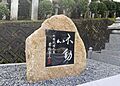
Memorial monument for Shinzo Abe in Nara Japan (2023)
-
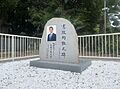
Memorial monument for Shinzo Abe at Osaka Gokoku Shrine in Osaka Japan (2025)


See also
 In Spanish: Shinzō Abe para niños
