
W National Park facts for kids
Quick facts for kids W Transborder Park |
|
|---|---|
|
IUCN Category II (National Park)
|
|

IUCN Protected Areas of the WAP complex
|
|
| Location | Niger-Burkina Faso-Benin |
| Nearest city | Kandi (Benin), Diapaga (Burkina Faso), Tapoa (Niger) |
| Area | 10,000 km2 (3,900 sq mi) |
| Established | August 4, 1954 |
| Governing body | ECOPAS, Governments of Niger, Burkina Faso, and Benin |
The W Transborder Park is a huge and important national park in West Africa. It gets its name from a bend in the Niger River that looks like the letter "W" (French: double v). This special park stretches across three countries: Niger, Benin, and Burkina Faso. All three governments work together to protect it.
For many years, a project called ECOPAS helped manage the park. This project focused on protecting ecosystems in the Sudano-Sahelian part of Africa. Since June 2020, the part of W National Park in Benin, which is very large (over 8,000 square kilometers), has been managed by African Parks. This part of the park is also connected to Pendjari National Park, which African Parks also manages.
Contents
A Look Back: The Park's Story
The W National Park in Niger was officially created on August 4, 1954. It became a special place in 1996 when UNESCO named it a World Heritage Site. This means it's recognized globally for its unique natural value.
The park is also part of a bigger network of protected areas. These include important wetlands along the Niger River, known as Ramsar sites. These wetlands are vital for many plants and animals. The entire W Transborder Park is also recognized by BirdLife International as an Important Bird Area. This highlights its importance for many different bird species.
Exploring the Park's Landscape

This huge park covers about 10,000 square kilometers across the three countries. For a long time, not many people lived here. It used to be a wetland area where the Mékrou River met the Niger River. There are also rocky hills throughout the park.
Even though it was less populated recently, people lived here long ago. Many important archaeological sites, like ancient tombs, have been found. These sites show that humans have been part of this landscape for a very long time.
Amazing Plants of W Park
The W Transborder Park is home to an incredible variety of plants. Scientists have found 454 different plant species here! Among them are two types of orchids that grow only in Niger, making them very special. The park also marks the southern edge where "tiger bush" plateaus can be found in Niger. These unique plant areas add to the park's rich natural beauty.
Incredible Animals of W Park
The W Transborder Park is a haven for many amazing animals. It's especially famous for its large mammals.
Mammals: Giants and Hunters
You can find many different animals here, like the shy aardvark and playful baboons. There are also powerful African buffalo and swift hunters like the caracal, cheetah, African leopard, and West African lion. Other fascinating creatures include the huge African bush elephant, hippopotamus, serval, and warthog.
This park is a crucial home for some of the very last wild African elephants in West Africa. It's also one of the last places where the rare Northwest African cheetah lives. Experts believe about 25 cheetahs live across the W–Arli–Pendjari protected area. Sadly, the rare West African giraffe is not found here, and the endangered West African wild dog might no longer live in this area.
Birds: Feathered Friends
Beyond the big mammals, the W National Park is a paradise for birds. Over 350 different bird species have been seen here! Many of these are migratory birds that stop in the park during their long journeys. Because of this, BirdLife International has recognized the park as an Important Bird Area. This shows how vital it is for bird conservation.
Gallery
-
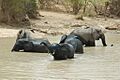
Bush elephants -
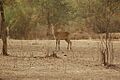
Kob antelope -
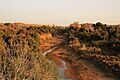
Landscape


See also
 In Spanish: Parque nacional W para niños
