
Barred owl facts for kids
Quick facts for kids Barred owl |
|
|---|---|
 |
|
| Conservation status | |
Scientific classification  |
|
| Kingdom: | Animalia |
| Phylum: | Chordata |
| Class: | Aves |
| Order: | Strigiformes |
| Family: | Strigidae |
| Genus: | Strix |
| Species: |
S. varia
|
| Binomial name | |
| Strix varia Barton, 1799
|
|
| Subspecies | |
|
|
| Script error: The function "autoWithCaption" does not exist. | |
| Synonyms | |
|
Syrnium varium |
|

Script error: No such module "Check for conflicting parameters".
The barred owl (Strix varia), also known as the northern barred owl or hoot owl, is a large owl found in North America. These owls are part of the true owl family, called Strigidae. They mostly live in eastern North America, but have also spread to the west coast. Barred owls love old, mature forests, but they can also live in other woodland areas. They mainly eat small mammals, but they are clever hunters and will also catch birds, reptiles, amphibians, and even insects.
Barred owls are brown or gray with dark stripes on their bellies. They usually build their nests in tree hollows in forests. Sometimes, barred owls move into areas where spotted owls live. This can cause problems because both owls need the same food and homes. Scientists are working to understand and help protect the spotted owls.
Contents
- The Barred Owl: A Forest Hunter
- Status
- Images for kids
- See also
The Barred Owl: A Forest Hunter
The barred owl was first described by a naturalist named Benjamin Smith Barton in 1799. Its name comes from the varied patterns of dark stripes on its belly.
Barred owls are medium-sized owls. They are larger than some owls but smaller than others, like the Ural owl. They are related to the spotted owl, but genetic tests show they separated a very long time ago.
What Do Barred Owls Look Like?

Barred owls have a grayish-brown or brown color. They have white stripes on their backs and wings. Their bellies are pale, with horizontal stripes on the chest and vertical stripes on the belly. These stripes can be blackish, dark brown, or reddish-brown.
Their heads are large and round, without the "ear tufts" that some owls have. They have a pale grayish-brown face with subtle rings. Their beak is pale yellow, and their eyes are a dark brown, almost black, color.
Owls have amazing eyesight, especially at night. Their eyes have many special cells that help them see in very low light. Barred owls also have soft feathers that help them fly silently, which is perfect for hunting.
Barred owls have feathers on their legs and toes, right down to their dark gray talons. Southern barred owls have fewer feathers on their toes. Their tail is brown or grayish-brown with 4–5 white stripes.
Young barred owls are fluffy and brownish-white. They grow into adults after about a year. Barred owls are large birds, usually 40 to 63 centimeters (16 to 25 inches) long. Their wingspan can be 96 to 125 centimeters (38 to 49 inches) wide. Female barred owls are usually larger and heavier than males.
The Barred Owl's Special Calls
The barred owl is known for its loud and clear calls. Its most common call sounds like "Who cooks for you, who cooks for you all." Because of this, some people call it the Old Eight-Hooter.
They have other calls too, like a series of rising notes. When they are upset, they might make a buzzing hiss or click their beaks. Young owls and females make high-pitched scratching sounds when they want food.
Barred owls call most often at night, but you can sometimes hear them during the day, especially if they are responding to other owls or people imitating their calls. They are most vocal from late winter to early spring, during their breeding season.
Where Do Barred Owls Live?

Barred owls live across most of the eastern United States and much of southern Canada. Their native range stretches from Maine down to Florida and west to states like Minnesota and Oklahoma.
How Their Home Range Grew

In the past, the wide-open Great Plains acted as a natural barrier, stopping barred owls from moving west. But over the last century, more forests grew along rivers and in other areas, partly due to changes made by people. This allowed barred owls to expand their range westward.
Now, barred owls can be found in Manitoba, Saskatchewan, Alberta, and British Columbia in Canada. In the western United States, they have spread to Montana, Idaho, Washington, Oregon, and northern California. They have even reached southeastern Alaska.
Favorite Forest Homes

Barred owls prefer old deciduous (trees that lose leaves in fall) or mixed forests. They like old forests because these have more places to build nests, like large tree hollows. These older forests also offer better protection and hunting spots.
They often live near water, such as along rivers or in swampy areas. While they love deep forests, barred owls can also adapt to living in wooded areas near towns or in large parks with old trees. They might even find good hunting grounds in suburban neighborhoods, where small rodents are common. However, they still need large trees for nesting and resting.
Daily Life of a Barred Owl

Like most owls, barred owls are usually active at night. They spend their days hidden in dense tree leaves, often high above the ground. Sometimes, they rest in a branch close to a tree trunk or inside a natural tree hollow.
Barred owls are very territorial. They claim their areas by hooting from different perches, especially near the edges of their home range. These territories usually stay the same year after year. They are not migratory birds, meaning they don't travel long distances seasonally. They tend to stay in the same area all year.
Barred owls are silent and skilled fliers. They often use clear paths through the forest where there are not many low branches. Sometimes, smaller birds like jays or woodpeckers will mob (attack) a barred owl if they find it during the day.
What Do Barred Owls Eat?

Barred owls are clever hunters and will eat many different kinds of animals found in woodlands. They usually hunt from a perch, gliding down quickly when they spot prey. Their silent flight helps them get very close to their meal.
They mostly hunt small animals that live on the ground. However, they can also catch birds roosting at night or bats flying in the air. Sometimes, they even hunt during the day, especially on cloudy days. Barred owls have been seen plunging into snow to catch small animals hiding underneath. They might also wade into shallow water to catch fish, which is unusual for an owl!
Because their feet are not extremely large, they usually catch smaller prey. After eating, owls cough up pellets which contain the indigestible parts of their food, like bones and fur. These pellets help scientists learn what the owls have been eating.
Mammal Meals
Small rodents are the main food for barred owls. This includes voles, mice, and rats. These small mammals are often active at night, just like the owls. In winter, rodents can make up almost all of a barred owl's diet.
Barred owls also hunt different kinds of squirrels, even though squirrels are usually active during the day. They often catch smaller squirrels like chipmunks or young tree squirrels. Flying squirrels are also a favorite meal because they are active at night. Other mammals they eat include shrews, moles, and sometimes small rabbits or hares. Very rarely, they might catch larger animals like young skunks or weasels.
Bird Bites
.jpg)
Barred owls also eat other birds, though not as often as mammals. They catch many different kinds of birds, from small hummingbirds to larger ones like American crows. They are known to hunt swallows nesting on buildings or cliffs.
In forests, barred owls often prey on passerine (songbird) nests, especially taking young birds that have just learned to fly. These young birds are easier to catch because they are still learning to fly well. Woodpeckers are also common prey because they live in the same forest habitats as barred owls. Larger game birds like ruffed grouse are also sometimes hunted.
Other Snacks
.jpg)
Barred owls eat reptiles like small lizards and snakes, though these are not a major part of their diet. They also enjoy amphibians, such as frogs and salamanders, especially during the breeding season when these animals are more active.
Sometimes, barred owls will even catch fish by wading into shallow water or hunting from a dock. They also eat many invertebrates, like beetles, moths, and crayfish. In some areas, earthworms are a common food source.
Barred Owls and Other Animals
.jpg)
Barred owls share their homes with many other predators. They often interact with other owl species. The great horned owl is a major competitor and predator of the barred owl. Great horned owls are larger and stronger, and they sometimes prey on young and even adult barred owls. Barred owls tend to avoid areas where great horned owls are present.
Barred owls also compete with red-shouldered hawks, which hunt similar prey during the day. However, these two species often live near each other without much conflict.
Barred owls themselves can be predators of smaller owls, such as western screech owls and northern saw-whet owls. Their expansion into new areas has sometimes led to declines in these smaller owl populations.
Barred Owls and Spotted Owls
Barred owls have expanded their range westward, moving into areas where northern spotted owls live. This has created challenges for the spotted owls, which were already facing problems due to changes in their forest homes.
Barred owls are generally more aggressive and often outcompete spotted owls for food and nesting spots. This competition can lead to fewer spotted owls in areas where both species live. Scientists are studying this interaction to understand it better and find ways to help the spotted owl populations.
Sometimes, barred owls and spotted owls even have babies together, creating hybrid owls. These hybrid owls are a mix of both species.
The Barred Owl Life Cycle

Barred owls usually stay with the same partner for their entire lives. They often start breeding when they are about two years old.
Nesting Habits
Barred owls prefer to nest in the hollow trunks of large, old trees or in broken-off tree branches. These hollows offer a safe and sheltered place for their eggs and young. They often choose nest sites in deep, dark wooded areas, usually close to water.
If there are no suitable tree hollows, barred owls might use old nests built by other birds, like red-shouldered hawks, or even squirrel nests. They have also been known to use nest boxes that people put up. Barred owls do not build their own nests; they just use existing structures.
Raising Young Owls

Female barred owls typically lay 2 to 3 eggs, but sometimes up to 5. The eggs are pure white. The female sits on the eggs for about 28 days to keep them warm, while the male brings her food.
Once the chicks hatch, they are helpless and covered in white down feathers. The female stays with them for about three weeks, and the male continues to bring food for the whole family. After three weeks, the female also starts hunting for the young.

The young owls start moving around the nest at about three weeks old. They begin to grow adult-like feathers at six weeks. They fledge (take their first flight) when they are about 36–39 days old. Even after they can fly, their parents continue to feed them until they learn to hunt on their own, usually by early to mid-autumn.
Young owls then leave their parents' territory to find their own homes. This time can be dangerous for them.
How Long Do Barred Owls Live?
Barred owls can live a long time. In the wild, some have been recorded living for over 18 years, and one even lived for more than 24 years! In captivity, where they are safe from many dangers, some barred owls have lived for over 30 years.
Common causes of death in the wild include predation by other animals (especially great horned owls), accidents (like getting tangled in fishing line), and diseases. Like many wild animals, they can sometimes have tiny creatures living on or inside them, but usually, they stay healthy.
.jpg)
Barred Owls in Art
.jpg)
The famous artist John James Audubon included the barred owl in his book Birds of America. His illustration, called Plate 46, shows a barred owl about to catch a grey squirrel.
Status

The barred owl is one of the most common owls in North America. Scientists estimate there might be up to 3 million barred owls in the world. This makes them one of the most numerous owl species on the continent.
Images for kids
-
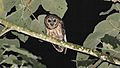
The fulvous owl was once thought to be a type of barred owl, but it is now considered its own species.
-
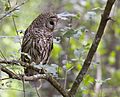
Some barred owls, like this one from Florida, have darker brown stripes and bare toes.
-
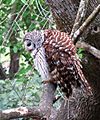
This Texas barred owl has cinnamon-colored feathers and mostly bare toes.
_(5957075195).jpg)
_(9732594639).jpg)
.jpg)
See also
 In Spanish: Cárabo norteamericano para niños
