
Shortnose cisco facts for kids
Quick facts for kids Shortnose cisco |
|
|---|---|
 |
|
| Conservation status | |
Scientific classification  |
|
| Kingdom: | Animalia |
| Phylum: | Chordata |
| Class: | Actinopterygii |
| Order: | Salmoniformes |
| Family: | Salmonidae |
| Genus: | Coregonus |
| Species: |
C. reighardi
|
| Binomial name | |
| Coregonus reighardi (Koelz, 1924)
|
|
| Script error: The function "autoWithCaption" does not exist. | |
Script error: No such module "Check for conflicting parameters".
The shortnose cisco (Coregonus reighardi) is a rare freshwater fish found in North America. It belongs to the salmon family, called Salmonidae. It is one of several kinds of ciscoes in the Coregonus artedi species complex. This fish lives in cold, deep waters of the Great Lakes between Canada and the United States. Scientists once feared it was completely gone forever. A surprise discovery proved that some of these amazing fish are still swimming in deep lake waters today.
Contents
What Does the Shortnose Cisco Look Like?
The shortnose cisco is quite easy to tell apart from other related whitefishes. It has a thick, plump body that looks almost completely round when viewed from the front. Its head is short and blunt, which gave this fish its common name. It also has tiny eyes compared to other fish in its family.
Size and Weight
- Maximum length reaches about 36 cm (14 in) long.
- Maximum weight reaches around 540 g (1 lb 3 oz).
- The oldest known shortnose cisco lived to be eight years old.
Habitats and Daily Life
These fish spend their time near the deep, muddy bottom of large lakes. Like many other deep-water fish, they prefer cool and quiet spots far beneath the surface. Scientists still have a lot to learn about their daily habits because they live so deep.
What Do They Eat?
Even though they are related to large salmon, shortnose ciscoes do not hunt big prey. They feed on very small aquatic creatures that drift through the water or crawl along the mud:
- Tiny water fleas and drifting creatures called zooplankton.
- Small shelled creatures including crustaceans.
- Soft-bodied lake animals like small molluscs.
Reproduction and Life Cycle
Shortnose ciscoes breed during the spring season. They travel down to the lake bottom to lay their eggs on the lake floor. Very few young survive to adulthood, which makes it hard for their numbers to bounce back.
Conservation and Survival in the Great Lakes
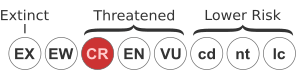
The shortnose cisco once lived across three huge freshwater lakes: Lake Huron, Lake Michigan, and Lake Ontario. Over the years, big changes in the lakes caused their numbers to drop quickly. The IUCN listed the fish as critically endangered.
Why Did They Disappear?
Several big problems caused the shortnose cisco population to collapse:
- People caught too many of them in large fishing nets, a problem known as overfishing.
- Pollution and human activity caused severe damage to the lakes.
- An unwanted invasive creature called the sea lamprey arrived and attacked local fish.
Timeline of Disappearance
For decades, scientists could not find the shortnose cisco anywhere in its historic homes:
- Last seen in Lake Ontario in 1964.
- Last seen in Lake Michigan in 1974.
- Last seen in Georgian Bay in 1985.
Because nobody saw one after 1985, the U.S. Fish and Wildlife Service and wildlife experts in Ontario feared the fish was entirely extinct.
A Surprise Rediscovery
In 2024, researchers from the United States Geological Survey shared exciting news. They caught and identified living shortnose ciscoes deep inside Lake Superior. Nobody had ever recorded the species living in Lake Superior before. This discovery gave conservationists new hope that these rare fish can survive with proper lake protection.
See also
 In Spanish: Coregonus reighardi para niños
