
Dolphin facts for kids
Quick facts for kids Dolphins |
|
|---|---|
 |
|
| A common bottlenose dolphin (Tursiops truncatus) | |
| Scientific classification | |
| Kingdom: | Animalia |
| Phylum: | Chordata |
| Class: | Mammalia |
| Order: | Artiodactyla |
| Infraorder: | Cetacea |
| Parvorder: | Odontoceti |
| Groups included | |
|
|
| Cladistically included but traditionally excluded taxa | |
|
|
Dolphins are super smart and friendly aquatic mammals that live in oceans and some rivers around the world. They belong to a group called toothed whales. There are about 40 different kinds of dolphins, from the tiny 1.7-metre-long (5 ft 7 in) Maui's dolphin to the huge 9.5 m (31 ft) orca, which is actually the largest dolphin! Dolphins have sleek bodies, powerful tails, and special flippers that help them swim incredibly fast and gracefully. They are known for their playful nature and their amazing ability to communicate with each other using clicks and whistles.
Contents
Where the Name "Dolphin" Comes From
The word "dolphin" comes from an ancient Greek word, delphís, which meant "a 'fish' with a womb." This name traveled through Latin and Old French to become the word we use today. Sometimes, people use "dolphin" as a general name for the most common type, the bottlenose dolphin. It's also important to know that a mahi-mahi is a type of fish, sometimes called a dolphinfish, but it's not a mammal like a true dolphin.
Dolphins are different from porpoises, even though they look similar. Porpoises usually have shorter snouts and spade-shaped teeth, while dolphins have longer snouts and conical teeth. A group of dolphins is called a school or a pod. Male dolphins are called bulls, females are called cows, and young dolphins are called calves.
How Dolphins Evolved Over Millions of Years
Dolphins didn't always live in the water! Millions of years ago, their ancestors were land mammals that looked a bit like small deer. Over about 48 million years, these animals slowly adapted to life in the water. Their bodies changed to become streamlined, their front limbs became flippers, and their back legs eventually disappeared, leaving only tiny bones inside their bodies. This amazing journey shows how animals can change over time to fit their environment.

Dolphin Body and Senses
Dolphins have torpedo-shaped bodies, which means they are smooth and tapered at both ends, perfect for gliding through water. Their necks aren't very flexible, but their powerful tails, called flukes, help them push through the water. They have flippers for steering and a dorsal fin on their back for stability.

Their Unique Skin and Blubber
A dolphin's skin is smooth and rubbery, without hair. Underneath, they have a thick layer of fat called blubber. This blubber is super important! It helps them stay warm in cold water, provides energy when food is scarce, and makes their bodies streamlined for swimming. Baby dolphins are born with thinner blubber, which grows thicker as they get older.
How They Move and Dive
Dolphins use their strong tail flukes to propel themselves through the water by moving them up and down. Their flippers are mostly for steering. Some dolphins are incredibly fast, like the orca, which can travel at speeds up to 55.5 km/h (34.5 mph). Many dolphins can also dive very deep. They have special ways to save oxygen, like slowing their heart rate and sending blood to their most important organs, like the brain and heart.
Incredible Senses: Echolocation and Sight
Dolphins have amazing senses, especially their hearing. They use a special ability called echolocation, or biosonar, to "see" with sound. They send out clicks and listen for the echoes that bounce back from objects. This helps them find food and navigate, even in murky water or darkness.


Their eyes are on the sides of their heads, giving them a wide view. They can see well both underwater and above the surface. However, dolphins don't have a good sense of smell, and their sense of taste is also thought to be limited.
Smart and Social Dolphins
Dolphins are known for being very intelligent animals. They can learn, teach each other, and work together. Scientists have found special brain cells in dolphins that are similar to those in humans, which are linked to social behavior and emotions. Orcas, the largest dolphins, have the second-largest brains of any animal on Earth! Some studies suggest dolphins might even have a form of self-awareness, meaning they can recognize themselves. This is often tested using mirrors, where animals show they understand the reflection is of themselves.
Dolphin Life and Habits
Social Life and Communication
Dolphins are very social creatures and usually live in groups called pods. These pods can have a few dolphins or sometimes hundreds! They form strong friendships and will help injured or sick members, even pushing them to the surface to breathe. They've even been seen helping other animals, like guiding whales out of shallow water or protecting swimmers from sharks.


Dolphins communicate using a variety of sounds, including clicks and whistles. Each dolphin even has a unique "signature whistle" that's like its own name! They can also communicate through touch and body language.
Life Cycle and Family Life
Dolphins typically give birth to one calf at a time. The baby dolphin is usually born tail-first. Mothers take full responsibility for raising their young, often nursing them for a long time. The gestation period (how long the baby is in the mother's womb) varies by species, from about 11 months for smaller dolphins to around 17 months for orcas.
Amazing Dolphin Hybrids
Sometimes, different species of dolphins can have babies together, creating hybrids! One famous example is the wholphin, which is a mix of a false killer whale and a bottlenose dolphin. Two wholphins currently live at the Sea Life Park in Hawaii; the first was born in 1985. Wholphins have also been seen in the wild.
How Dolphins Sleep
Dolphins have a unique way of sleeping. They usually sleep with only one half of their brain at a time. This allows them to stay partly awake to breathe and watch out for danger. In captivity, they sometimes enter a deeper sleep where both eyes are closed, and a tail kick reflex keeps their blowhole above water.
Hunting for Food
Dolphins are skilled hunters. They mostly eat fish and squid. Some larger dolphins, like orcas, also hunt seals, sharks, and even other dolphins. They use clever strategies to catch their prey. One common method is "herding," where a group of dolphins works together to gather a school of fish into a tight ball, making it easier to catch them. They can also chase fish into shallow water or even onto beaches. Some dolphins have even been seen working with humans to catch fish! In Brazil, dolphins help fishermen by driving fish towards their nets.
Jumping and Playing
Dolphins love to jump out of the water, a behavior called "porpoising." They do this for many reasons: to save energy while traveling, to get a better view of their surroundings, to communicate, to shake off parasites, or just for fun! They are very playful animals and often play with objects, make bubble rings, and interact with other dolphins or even other animals.
The Mystery of Tail-Walking
In a rare and fascinating behavior, some Indo-Pacific bottlenose dolphins in Australia have learned to "tail-walk." This means they push most of their body vertically out of the water and move backward using their tail. This behavior started in 1988 with a female dolphin named Billie, who learned it from captive dolphins. She then taught it to others, showing how dolphins can learn new things from each other, even if there's no clear benefit!
Protecting Dolphins: Challenges and Conservation
Dolphins face several threats in the wild, but they also have few natural enemies. Some large sharks, like bull sharks or great white sharks, can be a danger, especially to young calves. Dolphins can also get sick from various diseases.
Human Impact on Dolphins
Unfortunately, human activities pose the biggest threats to dolphins.
- Pollution: Chemicals, heavy metals, plastics, and other industrial and agricultural pollutants in the ocean can harm dolphins.
- Fishing: Dolphins can accidentally get caught in fishing nets, a problem called "bycatch," which leads to many deaths.
- Hunting: In some parts of the world, like Japan and the Faroe Islands, dolphins are hunted for food. This practice is controversial, and the meat can contain high levels of mercury, which is dangerous for humans to eat.
- Boat Collisions: Dolphins can be injured or killed by boats and their propellers.
- Noise Pollution: Loud underwater noises from things like naval sonar or construction can stress dolphins, damage their hearing, and force them to surface too quickly, which can be harmful.
How Climate Change Affects Dolphins
Climate change is also a major threat. Rising ocean temperatures can cause dolphins to move to cooler waters, changing their habitats. It can also affect their food sources, as the fish and squid they eat might move or decrease in number. This can lead to dolphins becoming less healthy and having fewer babies. For example, some river dolphins are especially vulnerable to changes in water levels and quality caused by climate change.
Conservation Efforts
Many organizations are working hard to protect dolphins. They rescue and help sick or injured dolphins, and they work to conserve dolphin populations and their habitats. Some countries, like India, have even declared the dolphin as their national aquatic animal to help protect endangered species like the Ganges river dolphin. Labels like "dolphin safe" on tuna products help consumers choose fish caught in ways that don't harm dolphins.
Dolphins and Humans Through History
Dolphins in Ancient Stories and Art
Dolphins have been important to humans for thousands of years. In ancient Greek myths, dolphins were often seen as helpful friends to people. Many old coins and artworks show people riding on the backs of dolphins. The Greeks believed that spotting dolphins was a good sign. The god Dionysus even turned pirates into dolphins to make them helpful creatures!


In Hindu mythology, the Ganges river dolphin is linked to the goddess Ganga. Some South American river dolphins, called Botos, are even believed to be shapeshifters in local legends!
Dolphins in Symbols and Coats of Arms
Dolphins are also used as symbols, especially in heraldry, which is the study of coats of arms. For example, the former French province of Dauphiné had a dolphin on its coat of arms, and the heir to the French throne was even called the "Dauphin," meaning "The Dolphin of France." You can also find dolphins on the coats of arms of places like Anguilla and Romania.

Dolphins in Captivity
Many people enjoy seeing dolphins up close. Dolphinariums and marine parks around the world keep dolphins, especially bottlenose dolphins, which are easy to train and have a friendly appearance. These parks allow people to learn about dolphins and watch them perform tricks. There are also a smaller number of orcas in captivity, which are popular due to their intelligence and size.


Dolphins Helping the Military
Some militaries, like the United States Navy, have trained dolphins for special tasks. These tasks include finding underwater mines or helping to rescue lost equipment or people. The US Navy has stated that their dolphins are not trained for combat.
Dolphin-Assisted Therapy
Some people believe that interacting with dolphins can help with psychological problems or developmental disabilities, a practice called dolphin-assisted therapy. While some studies have suggested it can improve mood, scientists are still researching whether it's truly an effective therapy compared to other methods.
Dolphin Meat: A Health Concern
As mentioned earlier, in a few places like Japan and the Faroe Islands, dolphins are hunted for their meat. However, consuming dolphin meat can be risky because it often contains high levels of mercury. Health organizations recommend that children and pregnant women avoid eating dolphin meat due to these potential health dangers.
Images for kids
-
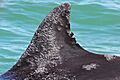
Lesions in the dorsal fin of a bottlenose dolphin caused by lobomycosis, a fungal infection of the skin.
-

Spectrogram of dolphin vocalizations. Whistles, whines, and clicks are visible as upside down V's, horizontal striations, and vertical lines, respectively.
-

Pacific white-sided dolphins porpoising.
-

Sleeping dolphin in captivity: a tail kick reflex keeps the dolphin's blowhole above the water.
-
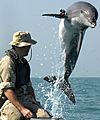
A military dolphin
-

Plate of dolphin sashimi
-
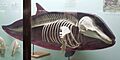
A skin-skeletal preparation.


See also
 In Spanish: Delfines oceánicos para niños
- List of individual cetaceans
