
List of fishes of Yellowstone National Park facts for kids

Yellowstone National Park, located in Idaho, Montana, and Wyoming, is home to many different kinds of fish. You can find 13 types of fish that are naturally from the park (native species). There are also six types of fish that were brought in from other places (non-native species).
People have enjoyed fishing for trout in the park since it was created in 1872. Trout are the most common fish here. When Yellowstone National Park first started, about 40% of its waters had no fish at all. This included most high-mountain lakes and rivers above big waterfalls. Only 17 out of 150 lakes had fish.
Starting in 1889, the U.S. Bureau of Fisheries began a 60-year project. They added fish to the waters and ran fish hatcheries. This greatly changed where native and non-native fish lived in the park. By 1955, all fish stocking and hatchery work in the park had stopped. Some of the fish brought in never created strong populations. At least one type of introduced fish was even completely removed from the park.
Contents
- Native Fish: Yellowstone's Original Species
- Arctic Grayling: A Special Fish
- Longnose Sucker: A Long-Lived Fish
- Mountain Sucker: Widespread in Rivers
- Utah Sucker: Found in Heart Lake
- Longnose Dace: In All Major Rivers
- Speckled Dace: West of the Divide
- Mountain Whitefish: Surviving Well
- Mottled Sculpin: A Mystery Fish
- Redside Shiner: Spreading in Lakes
- Snake River Fine-Spotted Cutthroat Trout
- Westslope Cutthroat Trout: Restoration Efforts
- Yellowstone Cutthroat Trout: Facing Challenges
- Utah Chub: Spreading to New Lakes
- Non-Native Fish: Newcomers to Yellowstone
- Non-Native Fish No Longer in the Park
- See also
Native Fish: Yellowstone's Original Species
The fish listed below are native to Yellowstone National Park. However, their original homes might have shrunk a lot since the park began. Some were even moved to waters where they didn't originally live, especially in mountain lakes. Native fish are fully protected in the park. This means anglers (people who fish) are not allowed to catch them.
- Native Yellowstone Fish
-
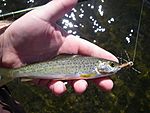
Grebe Lake grayling
-
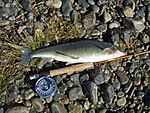
Mountain whitefish
-
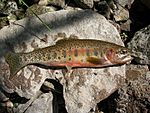
Westslope cutthroat trout
-
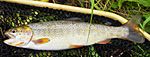
Snake River fine-spotted cutthroat trout
-
Yellowstone cutthroat trout
-
Mountain sucker
-
Longnose sucker


Arctic Grayling: A Special Fish
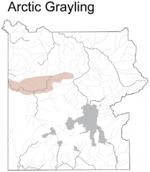
The Arctic Grayling (Thymallus arcticus montanus) used to live in the Madison River and Gallatin River areas. This was below Firehole Falls and Gibbon Falls. But when brown and rainbow trout were brought into the Madison River, the grayling disappeared from these rivers.
Today, Arctic grayling live in Grebe Lake, Wolf Lake (in the Gibbon River area), and Cascade Lake (in the Yellowstone River area). They were brought here in 1921 from Georgetown Lake in Montana. Sometimes, grayling are caught in the Gibbon River. But these are likely fish that escaped from Grebe or Wolf lakes.
Longnose Sucker: A Long-Lived Fish
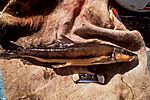
The Longnose sucker (Catostomus catostomus grieus) is native to the Yellowstone River area below Yellowstone Falls. You can find it in the Lamar River, Slough Creek, and Gardner River. It has also been introduced into Yellowstone Lake. From there, it spread into other Yellowstone rivers and lakes. The Longnose sucker is thought to be the longest-living fish in the park. A 20-inch (51 cm) fish weighing 3 pounds (1.4 kg) could be as old as 25 years!
Mountain Sucker: Widespread in Rivers
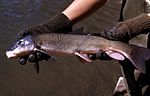
The Mountain sucker (Catostomus platyrhynchus) lives in many rivers and streams in Yellowstone. You can find them below the main waterfalls in the park's big river systems.
Utah Sucker: Found in Heart Lake
The Utah sucker (Catostomus ardens) is native to Heart Lake and the Heart River area. It probably also lives in the Snake River area of the park.
Longnose Dace: In All Major Rivers
The Longnose dace (Rhinichthys cataractae) is common in all the major river systems in the park. This includes Yellowstone Lake and the streams that flow into it.
Speckled Dace: West of the Divide
The Speckled dace (Rhinichthys osculus) only lives west of the Continental Divide in the park. This means you will find it in the Snake River, including Heart Lake and Fall River areas.
Mountain Whitefish: Surviving Well
The mountain whitefish (Prosopium williamsoni) is native to the park. It lives in the Madison River, Gallatin River, and Yellowstone River (below Knowles Falls). It's also in the Middle Creek (a branch of the Shoshone River) and the Snake River areas. Attempts to put mountain whitefish into the Yellowstone River below Yellowstone Lake did not work. Native mountain whitefish do very well even when other types of trout are introduced.
Mottled Sculpin: A Mystery Fish
The Mottled sculpin (Cottus bairdi) is common in Yellowstone streams and rivers below the major waterfalls. It lives in the Fall River, Snake River, Shoshone River, Yellowstone River, and Gallatin River areas. Usually, it's only found below big waterfalls like Firehole Falls or Knowles Falls. But when scientists first studied the park's waters in the 1880s-90s, they found mottled sculpin in the Gibbon River above Gibbon Falls. This was strange because no other fish lived there. Scientists still don't know why this happened.
Redside Shiner: Spreading in Lakes
The Redside shiner (Richardsonius balteatus hydrophlox) is native to the Snake River area in Yellowstone. It is most often found in lakes and ponds. It might also be native to lakes in the Fall River area. In the 1950s, it was introduced into Yellowstone Lake. Today, it lives all along the shoreline and in streams and lakes of the upper Yellowstone River. It was also put into Lewis Lake and now lives in Shoshone Lake too. These fish were not officially introduced. It is thought that fishermen released them after using them as bait.
Snake River Fine-Spotted Cutthroat Trout
The Snake River fine-spotted cutthroat trout (Oncorhynchus clarki sp.) is one of three types of cutthroat trout found in Yellowstone. As its name suggests, this fish lives in the Snake River areas of the park. Some fish scientists think this type of cutthroat trout is the same as the Yellowstone cutthroat trout.
Westslope Cutthroat Trout: Restoration Efforts
The westslope cutthroat trout (Oncorhynchus clarki lewisi) was common in the Gallatin River and Madison River areas when the park was created. Today, pure populations of this fish are found in only two areas. Last Chance Creek in the Gallatin River area has a natural population. The Oxbow/Geode stream area in the Yellowstone River area has a pure population, but it was put there in 1922. When brown, rainbow, and brook trout were brought into its original homes, they mostly wiped out the westslope cutthroat trout.
The National Park Service has a big plan to bring this fish back to suitable waters in the park. In 2014, after removing rainbow trout from the Goose Lake chain, park officials started a special breeding group of westslope cutthroat trout in Goose Lake.
In 2017, the park started a multi-year project to restore native trout in the upper Gibbon River area. Lakes (Grebe and Wolf) and streams above Virginia Cascades have been treated with a special chemical called Rotenone. This removes non-native rainbow, brown, and brook trout, as well as non-native Arctic grayling. Once these fish are gone, the park will add native westslope cutthroat trout and Arctic grayling. This will create a safe place for these fish in the park. Even though it's called a "restoration" project, neither of these fish types originally lived in the upper Gibbon River area.
Yellowstone Cutthroat Trout: Facing Challenges
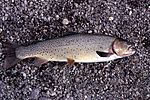
The Yellowstone cutthroat trout (Oncorhynchus clarkii bouvieri) lives in the Yellowstone River area. This includes the river from its start, through Yellowstone Lake, and north to the park border at Gardiner, Montana. It also includes the Lamar River area. This fish has been widely stocked in park lakes that used to have no fish. Before non-native trout were introduced, the Yellowstone cutthroat was the main fish that anglers wanted to catch in the park. Fishing Bridge over the Yellowstone River, where it leaves Yellowstone Lake, was a favorite spot to catch cutthroats or watch them lay their eggs. However, the introduction of lake trout into Yellowstone Lake has caused a serious drop in the Yellowstone cutthroat trout population.
Utah Chub: Spreading to New Lakes
The Utah chub (Gila atraria) is native to the Snake River area in Yellowstone, especially Heart Lake. It was introduced in the 1950s–60s, probably by fishermen using them as bait, into the Lewis Lake and Shoshone Lake system. It is the most common fish in Lewis Lake.
- Native Species Distribution Maps
-
Arctic grayling
-
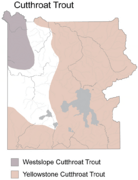
Cutthroat trout
-
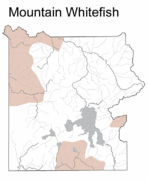
Mountain whitefish


Non-Native Fish: Newcomers to Yellowstone
The following non-native fish have been introduced into park waters. Many of these waters originally had no fish. In many cases, these non-native fish have greatly harmed the original homes of native species when they were introduced.
- Non-native Yellowstone Fish
-
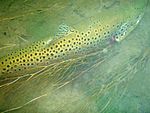
Madison River Brown Trout
-
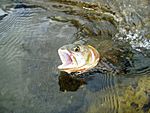
Cutbow from Gardner River
-
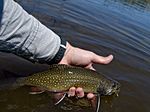
Brook Trout
-
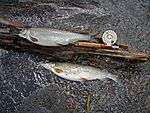
Lake Trout, Yellowstone Lake
-
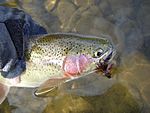
Rainbow Trout


Brown Trout: A Popular Angler's Fish
Brown trout (Salmo trutta) are not native to the United States. They were first brought to the U.S. from Scotland and Germany in 1882. Both types were introduced into Yellowstone starting in 1890. Shoshone and Lewis Lake received fish in 1890. They were also put into the Firehole River (above and below Firehole Falls), the Madison River, and the Gibbon River (below Gibbon Falls) in 1890.
Brown trout also live in the Yellowstone River below Knowles Falls, the Gardner River below Osprey Falls, and in Middle Creek (a branch of the Shoshone River). They are also in the Gallatin River. These fish came from populations stocked in Wyoming and Montana that swam upstream. Brown trout do not live in the Bechler River or Fall River areas in the park's southwest corner.
Brown trout are largely responsible for the disappearance of cutthroat trout and Arctic grayling from their original homes in the Madison and Gallatin river areas. Brown trout are the most common fish in the Madison River area and are very popular with anglers. Large brown trout swim into the Madison River in the fall from Hebgen Lake (outside the park) to lay eggs. This attracts many fishermen.
Rainbow Trout: From Pacific Waters
Rainbow trout (Oncorhynchus mykiss) are native to rivers that flow into the Pacific Ocean in North America and Asia. They were first introduced into the Gibbon River, both above and below Gibbon Falls, in 1890. In 1923, rainbow trout were also put into the Firehole River above Firehole Falls. Rainbow trout have also been introduced into many Yellowstone lakes. They live in the Yellowstone River below Yellowstone Falls and in the upper Slough Creek area.
Rainbow-Cutthroat Hybrids: A Threat to Natives
A Cutbow (Oncorhynchus clarki x mykiss) is a fertile hybrid. This means it's a mix between a rainbow trout (Oncorhynchus mykiss) and a cutthroat trout (O. clarki). While cutbows can happen naturally, most native rainbow and cutthroat populations were kept separate by geography or habitat. When non-native rainbow trout were introduced into areas where Yellowstone cutthroat trout lived, cutbow hybridization became a serious problem. This is because of genetic pollution, which harms the native cutthroat populations. Cutbows can be found in Yellowstone wherever both rainbow and cutthroat trout are present.
Brook Trout: Preferring Cooler Waters
Brook trout (Salvelinus fontinalis) were widely stocked in park waters starting in 1890. They prefer cooler water. Because of this, they were easily pushed out by introduced brown and rainbow trout in the lower parts of the major river systems. Today, brook trout live in the upper Firehole River above Kepler Cascades. They are also in other Firehole streams like the Little Firehole River, Iron Spring, and Sentinel Creeks. In the Gardner River area, they are common above Osprey Falls. They also live in many lakes and ponds. Brook Trout are found in the Middle Creek area of the Shoshone River and streams that flow into Shoshone Lake.
Lake Trout: A Big Problem for Cutthroats
Lake Trout (Salvelinus namaycush) were one of the first non-native fish brought into Yellowstone. They are also the largest fish species in the park, growing to an average length of 20 inches (51 cm). In 1890, 42,000 young fish were put into Lewis Lake and Shoshone Lake. At that time, these lakes had no fish because of Lewis Falls. Sometime later, they were also introduced into Heart Lake. Lake trout weighing over 30 pounds (14 kg) have been caught in Lewis, Shoshone, and Heart lakes. The park record is a 42-pound (19 kg) fish caught in Heart Lake in 1931.
In 1994, lake trout were found in Yellowstone Lake. It is believed they were accidentally or intentionally introduced as early as 1989, possibly from fish taken from Lewis Lake. The introduction of lake trout into Yellowstone Lake has caused a serious decline in the Yellowstone cutthroat trout population. Because of this, the National Park Service has a strong program to remove lake trout from the lake.
Lake Chub: Likely from Bait Fishermen
The Lake chub (Couesius plumbeus) is native to the Missouri and Yellowstone river areas in Montana and Wyoming. However, it is not native to Yellowstone National Park itself. It was most likely introduced into Yellowstone Lake and McBride Lake and Abundance Lake in the Slough Creek area by fishermen using them as bait. It is not very common, but it is probably well established in the Slough Creek area.
- Non-native Species Distribution Maps
-
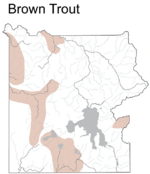
Brown trout
-
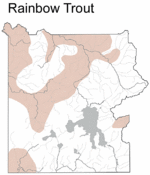
Rainbow trout
-
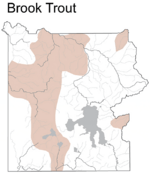
Brook trout
-
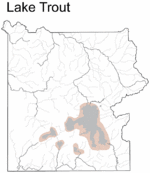
Lake trout


Non-Native Fish No Longer in the Park
The following fish were introduced into park waters but did not create strong populations (except for the Yellow Perch). All these fish no longer live in Yellowstone today.
- Non-native species no longer in Yellowstone
-
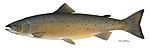
Atlantic salmon
-
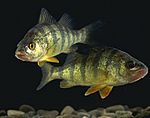
Yellow perch
.jpg)

Land-locked Atlantic Salmon: Failed Introductions
In 1908, 7000 Land-locked Atlantic salmon (Salmo salar) were put into Yellowstone Lake. Another 5000 were put into Duck Lake (West Thumb). Neither of these attempts worked, and the salmon did not survive.
Largemouth Bass and Smallmouth Bass: Not Established
In 1893, 250 young bass were introduced into the Gibbon River. It's not known if these were large or smallmouth bass (Micropterus dolomieu). In the early 1900s, 500 young Largemouth bass (Micropterus salmoides) were put into Goose Lake and Feather Lake in the Lower Geyser Basin. Neither of these introductions led to a lasting population of bass.
Yellow Perch: Successfully Removed
In the early 1900s, Yellow perch (Perca flavescens) appeared in Goose Lake and other small lakes in the Lower Geyser Basin. It is believed they were either illegally introduced or came along with the official bass stocking. In 1938, park fish managers treated Goose Lake and other areas with chemicals to remove the Yellow perch. They do not exist in the park today.
See also
- Animals of Yellowstone
- Angling in Yellowstone National Park
