
List of forts in South Dakota facts for kids

South Dakota is a state with a rich history, and a big part of that history involves its many forts. These forts were like small, protected towns built a long time ago, mostly by the United States Army. They were important for different reasons, like protecting settlers, controlling trade, or keeping peace with Native American tribes. Some forts were simple wooden structures, while others were large military bases. Many of these forts are no longer standing, but their stories help us understand how South Dakota grew and changed over time. This list will tell you about some of the most interesting forts that once existed, or still exist, in South Dakota.
Contents
Why Were Forts Built in South Dakota?
Forts in South Dakota were built for several key reasons. In the 1800s, as more people moved west, these forts helped protect travelers and new settlers. They also served as important trading posts, where goods were exchanged between different groups. Sometimes, forts were built to keep an eye on Native American tribes and manage agreements with them. They were also used by the military to keep order and respond to conflicts, like the Ghost Dance movement. Each fort has its own unique story, but they all played a part in shaping the history of the region.
Famous Forts and Their Stories

Many forts in South Dakota have fascinating histories. Let's look at a few of them.
Fort Randall: A Major Military Post
Fort Randall was built in 1856 in Gregory County. It was one of the most important early military posts in the area. Located on the Missouri River, it helped control travel and trade along the river. Soldiers at Fort Randall played a big role in exploring the region and protecting the growing settlements. Today, you can still visit the ruins of the fort and imagine what life was like for the soldiers stationed there.
Fort Meade: Protecting the Black Hills

Fort Meade was established in 1878 in Meade County. It was built after gold was discovered in the Black Hills, which brought many new people to the area. The fort was important for keeping peace and order during this busy time. It was also known by earlier names like Camp Ruhlen and Camp Sturgis. Fort Meade continued to be an active military base for many years and is now home to a Veterans Affairs medical center.
Fort Bennett: A Changing Name

Fort Bennett was built in 1870 in Stanley County. It was first called the Post at Cheyenne (River) Indian Agency. This means it was located near an agency that worked with Native American tribes. In 1878, its name changed to Fort Bennett. Forts like this often served as places where government officials met with tribal leaders and managed supplies.
Fort Pierre Chouteau: An Early Trading Post
Fort Pierre Chouteau was built much earlier, in 1831, also in Stanley County. This fort was primarily a fur trading post. Fur trading was a huge business in the early 1800s, and posts like Fort Pierre Chouteau were central to this trade. It was a place where trappers and traders could bring their furs and exchange them for other goods. It is now recognized as a National Historic Landmark because of its importance in the fur trade era.
Other Notable Forts and Camps
Many other forts and camps were built across South Dakota, each with its own purpose.
- Camp Cheyenne (1890, Meade County) was built during a time of unrest, specifically in response to the Ghost Dance movement among the Sioux people.
- Fort Defiance (1874, Custer County) was also known by several other names, including Gordon Stockade and Camp Harney. These different names show how forts could change over time or be known by different groups.
- Some camps, like one of the Camp Crook locations (1876, Pennington County), even grew into towns later on. This shows how military outposts could become the starting points for new communities.
- Fort Sisseton (1864, Marshall County) is another well-preserved fort that you can visit today. It offers a glimpse into military life on the frontier.
- Camp Rapid (1925, Pennington County) is a more modern military installation, showing that the need for military presence continued into the 20th century.
These forts and camps, whether big or small, played a vital role in the history of South Dakota. They represent a time of exploration, settlement, and sometimes conflict, helping to shape the state we know today.
Images for kids
-
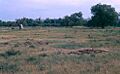
The site of Fort Pierre Chouteau, a National Historic Landmark
-
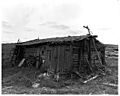
The blacksmith shop at Fort Bennett
-
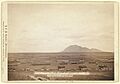
Fort Meade in 1888
See also
