
List of protests in the United Kingdom facts for kids
Protests are when groups of people gather to show their strong feelings about something. They might be unhappy with a government decision, a company's actions, or a social issue. In the United Kingdom, people have protested about many different things over the years. These include fighting for the right to vote, asking for changes in how the country is run, speaking out about poverty, wages, and working conditions, and protesting against wars. People have also marched for human rights, immigration rules (both for and against), fathers' rights, LGBTQ+ rights, and climate change. In Northern Ireland, protest marches have sometimes been very difficult, like the event known as Bloody Sunday.
.jpg)
Police in London used to share how many people they thought were at protests. Around 2019, they stopped doing this unless there was a special reason. However, by late 2023, they started sharing these numbers with the media again.
Contents
- Largest Protests in the UK
- Why People Protest
- Fighting for the Right to Vote
- Protesting Poverty
- Workers' Rights and Disputes
- Fighting for Rights
- Race and Immigration
- Protesting Taxes
- Protecting the Environment
- Animal Rights
- Protesting War
- Nuclear Weapons
- Religion
- Art and Culture
- Foreign Policy
- Anti-Capitalist and Anti-Globalisation
- The Troubles in Northern Ireland
- Other Protests
- Images for kids
- See also
Largest Protests in the UK
Some of the biggest protests in the UK have seen hundreds of thousands, or even over a million, people gather. For example, on 15 February 2003, around 1.5 million people marched in London to protest the Iraq War. This was organised by the Stop the War Coalition.
Other very large protests include:
- Brexit Referendum: In March and October 2019, huge marches took place in London, with up to a million people, asking for a second public vote on leaving the European Union. These were organised by groups like People's Vote.
- Palestine Solidarity: In late 2023 and early 2024, many large marches for Palestine took place in London, with hundreds of thousands of people attending. These were organised by the Palestine Solidarity Campaign.
- Austerity: In March 2011, about 500,000 people marched in London against government spending cuts, organised by the Trades Union Congress.
- Countryside Issues: In September 2002, over 400,000 people marched in London for countryside causes, including hunting rights, organised by the Countryside Alliance.
- Nuclear Weapons: In October 1983, around 400,000 people marched in London against nuclear weapons, organised by the Campaign for Nuclear Disarmament.
Why People Protest
People protest for many different reasons. They want their voices heard and hope to bring about change.
Fighting for the Right to Vote
In the past, not everyone in the UK could vote. People protested to change this.
- The Chartists were a working-class movement in the 1800s who wanted more people to have the right to vote and other democratic changes.
- Suffragettes were women who fought for women to have the right to vote in the early 1900s.
- The Peterloo Massacre in 1819 was a tragic event where people gathered peacefully to ask for parliamentary reform, but the army attacked them.
Protesting Poverty
People have often protested against poverty and for better living conditions.
- The Hunger marches in the 1920s and 1930s saw unemployed people march long distances to London to demand help.
- The Jarrow March in 1936 was a famous march by unemployed shipyard workers from Jarrow to London.
- The Make Poverty History campaign in 2005 saw large protests to raise awareness about global poverty.
Workers' Rights and Disputes
Workers often protest to get better pay, safer working conditions, or to stop job losses.
- The 1926 United Kingdom general strike was a huge strike involving many different workers to support coal miners.
- The UK miners' strike (1984–1985) was a long and difficult strike by coal miners against pit closures.
Fighting for Rights
Many protests are about making sure everyone has fair rights.
- The Gay Liberation Front in the UK campaigned for LGBTQ+ rights.
- Fathers 4 Justice is a group that protests for fathers' rights in family law cases.
- 2010 UK student protests happened when students protested against increases in university tuition fees.
- The George Floyd protests in the United Kingdom in 2020 were part of a global movement against racial injustice.
Race and Immigration
People have protested against racism and for equal treatment for all races.
- The Battle of Cable Street in 1936 was when people in London stopped a march by a fascist group.
- The Bristol Bus Boycott, 1963 was a protest against a bus company that would not hire Black or Asian drivers.
- Groups like the Anti-Nazi League and Rock Against Racism were formed to fight against racist groups and promote unity.
Protesting Taxes
Sometimes, people protest against taxes they think are unfair.
- The Poll Tax Riots in 1990 were large protests against a new tax that was the same for everyone, no matter how rich or poor they were.
- The UK fuel protests in 2000 were when people protested against high fuel prices.
Protecting the Environment
Many people protest to protect our planet and fight climate change.
- Groups like Extinction Rebellion and Just Stop Oil use protests to demand action on climate change.
- Bristol Youth Strike 4 Climate is an example of young people striking from school to protest climate change.
- There have been many protests against new roads or airport expansions, like at Heathrow Terminal 5.
Animal Rights
People also protest for the rights and welfare of animals.
- The Countryside Alliance organised large marches to support fox hunting.
- Groups like Stop Huntingdon Animal Cruelty protest against animal testing.
Protesting War
Many people in the UK have protested against wars and military actions.
- There were protests against the Vietnam War in the 1960s.
- The Stop the War Coalition has organised many protests, including the huge march against the Iraq War in 2003.
- Conscientious objectors are people who refuse to fight in wars because of their beliefs.
Nuclear Weapons
Protests have also focused on nuclear weapons.
- The Campaign for Nuclear Disarmament (CND) has organised many marches against nuclear weapons since the 1950s.
- The Greenham Common Women's Peace Camp was a famous protest camp set up by women outside a military base that stored nuclear missiles.
Religion
Sometimes, protests happen because of religious issues or beliefs.
- There have been protests against plays or shows that some religious groups found offensive.
Art and Culture
Even art and culture can be the subject of protests.
- The Stuckist demonstrations were protests by artists who disagreed with modern art.
Foreign Policy
People protest about how the UK government deals with other countries.
- There have been protests in the UK about conflicts in other parts of the world, like the 2023 Gaza War protests.
- Protests have also happened during visits by foreign leaders, like Donald Trump or George W. Bush.
Anti-Capitalist and Anti-Globalisation
Some protests are against the global economic system or big corporations.
- The 2009 G-20 London summit protests happened when world leaders met in London, with people protesting against global capitalism.
- The Occupy movement saw people camp out in public places to protest economic inequality.
The Troubles in Northern Ireland
The period known as The Troubles in Northern Ireland involved many protests and conflicts.
- The Northern Ireland Civil Rights Association organised marches for equal rights for all citizens.
- Bloody Sunday was a day in 1972 when British soldiers shot and killed unarmed civilians during a protest march.
- The 1981 Irish hunger strike was a protest by prisoners who wanted to be treated as political prisoners.
Other Protests
Protests can happen for many other reasons too.
- The Luddites were textile workers in the early 1800s who protested against new machines that they feared would take their jobs.
- The Swing Riots were protests by agricultural workers in the 1830s against low wages and new farming machines.
- The "Put It To The People" march in 2019 was a large anti-Brexit protest.
Images for kids
-
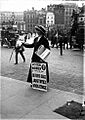
A British suffragette
-
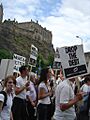
Make Poverty History marchers in Edinburgh in 2005
-
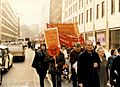
Miners' strike rally in London, 1984
-
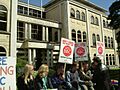
Picket outside BBC Bristol in 2006
-
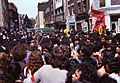
March against the National Front in Brick Lane, 1978
-
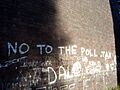
Anti-Poll Tax graffiti
-
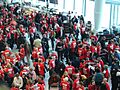
Protest at Heathrow Terminal 5
-
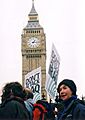
Protesters against the war on Iraq
-
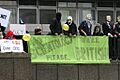
Protest by Anonymous in London in 2008 against Scientology
-
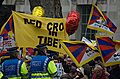
Pro-Tibet protesters at Olympic torch relay in London in 2008
-
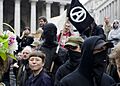
Black bloc at the 2009 G20 protests
-
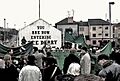
Memorial march in 2007 for Bloody Sunday


See also
- Civil liberties in the United Kingdom
- Speakers' Corner
- Student activism in the UK
