
Occupy movement facts for kids
Quick facts for kids Occupy movement |
|
|---|---|

Worldwide Occupy movement protests on 15 October 2011
|
|
| Date | 17 September 2011 – 9 November 2016 |
| Caused by | Economic and social inequality, corporate influence over government |
| Goals | Greater fairness, economic justice, better jobs, and banking rules |
| Methods |
|
| Status | Ended |
The Occupy movement was a worldwide protest movement that began in late 2011. People joined together to speak out against social and economic inequality. They believed that the global financial system and large corporations held too much control over everyday life. Protesters wanted more social and economic justice. They also wanted real democracy that helped regular people instead of just wealthy individuals.
The movement started in New York City with Occupy Wall Street on 17 September 2011. Protesters set up camp in Zuccotti Park near Wall Street in Lower Manhattan. Soon, the idea spread across the planet. Within weeks, people held protests in over 951 cities across 82 countries. Demonstrators used public squares to talk about fairness, share food, and hold peaceful meetings.
Contents
What Was the Occupy Movement?
The Big Ideas Behind the Movement
The Occupy movement grew out of frustration after the 2008 financial crisis. During that crisis, many families lost their homes and jobs. Many people felt that ordinary citizens suffered while large banks received government help. Protesters argued that a small minority held most of the world's money and power.
The demonstrators took inspiration from other major gatherings. These included the Arab Spring in the Middle East and the Spanish Indignados protests. In Spain, thousands of people had camped in public squares like Madrid during the 2011 Spanish protests. Activists also learned from the 2009 Iranian presidential election protests and waves of anti-austerity protests in Europe.
The Famous Slogan: We Are the 99%

The movement became famous for the political slogan "We are the 99%". Protesters shared this message online using blogs like Tumblr and popular social media like Twitter.
The phrase came from economic research, including studies from the Congressional Budget Office. These reports showed a big gap between the richest 1% of earners and the remaining 99%. Wealth had grown much faster for the top group over thirty years. After the Great Recession, this difference grew even wider. Protesters believed that laws favored the richest group instead of supporting common families.
How Was the Movement Started?

A Canadian group called the Adbusters Media Foundation helped start the movement. They published an anti-consumerist magazine named Adbusters. Leaders Kalle Lasn and Micah White wanted a peaceful gathering on Wall Street. They wanted to push back against corporate influence in politics.
Online activist groups like Anonymous helped share the message. They created posters featuring a dancer on top of the famous Charging Bull statue in New York. The concept spread quickly on social networks like Facebook, IRC, and Meetup. The first large gathering in New York City happened on 17 September 2011.
How the Protests Were Run
Running Camps Without Leaders

The Occupy movement worked very differently from ordinary organizations because it had no single president or boss. Instead, everyone practiced participatory democracy. Every participant had a chance to share opinions in open discussions called General assemblies.
To make group choices, protesters used consensus. This meant people talked through problems until everyone agreed. This style borrowed ideas from the Quaker community, ancient Athens, and the anti-globalization movement. Small teams called working groups prepared plans for food, medical care, and camp rules.
Hand Signals and the Progressive Stack

Large crowds made it hard for everyone to hear or vote quickly. To solve this, meetings used silent hand signals. Wiggling fingers pointing upward meant agreement. Crossing arms made an "X" to show strong disagreement.
Meetings also used a list of speakers called a stack. Occupy Wall Street often used a progressive stack. In this system, facilitators invited people from marginalized groups to speak earlier. This ensured that diverse voices, including women and minorities, could lead discussions.
The Promise of Peaceful Protest
The movement focused on Nonviolent protest and Civil disobedience. Many camps studied books by Dr. Gene Sharp, such as From Dictatorship to Democracy. Sharp wrote about nonviolent methods to push for social change. Demonstrators held meetings to learn ways to keep marches peaceful and orderly.
Sociologist Manuel Castells praised early campers for staying peaceful during gatherings. When conflicts occurred, people relied on community mediators. Many camps asked members to sign pledges agreeing to nonviolence. Writers like Anthony Barnett noted that peace helped the movement gain wide public respect.
Major Events Across the World
The Movement Expands in Autumn 2011

During late September 2011, attention grew after police arrested marchers in New York City. On 1 October 2011, hundreds of people marched onto the Brooklyn Bridge. A few days later, 15,000 marchers gathered with labor unions to support the cause.
On 15 October 2011, people held a global day of action. Millions rallied in 900 cities, including Paris, Madrid, Tokyo, Sydney, and Frankfurt. Protests took place in South America, Europe, Asia, and North America.
Actions in Oakland and New York
On 25 October 2011, police cleared the camp at Frank Ogawa Plaza in Oakland, California. Protesters later held the 2011 Oakland General Strike on 2 November. During this march, thousands of citizens briefly closed the Port of Oakland.
On 15 November 2011, police entered Zuccotti Park in New York City and removed the tents. Other cities around the world began clearing camps around the same time. Even though the tents were gone, activists continued to meet in community halls and parks.
Protests in Other Countries

- In the United Kingdom, Occupy London set up tents outside St Paul's Cathedral after police blocked Paternoster Square. Church leader Giles Fraser welcomed peaceful demonstrators. Camps also appeared in Bristol, College Green, and Edinburgh.
- In Canada, campers set up tents in Vancouver, Toronto, and Montreal, and stayed active through the cold winter.
- In Nigeria, citizens launched Occupy Nigeria in January 2012 to stop sudden rises in everyday fuel prices. President Goodluck Jonathan agreed to lower fuel costs after broad public strikes.
- In Australia, people set up Occupy Melbourne and Occupy Sydney in busy shopping plazas like Martin Place.
What Did the Movement Change?
Helpful Projects for Everyday Families
After camps closed, activists started community projects to help families in need. One project called Occupy Sandy brought hot food and clothing to neighborhoods damaged by Hurricane Sandy in 2012.
Another project was Strike Debt and its Rolling Jubilee program. This group collected donations to pay off medical debt for thousands of families. By 2015, they had erased millions of dollars in debt so people could start fresh. Activists also formed Occupy Homes to help families protect their houses from unfair bank auctions.
Long-Term Impact on World Politics
The Occupy movement changed how people talk about money and fairness. Words like "the 99%" and "income inequality" became regular topics on television news and in school classrooms.
Leaders began paying more attention to working families. Former British Prime Minister Gordon Brown and United States leaders discussed ideas to make banks behave more fairly. In the United States, lawmakers proposed rules to limit corporate money in elections. The movement showed that peaceful gatherings could inspire millions across the globe to talk about fairness.
Images for kids
-
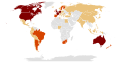
Occupy protests around the world
-

Green party leader Caroline Lucas speaking at the Bank of Ideas
-

Occupy DC sign and tents in Washington, D.C.
-

Occupy Portland prayer vigil
-

Mashtots Park activists in Armenia
-

The Occupy Sydney camp
-

Protesters in Brasília, Brazil
-

Occupy Montreal assembly
-

Tents at the Occupy Buffer Zone in Cyprus
-

Occupy Berlin rally in Germany
-

Occupy Dame Street camp in Dublin
-

Occupy Rotterdam in the Netherlands
-

Occupy Auckland camp in New Zealand
-

Occupy Gezi in Turkey
-

Julian Assange speaking at Occupy London
-

Tents in Parliament Square, London
-

March to the Port of Oakland
-

Zuccotti Park closed to camping
-

Crowd in Congress Square, Ljubljana


Related Pages
- Arab Spring
- Civil disobedience
- Direct action
- Economic inequality
- Nonviolent protest
- Occupy Wall Street
- Social justice
- We are the 99%
