
Maat facts for kids
Quick facts for kids Maat |
|
|---|---|
| Goddess of Order | |

Maat is the goddess of truth and justice. The ostrich feather on her head is her symbol.
|
|
| Major cult center | All ancient Egyptian cities |
| Symbol | scales, ostrich feather, Balance |
| Consort | Thoth |
| Offspring | Seshat |
| Parents | Ra and Hathor |
Maat (also spelled Maʽat) was the ancient Egyptian goddess of truth, balance, order, harmony, law, morality, and justice. She was more than just a goddess; she represented the way the universe was supposed to work. The ancient Egyptians believed that Maat regulated the stars, the seasons, and the actions of both humans and gods.
Her opposite was Isfet, which meant chaos, violence, and injustice. The Egyptians believed that without Maat, the world would fall into chaos.
Contents
Who Was Maat?
Maat was depicted as a young woman. She often wore an ostrich feather on her head. Sometimes, she was shown with wings on each arm. This feather became her most famous symbol and was known as the "Feather of Truth."
In Egyptian mythology, Maat was the daughter of the sun god Ra. She was often linked with Thoth, the god of wisdom and writing. Because Thoth recorded the judgments of the dead, he and Maat worked closely together.
The Principle of Order
For the ancient Egyptians, Maat was a rule for living a good life. It meant acting with honour and truth in matters involving family, the community, the nation, and the gods.
Maat and the Pharaohs

The Pharaoh (the king of Egypt) had a very important job. He had to keep Maat (order) in the world and push back Isfet (chaos). Many pharaohs included Maat in their names or titles, calling themselves "Beloved of Maat." They believed they ruled through her authority.
If a king did not follow Maat, the Egyptians feared that terrible things would happen, like famine or war. A good king ensured that the laws were fair and that people were treated with justice.
Maat in Daily Life
Ordinary people were also expected to follow Maat. This meant being honest, fair, and kind to others. Ancient texts taught that helping the poor and being a good neighbor were ways to live by Maat.
The Afterlife and Judgment
The most famous story about Maat involves the afterlife. The ancient Egyptians believed that when a person died, they had to travel to the Duat (the underworld) to be judged.
The Weighing of the Heart

In the Hall of Two Truths, a ceremony called the Weighing of the Heart took place. The heart of the dead person was placed on one side of a scale. On the other side was the Feather of Maat.
- If the heart was lighter than or equal to the feather, it meant the person had lived a good, truthful life. They were allowed to enter Aaru, the Egyptian paradise.
- If the heart was heavier than the feather, it was full of sin and bad deeds. The heart would be eaten by Ammit, a scary monster that was part lion, part hippo, and part crocodile. This meant the person's soul would vanish forever.
The god Anubis watched over the scales to make sure the weighing was correct, and Thoth wrote down the result.
The 42 Declarations of Purity
During the judgment, the deceased person had to recite a list of things they had not done. These are often called the "Negative Confessions." There were 42 judges, known as the Assessors of Maat, who listened to these promises.
Some examples of these declarations included:
- "I have not stolen."
- "I have not told lies."
- "I have not been angry without a good reason."
- "I have not hurt anyone."
- "I have not polluted the water."
These statements show that the Egyptians valued honesty, kindness, and respect for nature.
Scribes and Education

In ancient Egypt, scribes were people who learned to read and write. They were very important because they kept records for the government and temples. Scribes were taught to follow the laws of Maat in their work.
Thoth was the patron god of scribes, but Maat was the spirit of their work. Scribes believed that writing the truth was a way to honor the goddess. They wrote letters, legal documents, and religious texts.
Young students in scribal schools learned about Maat early on. They were taught that being honest and fair was the key to success. Texts like the Instruction of Ptahhotep gave advice on how to speak well and treat others with respect, which was all part of living by Maat.
Temples
Although Maat was a very important concept, there were not many large temples built just for her. Instead, she was worshipped in many temples dedicated to other gods, like Karnak and Memphis. A small temple to Maat was found at Karnak, and evidence suggests others existed.
Images for kids
-
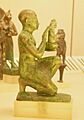
A bronze statue of a man offering a small figure of Maat.
-
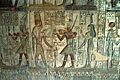
The village of Deir el-Medina, where many artisans and scribes lived.
-
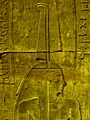
A carving of Maat on a wall at the Temple of Edfu.
-
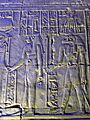
A scene from the Temple of Edfu.
-
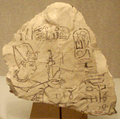
A drawing on stone showing Pharaoh Ramesses IX presenting Maat.
-
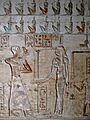
Carving in a temple at Deir el-Medina.
-
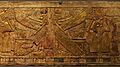
Maat shown with large wings.
-
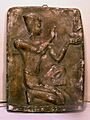
An ancient carving showing an Egyptian holding a statue of Maat.
-
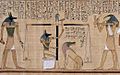
The heart of Hunefer being weighed against Maat's feather.
-
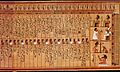
Judges of Maat watching the ceremony.
-
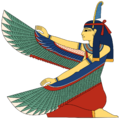
Winged Maat in the Tomb of Nefertari.
-
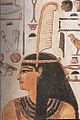
Maat wearing the feather of truth.


_-_Egypt-5A-044.jpg)


.png)

See also
