
Robert Morris (financier) facts for kids
Quick facts for kids
Robert Morris
|
|
|---|---|

Portrait by Robert Edge Pine, c. 1785
|
|
| United States Senator from Pennsylvania |
|
| In office March 4, 1789 – March 4, 1795 |
|
| Preceded by | Seat established |
| Succeeded by | William Bingham |
| United States Agent of Marine | |
| In office August 12, 1781 – November 1, 1784 |
|
| Preceded by | Alexander McDougall (Secretary of Marine) |
| Succeeded by | Benjamin Stoddert (Secretary of the Navy) |
| United States Superintendent of Finance | |
| In office June 27, 1781 – November 1, 1784 |
|
| Preceded by | Position established |
| Succeeded by | Alexander Hamilton (Secretary of the Treasury) |
|
|
| In office 1775–1778 |
|
| Personal details | |
| Born | January 20, 1734 Liverpool, Lancashire, England, Great Britain |
| Died | May 8, 1806 (aged 72) Philadelphia, Pennsylvania, U.S. |
| Resting place | Christ Church Burial Ground, Philadelphia, Pennsylvania, U.S. |
| Political party | Federalist |
| Spouse |
Mary White (1749–1827)
(m. 1769) |
| Children | 7, including Thomas |
| Signature |  |
Robert Morris Jr. was a British-born merchant and one of the most important Founding Fathers of the United States. He was a very wealthy businessman who used his own money to help win the American Revolutionary War. Because of this great help, people called him the "Financier of the Revolution."
Morris is one of only two people, along with Roger Sherman, to sign three of America's founding papers: the Declaration of Independence, the Articles of Confederation, and the U.S. Constitution. He served as the first Superintendent of Finance of the United States, created the country's first national bank, and was later elected a U.S. Senator for Pennsylvania.
Contents
Early Life and Growing Up
A Boy in Liverpool and Maryland

Robert Morris was born in Liverpool, England, on January 20, 1734. His father, Robert Morris Sr., worked as a trade agent for a shipping company. Young Robert lived with his grandmother until he was thirteen years old. In 1747, he sailed across the ocean to Oxford, Maryland, to join his father, who worked in the tobacco trade.
Two years later, his father sent him to Philadelphia, which was the largest city in British North America. Philadelphia was full of busy docks and growing shops. Soon after Robert arrived, his father died from an infected wound. The young teenager inherited money and had to make his own way in the world.
Learning the World of Ships and Trade
Robert became an apprentice clerk for a merchant named Charles Willing. He proved to be very smart with numbers and worked hard. Morris traveled on sailing ships to ports around the Caribbean Sea to learn about buying and selling. He learned how merchants traded goods using many different kinds of coins.
Charles Willing died in 1754. His son, Thomas Willing, was two years older than Morris. The two young men became close friends. In 1757, they created a business partnership called Willing, Morris & Company. This shipping business soon became one of the most successful firms in colonial Pennsylvania.
Sailing Across the World's Oceans
Willing, Morris & Company owned fast trading ships that sailed across the globe. They pooled money with other merchants to buy ship insurance to protect their vessels from storms and pirates. Their ships carried goods between Cuba, Spain, Italy, the West Indies, and the India. Later, in 1784, Morris helped pay for the voyage of the Empress of China, the very first American ship to trade directly with China.
During the French and Indian War, there was a major shortage of workers in Pennsylvania. In this era, Willing, Morris & Company took part in the Atlantic slave trade, purchasing and selling enslaved laborers. By 1765, the firm ended its role in this trade. Later in life, Morris hired workers under labor contracts instead.
Family and Grand Homes
Family Life in Philadelphia


In 1769, Morris married twenty-year-old Mary White, the daughter of a wealthy lawyer. Together they raised seven children, including a son named Thomas Morris who later became a congressman. Mary's brother, William White, became an Episcopal bishop and served as a Senate chaplain.
The Morris family attended Christ Church, where other leaders like Benjamin Franklin also went to worship. Morris owned a town house on Front Street and a country estate called "The Hills" near the Schuylkill River. He also bought a large estate named Morrisville along the Delaware River.
Living in the President's House

In 1781, Morris bought a house on Market Street near Independence Hall. It was one of the finest houses in the entire city.
When Philadelphia served as the nation's temporary capital, Morris offered this home to his good friend General George Washington. It became known as the President's House. Washington lived there during his presidency, and Morris moved into a house next door. President John Adams also lived there before the government moved to the White House in Washington, D.C.
The American Revolution Begins
Protesting Against British Taxes
In 1765, the Parliament of Great Britain passed the Stamp Act. This law placed taxes on paper goods, legal documents, and newspapers in the American colonies. Morris joined other city merchants to resist the tax. He helped convince the tax collector, John Hughes, not to collect the money.
Morris explained that he loved his English roots, but he stood firmly with the American colonies on matters of freedom. In 1774, when Britain passed harsh laws called the Intolerable Acts, colonists decided to stop buying British goods. Morris served on a local committee that carried out the Continental Association trade boycott.
Smuggling Gunpowder for the Army
The American Revolutionary War began in April 1775 after the Battles of Lexington and Concord. The Second Continental Congress met in Philadelphia and chose George Washington to command the Continental Army.
Soldiers needed weapons, food, and clothes, but they were desperately short of gunpowder. Morris served on the Pennsylvania Committee of Safety alongside Benjamin Franklin. Morris used his commercial trading network to secretly smuggle gunpowder from overseas into the colonies. Because his plans worked, he became the chief gunpowder supplier for the whole Continental Army.
Signing the Declaration of Independence
In late 1775, Morris was elected as a delegate to the Second Continental Congress. He worked on the Secret Committee of Trade to purchase supplies and weapons. He also worked on the Committee of Secret Correspondence to make friends with foreign nations. He helped send diplomat Silas Deane to Paris to seek aid from the French government.
Morris also helped lead the Marine Committee, which built and directed the small Continental Navy. He favored using fast ships to attack British supply vessels. Along with John Adams, he helped write the Model Treaty, which promoted free trade with other countries instead of British mercantile rules.
In July 1776, Congress voted on whether to declare independence from Britain. Morris still hoped for peace and worried that the colonies were not ready for a long war. To ensure the Pennsylvania delegation would not vote no and ruin American unity, Morris purposefully stayed away during the vote on the Lee Resolution. Soon after, he chose to sign the Declaration of Independence, saying it was his duty to stand with his country.
Financing the Fight for Freedom
Daring Ships and Privateers

During the war, Morris kept supply lines open across the Atlantic Ocean. He directed ships to take southern tobacco to Europe and trade it for muskets and uniforms. Many American ships were stopped by the British navy, so Morris hired armed civilian ships called privateers to attack British merchant ships.
Morris worked with Benjamin Franklin and Arthur Lee to obtain secret money and weapons from Spain and France. When British troops chased Washington across the Delaware River in late 1776, Congress fled Philadelphia. Morris stayed behind to gather money and supplies, helping Washington win the important Battle of Trenton.
After the American defeat at the Battle of Brandywine in 1777, Morris moved his family to Manheim, Pennsylvania. He continued helping Congress, and in March 1778, he signed the Articles of Confederation.
Creating the Bank of Pennsylvania
After stepping down from Congress in 1778, Morris was elected to the Pennsylvania Assembly. He joined with James Wilson to form the Republican Society, which wanted stronger courts and an end to unfair religious tests.
During the war, paper currency lost value quickly, causing terrible inflation. In 1780, Morris and several wealthy merchants started the Bank of Pennsylvania. This private bank gathered money to buy meat, flour, and uniforms for starving soldiers. The bank helped keep the army in the field during a dangerous period of the war.
Leading America's Finances
Becoming Superintendent of Finance


By 1781, the United States was running out of money. Soldiers had not been paid in months, leading to the Pennsylvania Line Mutiny. Congress needed a single capable leader to fix the treasury. Congress created executive departments and chose Robert Morris as the nation's first Superintendent of Finance of the United States. Morris appointed his friend Gouverneur Morris as his assistant.
Morris also served as Agent of Marine, giving him control over the Continental Navy. Working closely with Secretary of War Benjamin Lincoln, Morris became the chief manager of the American government's daily work.
Funding the Victory at Yorktown
In August 1781, General Washington and the French general Rochambeau decided to trap a British army in Virginia. Washington needed enormous amounts of money to move thousands of troops and cannons hundreds of miles south.
The government treasury had no cash left. Morris used his personal credit and borrowed money to raise over $1,400,000. A businessman named Haym Salomon helped Morris sell bills and obtain the final funds needed. This funding allowed Washington to march south and win the decisive Battle of Yorktown, forcing the surrender of British General Cornwallis.
The First National Bank


Morris knew the young country needed a modern money system. In 1781, he convinced Congress to approve the Bank of North America in Philadelphia. It opened its doors in early 1782 as the first official commercial bank in the country.
The bank stored government funds and made loans to Congress. It also issued reliable banknotes that people trusted. Before the bank opened, Morris even issued notes backed by his own fortune, known across the country as "Morris notes." He also asked Congress to build a national mint and proposed the nation's first decimal currency system.
Troubles with Taxes and Soldiers' Pay
Morris wanted the national government to pay off its war debts. He asked the thirteen states to approve a five percent federal tariff on imported goods. Under the Articles of Confederation, every single state had to agree to change the tax rules. In 1782, Rhode Island voted against it, ruining the plan.
Without tax revenue, Morris could not pay the soldiers who had won the war. In early 1783, upset officers threatened to rebel in an event called the Newburgh Conspiracy. Washington calmed the men, while Morris gave out notes using his own money to provide at least one month of pay. Tired of arguing with the states over money, Morris resigned as Superintendent of Finance in 1784.
Shaping the New Constitution
The Philadelphia Convention of 1787

In May 1787, leaders from across the country met at the Philadelphia Convention to fix the national government. Morris was one of the Pennsylvania delegates, alongside Benjamin Rush, George Clymer, and Jared Ingersoll.
Morris officially opened the convention and nominated George Washington to be its president. Morris did not give many speeches during the hot summer debates, but he supported a strong national government that could collect taxes. On September 17, 1787, Morris signed the new United States Constitution. He became one of only six men to sign both the Declaration of Independence and the Constitution.
Serving in the United States Senate

After Pennsylvania ratified the Constitution, the state legislature chose Morris and William Maclay to be its first members of the United States Senate.
President Washington offered Morris the job of Secretary of the Treasury. Morris declined the offer and suggested his talented friend Alexander Hamilton instead. In the Senate, Morris worked hard to pass Hamilton's financial programs, including the Tariff of 1789 and the creation of the First Bank of the United States.
In 1790, Morris helped make the famous Compromise of 1790 with Thomas Jefferson and James Madison. Under this deal, the federal government agreed to pay off state war debts, and the permanent national capital was planned for the Potomac River. While the capital city was being built, Philadelphia served as the temporary capital for ten years. Morris also helped Pennsylvania acquire the Erie Triangle, giving the state a port on the Great Lakes.
Land Speculation and Later Years
Giant Real Estate Deals


After retiring from the Senate in 1795, Morris turned his energy to buying western lands. In 1790, he bought a large part of the Phelps and Gorham Purchase in western New York and sold it to The Pulteney Association for a profit. He then bought more land and sold it to the Holland Land Company.
Morris also started canal companies, such as the Schuylkill and Susquehanna Navigation Company, and built the country's first iron rolling mill. But he soon took massive risks. Working with John Nicholson and James Greenleaf, he formed the North American Land Company. They bought more than six million acres of land in the south, as well as thousands of building lots in the new federal city of Washington, D.C.
Debtors' Prison and "Morris's Folly"

Morris borrowed enormous sums of money to buy these lands, hoping to sell them quickly to new settlers. Instead, the French Revolution and the Panic of 1797 caused land sales to collapse. Morris suddenly owed millions of dollars to banks and friends that he could not pay back.
He had started building an enormous marble mansion on Chestnut Street, designed by architect Pierre Charles L'Enfant. Because Morris ran out of money, the mansion was never finished and was torn down. People nicknamed the unfinished building "Morris's Folly."
In February 1798, Morris was arrested and placed in the Prune Street debtors' prison in Philadelphia. He lived inside the prison for more than three years. In 1800, Congress passed the Bankruptcy Act of 1800, which allowed people trapped in heavy debt to leave prison. Morris was finally released in August 1801.
Final Years and Death
When Morris left prison, his fortune was gone. His wife Mary had a small yearly payment that allowed them to rent a modest house on the edge of Philadelphia. Morris spent his remaining years quietly at home with his family.
Morris died on May 8, 1806, at the age of seventy-two. He was buried in the churchyard of Christ Church Burial Ground in Philadelphia.
Legacy and Honors


Robert Morris played a key role in the birth of the United States. Without his work gathering weapons, building a navy, and raising millions of dollars, the Continental Army might have lost the war.
Morris has been remembered across the United States in many ways:
- His portrait appeared on $1,000 greenback bills and the 1880 $10 silver certificate.
- Robert Morris University in Pennsylvania is named in his honor.
- The town of Morrisville, Pennsylvania, and the village of Mount Morris, New York, bear his name.
- Several ships in the United States Navy and United States Coast Guard have been named USS Morris.
- A large bronze statue of Morris stands in Independence National Historical Park in Philadelphia.
- A public monument honoring Morris, George Washington, and Haym Salomon stands in Chicago, Illinois.
Images for kids
-
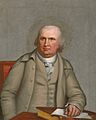
Robert Morris portrait painted by Robert Edge Pine
-
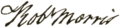
Signature of Robert Morris
Related Pages
- Founding Fathers of the United States
- American Revolutionary War
- Continental Army
- United States Declaration of Independence
- Constitution of the United States
See also
 In Spanish: Robert Morris (financiero) para niños
- List of richest Americans in history
- List of United States senators born outside the United States
