
Siege of Rees (1599) facts for kids
Quick facts for kids Siege of Rees (1599) |
|||||||
|---|---|---|---|---|---|---|---|
| Part of the Eighty Years' War and the Anglo-Spanish War (1585–1604) | |||||||
.jpg) Photograph of the old walls of Rees in 2011. |
|||||||
|
|||||||
| Belligerents | |||||||
 United Provinces United Provinces Electoral Palatinate Electoral Palatinate Brunswick-Lüneburg Brunswick-LüneburgLower Saxon Circle |
 Spain Spain |
||||||
| Commanders and leaders | |||||||
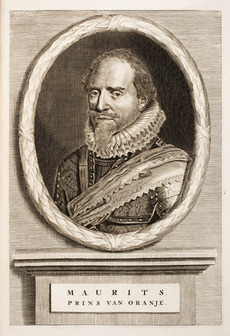
 Count of Lippe Count of Solms Philip of Hohenlohe Count of Lippe Count of Solms Philip of HohenloheSupported by: Maurice of Nassau |
 Ramiro de Guzmán Hendrik van den Bergh Ramiro de Guzmán Hendrik van den BerghSupported by: Francisco de Mendoza |
||||||
| Casualties and losses | |||||||
| Count of Lippe: 2,000 - 2,500 Hohenlohe & Solms: Unknown |
1,500–3,000 | ||||||
The Siege of Rees of 1599 was a short but important battle. It happened in September 1599 in a town called Rees in what is now Germany. This battle was part of two bigger wars: the Eighty Years' War and the Anglo-Spanish War (1585–1604).
Forces from Protestant-German states and the Dutch Republic tried to capture Rees. They were led by Count Simon VI of Lippe, Philip of Hohenlohe-Neuenstein, and Count Ernst of Solms. However, Spanish forces, led by Don Francisco de Mendoza and Don Ramiro de Guzmán, successfully defended the town. The Spanish won this battle, which helped them keep control of the area.
What Led to the Siege?
In 1598, a peace treaty was signed between Spain and France. This treaty was called the Peace of Vervins. It meant Spain gave back most of the lands it had taken from France.
After this peace, Spanish forces in the Spanish Netherlands (led by Archduke Albert) focused on other areas. Don Francisco de Mendoza, a Spanish commander, led his army to capture several towns. They took Orsoy and Alpen in September 1598.
Later, in October, the Spanish also recaptured the important fortress of Rheinberg. They then moved into the province of Gelderland and took Doetinchem. On October 30, 1598, the Spanish army captured Rees itself. Spanish soldiers then stayed in these areas for the winter.
In the spring of 1599, the Spanish army continued its advance. They tried to capture Zaltbommel in May. However, Maurice of Nassau, a Dutch leader, managed to keep supplies flowing into Zaltbommel. This forced the Spanish to retreat from Zaltbommel in June.
The Battle for Rees
In early September 1599, a large army of Protestant-German soldiers, about 25,000 strong, marched towards Rees. They were led by Count Simon of Lippe. Their goal was to take Rees back from the Spanish. They surrounded the town, starting the siege.
On September 10, there were small fights near Rees. The Spanish forces inside Rees were led by Don Ramiro de Guzmán. They also received help from Don Francisco de Mendoza's army. Even though the Spanish were greatly outnumbered (about one Spanish soldier for every eight Protestant soldiers), they launched a strong attack.
Two brave Spanish captains, Andrés de Ontoria and Andrés Ortiz, led two powerful charges. These attacks broke the lines of the Protestant army. The German soldiers were not as well-trained or disciplined. Their defenses fell apart.
The Protestant forces suffered a huge defeat. Between 2,000 and 2,500 of Count of Lippe's soldiers were killed or wounded. Hundreds more were captured, about 400 prisoners. The Spanish also took much of their artillery and supplies. The Spanish army, on the other hand, had very few losses.
This defeat was a big embarrassment for the Protestant-Dutch forces. Even though they had surprised and taken Rheinberg on August 30, their attack on Rees failed badly. After this loss, the German army scattered, and the siege of Rees ended.
What Happened Next?
.jpg)
A few days after the siege, the Spanish army took back control of the fortress of Rheinberg. It became clear that Spain was very strong in the Southern Netherlands. People in the northern provinces worried about a Spanish invasion.
In 1600, the Dutch leader Johan van Oldenbarnevelt saw a chance to strike. Prince Maurice of Nassau led his army towards the port of Dunkirk. Dunkirk was known for its privateers, who were like pirates. They caused a lot of damage to Dutch and English ships.
The Spanish army, called the Army of Flanders, got ready. They made their positions stronger along the coast. This led to a big battle called the Battle of Nieuwpoort. Even though Maurice's Dutch army won the battle, both sides lost many soldiers. The battle didn't achieve its main goal, which was to capture Dunkirk. Maurice had to pull his army back.
The Siege of Rees in 1599 was the last major action of Don Francisco de Mendoza's campaign. This period was also known as the Spanish Winter of 1598–99.
See also
.jpg)
