
United States Bill of Rights facts for kids
Quick facts for kids United States Bill of Rights |
|
 First page of an original copy of the twelve proposed articles of amendment, as passed by Congress and engrossed by William Lambert
|
|
| Created | September 25, 1789 |
| Ratified | December 15, 1791 |
| Location | National Archives |
| Authors | 1st United States Congress, mainly James Madison |
| Purpose | To amend the Constitution of the United States |
The United States Bill of Rights is a very important part of the United States Constitution. It includes the first ten amendments, or changes, to the Constitution. These amendments were added to protect the freedoms of American citizens. They were created after many people worried that the original Constitution didn't clearly list enough individual rights.
The Bill of Rights guarantees many personal freedoms. These include the right to speak freely, to publish ideas, and to practice religion. It also protects the right to own firearms and to gather peacefully. The Bill of Rights also makes it clear that the national government has limited powers. Any powers not given to the federal government belong to the states or to the people. Many ideas in these amendments came from older documents, like the Virginia Declaration of Rights (1776) and the Magna Carta (1215).
James Madison played a key role in creating the Bill of Rights. He studied what people thought was missing from the Constitution. On September 25, 1789, Congress approved twelve proposed amendments. These were then sent to the states to be approved. Ten of these proposals were ratified on December 15, 1791. These ten became the Bill of Rights. One other proposal became the Twenty-seventh Amendment much later, in 1992.
At first, the Bill of Rights only limited the national government. Later, after the Fourteenth Amendment was added, courts started using it. This made sure that states and local governments also followed most of the Bill of Rights. This process is called "incorporation."
James Madison first thought a Bill of Rights wasn't needed. He believed the government only had powers listed in the Constitution. So, he thought it couldn't take away rights not listed. He also worried that listing some rights might make people think other rights weren't protected. But many people wanted a Bill of Rights. So, Madison agreed to write one. He added the Ninth Amendment to say that just because a right isn't listed, it doesn't mean people don't have it.
You can see an original copy of the Bill of Rights at the National Archives in Washington, D.C..
Contents
- Creating the Bill of Rights
- Proposing and Approving the Amendments
- What the Bill of Rights Means Today
- First Amendment: Freedom of Expression
- Second Amendment: Right to Bear Arms
- Third Amendment: Quartering Soldiers
- Fourth Amendment: Searches and Seizures
- Fifth Amendment: Rights in Criminal Cases
- Sixth Amendment: Fair Trials
- Seventh Amendment: Civil Trials
- Eighth Amendment: Punishments
- Ninth Amendment: Unlisted Rights
- Tenth Amendment: Powers of States and People
- Displaying and Honoring the Bill of Rights
- Images for kids
- See also
Creating the Bill of Rights
The Constitutional Convention
Before the Constitution, the thirteen states followed the Articles of Confederation. This national government was too weak to solve problems between the states. So, leaders met in Philadelphia, Pennsylvania, in 1787 to fix these weaknesses. This meeting is known as the Philadelphia Convention.
Many leaders, like James Madison and Alexander Hamilton, wanted to create a new government. George Washington led the convention. The 55 delegates who wrote the Constitution are called the Founding Fathers.
During the convention, George Mason suggested adding a Bill of Rights. But the idea was voted down. Some delegates, like Madison, thought state bills of rights were enough. Others worried that listing rights might suggest that any unlisted rights didn't exist. This decision later caused problems when states had to approve the new Constitution.
Arguments for and Against a Bill of Rights
After the convention, some important leaders, called "Anti-Federalists," opposed the new Constitution. They worried that a strong national government could threaten individual freedoms. They wanted a clear list of rights to protect people. Elbridge Gerry wrote a popular paper explaining why a Bill of Rights was needed.
Supporters of the Constitution, called "Federalists," disagreed. They argued that the Constitution itself protected people's rights. They thought adding a list of rights was unnecessary. They also worried it could cause confusion or imply that unlisted rights were not protected.
The Massachusetts Compromise
The debate over the Constitution was intense. Some states, like Delaware and Pennsylvania, approved it easily. But in Massachusetts, the debate was very difficult. Revolutionary heroes Samuel Adams and John Hancock helped find a solution. They agreed to approve the Constitution if the convention also suggested amendments. These suggested changes included ideas that later became parts of the Fifth Amendment and the Tenth Amendment.
Following Massachusetts' lead, other states like Virginia and New York also agreed to ratify the Constitution. They did so with the understanding that amendments would be added later. The new Constitution needed at least nine states to approve it to become law. By June 1788, enough states had ratified it. The new government officially began on March 4, 1789.
Proposing and Approving the Amendments
Madison's Role in Amendments

The first 1st United States Congress met in New York City. James Madison was a representative from Virginia. He had promised during his election campaign that he would introduce amendments to the Constitution.
Madison had changed his mind about needing a Bill of Rights. He realized it was important to protect individual freedoms. He also wanted to prevent another big meeting to change the whole Constitution. He believed that amendments would make the government more popular and stable. President George Washington also encouraged Congress to consider amendments.
Madison's Ideas for Amendments
Madison presented his ideas for amendments to the House of Representatives. He wanted to add an introduction about natural rights. He also proposed that some parts of the Bill of Rights should apply to states, not just the federal government. He used ideas from older documents like the English Magna Carta and the English Bill of Rights of 1689. The Virginia Declaration of Rights was a big influence on his proposals.
How Congress Shaped the Amendments
Congress debated Madison's proposals. Some representatives worried that changing the Constitution so soon would make the government seem unstable. The House of Representatives discussed the amendments for many days. They made some important changes. For example, they added the phrase "freedom of speech, and of the press."
Roger Sherman suggested putting the amendments at the end of the Constitution. This way, the main document would stay the same. The amendments were shortened from twenty to twelve. They were approved by Congress on September 25, 1789.
The States Ratify the Bill of Rights
The twelve proposed amendments were sent to the states for approval on October 2, 1789. For an amendment to become part of the Constitution, three-fourths of the states had to ratify it. At that time, there were 14 states in the Union.
By December 15, 1791, ten of the twelve proposed amendments were ratified. These became the first ten amendments to the Constitution, known as the Bill of Rights.
One of the original twelve proposals, about how many representatives each state would have, was never ratified. Another proposal, about congressional pay raises, was ratified much later. It became the Twenty-seventh Amendment in 1992. This happened after a college student started a campaign to get states to ratify it.
What the Bill of Rights Means Today
For many years, the Bill of Rights didn't have a huge impact on court decisions. This was partly because it only applied to the federal government. But in the 20th century, most of its protections were also applied to state and local governments. This process is called "incorporation," using the Fourteenth Amendment.
The Bill of Rights sets legal limits on government power. It protects important civil liberties and fundamental rights for everyone. The Supreme Court has said that these rights are so important they should not depend on what the majority of people want.
First Amendment: Freedom of Expression
Congress shall make no law respecting an establishment of religion, or prohibiting the free exercise thereof; or abridging the freedom of speech, or of the press; or the right of the people peaceably to assemble, and to petition the Government for a redress of grievances.
The First Amendment protects several key freedoms. It says the government cannot create an official religion or stop people from practicing their own religion. It also protects freedom of speech, freedom of the press, and the right to gather peacefully. People also have the right to ask the government to fix problems. Over time, courts have expanded what these freedoms mean.
Second Amendment: Right to Bear Arms
A well regulated Militia, being necessary to the security of a free State, the right of the people to keep and bear Arms, shall not be infringed.
The Second Amendment protects the individual right to keep and bear arms. This right existed in English law long before the Bill of Rights. It has been a topic of much discussion in the United States. The Supreme Court has ruled that people have a right to own firearms for self-defense at home. However, this right is not unlimited, and governments can still regulate firearms.
Third Amendment: Quartering Soldiers
No Soldier shall, in time of peace be quartered in any house, without the consent of the Owner, nor in time of war, but in a manner to be prescribed by law.
The Third Amendment stops soldiers from being housed in private homes without the owner's permission. This was a response to British laws before the Revolutionary War. This amendment is rarely discussed in court cases today.
Fourth Amendment: Searches and Seizures
The right of the people to be secure in their persons, houses, papers, and effects, against unreasonable searches and seizures, shall not be violated, and no Warrants shall issue, but upon probable cause, supported by Oath or affirmation, and particularly describing the place to be searched, and the persons or things to be seized.
The Fourth Amendment protects people from unreasonable searches and seizures by the government. It requires that police usually need a warrant to search someone's property. A warrant must be based on probable cause and describe what is being searched or seized. Evidence found illegally cannot be used in court.
Fifth Amendment: Rights in Criminal Cases
No person shall be held to answer for a capital, or otherwise infamous crime, unless on a presentment or indictment of a Grand Jury, except in cases arising in the land or naval forces, or in the Militia, when in actual service in time of War or public danger; nor shall any person be subject for the same offence to be twice put in jeopardy of life or limb; nor shall be compelled in any criminal case to be a witness against himself, nor be deprived of life, liberty, or property, without due process of law; nor shall private property be taken for public use, without just compensation.
The Fifth Amendment protects people accused of crimes. It says you cannot be tried for the same crime twice (called double jeopardy). It also protects you from having to testify against yourself (called self-incrimination). This is why police must give the Miranda warning to suspects. The amendment also guarantees due process of law and requires fair payment if the government takes private property for public use.
Sixth Amendment: Fair Trials
In all criminal prosecutions, the accused shall enjoy the right to a speedy and public trial, by an impartial jury of the State and district wherein the crime shall have been committed, which district shall have been previously ascertained by law, and to be informed of the nature and cause of the accusation; to be confronted with the witnesses against him; to have compulsory process for obtaining witnesses in his favor, and to have the Assistance of Counsel for his defense.
The Sixth Amendment ensures a fair trial for people accused of crimes. It guarantees a speedy and public trial by an impartial jury. It also says you must be told what you are accused of. You have the right to face witnesses against you and to call your own witnesses. Importantly, it guarantees the right to have a lawyer to help with your defense.
Seventh Amendment: Civil Trials
In suits at common law, where the value in controversy shall exceed twenty dollars, the right of trial by jury shall be preserved, and no fact tried by a jury, shall be otherwise re-examined in any court of the United States, than according to the rules of the common law.
The Seventh Amendment guarantees the right to a trial by jury in federal civil cases. These are cases where people sue each other for money or property, not for crimes. It also prevents judges from changing facts that a jury has decided. This amendment mostly applies to federal courts, not state courts.
Eighth Amendment: Punishments
Excessive bail shall not be required, nor excessive fines imposed, nor cruel and unusual punishments inflicted.
The Eighth Amendment protects people from unfair punishments. It says that bail (money paid to get out of jail before trial) and fines cannot be too high. It also forbids cruel and unusual punishment. Courts have interpreted this to mean that punishments must fit the crime and cannot be overly harsh. This includes looking at whether the death penalty is applied fairly.
Ninth Amendment: Unlisted Rights
The enumeration in the Constitution, of certain rights, shall not be construed to deny or disparage others retained by the people.
The Ninth Amendment is very important because it says that the list of rights in the Constitution is not complete. Just because a right isn't specifically written down doesn't mean people don't have it. This amendment helps protect other fundamental rights that are not explicitly mentioned. This idea of privacy has been important in later court decisions about personal choices.
Tenth Amendment: Powers of States and People
The powers not delegated to the United States by the Constitution, nor prohibited by it to the States, are reserved to the States respectively, or to the people.
The Tenth Amendment explains that the federal government only has the powers given to it by the Constitution. Any powers not given to the federal government, and not forbidden to the states, belong to the states or to the people. This helps balance power between the national government and the states.
Displaying and Honoring the Bill of Rights
.jpg)

George Washington had fourteen handwritten copies of the Bill of Rights made. One was for Congress, and one for each of the original thirteen states. Some of these copies went missing over time. For example, North Carolina's copy was stolen during the Civil War but was recovered in 2003.
The copy kept by the First Congress is now on display. You can see it at the National Archives Building in Washington, D.C. It is displayed alongside the Constitution and the Declaration of Independence. These documents are in the Rotunda for the Charters of Freedom.
In 1941, President Franklin D. Roosevelt declared December 15 as Bill of Rights Day. This day remembers the anniversary of the Bill of Rights being ratified.
Images for kids
-
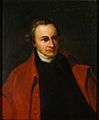
Patrick Henry spoke against the Constitution in 1788.
-
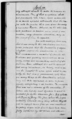
George Washington's 1788 letter about Massachusetts approving the Constitution.


See also
 In Spanish: Carta de Derechos de los Estados Unidos para niños
- Anti-Federalism
- Constitutionalism in the United States
- Founding Fathers of the United States
- Four Freedoms
- Institute of Bill of Rights Law
- Patients' [bill of] rights
- Second Bill of Rights
- States' rights
- Substantive due process
- Taxpayer Bill of Rights
- Universal Declaration of Human Rights
- Virginia Statute for Religious Freedom
- We Hold These Truths
