
LSU Tigers football facts for kids
Quick facts for kids LSU Tigers football |
|
|---|---|
| First season | 1893; 133 years ago |
| Athletic director | Verge Ausberry |
| Head coach | Lane Kiffin 1st season, 4–1 (.800) |
| Stadium | Tiger Stadium (Capacity: 102,321) |
| Location | Baton Rouge, Louisiana |
| NCAA division | Division I FBS |
| Conference | SEC |
| All-time record | 825–441–47 (.646) |
| Bowl record | 30–24–1 (.555) |
| Claimed nat'l titles | 1958, 2003, 2007, 2019 |
| Unclaimed nat'l titles | 1908, 1936, 1962, 2011 |
| Conference titles | SIAA: 1896, 1902, 1908
SoCon: 1932 SEC: 1935, 1936, 1958, 1961, 1970, 1986, 1988, 2001, 2003, 2007, 2011, 2019 |
| Division titles | SEC West: 1996, 1997, 2001, 2002, 2003, 2005, 2007, 2011, 2019, 2022 |
| Rivalries | Arkansas (rivalry) Ole Miss (rivalry) Texas A&M (rivalry) Alabama (rivalry) Mississippi State (rivalry) Auburn (rivalry) Florida (rivalry) Tulane (rivalry) Clemson (rivalry) |
| Heisman winners |
|
| Consensus All-Americans | 41 |
| Current uniform | |
 |
|
| Colors | Purple and Gold |
| Fight song | Fight for LSU |
| Mascot | Mike the Tiger |
| Marching band | Louisiana State University Tiger Marching Band |
| Outfitter | Nike |
| Website | LSUsports.net |
The LSU Tigers football team represents Louisiana State University in American college football. People often call the team the Fighting Tigers. They compete at the top level of student sports, known as the Football Bowl Subdivision of the National Collegiate Athletic Association. LSU plays in the famous Southeastern Conference, which includes many top college programs across the southern United States.
LSU holds one of the highest winning records in college football history. The school claims four official national championships. These titles were won in the 1958, 2003, 2007, and 2019 seasons. The team has also won 16 league championships and has produced more than 40 consensus All-Americans. Three star athletes from LSU have won the famous Heisman Trophy: Billy Cannon in 1959, Joe Burrow in 2019, and Jayden Daniels in 2023.
The Tigers host their home matches on campus inside Tiger Stadium, located in Baton Rouge, Louisiana. Fans often call this giant arena Death Valley. The team is coached by Lane Kiffin, who guides the players on the field.
Contents
How the LSU Tigers Football Program Began and Grew
Early Years and First Games (1893–1954)

The football team began in autumn 1893 thanks to Dr. Charles E. Coates, a chemistry teacher. Coates had played football as a college student and wanted to start a squad at LSU. For their very first game, the players wore handmade uniforms decorated with purple and gold ribbons. LSU played against Tulane in New Orleans at Crescent City Base Ball Park. Tulane won that first contest 34–0. This matchup started a legendary school contest known as the Battle for the Rag. Future Louisiana governor Ruffin G. Pleasant served as the quarterback and team leader. Pleasant was later honored in the LSU Athletic Hall of Fame.

LSU celebrated its first victory in 1894 by defeating the Natchez Athletic Club. Samuel Marmaduke Dinwidie Clark scored the very first touchdown in school history during that game. The team played its first home contest on campus at State Field that same year under coach Albert Simmonds. Star player William S. Slaughter played five seasons between 1894 and 1898. By the 1895 season, the Tigers earned their first home win in Baton Rouge.
In 1896, coach Allen Jeardeau took charge and led the team to an undefeated record. LSU captured its first championship in the Southern Intercollegiate Athletic Association. During this great season, people began calling the team the "Tigers." This nickname honored a brave military unit from the state known as the 9th Louisiana Infantry. Jeardeau coached the 1897 team for two games before illness swept through the South, cutting the season short.

Illness also disrupted the 1898 schedule, leaving time for only one match. Team captain Edmond Chavanne took over coaching duties, becoming the first former student to lead the squad. In 1899, coach John P. Gregg guided the group against the tough "iron men" of the Sewanee team. That year also saw the debut of five-year letterman John J. Coleman.
Chavanne returned to coach in 1900, and then coach W. S. Borland took over in 1901. Borland led the team to five wins. During the 1902 season, LSU upset the Texas team and defeated the Auburn squad, losing only to Vanderbilt. Coach Dan A. Killian led the team through several winning campaigns, including a spotless record in the 1905 season. Runner René A. Messa earned spots on the College Football All-Southern Team during that era.

In 1907, LSU traveled outside the country to play in the Bacardi Bowl in Havana, Cuba. They defeated the University of Havana 56–0 on Christmas Day. Runner John Seip made a thrilling 67-yard punt return score in the win.

The 1908 team went undefeated with ten victories under coach Edgar R. Wingard. Star quarterback Doc Fenton scored 132 points that year to lead the entire country. Running mate Mike Lally helped power the backfield offense. LSU defeated Auburn 10–2 to stay unbeaten. Sportswriter Grantland Rice closely followed their exciting games. Both Fenton and Seip entered the LSU Athletic Hall of Fame for their great play. After coach Joe Pritchard and coach John W. Mayhew led a strong 1909 campaign, the team faced rebuilding years.

Coach Pat Dwyer joined the Tigers in 1911 and created clever plays for lineman Tom Dutton and back Lawrence Dupont. In the 1913 season, fullback Alf Reid made the All-Southern squad. The 1914 team suffered a tough loss to the Texas A&M squad. Football pioneer Walter Camp gave praise to lineman Phillip Cooper in 1916. Coaches Irving Pray, Dana X. Bible, and Wayne Sutton guided teams during the late 1910s.

Coach Branch Bocock led the 1921 season before LSU joined the Southern Conference. In 1923, Mike Donahue arrived from Auburn to coach the Tigers. His 1924 team scored a major victory over Indiana. That Thanksgiving, LSU opened Tiger Stadium against Tulane in front of 18,000 cheering fans. In 1925, the Tigers earned big shutout wins over Louisiana Normal and Southwestern Louisiana. Later that season, coach Wallace Wade brought his powerhouse Alabama team to town. LSU also played against John Heisman and his Rice squad.

Coach Russ Cohen arrived in 1928, led by captain Jess Tinsley. In 1931, LSU played its first night game, defeating the Spring Hill team. Coach Biff Jones led the 1932 team to a conference title. The 1933 squad featured Olympic track star Jack Torrance. In 1934, famous Louisiana senator Huey P. Long was a huge supporter of the team. Sophomore star Gaynell Tinsley caught a legendary 65-yard pass from back Abe Mickal that year. Tinsley earned a spot in the College Football Hall of Fame for his blocking and tackling.

Head coach Bernie Moore guided LSU to its first Southeastern Conference title in 1935. The team played in the Sugar Bowl against TCU. Tinsley earned All-American honors alongside teammates Marvin Stewart, Justin Rukas, and Jesse Fatherree. Quarterback Bill May won the prestigious Jacobs Blocking Trophy. The 1936 team won another league championship, finishing behind Minnesota in the national polls.
Receiver Ken Kavanaugh led the 1937 and 1939 squads. In one amazing game, Kavanaugh caught four touchdown passes against Holy Cross. He was named All-American and won conference awards alongside Bob Foxx of the Tennessee Volunteers. In 1943, running back Steve Van Buren led the country in scoring and won the Orange Bowl. In 1946, quarterback Y. A. Tittle guided LSU into the famous Ice Bowl against Arkansas. Snow and freezing sleet covered the field as the teams fought to a scoreless tie.
Championship Era Under Paul Dietzel (1955–1961)


Coach Paul Dietzel arrived in 1955 to build a new winning culture. Fullback Jim Taylor became an All-American star for the 1957 team. In 1958, Dietzel created an exciting system using three separate squads. The first unit was the White Team, the reserve offensive group was the Go Team, and the famous defensive unit was named the Chinese Bandits.
The system carried the 1958 Tigers to a perfect season and a national championship. LSU defeated the Clemson squad 7–0 in the Sugar Bowl after Billy Cannon threw a touchdown pass to Mickey Mangham. In 1959, Cannon won the coveted Heisman Trophy. His most famous play happened against Ole Miss on Halloween night. Cannon returned a punt 89 yards through seven tacklers to score the winning touchdown, a moment now called Cannon's Halloween Run.
Charlie McClendon and Modern Bowl Success (1962–1979)

Coach Charles McClendon took control in 1962 and led the program for eighteen successful seasons. Kicker Doug Moreau set school kicking records in 1965. In the 1966 Cotton Bowl, LSU pulled off a huge upset by beating the undefeated Arkansas team 14–7.
In 1972, quarterback Bert Jones led a thrilling comeback against Ole Miss. Jones threw a winning touchdown pass to Brad Davis with just one second left on the clock. McClendon won a conference title in 1970 and guided the team to many bowl games before retiring in 1979.
Coaching Changes and Thrilling Moments (1980–1999)
Following McClendon, coach Bo Rein was hired but sadly passed away before coaching a game. Former star Jerry Stovall took over as head coach in 1980. In 1982, Stovall led LSU to a 20–10 victory over Alabama in coach Bear Bryant's final game against the Tigers. Announcer Jim Hawthorne began broadcasting games in 1983, becoming the beloved Voice of the Tigers.
Coach Bill Arnsparger took charge in 1984, winning the conference title with the 1986 LSU squad. Coach Mike Archer followed in 1987 and earned ten wins in his first year. In 1988, LSU upset fourth-ranked Auburn in the famous Earthquake Game. Quarterback Tommy Hodson threw a late touchdown pass to Eddie Fuller, causing the crowd to roar so loudly that a campus earthquake monitor recorded the shaking.
Coach Curley Hallman led the team in the early 1990s, highlighted by a victory over Alabama in 1993. Coach Gerry DiNardo arrived in 1995 and brought back the tradition of wearing white jerseys at home. Running back Kevin Faulk starred for the 1997 squad, which upset the top-ranked Florida Gators in Tiger Stadium. DiNardo finished his run in 1999, and assistant Hal Hunter served as interim coach for a win over Arkansas.
National Glory Under Saban, Miles, and Orgeron (2000–2021)


Coach Nick Saban arrived in 2000 and rebuilt LSU into a national powerhouse. In 2001, the Tigers beat the Tennessee team to win the SEC title. The 2002 squad won an unbelievable game against Kentucky with a 75-yard pass called the Bluegrass Miracle. In 2003, quarterback Matt Mauck, receiver Skyler Green, and defender Corey Webster led LSU to the national title game. LSU defeated Oklahoma 21–14 in the 2004 Sugar Bowl to claim the BCS national championship.

Coach Les Miles took over in 2005. During the 2005 season, quarterback JaMarcus Russell and receiver Early Doucet led a thrilling comeback against Arizona State after games were moved due to Hurricane Katrina. In 2007, fullback Jacob Hester helped LSU beat Florida and earn a spot in the championship game. LSU defeated Ohio State 38–24 in the 2008 BCS National Championship Game to win another national title.

In the 2010 season, running back Stevan Ridley scored a dramatic winning touchdown against Tennessee on the final untimed play. The undefeated 2011 team defeated Alabama 9–6 in overtime during the regular season, a matchup called the Game of the Century.

Coach Ed Orgeron became head coach in 2016. In 2018, LSU beat UCF in the Fiesta Bowl. The historic 2019 team produced one of the greatest seasons in college football history. Led by quarterback Joe Burrow, running back Clyde Edwards-Helaire, and star receivers Ja'Marr Chase and Justin Jefferson, the offense scored at will. Burrow won the Heisman Trophy, and LSU went 15–0, beating Clemson 42–25 in the national championship game in New Orleans. Quarterbacks Myles Brennan, T. J. Finley, and Max Johnson played during the 2020 and 2021 seasons. Assistant Brad Davis served as interim coach at the end of 2021.
Recent Years (2022–Present)

Coach Brian Kelly took charge of the team in 2022, leading the Tigers to an SEC West title in his first season. Dynamic quarterback Jayden Daniels put up incredible passing and rushing numbers, winning LSU's third Heisman Trophy in 2023. Kelly coached through the 2025 season. Coach Lane Kiffin became the head coach of the Tigers to guide the program forward into the future.
National and Conference Championship Titles
National Championship Seasons
LSU officially claims four national football championships from four memorable seasons:
- 1958: Coach Paul Dietzel guided the Tigers to an 11–0 record. They shut out Clemson 7–0 in the Sugar Bowl and finished first in both the AP Poll and Coaches Poll.
- 2003: Coach Nick Saban led the Tigers to a 13–1 record. They defeated Georgia for the SEC crown and beat Oklahoma 21–14 in the Sugar Bowl BCS Championship game.
- 2007: Coach Les Miles directed LSU to a 12–2 record, winning the SEC championship before defeating Ohio State 38–24 in the BCS National Championship.
- 2019: Coach Ed Orgeron commanded a perfect 15–0 team that shattered scoring records and beat Clemson 42–25 in the College Football Playoff title game.
League Championships
LSU has won 16 conference titles throughout its history across different athletic associations:
- Southern Intercollegiate Athletic Association (3 titles): 1896, 1902, 1908
- Southern Conference (1 title): 1932
- Southeastern Conference (12 titles): 1935, 1936, 1958, 1961, 1970, 1986, 1988, 2001, 2003, 2007, 2011, 2019
Uniforms, Colors, and Equipment

LSU players wear famous purple and gold uniforms. While most college football teams wear colored jerseys at home, LSU wears white jerseys for home games at Tiger Stadium. This tradition began under Paul Dietzel in 1958 and continues to this day. The team wears purple jerseys for select games during the year.
The team wears yellow-gold helmets featuring a purple and white stripe down the center. The classic tiger head logo sits on each side below curved purple "LSU" lettering. LSU has also worn special white and purple helmets for select games. The football pants are traditional gold with purple and white side stripes.
Great Traditions and Game Day Excitement

Game day at LSU is packed with fun traditions for players and fans:
- Tiger Stadium: The home field seats over 102,000 cheering fans. It features classic "H" shaped goalposts that players run underneath when entering the field. Above the locker room exit, players touch a crossbar painted with the word "WIN!" for good luck.
- Victory Hill: Before kickoff, players, coaches, cheerleaders, and the marching band march down North Stadium Drive toward the stadium as fans cheer on both sides of the street.
- The Golden Band from Tigerland: The famous marching band performs an exciting pregame show, playing fight songs like "Touchdown for LSU" and saluting each corner of the stadium.
- No. 18 Jersey: Starting with quarterback Matt Mauck in 2003 and Jacob Hester in 2004, the coaching staff awards the number 18 jersey each year to a hardworking team leader.
Historic Rivalry Games

LSU shares fierce rivalries with several top college teams:
- Alabama: A major SEC rivalry that features highly ranked teams battling for the top of the conference standings.
- Arkansas: The winner of this game takes home the Golden Boot, a massive gold trophy shaped like the two states.
- Auburn: A matchup between two Tiger teams that has featured wild finishes like the Earthquake Game.
- Florida: An annual cross-division clash known for dramatic finishes and championship implications.
- Ole Miss: One of LSU's oldest rivals. The two teams play for the Magnolia Bowl trophy.
- Texas A&M: A competitive series highlighted by an incredible seven-overtime game played in 2018.
- Tulane: LSU's oldest football opponent, first played in 1893 in the Battle for the Rag.
Athletic Facilities


The Tigers play inside Tiger Stadium, one of the largest stadiums in world sports. The stadium opened in 1924 and has expanded several times to hold 102,321 spectators. The team is famous for playing night games under the bright stadium lights, creating an electric atmosphere.
The team prepares for games at the Charles McClendon Practice Facility. This modern complex includes the LSU Football Operations Center, weight training rooms, meeting rooms, outdoor grass practice fields, and an 82,500-square-foot indoor field with artificial turf.
Legendary Tiger Players and Awards
Heisman Trophy Winners

Three LSU players have won the Heisman Trophy as the most outstanding player in college football:
- Billy Cannon (1959): A versatile halfback who dominated games on offense, defense, and special teams.
- Joe Burrow (2019): Set national records by throwing 60 touchdown passes and leading the Tigers to a 15–0 season.
- Jayden Daniels (2023): A dual-threat quarterback who dazzled fans with both his passing arm and fast running skills.
Pro Football Hall of Fame Members


Six former Tigers have been inducted into the Pro Football Hall of Fame:
- Steve Van Buren – Running back
- Y. A. Tittle – Quarterback
- Jim Taylor – Fullback
- Kevin Mawae – Center
- Johnny Robinson – Defensive safety
- Alan Faneca – Offensive guard
Images for kids
-
Southeastern Conference logo in LSU colors
-
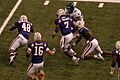
LSU defense lining up on the field
-
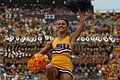
LSU cheerleader cheering during a home game
-
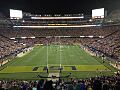
Tiger Stadium South End Zone welcoming fans to Death Valley
-
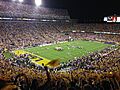
Student section enjoying a game inside Tiger Stadium
-
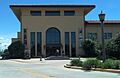
LSU Football Operations Center building
-
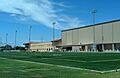
Indoor practice facility field and outdoor fields
-

LSU playing against Texas during the 2019 regular season
-
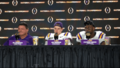
Post-game press conference after the 2020 CFP National Championship victory
-
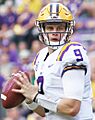
Joe Burrow playing quarterback for LSU


See also
- Louisiana State University traditions
- LSU Tigers and Lady Tigers
- Tiger Athletic Foundation
- List of NCAA Division I FBS football programs
