
Academy Award for Best Cinematography facts for kids
Quick facts for kids Academy Award for Best Cinematography |
|
|---|---|

The 2025 recipient: Autumn Durald Arkapaw
|
|
| Presented by | Academy of Motion Picture Arts and Sciences (AMPAS) |
| Country | United States |
| First awarded | May 16, 1929 (for films released during the 1927/1928 film season) |
| Currently held by | Autumn Durald Arkapaw Sinners (2025) |
The Academy Award for Best Cinematography is a special prize given out every year by the Academy of Motion Picture Arts and Sciences (AMPAS). It celebrates the amazing work of a cinematographer, who is the person in charge of how a movie looks on screen. Think of them as the artist who paints with light and shadows to create the perfect mood and visual style for a film!
Contents
The Story Behind the Award

The Academy Awards started way back in 1929. In the beginning, the award for Best Cinematography was a bit different. For the first year (1927–28), cinematographers were recognized for all their work during that time, not just one movie. For example, Karl Struss and Charles Rosher won together for their film Sunrise, but other films they worked on were also mentioned. This system was a bit confusing!
By 1931, things became clearer. The Academy decided that individuals should be nominated for their work on a single film. This is the system we still use today.
For many years, from 1939 to 1966, there were actually two awards for cinematography: one for movies filmed in black-and-white and another for color films. It was like having two categories for different painting styles! After 1966, they combined them, but some black-and-white films have still won, like Schindler's List (1993), Roma (2018), and Mank (2020).
Did you know that Floyd Crosby won this award in 1931 for Tabu? This was special because it was the last silent film to ever win in this category. Also, Hal Mohr made history in 1935 for A Midsummer Night's Dream by winning the only "write-in" Academy Award ever! This means he wasn't officially nominated at first, but enough people voted for him.
Over the years, many talented people have been recognized. For example, David Lean, a famous director, had five of his films win this award. That's a lot!
In more recent times, filmmaking has changed a lot with technology. The first movies shot mostly with digital cameras to be nominated were The Curious Case of Benjamin Button and Slumdog Millionaire in 2009. Slumdog Millionaire was the first digital film to win! The very next year, Avatar was the first to be shot entirely on digital video and win.
The Academy Awards have also become more diverse. In 2017, Bradford Young became the first African-American cinematographer to be nominated for his work on Arrival. Then, in 2018, Rachel Morrison made history as the first woman ever nominated for this award. Before her, it was the only major Academy Award category that had never nominated a woman!
In 2019, Alfonso Cuarón won for Roma. What made this extra special was that he was also the director of the film! He famously said, "No single film has ever existed without cinematography," highlighting how important this role is.
Amazing Achievements in Cinematography
Here are some cool facts about the cinematographers who have achieved the most in this category:
| Category | Name | Superlative | Year | Notes |
|---|---|---|---|---|
| Most awards | Leon Shamroy | 4 awards | 1942 | Won 4 times out of 18 nominations. |
| Joseph Ruttenberg | 1958 | Won 4 times out of 10 nominations. | ||
| Most nominations | Leon Shamroy | 18 nominations | 1965 | Nominated 18 times, winning 4 awards. |
| Charles Lang | 1972 | Nominated 18 times, winning 1 award. | ||
| Most consecutive awards | Emmanuel Lubezki | 3 consecutive awards | 2013, 2014, 2015 | Won 3 years in a row! |
| Oldest winner | Conrad L. Hall | Age 76 | 2002 | He passed away just two months before the awards ceremony. |
| Oldest nominee | Asakazu Nakai | Age 84 | 1985 | He was nominated with two other cinematographers. |
| Youngest winner | Floyd Crosby | Age 31 | 1930/1931 | |
| Youngest nominee | Edward Cronjager | Age 27 | 1930/1931 | |
| Most nominations without an award | George Folsey | 13 nominations | 1963 | Nominated many times but never won. |
| First female nominee | Rachel Morrison | 2017 | A groundbreaking achievement for women in film. | |
| First nominee/winner who also directed the film | Alfonso Cuarón | He directed and was the director of photography for Roma | 2018 |
Cinematographers with Multiple Awards and Nominations
Here's a look at the cinematographers who have received many awards and nominations for their incredible work:
|
|
|
Images for kids
-
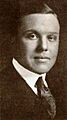
Charles Rosher was the inaugural co-winner of this category, winning the award twice, first for Sunrise: A Song of Two Humans (1927) alongside Karl Struss and his second for The Yearling (1946) alongside Leonard Smith and Arthur Arling.
-
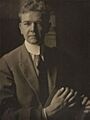
Karl Struss was the inaugural co-winner of this category, winning alongside Charles Rosher for Sunrise: A Song of Two Humans (1927).
-
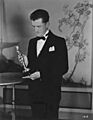
Clyde De Vinna won for White Shadows in the South Seas (1928).
-
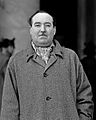
Lee Garmes won for Shanghai Express (1932).
-
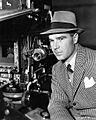
Charles Lang is tied for the most nominations for this category with 18 nominations, winning once for A Farewell to Arms (1932).
-
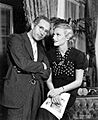
Victor Milner won for Cleopatra (1934).
-
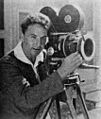
Hal Mohr won twice for A Midsummer Night's Dream (1935) along with co-winning with W. Howard Greene for Phantom of the Opera (1943).
-
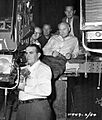
George Barnes won for Rebecca (1940).
-
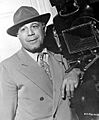
Tony Gaudio won for Anthony Adverse (1936), becoming the first ever Italian to win an Oscar.
-

W. Howard Greene won alongside Hal Mohr for Phantom of the Opera (1943).
-
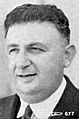
Karl Freund won for The Good Earth (1937).
-
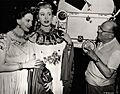
Joseph Ruttenberg (right) holds the tied record for the most wins in the category, winning four times for The Great Waltz (1938), Mrs. Miniver (1942), Somebody Up There Likes Me (1956), Gigi (1958).
-
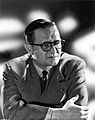
Gregg Toland won once amongst 6 nominations for Wuthering Heights (1939).
-
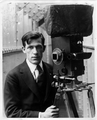
Arthur C. Miller won three times amongst 7 nominations for How Green Was My Valley (1941), The Song of Bernadette (1943) and Anna and the King of Siam (1946).
-
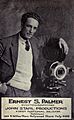
Ernest Palmer won alongside Ray Rennahan for Blood and Sand (1941).
-
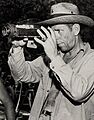
Leonard Smith co-won for The Yearling. (1946) alongside Arthur Arling and Charles Rosher.
-
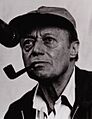
Jack Cardiff won for Black Narcissus (1947).
-
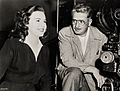
William Daniels won for The Naked City (1948).
-
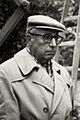
Paul C. Vogel won for Battleground (1949).
-
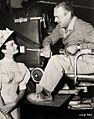
Loyal Griggs won for Shane (1953).
-
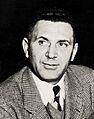
Milton Krasner won for Three Coins in the Fountain (1954).
-
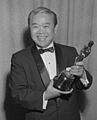
James Wong Howe won twice amongst 10 nominations for The Rose Tattoo (1955), and Hud (1963).
-

Jack Hildyard won for The Bridge on the River Kwai (1953).
-
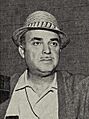
Sam Leavitt won for The Defiant Ones (1958).
-
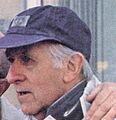
Freddie Francis won twice for Sons and Lovers (1960) and Glory (1989).
-
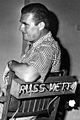
Russell Metty won for Spartacus (1960).
-

Haskell Wexler won twice amongst 5 nominations for Who's Afraid of Virginia Woolf? (1966) and Bound for Glory (1976).
-
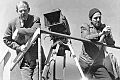
Sven Nykvist (left) won twice for Cries and Whispers (1972) and Fanny and Alexander (1982).
-
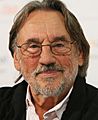
Vilmos Zsigmond won for Close Encounters of the Third Kind (1977).
-
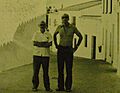
Néstor Almendros won for Days of Heaven (1978).
-

Vittorio Storaro won the award thrice, winning for Apocalypse Now (1979), Reds (1981) and The Last Emperor (1987).
-
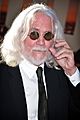
Robert Richardson won thrice amongst 10 nominations, winning for JFK (1991), The Aviator (2004) and Hugo (2011).
-

John Seale won once amongst 5 nominations for The English Patient (1996).
-

Janusz Kamiński won twice amongst 7 nominations, winning for Schindler's List (1993) and Saving Private Ryan (1998).
-

Peter Pau won for Crouching Tiger, Hidden Dragon (2000).
-

Guillermo Navarro won for Pan's Labryinth (2006).
-

Anthony Dod Mantle won for Slumdog Millionaire (2008).
-
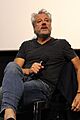
Wally Pfister won for Inception (2010).
-
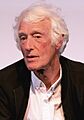
Roger Deakins won twice amongst 16 nominations, winning for Blade Runner 2049 (2017) and 1917 (2019).
-

Alfonso Cuarón won for Roma (2018), becoming the first winner of the category to have also directed the film.
-
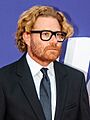
Erik Messerschmidt won for Mank (2020).
-

Greig Fraser won for Dune (2021).
-

James Friend won for All Quiet on the Western Front (2022).
-

Hoyte van Hoytema won for Oppenheimer (2023).
-

Lol Crawley won for The Brutalist (2024).


.jpg)
.jpg)


_set_1.jpg)

_with_1912_Path%C3%A9_35mm_movie_camera.webp)


.jpg)
_1.jpg)
.jpg)
_1.jpg)
_1_(cropped).jpg)
.jpg)
.png)
.jpg)

.jpg)


.png)
.jpg)

.jpg)

.jpg)
_(51473086144)_(cropped).jpg)
.jpg)
_(cropped).jpg)


See also
 In Spanish: Anexo:Óscar a la mejor fotografía para niños
- BAFTA Award for Best Cinematography
- Critics' Choice Movie Award for Best Cinematography
- American Society of Cinematographers Award for Outstanding Achievement in Cinematography in Theatrical Releases
