
Pulmonary alveolus facts for kids
Quick facts for kids Pulmonary alveolus |
|
|---|---|
 |
|
| The alveoli | |
| Latin | alveolus pulmonis |
| System | Respiratory system |
The pulmonary alveoli (say "al-VEE-oh-lye"), also known as air sacs, are tiny, hollow, cup-shaped spaces in your lungs. There are millions of them! This is where your body exchanges gases. Oxygen from the air you breathe in moves into your blood. At the same time, carbon dioxide, a waste gas, moves from your blood into the alveoli to be breathed out. This important exchange happens through a very thin wall called the blood–air barrier.
Alveoli are a key part of your lungs. They are found in tiny air tubes called respiratory bronchioles. They also line the walls of alveolar ducts and are most common in alveolar sacs, which are like small clusters of grapes. Together, these tiny structures form the main working parts of your lungs. They are surrounded by a network of tiny blood vessels. Oxygen passes from the alveoli into these blood vessels. Carbon dioxide passes from the blood vessels into the alveoli to be exhaled.
Alveoli are special to mammals like us. Other animals have different ways to exchange gases.
Contents
How Alveoli Are Built

Alveoli start as small pouches in the respiratory bronchioles. These bronchioles are tiny tubes that branch out in your lungs. From these, alveolar ducts extend, which are also lined with many alveoli. Each duct then leads to several alveolar sacs, which are like small bunches of grapes, with many alveoli opening into them.
Your lungs keep forming new alveoli until you are about eight years old. An adult's lungs have around 480 million alveoli! This creates a huge surface area for gas exchange, about the size of a tennis court (70 to 80 square meters). Each alveolus is covered by a network of tiny blood vessels. These capillaries cover about 70% of the alveolus's surface. Each alveolus is very small, only about 200 to 500 micrometers wide. That's thinner than a human hair!
Inside the Alveoli
An alveolus has a very thin lining, like a delicate skin. This lining is called the alveolar membrane. It's super thin, only about 0.2 to 0.6 micrometers thick. This thinness helps gases move easily between the air and your blood.
Inside the walls of the alveoli, there are tiny connecting passages called pores of Kohn. These pores allow air to move between different alveoli. The walls between alveoli, called the alveolar septum, contain special fibers. These include collagen and elastic fibers. The elastic fibers help the alveoli stretch when you breathe in. Then, they spring back to push out the air when you breathe out.

There are three main types of cells in the alveoli:
- Type I cells (also called pneumocytes) are very thin and flat. They form the main structure of the alveolar walls.
- Type II cells (also called pneumocytes) are cuboidal (cube-shaped). They produce a special liquid called pulmonary surfactant.
- Alveolar macrophages are like tiny clean-up crews. They move around and eat up any dust or germs that get into your lungs.
How Alveoli Grow
Your lungs start developing very early, even before you are born. The tiny structures that will become alveoli begin to form around 36 weeks into development. New alveoli continue to grow and divide, especially during the first few months after birth.
For the first three years of life, your lungs grow mainly by making more alveoli. After that, both the number and size of your alveoli increase. This growth continues until your lungs are fully developed, usually around eight years of age.
How Alveoli Work

Alveoli have special cells that help them do their job.
Type I Cells: Gas Exchange


Type I cells are very thin and flat. They make up most of the alveolar walls. Their job is to allow gas exchange to happen easily. Oxygen from the air moves through these thin cells into your blood. Carbon dioxide from your blood moves through them into the air to be exhaled. These cells are so thin, you need a special microscope to see them!
If Type I cells get damaged, they can't fix themselves. But don't worry, Type II cells can step in to help!
Type II Cells: Keeping Alveoli Open
Type II cells are smaller and cube-shaped. They are very important because they produce a special liquid called pulmonary surfactant. Think of surfactant like a soapy film. It covers the inside of the alveoli. Without this film, the tiny air sacs would stick together and collapse when you breathe out. Surfactant helps them stay open and makes it easier to breathe in again.
These cells start making surfactant when a baby is still developing. Enough surfactant is usually made by about 35 weeks of gestation (when a baby is in the womb). If a baby is born too early, they might not have enough surfactant. This can cause breathing problems.
Type II cells can also divide and create new Type I or Type II cells if the lung tissue is hurt.
Alveolar Macrophages: The Clean-Up Crew
Alveolar macrophages are like tiny "pac-men" in your lungs. They live on the inner surfaces of the alveoli. Their job is to find and eat any unwanted particles. This includes dust, bacteria, or other tiny bits that you might breathe in. They help keep your lungs clean and healthy. They also play a role in fighting off viruses in your lungs.
Alveoli and Your Health
Sometimes, problems with alveoli can affect your breathing.
Surfactant Problems
If there isn't enough pulmonary surfactant in the alveoli, parts of the lung can collapse. This is called atelectasis. It's a serious problem, especially for babies born too early. When premature babies don't have enough surfactant, they can get infant respiratory distress syndrome (IRDS). This makes it very hard for them to breathe.
Inflammation and Swelling
- Pneumonia is when your lung tissue gets inflamed. This can be caused by viruses or bacteria. When you have pneumonia, fluid can build up in the alveoli. This makes it harder for oxygen to get into your blood.
- Asthma makes the tiny air tubes (bronchioles) in your lungs narrow. This reduces how much air can reach the alveoli. Things like smoke or allergies can trigger asthma.
- Chronic bronchitis happens when your lungs make too much mucus. This mucus can clog the air passages leading to the alveoli. It often causes a lot of coughing and can be linked to long-term exposure to cigarette smoke.
Structural Issues

- Emphysema is a lung disease where the elastic fibers in the alveolar walls break down. This makes the alveoli less stretchy. It becomes harder to push air out of the lungs, reducing gas exchange. Smoking is a major cause of emphysema.
- Lung tumors or lung cancer can press on the alveoli. This can reduce their ability to exchange gases. Sometimes, tumors can even fill the alveoli.
Fluid Buildup
- A pulmonary contusion is like a bruise on your lung. It's caused by an injury. Blood and fluid can collect in the lung tissue, making it harder for alveoli to work.
- Pulmonary edema is when fluid builds up inside the alveoli and lung tissue. This often happens if your heart isn't pumping blood well, or if your lungs are damaged.
The coronaviruses that cause diseases like severe acute respiratory syndrome (SARS) and coronavirus disease 2019 (COVID-19) can infect your lungs. They often target the Type II alveolar cells. This is because these cells have a special protein (ACE2) that the viruses use to enter. This is why these viruses can cause serious breathing problems.
Images for kids
-
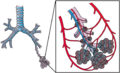
Blood circulation around alveoli

See also
- Interstitial lung disease
- A549 cells
- List of distinct cell types in the adult human body
- Physics of Respiration
