
Gibberellin facts for kids
Gibberellins (also called GAs) are important plant chemical messengers that control how plants grow and develop. These chemicals tell plants when it is time to stretch out their stems, wake up sleeping seeds, and open up pretty blossoms. They guide key life events, including seed germination, plant resting periods called dormancy, flower making during flowering, and the natural aging of leaves and fruit known as senescence. Gibberellins are among the oldest known plant helpers in science. During the 1960s, farmers used clever plant breeding to grow shorter wheat and rice crops that made less gibberellin. This historic change was part of the "green revolution", which stopped crop stalks from falling over in storms. This amazing breakthrough produced huge amounts of extra food and helped save over one billion people from hunger.
Contents
What Are Gibberellins and How Do They Work?

Gibberellins are natural acids that belong to a group of organic molecules known as diterpenoids. Plant cells build them starting inside special sun-powered factories called chloroplast parts. Next, the plant shapes them further inside the endoplasmic reticulum and the fluid-filled cytosol. Finally, the chemical becomes active and ready to work. Scientists have found at least 136 kinds of gibberellins in plants, fungi, and tiny bacteria.
Scientists name each new type with numbers, starting with GA1 up to GAn. The very first type discovered in fine detail was Gibberellic acid, also called GA3. Most active gibberellins have 19 carbon atoms arranged in tiny rings. These active forms have a special circular chemical loop known as a lactone bridge. Adding oxygen and hydrogen in a step called Hydroxylation also changes how strongly they work. The most common working types in green plants are GA1, GA3, GA4, and GA7.
-
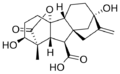
Gibberellin A1 (GA1), a common active form.
-
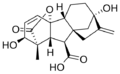
Gibberellic acid (GA3), the famous plant grower.
-
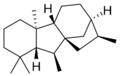
The basic skeleton shape called ent-gibberellane.
-
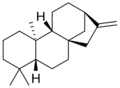
The building block shape called ent-kaurene.


Helping Seeds Wake Up and Sprout
Seeds carry baby plant embryos that rest quietly until warm spring days arrive. This peaceful resting state is known as dormancy. Gibberellins give the wake-up call to break this sleep so germination can begin.
Before a tiny sprout can catch sunlight, it needs food to grow strong. The parent plant packs the seed with stored energy in the form of powdery starch. When rain moistens the seed, the baby embryo sends gibberellins traveling to a protective seed layer called the aleurone. The gibberellin signals this layer to start breaking down energy molecules. It triggers the production of a special helper enzyme called α-amylase. In tiny seed parts like the scutellum, the hormone orders the reading of genes to make plenty of this enzyme. The α-amylase then quickly cuts complex starch stored in the seed's endosperm into sweet glucose sugar. The young embryo drinks this sweet fuel, gains energy, and bursts happily through the soil.
Stretching Stems and Making Big Fruit
Gibberellins do far more than just awaken sleepy seeds. They tell plant cells to stretch out long and multiply quickly. In stems, they control the space between leaves, which scientists call the internode. Plants with lots of gibberellin grow very tall, while plants lacking it stay tiny like little green bushes.
Farmers often use sprays of Gibberellic acid on fruit crops like table grapes. This spray encourages the fruit stems to stretch out longer, giving grape bunches plenty of room to grow big, sweet, and seedless without rotting. Cold weather also changes hormone levels in plants. For example, a chilly winter prompts plants to create gibberellins, preparing buds to open into flowers once spring arrives. Inside plant cells, tiny calcium ions activate an alert protein named calmodulin. This helper protein connects with plant DNA to turn on fast cell growth.
How Plants Make and Break Down Gibberellins
Making gibberellins is a step-by-step chemical assembly line. In higher plants, this building process happens through a pathway called the methylerythritol phosphate pathway. Cells start with an ingredient named trans-geranylgeranyl diphosphate (GGDP).
Several specialized groups of enzymes turn this starter molecule into plant growth fuel. These groups include terpene builders, cytochrome P450 monooxygenases, and special dioxygenase enzymes. Together, they carry out eight neat chemical steps:
- First, an enzyme named ent-copalyl diphosphate synthase changes GGDP into a shape called ent-CDP.
- Next, ent-kaurene synthase turns ent-CDP into ent-kaurene.
- Then, an enzyme called ent-kaurene oxidase adds oxygen to turn ent-kaurene into ent-kaurenol, then ent-kaurenal, and then ent-kaurenoic acid.
- Next, ent-kaurenoic acid oxidase transforms ent-kaurenoic acid into intermediate aldehydes.
- Finally, oxygen-adding enzymes turn the intermediate molecules into active gibberellin GA4.
Scientists studying the tiny mustard plant Arabidopsis discovered that breaking any of these early enzyme genes produces tiny dwarf plants. The plant simply cannot make the chemical fuel it needs to grow tall!
Where Plants Build These Hormones
Plants make gibberellins right where fast growth happens. You can find them in young shooting stems, fresh green tips, and tiny flower buds. They are also made in deep flower parts that hold pollen grains.
Microscopic organisms can create them too. A soil fungus named Gibberella fujikuroi makes large amounts of gibberellin. In fact, scientists first discovered gibberellins while studying why this fungus made rice plants grow unusually tall! Today, bio-factories grow fungi in large tanks using solid-state fermentation to produce natural gibberellin sprays for modern farming.
Recycling and Keeping the Balance
Plants must control their growth carefully, so they also know how to destroy gibberellins when it is time to stop growing. If a plant gets too much gibberellin, special cleanup enzymes turn off the growth signal. For instance, plants can use a process called 2β-hydroxylation to quickly disable active molecules. Plants run on clever feedback loops. If gibberellin levels dip too low, the plant quickly builds more builder enzymes. When hormone levels get too high, the plant turns on cleanup teams to maintain balance.
Working Together with Nature and Other Hormones
Gibberellins do not work alone. They communicate constantly with other plant hormones to guide healthy growth.
- Auxins: The classic plant hormone auxin, such as indole-3-acetic acid, works like a best friend to gibberellins. Removing the top tip of a pea stem cuts off auxin, which quickly lowers GA1 levels and slows growth. Adding auxin back restarts gibberellin production, showing that these two hormones team up to help plants reach for the sky.
- Abscisic acid: This hormone acts as the brake pedal, while gibberellin acts as the gas pedal. Abscisic acid tells seeds and buds to stay asleep during harsh, dry weather. When rainy, warm weather arrives, gibberellin levels surge, overcoming the resting hormone so the plant can grow. Farmers sometimes use this chemical tug-of-war to keep fruit hanging on orchard branches until harvest day.
- Ethylene: This ripening gas often works to decrease active gibberellin amounts. Other plant helpers like brassinosteroids also join this team to shape healthy leaves and strong stems.
Environmental cues also guide gibberellin levels. Sunlight guides seed sprouting and changes plant shapes in a process called photomorphogenesis. When seeds emerge from dark soil into warm sunshine, a change known as de-etiolation occurs, guided by gibberellins. Seasonal day lengths also adjust hormone amounts during day-length responses, telling the plant when to flower before winter arrives.
How Plant Cells Receive the Gibberellin Message

For a plant hormone to work, the cell must receive the message through a special chemical detector called a receptor. Scientists long searched for a detector resting on the outer cell surface, but they discovered that the true receiver lives inside the cell's fluid.
In plants like rice and Arabidopsis, the main gibberellin receiver is an alert protein named GID1. This protein has a pocket that fits the gibberellin molecule like a key sliding into a lock. When gibberellin slips into this pocket, a flexible protein flap closes over it like a little lid.
Removing the DELLA Brakes
Inside plant cells, growth is blocked by a family of stubborn guard proteins called DELLA proteins (such as GAI). They get their funny name from five chemical links in their sequence: aspartate, glutamate, leucine, and alanine (spelling D-E-L-L-A in scientific shortcode).
DELLA proteins act like heavy brakes on growth. They block flowering, stop stems from stretching, and keep seeds asleep:
- When gibberellin locks into the GID1 receiver, the new shape creates an docking spot that grabs DELLA proteins.
- The whole group links together into a GA-GID1-DELLA team.
- This connection attracts an F-box protein, which acts like a tiny labeler.
- The labeler attaches a molecular tag called ubiquitin onto the DELLA brake protein.
- This tag tells the cell's disposal unit, the 26S-proteasome, to chew up and recycle the DELLA protein.
- With the DELLA brakes broken down, the cell is finally free to expand, divide, and grow!
Helping Cells Build and Expand
Once the DELLA brakes are out of the way, growth takes off in wonderful ways:
- Unlocking growth switches: DELLA proteins normally trap helpful switches called transcription factors, including light helpers called Phytochrome Interacting Factors (PIFs). When DELLAs disappear, these factors turn on genes that make cell walls stretch and grow long.
- Building cellular scaffolding: DELLAs also interfere with helper molecules called prefoldins. Prefoldins work as protein chaperones inside the cytosol. When DELLA levels drop, prefoldins can help build β-tubulin, the main ingredient of strong microscopic tubes called microtubules. These tubes build the inner skeleton that shapes growing plant cells.
- Guiding internal deliveries: Microtubules act as tiny railroad tracks for moving cellular cargo packages. These packages carry vital hormone transporters, such as PIN proteins, right out to the outer cell membrane. These carrier proteins steer auxin through tissues, working together with gibberellins to build strong, healthy plants.
Gibberellins are nature's amazing chemical keys. By waking dormant seeds, stretching plant stems, and unlocking cell switches, these tiny plant helpers keep our natural world green, vibrant, and blooming.
