
Gibraltar convoys of World War II facts for kids
Quick facts for kids Gibraltar convoys of World War II |
|||||
|---|---|---|---|---|---|
| Part of World War II | |||||
 Sloop HMS Stork was one of the more successful Gibraltar convoy escorts. |
|||||
|
|||||
| Belligerents | |||||
 United Kingdom United Kingdom Free France Free France Canada Canada |
 Germany Germany Italy Italy |
||||
During World War II, the Gibraltar convoys were groups of merchant ships. These ships sailed together between Gibraltar and the United Kingdom. They carried important supplies and goods.
These convoy routes were very dangerous. They crossed paths with German U-boats (submarines) and were within reach of Axis planes. This made the convoys easy targets for bombers, submarines, and warships during the Battle of the Atlantic.
- OG convoys carried supplies from the UK to Gibraltar. These ran from September 1939 to September 1942.
- After Operation Torch (a big Allied invasion), OG convoys changed to KM convoys. These carried soldiers and supplies from the UK, past Gibraltar, and into the Mediterranean Sea.
- HG convoys brought food, raw materials, and empty ships back from Gibraltar to the UK. They ran from September 1939 to September 1942.
- After Operation Torch, HG convoys were replaced by MK convoys. These brought mostly empty ships back from the Mediterranean to the UK.
- Both KM and MK convoys continued until 1945, when the war ended.
Contents
Why Were These Convoys Important?
The Battle of the Atlantic was all about protecting ships that carried supplies. These supplies were vital for the British Isles. While other convoys sailed to and from North America, the Gibraltar convoys used a traditional trade route. This route connected the UK with the rest of the British Empire through the Mediterranean Sea, Suez Canal, Red Sea, and Indian Ocean.
This route was risky because it was close to Spain and Italy. Both countries were either friendly to the Axis or part of the Axis. This meant enemy forces could easily watch and attack the ships.
Protecting this shipping route was also important for France. They used it for trade with their colonies in North Africa, Syria, Lebanon, Madagascar, and Indochina. French warships helped escort the Gibraltar convoys until France surrendered in 1940.
Most shipping to and from the Indian Ocean then had to go all the way around Africa. This changed after Italy surrendered. OG and KM convoys mainly carried supplies for the military and people in Gibraltar and Malta. They also supported big operations like Operation Torch and Operation Husky.
The convoy routes were close to U-boat bases in occupied France. This often led to battles between convoys and Allied patrols in the Bay of Biscay. Airplanes from Cornwall and Gibraltar provided some cover. However, there was a "gap" where U-boats and surface raiders could hide. This gap remained until planes started flying from the Azores in October 1943.
Types of Convoys and Their Journeys

After World War I, four main convoy routes were set up. The Gibraltar convoys were one of these.
HG Convoys: Heading Home
Homeward bound from Gibraltar, these convoys brought goods back to the UK.
- The first HG convoy, HG 1, left Gibraltar on September 26, 1939. It arrived in Liverpool on October 6.
- Early convoys had French warship escorts. These escorts would go as far as Ushant. Ships heading to eastern UK ports would then go through the English Channel. This changed after France surrendered in June 1940.
- Some early HG convoys (HG 7, 8, and 9) started in Port Said. But sailing through the Mediterranean stopped with HG 10 in December 1939.
- Sometimes, faster ships would sail in a separate "fast" section. This happened until June 1940. After France surrendered, most convoys sailed as one group.
- The last HG convoy, HG 89, left Gibraltar on September 19, 1942. It arrived in Liverpool on September 30. These convoys were replaced by MKS convoys after Operation Torch.
OG Convoys: Outbound to Gibraltar
Outbound to Gibraltar, these convoys carried supplies from the UK.
- From September 7, 1939, OB convoys sailed from Liverpool south into the Atlantic.
- Near Land's End, they met OA convoys from London.
- The combined OA/OB convoys were escorted for about four days. Then, ships going to Gibraltar would form an OG convoy near Ushant. French warships would escort them south.
- OG 1 formed on October 2, 1939, and reached Gibraltar on October 8.
- Like HG convoys, OG convoys also had separate fast sections for a while.
- After France surrendered, convoys started gathering directly at Liverpool.
- The OG series was paused by Operation Torch. OG 89 left Liverpool on August 31, 1942, as the last of its kind for a year. Later, some OG convoys sailed combined with KMS convoys.
MKS Convoys: Mediterranean to UK (Slow)
These were Slow convoys returning from the Mediterranean to the United Kingdom after Operation Torch. They replaced the HG series.
- MKS 1 sailed from Gibraltar on November 21, 1942, and reached Liverpool on November 30.
- Many MKS convoys later joined up with SL convoys (from the South Atlantic). They would get a combined name like SL 128/MKS 12.
- The MKS series continued until MKS 103 reached Liverpool on June 1, 1945.
KMS Convoys: UK to Mediterranean (Slow)
These were Slow ships traveling from the United Kingdom to the Mediterranean.
- KMS 1 was part of Operation Torch. It left the Firth of Clyde on October 22, 1942, and reached Algiers on November 8.
- Many KMS convoys also sailed as part of OS convoys (outbound from the UK). They would have combined names like OS 46/KMS 13.
- These convoys went as far east as Port Said. The last one, OS 124/KMS 98, reached Gibraltar on April 27, 1945.
KMF Convoys: UK to Mediterranean (Fast)
These were Fast ships from the United Kingdom to the Mediterranean.
- KMF 1 was the main invasion convoy for Operation Torch. It left the Firth of Clyde on October 26, 1942, and reached Oran on November 8.
- German U-boats and aircraft attacked these convoys. For example, U-562 sank the troopship Strathhallan from KMF 5 in December 1942.
- Aircraft sank the Windsor Castle from KMF 11 in March 1943.
- As the Mediterranean became safer, KMF convoys started carrying troopships with soldiers going to the Indian Ocean.
- German planes sank three troopships from these convoys in November 1943: Santa Elena, Marnix van St. Aldegonde (from KMF 25), and Rohna (from KMF 26).
- The last KMF convoy, KMF 45, left the Firth of Clyde on May 23, 1945.
MKF Convoys: Mediterranean to UK (Fast)
These were Fast ships returning from the Mediterranean to the United Kingdom.
- Only one MKF convoy, MKF 1, lost ships. It was returning from Operation Torch.
- U-413 sank the Warwick Castle on November 14, 1942.
- U-155 sank the Ettrick and the aircraft carrier HMS Avenger on November 15, 1942.
- The last MKF convoy, MKF 45, reached Liverpool on June 8, 1945.
Notable Convoy Battles
Many convoys faced fierce attacks from German U-boats and aircraft. Here are some examples of important events:
- HG 3 (October 1939): Lost three ships to U-boat torpedoes.
- OG 16 (February 1940): Armanistan was torpedoed by U-25.
- OG 19 (February 1940): British Endeavor was torpedoed by U-50.
- HG 34 (June 1940): Lost four ships to U-boat torpedoes.
- OG 47 (December 1940): Mangen was torpedoed by the Italian submarine Mocenigo.
- HG 49 (January 1941): The rescue ship Beachy was bombed by aircraft.
- HG 53 (February 1941): This convoy was attacked by submarines, aircraft, and surface ships.
- OG 63 (June 1941): Lost two ships to the Italian submarine Marconi and one to aircraft.
- OG 69 (July 1941): German bombers found this convoy. Seven ships were torpedoed by U-boats.
- OG 71 (August 1941): Again, German bombers found the convoy. Ten ships were torpedoed by U-boats.
- HG 73 (September 1941): Nine ships were torpedoed by U-boats and Italian submarines.
- HG 76 (December 1941): This convoy lost the first escort carrier HMS Audacity.
- OG 82 (May 1942): The convoy escorts sank U-252 without losing any of their own ships.
- HG 84 (June 1942): Lost five ships to U-boats and one escort ship to aircraft.
- KMF 1 (November 1942): This was the Operation Torch invasion convoy. It lost USS Thomas Stone to a torpedo in the Mediterranean.
- MKF 1 (November 1942): The only MKF convoy to lose ships. Two troopships were torpedoed by submarines.
- KMS 8 (February 1943): Lost two ships to U-77. The escort ship HMCS Louisburg was sunk by aircraft.
- KMS 9 (February 1943): Escorting aircraft sank U-620.
- KMF 11 (March 1943): Windsor Castle was bombed by aircraft.
- KMS 18 (July 1943): This was an Operation Husky invasion convoy. It lost three ships to U-boats.
- MKF 19 (July 1943): Escorts sank U-409.
- SL 135/MKS 22 (August 1943): An escort sank U-634.
- SL 138/MKS 28 (October 1943): Lost two ships to German aircraft and U-boats. Escorts sank U-306.
- KMF 25 (November 1943): Lost two ships to aircraft bombs.
- SL 139/MKS 30 and SL 140/MKS 31 (November 1943): Escorts sank three U-boats in each of these convoys.
- KMF 26 (November 1943): Rohna was bombed by aircraft.
- OS 62/KMS 36 (December 1943): HMS Hurricane was torpedoed by U-415.
- OS 64/KMS 38 (January 1944): HMS Tweed was torpedoed by U-305.
- SL 147/MKS 38 (January 1944): Escorts sank five U-boats.
- SL 150/MKS 41 (March 1944): HMS Asphodel was torpedoed by U-575.
- KMS 76 (January 1945): Black Heath was torpedoed by U-870.
- OS 115/KMS 89 (March 1945): Lornaston was torpedoed by U-275.
Images for kids
-
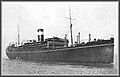
1,149 men died when HMT Rohna was sunk by a Luftwaffe glide bomb while sailing with convoy KMF 26.
-
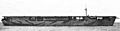
HMS Audacity was lost from convoy HG 76.
-
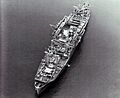
USS Thomas Stone was lost from convoy KMF 1.

.jpg)
.jpg)
