
Jali facts for kids


Imagine a beautiful stone screen with intricate patterns! That's what a jali (pronounced JAA-lee) is. The word jali means "net" in some languages. These special screens are made of stone and have many small holes. They often feature amazing designs, like fancy writing (calligraphy), geometric shapes, or patterns inspired by nature. You'll find jalis mostly in Indian architecture, especially in buildings that blend Indian and Islamic styles. They are similar to another type of screen called mashrabiya found in other Islamic buildings.
Jalis are super clever! They let in cool breezes and soft light, but keep out harsh sunlight and rain. They even help keep buildings cool naturally, without needing air conditioning! The holes in a jali are usually small, often about the same size or smaller than the stone's thickness. This makes the screen very strong. Interestingly, jalis in places with lots of humidity, like Kerala and Konkan, have bigger holes. In drier areas, like Gujarat and Rajasthan, the holes are smaller, making the screen less see-through.
For a while, jalis became less common, especially when glass windows became popular in the late 1800s. People also wanted more privacy in crowded cities. But guess what? In the 2000s, jalis are making a comeback! Architects love them again because they help buildings use less energy. They are a fantastic way to build in an eco-friendly way.

Contents
The Story of Jalis: From Ancient Caves to Grand Palaces
Early Jalis in Temples
Long, long ago, some of India's first holy places were like natural caves. They were often dark and quiet. People would gather at the entrance to pray. To make the light inside softer and more peaceful, early builders used screens called jalis. These screens filtered the bright sunlight, helping people focus on their prayers and the sacred statues. This tradition continued in many Indian temples, including those for Hinduism and Jainism. Over time, jali designs became more detailed, with beautiful geometric shapes and patterns inspired by nature.
Islamic Influence and New Designs
When Islamic architecture arrived in places like Gujarat, jalis became even more popular. They were used in mosques and tombs, where light also held special meaning. The way jalis were used in Islamic buildings shows a wonderful mix of different art styles. Builders and artists from various backgrounds worked together, creating new and amazing jali designs that blended Hindu, Jain, and Islamic traditions.
Crafting Jali Masterpieces
At first, jalis often featured many geometric shapes. These were carved directly into stone. You can see some of the earliest examples of these geometric jalis at the Alai Darwaza in Delhi, built around 1305. Later, during the time of the Mughals, artists started carving incredibly detailed plant designs. The famous Taj Mahal has many jalis with these delicate patterns. Sometimes, they even added colorful pietra dura inlay, using marble and sparkling semi-precious stones to make the jalis even more stunning!
Famous Jalis in History
The Gwalior Fort has an old inscription from 1496 (Samvat 1553). It tells us about skilled craftspeople and their amazing work. One craftsman, named Khedu, was famous for his "Gwaliyai jhilmili," which means jali screens made in the Gwalior style! The Mughal period tomb of Muhammad Ghaus in Gwalior, built in 1565, is also famous for its beautiful stone jalis. Even in the 1800s, many houses in Gwalior used stone jalis. Today, you can see many jalis at the Usha Kiran Palace Hotel in Gwalior, which used to be a royal guest house.
Jalis Around the World
Where to See Jalis Today
You don't have to travel all the way to India to see jalis! Some of these incredible stone screens are now in big museums in the U.S. and Europe. You can find them at places like the Indianapolis Museum of Art, the Metropolitan Museum of Art in New York, and the Victoria and Albert Museum in London. They are truly works of art!
Images for kids
-
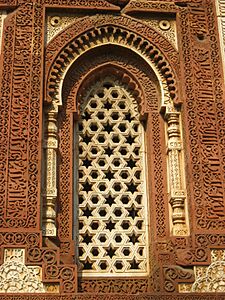
A window at Alai Darwaza, part of the Qutb complex.
-
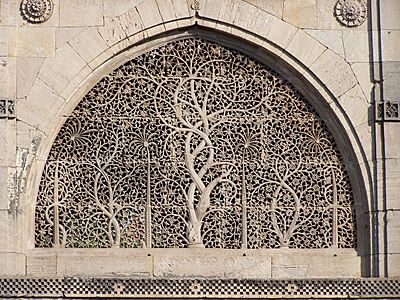
A jali in the Sidi Saiyyed mosque in Ahmedabad, showing a traditional Indian "tree of life" design.
-
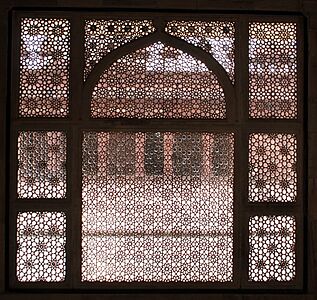
A jali at the Tomb of Salim Chishti in Fatehpur Sikri, featuring Islamic geometric patterns.
-
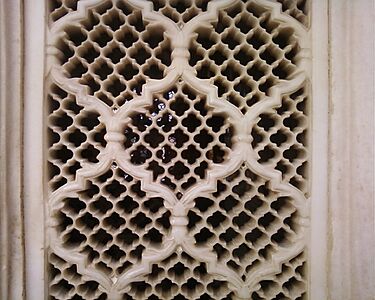
A jali at Bibi Ka Maqbara in Aurangabad, with typical Indian designs.
-
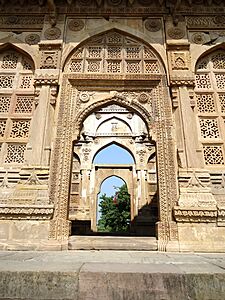
A jali at Champaner, combining traditional Indian and Islamic geometric patterns.
-
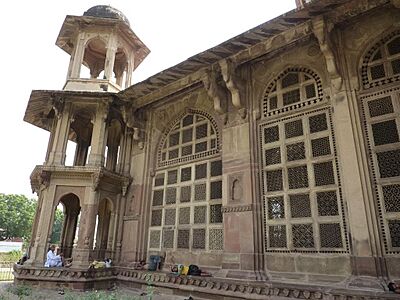
Jalis in the Mohammad Gaus Tomb in Gwalior.
-
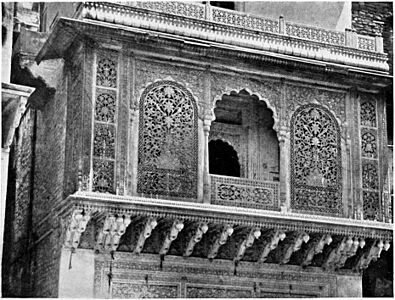
A 19th-century house in Gwalior, showing the use of stone jalis.


See Also
- Girih (Another type of geometric pattern)
- Jharokha (A type of enclosed balcony in Indian architecture)
- Openwork (Decorative work with openings)
- Venturi effect (How air moves faster through a narrow space)
