
Hinduism facts for kids
Hinduism is one of the world's oldest and largest religions. It began thousands of years ago in ancient India. Today, about 1.2 billion people follow it around the globe. That makes it the world's third-largest faith after Christianity and Islam. Most Hindus live in India and Nepal, but many also live in Bali, Mauritius, North America, and Europe.
Unlike many other major faiths, Hinduism does not trace back to a single human founder or one holy teacher. Instead, it grew naturally over thousands of years as a rich tapestry of cultures, traditions, ideas, and stories. Hinduism teaches respect for nature, kindness to animals, and the pursuit of inner peace. It includes many different traditions, celebrations, sacred books, and paths of Yoga.
Contents
The Meaning of the Name Hindu
Where Does the Word Come From?
The name Hindu comes from a famous geographic landmark called the Indus River. In the ancient Sanskrit language, this great river was known as the Sindhu. People living in lands to the west, including ancient travelers from the Persian empire and beyond, pronounced the initial "s" sound as an "h". Because of this change in pronunciation, the river became known as the Hindu.
Gradually, visitors used this name to describe the land and the people living beyond the river. Over centuries, traders, travelers, and rulers used terms like Hind and Hindustan to refer to the northern part of India. The word described a geographic area before it ever described a specific religion.
What Is Sanatana Dharma?
Many followers prefer to call their spiritual path Sanātana Dharma. In Sanskrit, this phrase translates to "eternal truth" or "the timeless way of righteous living." Followers use this name because they believe the core truths of the universe have always existed and will last forever.
Another historical name is Vaidika Dharma. This title means a way of living guided by the wisdom of the Vedas, which are the most ancient scriptures of India. To its followers, the tradition is not just a religion. It is a complete and harmonious way of living each day with honour and purpose.
Core Beliefs and Ideas
What Is Dharma and the Cosmic Order?

A central pillar of Hindu life is Dharma. Dharma means living with honesty, performing your personal duties, and acting kindly toward all living creatures. It is closely connected to rta, which is the natural balance and cosmic order that keeps the entire universe running smoothly.
When people follow their dharma, they help maintain harmony in their family, society, and the natural world. Ancient texts like the Brihadaranyaka Upanishad explain that truth and dharma are identical. Doing what is right gives moral strength to everyone, allowing even the small and gentle to stand up against unfair treatment.
Understanding Karma and Saṃsāra
Hindus believe that every action carries a result. This principle is called karma, which literally means "deed" or "action." If a person acts with kindness, honesty, and generosity, positive outcomes will return to them. On the other hand, hurtful actions create future difficulties and moral lessons.
Along with karma is the idea of saṃsāra. This is the ongoing journey of the soul through cycles of birth, life, and rebirth. Hindus believe that inside every living being lives an eternal spiritual spark known as the ātman, or the true self. While the physical body grows old, the inner soul continues forward on its learning journey.
The Four Goals of Life
Hindu teachings outline four noble goals that give balance and joy to human life. These goals are called the Puruṣārthas:
- Dharma: Living a moral, truthful, and helpful life.
- Artha: Working hard, earning an honest living, and gaining resources to care for family and community.
- Kama: Enjoying sensory beauty, music, painting, laughter, and loving friendships in a healthy way.
- Moksha: Reaching spiritual freedom, discovering supreme peace, and realizing oneness with ultimate reality.
Views of the Divine

The way Hindus understand God is rich, thoughtful, and varied. Many believe in one supreme, formless divine reality called Brahman. Brahman is the ultimate, unchanging energy that fills every corner of space and connects all living beings.
Because Brahman is vast and beyond complete human understanding, this divine energy is celebrated through many different forms and personalities called devas (heavenly beings) and Devis (goddesses). Different families, towns, and individuals feel drawn to specific forms of the divine, called their chosen deity or iṣṭa devatā. Some worshippers think of the divine as a caring mother, some as a protective guide, and others focus on deep, quiet meditation on the formless spirit within their own heart.
The Trimurti and Great Deities
In sacred stories, three primary divine expressions help explain the rhythm of creation:
- Brahma: The divine force representing creation and the beginning of things.
- Vishnu: The loving preserver who protects cosmic balance, kindness, and goodness.
- Shiva: The great yogi who transforms, dissolves, and renews energy so new life can emerge.
Great goddesses represent the active creative power of the universe, known as Shakti. Goddess Parvati, the companion of Shiva, represents gentle love and family devotion, while forms like Durga and Kali protect the innocent from harm. Goddess Lakshmi brings grace, prosperity, and light, while Saraswati inspires learning, music, and wisdom.
Avatars: Helpers of the Earth
When goodness on Earth is threatened by injustice, Hindus believe that the divine preserver descends in a helpful form called an avatar. The most famous avatars of Vishnu include Rama, the noble hero celebrated in the epic poem Ramayana, and Krishna, the playful guide and teacher of the sacred song Bhagavad Gita.
Sacred Scriptures

Hinduism has a massive library of ancient literature written in Vedic Sanskrit and classical Sanskrit. For hundreds of years before writing systems became common, students memorised these holy poems, chants, and teachings word-for-word from their teachers, passing them down with incredible accuracy.
Shruti: The Ancient Revelation
Texts known as Śruti ("that which is heard") are considered the most ancient and sacred foundations of Hindu thought. They include the four Vedas:
- Rigveda: A collection of more than one thousand sacred hymns praising nature and the cosmos.
- Samaveda: Melodies and musical chants used during ancient ceremonies.
- Yajurveda: Instructions and chants for conducting sacred offerings.
- Atharvaveda: Daily prayers, healing songs, and poems about health and society.
Each Veda contains deeper philosophical parts known as the Upanishads. These dialogue-filled writings explore deep questions about who we are, what the universe is made of, and how the inner soul (ātman) connects to the supreme reality (Brahman).
Smriti: Epics and Stories
The second group of texts is called Smṛti ("that which is remembered"). These works teach moral lessons and spiritual wisdom through thrilling stories, adventures, and poems that everyone in the family can enjoy.
The most famous of these stories are the two great Indian epics:
- The Mahabharata: One of the longest poems ever written, describing a struggle between two branches of a royal family. Within this giant work is the beloved Bhagavad Gita, where Krishna explains to the prince Arjuna why doing one's duty with love and courage is vital.
- The Ramayana: The adventure of Prince Rama, his brave wife Sita, and the loyal monkey hero Hanuman, showing the power of keeping promises, loyalty, and standing against unfair rulers.
Another massive group of books is the Puranas, which are filled with stories of gods, goddesses, kings, ancient history, and celebrations. Other famous books include the Yoga Sutras, which teach mental focus, breathing, and peaceful living.
Major Traditions and Denominations

Because Hinduism is so welcoming of diverse ideas, it does not have a single governing leader or headquarters. Instead, it flourishes as a friendly family of traditions. Scholars generally group these traditions into four main paths:
Vaishnavism is one of the largest traditions. Its followers, called Vaishnavas, place their primary devotion on Vishnu and his loving incarnations, especially Krishna and Rama. Vaishnavism places huge importance on heartfelt love for God, singing joyous hymns called bhajans, chanting, and building grand community temples. Followers believe that love for the divine inspires kindness, helpfulness, and charity toward everyone.
Shaivism
Shaivism focuses its devotion on Shiva. Followers, known as Shaivas, admire Shiva as the master of inner stillness and peaceful meditation. Shaivism has a strong history of monastic life, quiet study, and the practice of deep breathing and physical Yoga. Many Shaivas travel on long mountain pilgrimages, visiting ancient shrines high in the snow-capped Himalayas.
Shaktism
Shaktism celebrates the divine feminine energy of the universe, known as Devi or Shakti. Followers view the motherly energy of creation as the ultimate power that sustains all life. This tradition is especially popular in eastern Indian states like Bengal and Assam. Shaktas celebrate the balance between gentle kindness and brave courage, honoring goddesses such as Parvati, Durga, and Kali.
Smartism
Smartism is an inclusive philosophical tradition that worships five or six major deities as equal representations of the one supreme reality, Brahman. A classic Smarta shrine includes images of Ganesha, Shiva, Vishnu, Surya (the sun deity), and Parvati. Smartas follow the teachings of the great philosopher Adi Shankara and the wisdom tradition known as Advaita Vedanta, which teaches that understanding one's true inner spirit leads to freedom and peace.
Practices and Celebrations
Worship at Home and in Temples

Worship in Hinduism can happen anywhere, but the most common setting is at home. Most Hindu families set up a quiet shrine in their home decorated with pictures, small bronze statues called murtis, flowers, and lamps.
Daily worship, known as puja, involves simple acts of hospitality shown to the divine. Worshippers might light an oil lamp, ring a small brass bell, offer sweet fruit, light fragrant incense, and recite peaceful prayers. A popular part of worship is aarti, where a small flame is waved gently in circles before the holy image while everyone sings joyful songs. Many people also practice japa, which means quietly repeating a holy mantra or name of God using prayer beads to calm the mind.
Fire Ceremonies and Life Milestones

Ancient rituals often feature a sacred fire ceremony called a yajna or havan. Fragrant woods, clarifying grains, and herbs are offered into a warm fire while priests chant rhythms from the ancient Vedas.
Hindus mark important steps in growing up with meaningful ceremonies called sanskāras:
- Welcoming a newborn: Prayers and ceremonies celebrate the safe birth and the naming of a baby (Namakarana).
- First bites of solid food: The baby is fed delicious sweet rice in an event called Annaprashana.
- Learning to read: Children begin learning the alphabet and drawing letters in rice or sand.
- Starting school: An initiation ceremony called Upanayana celebrates a student taking up serious study.
- Weddings: A vibrant Hindu wedding brings families together with music, flowers, and vows taken around a holy fire.
Joyful Festivals of the Year

Festivals in Hinduism are bright, colorful, and joyful community holidays that follow the lunar motions of the Hindu calendar.
Diwali: The Festival of Lights
Diwali (or Deepawali) is the most famous Hindu festival in the world. Families clean and decorate their homes, hang strings of warm lights, and place rows of small clay lamps called diyas along windows and doorsteps. The festival celebrates the victory of goodness over unfairness, and knowledge over ignorance. People share sweet treats, exchange colorful gifts, wear new clothes, and celebrate the homecoming of Prince Rama and Sita.
Holi: The Festival of Colors

Holi is a lively springtime celebration welcoming the warm sunshine and fresh blooms of the new season. People gather outdoors in parks, streets, and schoolyards to splash each other with bright dry powder paints and water. The air fills with clouds of pink, blue, yellow, and green colors. Holi celebrates friendship, forgiveness, laughter, and the arrival of harvest season.
Other Wonderful Festivals
- Ganesh Chaturthi: A ten-day festival welcoming the elephant-headed deity Ganesha, who is loved as the bringer of wisdom and good beginnings.
- Navaratri and Durga Puja: Nine nights filled with community dancing, music, and plays celebrating goddess energy and the victory of courage over challenges.
- Raksha Bandhan: A sweet family holiday where brothers and sisters tie colorful protective bracelets of thread around each other's wrists to promise lifetime care and loyalty.
- Maha Shivaratri: A calm, peaceful night of quiet prayer, deep breathing, and meditation dedicated to Shiva.
Journeys to Sacred Places

Going on a spiritual trip to a sacred destination is called a tirtha-yatra or pilgrimage. Hindus travel to river confluences, high mountains, ancient temples, and forests to renew their spirits and learn from wise teachers called sadhus and Gurus.
Famous pilgrimage cities include Varanasi on the sacred Ganges river, Puri by the eastern sea, and Rameswaram in the south. Every few years, millions of people gather for the massive Kumbh Mela festival at river banks like Prayagraj and Haridwar, forming one of the largest peaceful gatherings of human beings anywhere in world history.
Architecture, Arts, and Daily Living
Beautiful Temple Architecture

A Hindu temple is designed to be a house of the divine and a bridge between heaven and Earth. Architects followed ancient design books called Vastu shastras that used sacred geometry, symmetry, and cosmic diagrams to create peaceful spaces.
Temples generally feature soaring decorative towers. In northern India, these towers take a gently curved shape called Nagara, while southern Indian temples feature massive, brightly painted pyramid gates called Gopurams. At the very center of the temple sits a quiet, cave-like room called the garbhagriha (womb chamber), where the sacred image rests. Visitors walk around the central chamber in a slow, peaceful circle to show respect. Stone carvers covered the outside walls with magnificent sculptures of dancing animals, heroes from epics, musicians, and graceful designs.
Ahimsa and Kindness to Animals

A fundamental ethical rule in Hinduism is ahiṃsā, which means nonviolence and refraining from harming any living creature. Because Hindus believe the divine essence lives inside all creatures, animals and plants deserve love and protection.
Because of this value, millions of Hindus practice a vegetarian lifestyle. They enjoy delicious, colorful dishes made of grains, lentils, fresh vegetables, fruits, and dairy products. Special respect is given to the cow, which is viewed as a gentle symbol of selfless giving and maternal care because it generously shares nourishing milk. Throughout India, communities build special shelters called goshalas where older cows and animals can rest safely and receive fresh food.
The Practice of Yoga

The word Yoga comes from a root meaning "to join" or "to connect." It describes practices that help connect the individual human mind with inner peace and divine wisdom. Ancient sages taught that there are several helpful paths of yoga:
- Karma Yoga: The path of helping others selflessly, working hard without being greedy for rewards.
- Bhakti Yoga: The path of love, devotion, singing, and prayer.
- Jñāna Yoga: The path of wisdom, deep reading, and asking searching questions about life.
- Rāja Yoga: The path of quiet breathing exercises, concentration, and still meditation.
Today, forms of physical yoga and breathing techniques are enjoyed by millions of boys, girls, and adults around the globe to stay healthy, calm, and strong.
Looking Across History

Hinduism's long journey spans thousands of years. Its roots touch the early settlements of the Indus Valley Civilisation and the ancient communities that sang the verses of the historical Vedic religion.
Between 500 BCE and 300 CE, teachers, poets, and thinkers wove together ancient rituals, deep meditation practices, and popular local traditions into what historians call the classical Hindu synthesis. During this creative era, authors wrote down the great adventures of the Ramayana and Mahabharata, and scholars formed the six classical schools of Hindu philosophy.
During the medieval centuries, the widespread Bhakti movement swept across India. Saint-poets from every walk of life wrote sweet, heartfelt songs in everyday local languages rather than formal scholarly Sanskrit. They taught that every child and adult, regardless of family background or wealth, could experience a direct and personal loving relationship with the divine.
In modern times, thinkers such as Swami Vivekananda traveled across oceans to share Indian philosophy at global conferences, highlighting its universal messages of harmony, tolerance, and respect among world religions. Today, Hindu ideas, festivals, art, and music continue to enrich communities around the globe.
Images for kids
-
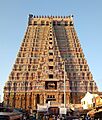
The grand entrance tower of the Srirangam temple in southern India.
-
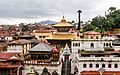
The historic Pashupatinath Temple in Nepal, dedicated to Shiva.
-

Swami Vivekananda helped introduce Indian philosophy and yoga to audiences in the West.
-

Members of the Hare Krishna movement sharing joyful music in Helsinki, Finland.
-
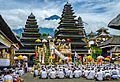
A colorful religious ceremony taking place at Pura Besakih in Bali, Indonesia.
-

A painting of the great epic battle told in the Mahabharata.
-

The sacred high-altitude pilgrimage temple of Muktinath in Nepal.
-
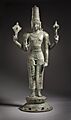
An artistic statue of Vishnu, the divine preserver.
-

Artwork depicting Brahma seated upon his sacred goose mount.
-

A giant coastal statue of Shiva meditating at Murudeshwar.
-
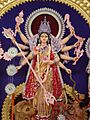
A decorated sculpture of Goddess Durga created for festival celebrations.
-

A traditional painting showcasing the ten major forms or Dashavatara of Vishnu.
-

A classical relief showing the divine form Ardhanarishvara, representing male and female balance.
-
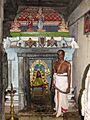
A priest offering prayers inside an ancient Hindu sanctuary.
-

A massive parade celebrating the festival of Ganesh Chaturthi.
-
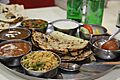
A traditional vegetarian thali meal served on a round metal platter.
-

The grand Kandariya Mahadeva Temple showing north Indian spire architecture.
-

The star-shaped Chennakeshava Temple built during the Hoysala dynasty.
-
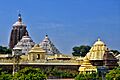
The famous tower of the Jagannath Temple, Puri in Odisha.
-
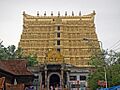
The towering entrance of the Padmanabhaswamy temple in Kerala.
-
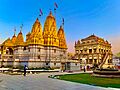
The colorful facade of the Swaminarayan Mandir in Gujarat.
-

The granite Kauai Hindu monastery located in Hawaii.
-

A dedicated monk greeting visitors with a respectful greeting in Madurai, India.
-

The ancient stone Shore Temple standing next to the sea at Mahabalipuram.
-
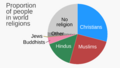
A global chart showing the percentages of major world religions.
-

Priests conducting a traditional ceremony at Bhadrachalam Temple.
-

Sacred religious symbols showing the sound Om and the sign of well-being.
-

A traditional painting of Krishna playing his sweet music in nature.


Related Pages
See also
 In Spanish: Hinduismo para niños
