
List of the prehistoric life of North Carolina facts for kids
This list of amazing prehistoric life in North Carolina tells you about the different ancient creatures whose fossils have been found in the state of North Carolina. These fossils help scientists learn about what life was like millions of years ago!
Contents
Ancient Life: Precambrian and Paleozoic Eras
The Paleobiology Database doesn't show any known fossils from the very old Precambrian or Paleozoic eras in North Carolina. This means that either no life existed here then, or their fossils haven't been discovered yet.
Mesozoic Era: Age of Dinosaurs
The Mesozoic Era is often called the "Age of Dinosaurs." It lasted from about 252 to 66 million years ago. Many interesting creatures lived in North Carolina during this time.
Dinosaurs and Reptiles of the Mesozoic
- †Aetosaurus: This was a reptile that looked a bit like a crocodile. It lived during the Late Triassic period.

- †Carnufex: This was a large, meat-eating reptile, a distant relative of crocodiles. It lived in the Late Triassic and its fossils were first found right here in North Carolina!

- †Deinosuchus: Imagine a giant alligator! Deinosuchus was a huge, ancient relative of alligators that lived in the Late Cretaceous period.

- †Halisaurus: This was a type of mosasaur, a large marine reptile that swam in the oceans during the Late Cretaceous. Mosasaurs were fierce predators.

- †Mosasaurus: Another huge marine reptile, Mosasaurus was a top predator in the Late Cretaceous seas. It had powerful jaws and sharp teeth.

- †Rutiodon: This reptile was a phytosaur, which looked a lot like a crocodile but was not closely related. It lived in the Late Triassic, and its first fossils were found in North Carolina.

- †Tylosaurus: This was another very large and powerful mosasaur from the Late Cretaceous. It was a fast swimmer and hunted other marine animals.

Fish and Sharks of the Mesozoic
- †Cretolamna: This was an ancient shark that lived from the Early Cretaceous to the Eocene. Its teeth are often found as fossils.

- Squalicorax: Also known as the "crow shark," this shark lived during the Late Cretaceous. It was a scavenger and a predator.

Other Mesozoic Life
- †Belemnitella: These were ancient squid-like creatures that had a hard internal shell, called a "guard." They lived in the Late Cretaceous.

- †Placerias: This was a large, plant-eating mammal-like reptile (synapsid) that lived in the Late Triassic. It was one of the last of its kind.

Cenozoic Era: Age of Mammals
The Cenozoic Era began about 66 million years ago and continues to the present day. This era saw the rise of mammals, birds, and modern plants.
Mammals of the Cenozoic
- †Borophagus: This was a type of "bone-crushing dog" that lived from the Miocene to the Pliocene. They had very strong jaws and teeth.

- †Cuvieronius: This was an ancient elephant relative that lived from the Pliocene to the Holocene. It had spiral tusks.

- †Gomphotherium: Another elephant relative, Gomphotherium lived from the Miocene to the Pleistocene. It had four tusks, two on top and two on the bottom.

- †Hemiauchenia: This was an ancient relative of llamas and camels that lived from the Miocene to the Pleistocene.

- †Mammut (American mastodon): These large, hairy elephant relatives lived during the Pleistocene. They were common across North America.

- †Nannippus: This was a small, three-toed horse that lived from the Miocene to the Pliocene.

- †Pseudhipparion: Another ancient horse, Pseudhipparion lived during the Miocene. It was also a three-toed horse.

- †Rhynchotherium: This elephant relative lived from the Miocene to the Pliocene. It had a unique lower jaw with two tusks that curved downwards.

- Tapirus (Tapir): Tapirs are pig-like mammals with short snouts. Ancient tapirs lived in North Carolina during the Cenozoic.
.JPG)
Whales and Dolphins of the Cenozoic
- †Atocetus: This was an ancient dolphin that lived during the Miocene.

- †Balaenula: This was a type of baleen whale from the Pliocene. Baleen whales filter feed tiny organisms from the water.

- †Cetotherium: These were small baleen whales that lived from the Miocene to the Pliocene.

- †Cynthiacetus: This was an ancient whale from the Eocene, known for its long, slender body.

- Globicephala (Pilot whale): Pilot whales are a type of dolphin. Their fossils have been found from the Cenozoic.

- †Kentriodon: This was an early type of dolphin that lived from the Oligocene to the Miocene.

- Lagenorhynchus (White-sided dolphin): These dolphins are known for their distinctive markings. Fossils show they lived in the Cenozoic.

- Monodon (Narwhal): Narwhals are known for their long, spiraled tusk. Fossils suggest they were present in the Cenozoic.

- †Ontocetus: This was an ancient walrus-like creature from the Miocene, and its first fossils were found in North Carolina.
- †Scaldicetus: This was a type of sperm whale from the Neogene period.

- †Squalodon: This "shark-toothed dolphin" lived from the Oligocene to the Miocene. It had teeth that looked like a shark's.

- Tursiops (Bottlenose dolphin): These are the common dolphins we see today. Their ancient relatives lived in the Cenozoic.

- †Xiphiacetus: This was a type of whale from the Miocene.

Birds of the Cenozoic
- †Anas clypeata (Northern shoveler): This duck is known for its large, shovel-shaped bill. Ancient shovelers lived in the Cenozoic.

- †Corvus ossifragus (Fish crow): Fish crows are common birds today. Their ancient relatives lived in the Cenozoic.

- †Ectopistes migratorius (Passenger pigeon): These birds were once very common but are now extinct. Fossils show they lived in the Cenozoic.
.jpg)
- †Fratercula arctica (Atlantic puffin): Puffins are seabirds known for their colorful beaks. Ancient puffins lived in the Cenozoic.

- †Mergus serrator (Red-breasted merganser): This duck is known for its long, thin bill. Ancient mergansers lived in the Cenozoic.

- †Pelagornis: This was a giant "false-toothed bird" that lived from the Oligocene to the Pleistocene. It had bony projections on its beak that looked like teeth.

- Phoenicopterus (Flamingo): Flamingos are known for their pink feathers and long legs. Ancient flamingos lived in the Cenozoic.

- †Somateria mollissima (Common eider): This is a large sea duck. Ancient eiders lived in the Cenozoic.
_male,_London_Wetland_Centre_-_Diliff.jpg)
- †Sterna maxima (Royal tern): Royal terns are seabirds with a shaggy crest. Ancient terns lived in the Cenozoic.

Fish and Sharks of the Cenozoic
- Acanthocybium solandri (Wahoo): This is a fast-swimming fish. Fossils show they lived in the Cenozoic.

- Aetobatus (Eagle ray): Eagle rays are known for their flat bodies and long tails. Ancient eagle rays lived in the Cenozoic.
.jpg)
- Aluterus (Filefish): Filefish are known for their rough, file-like skin. Ancient filefish lived in the Cenozoic.

- Carcharodon hastalis (Broad-toothed mako): This was a large, fast-swimming shark from the Miocene-Pliocene, related to the great white shark.

- Chilomycterus schoepfi (Striped burrfish): These fish have spines all over their bodies. Ancient burrfish lived in the Cenozoic.

- Citharichthys (Large-tooth flounder): Flounders are flatfish that live on the seabed. Ancient flounders lived in the Cenozoic.

- Isistius (Cookiecutter shark): These small sharks are known for taking cookie-cutter shaped bites out of larger animals. Ancient cookiecutter sharks lived in the Cenozoic.

- †Lophius americanus (American anglerfish): These fish are known for their large mouths and a "fishing rod" on their heads. Ancient anglerfish lived in the Cenozoic.

- †Otodus megalodon (Megalodon): This was the largest shark that ever lived, from the Miocene-Pliocene. Its teeth are huge!

- Odontaspis ferox (Smalltooth sand tiger): This shark is known for its sharp, pointed teeth. Ancient sand tigers lived in the Cenozoic.

- Pterothrissus (Japanese gissu): This fish is a type of bonefish. Ancient gissu lived in the Cenozoic.

- Seriola (Amberjack): Amberjacks are strong, fast-swimming fish. Ancient amberjacks lived in the Cenozoic.

- Triaenodon obesus (Whitetip reef shark): These sharks are common in coral reefs. Ancient whitetip reef sharks lived in the Cenozoic.

Shells and Other Marine Life of the Cenozoic
- Busycon contrarium (Whelk): Whelks are large sea snails. Their shells are often found as fossils.

- †Calappilia: This was a type of crab that lived from the Paleocene to the Miocene.

- Cancellaria (Nutmeg snail): These sea snails have shells that look like nutmeg. Ancient nutmeg snails lived in the Cenozoic.

- Coelopleurus (Sea urchin): Sea urchins are spiny marine animals. Ancient sea urchins lived in the Cenozoic.

- Dentalium (Tusk shell): These mollusks have long, tusk-shaped shells. Ancient tusk shells lived in the Cenozoic.

- Euspira (Moon sea snail): These snails have smooth, rounded shells. Ancient moon snails lived in the Cenozoic.

- Tenagodus (Sea snail): These sea snails have unusual, twisted shells. Ancient sea snails lived in the Cenozoic.

Plants of the Cenozoic
- Pontederia (Pickerel weed): These are aquatic plants with purple flowers. Ancient pickerel weeds lived in the Cenozoic.

- Quercus (Oak tree): Oak trees are common trees today. Ancient oak trees lived in the Cenozoic.

Images for kids
-
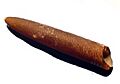
Fossilized guard of the Late Cretaceous belemnoid cephalopod Belemnitella
-
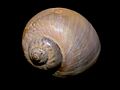
Shell of a Euspira moon sea snail
