
Oscar Werner Tiegs facts for kids
Quick facts for kids
Oscar Werner Tiegs
|
|
|---|---|
 |
|
| Born | 12 March 1897 Kangaroo Point, Brisbane, Australia
|
| Died | 5 November 1956 (aged 59) Hawthorn, Melbourne, Australia
|
| Known for | Contributions to the phylogenetic division of arthropoda |
| Awards | David Syme Research Prize (1928) Clarke Medal (zoology) (1956) Fellow of the Royal Society (1944) Fellow of the Australian Academy of Science (1954) |
| Scientific career | |
| Institutions | University of Adelaide University of Melbourne |
Oscar Werner Tiegs (born March 12, 1897 – died November 5, 1956) was an important Australian zoologist. He studied animals, especially insects and other creatures with exoskeletons, during the first half of the 1900s.
He made a big difference in how we understand arthropods. These are animals like insects, spiders, and crabs. Oscar Tiegs suggested dividing arthropods into two main groups. One group includes insects, myriapods (like centipedes), and velvet worms. The other group has trilobites (ancient sea creatures), crustaceans (like crabs), and arachnids (like spiders).
People admired his amazing drawings and his skill with a microscope. He was very careful and accurate in his work. Many consider him one of Australia's greatest zoologists. He holds a lasting place in the history of zoology, which is the study of animals.
Oscar Tiegs earned a high science degree (Doctor of Science) from the University of Adelaide. He was also a Fellow of the Royal Society and a founding Fellow of the Australian Academy of Science. These are very respected scientific groups.
Contents
Early Life and School Days
Oscar Tiegs' parents, Otto and Helene, moved to Australia from Germany. His father, Otto, was either a pharmacist and engineer or a merchant. He believed strongly in learning and education.
Oscar Tiegs was born in Kangaroo Point, a suburb of Brisbane, Australia. He had four younger sisters, but sadly, two of them passed away when they were babies.
A Young Insect Collector
As a child, Oscar loved insects. He collected about a thousand different kinds of beetles and learned their names. This collection was later given to the Queensland Museum. He described himself as a shy but hardworking boy who was completely fascinated by insects. He also thanked Henry Tyson, a government entomologist (insect expert), for his help.
He went to Brisbane State School until he was 14. Then he attended Brisbane Grammar School from 1911 to 1915. He was good enough to win a scholarship, which helped him go to university.
University Studies
In March 1916, Oscar started studying science at the University of Queensland. He focused on biology and learned a lot about animal shapes and structures. He earned his Bachelor of Science degree in 1919. While still a student, he published his first research paper in 1918. It was about the anatomy of a type of worm called an echiuroid worm.
He received his Master of Science degree in 1921 when he was 25. He had wanted to study medicine, but there wasn't a medical school in Queensland at the time. So, he continued his studies in zoology.
In 1920, he received a special fellowship to study economic biology. This meant he worked with scientists on important projects. He helped research how to control blowflies and prickly pear plants in Queensland. He also helped with a campaign to get rid of hookworm, a type of parasite.
Oscar Tiegs was the first person to earn a Doctor of Science degree from the University of Queensland.
Adult Life and Personality

On August 14, 1926, Oscar Tiegs married Ethel Mary Hamilton. She worked as a telephonist. They were married in a church in Hawthorn, a suburb of Melbourne.
Oscar Tiegs was known for making strong, lasting friendships. Even people he met only once, like during a trip to Europe in 1928, remembered him fondly. His friends and colleagues often called him Sandy Tiegs.
He was the godfather to David, the son of his mentor and friend, Professor Thorburn Robertson.
Oscar Tiegs loved learning and doing research. He didn't enjoy administrative tasks or committee meetings very much. However, he did serve as a Councillor and Chair of the Library Committee for The Royal Society of Victoria.
As the head of the Zoology Department at the University of Melbourne, he encouraged his staff to do their own research. He gave them freedom to explore their ideas, which helped them do world-class work. He was proud of his team and liked to show visitors what they were working on.
He was a great lecturer, especially to first-year students. He taught them basic zoology and animal shapes very clearly. He also gave special lectures to older students about how arthropods evolved and how the vertebrate nervous system works. His teaching career started even earlier, as he was a student demonstrator in biology at the University of Queensland in 1918.

In 1944, when he was 47, Oscar Tiegs was chosen as a Fellow of the Royal Society. This is a very high honor for a scientist.
In 1954, Oscar Tiegs was one of the 23 founding Fellows of the Australian Academy of Science. He and the other founding members asked Queen Elizabeth II to officially create the Academy. He also helped write the rules for the new Academy.
The zoological museum at the University of Melbourne, now called the Tiegs Museum, has many high-quality animal specimens thanks to Oscar Tiegs. He spent a lot of time improving its collection. He believed in the traditional way of studying zoology by looking at the shapes and structures of animals.
Oscar Tiegs was a very hard worker. For example, if a staff member was away, he would take on extra teaching duties himself so his other staff wouldn't be overloaded. Only later in his life did he start to balance his work time more. He loved music, especially Beethoven and Mozart, and appreciated art. He shared these interests with his wife, Ethel.
Some people felt Oscar Tiegs was very direct, sometimes even blunt, but he also had a good sense of humor. He was known for sending supportive letters and gift packages to friends during World War II. His shyness and living far away in Australia might have kept him from making an even bigger impact on zoology. He preferred working in the laboratory to attending meetings or social events.
He had a heart condition called aortic stenosis. He passed away from a coronary occlusion (a blocked heart artery) at his home in Hawthorn when he was 59 years old.
Scientific Career and Discoveries

Oscar Tiegs' scientific work covered many areas. He studied how nerves and muscles work, and how invertebrates (animals without backbones) develop from eggs. His studies were considered some of the best of his time. He often moved between different research topics, only to return to them later. He focused on describing the shapes and structures of animals, even when many other biologists were moving towards experiments.
His very first research paper described something unusual: how the male of a certain worm species (the echiuroid worm) becomes very simple and fuses with the female.
He also did some brief studies on worms, like hookworm, before moving to the new Department of Zoology at the University of Adelaide in 1922.
University of Adelaide Research

At Adelaide, Oscar Tiegs became the Acting Head of Zoology because Professor Thomas Harvey Johnston was away. He helped set up the new department and its teaching programs. Here, he was influenced by professors who studied anatomy and how the body works.
Oscar Tiegs spent three years in Adelaide. He earned his Bachelor of Science degree in 1922 and his Doctor of Science degree in 1922 from the University of Adelaide, all by the age of 25. His doctoral research was about how a type of wasp called Nasonia vitripennis changes as it grows.
His doctoral work became the foundation for much of his later studies. He looked closely at how muscles are built. He found that the striped look of muscle fibers wasn't from separate discs, but from a spiral (helicoidal) arrangement inside the fiber. He later realized that other scientists had seen this before, but their findings hadn't received much attention. He believed this spiral structure was common in muscles and that signals traveled along this spiral path.
From 1922 to 1934, Oscar Tiegs mainly focused on how nerves and muscles work.
University of Melbourne Work
In 1925, Oscar Tiegs moved to the University of Melbourne's Zoology Department as a senior lecturer.


In 1928, he received a special fellowship to travel to Europe. He worked at Cambridge University in England and Utrecht University in the Netherlands.
Also in 1928, Oscar Tiegs won the David Syme Research Prize for his excellent research.
As a histologist (someone who studies tissues), Oscar Tiegs became interested in how muscles receive signals from nerves. He did experiments and found that muscle action seemed to be caused by a substance like adrenaline, not by a double nerve supply as some thought.
In this work, Oscar Tiegs corrected mistakes made by others and confirmed some older ideas that were correct.
Understanding Arthropod Evolution
Around 1931, Oscar Tiegs became an Associate Professor of Zoology at Melbourne University. His interest returned to how insects change and develop (metamorphosis). He studied the development of three species: a beetle, a symphylan (a small centipede-like creature), and a pauropus (another tiny arthropod). He showed that some older ideas about "rejuvenation" (making something young again) were not correct. He also found that the development of the insect's midgut (part of its digestive system) didn't fit the usual process of early development.
He then spent four years studying the development of the symphylan Hanseniella agilis, followed by three years studying the pauropus Pauropus silvaticus.
He suggested a new way to classify arthropods based on the structure of their heads. Later research on their antenna muscles and how they move supported his ideas.
When Oscar Tiegs passed away in 1956, he had a complete draft of a major review about the evolution of arthropoda. His friends and colleagues finished and published this important work, for which he is also well-known.
Major Awards and Recognition
The Royal Society chose Oscar Tiegs as a Fellow in 1944 for several reasons:
- His work on how insects and symphylans develop and change.
- His experiments on how nerves supply muscles and how the sympathetic nervous system affects muscles.
- His detailed studies of muscle tissue, especially the spiral structure of striped muscle fibers.
- Other research on nerve connections, how teeth are supplied by nerves, and chemical signals in nerves.
He became a full Professor of Zoology at the University of Melbourne in 1948 and held this position until his death.
Oscar Tiegs also served as the Dean of the Science Faculty at the University of Melbourne from 1950 to 1952.
In 1951, Professor Wilfred Agar passed away, and Oscar Tiegs became the head of the Melbourne University Zoology Department.
In 1954, he took a break from work (sabbatical leave) and traveled overseas again with a special grant. This trip allowed him to be formally welcomed into the Royal Society, ten years after he was first elected as a Fellow. While in England, he also led a session at the Sixth Commonwealth Entomological Conference. He gave three lectures at the University of London in March 1954 about the flight muscles of insects.


For his last research project, Oscar Tiegs returned to the area of his doctoral studies. He did a very detailed study of the flight muscles of insects and other arthropod muscles, which was published in 1955. This work showed how these muscles evolved and changed at a very tiny, tissue level. He found that in simpler insects, muscle cells divide repeatedly to form new muscle fibers. But in more advanced insects, individual muscle cells attach to young muscle fibers, creating new parts and contributing to the muscle.
In 1956, Oscar Tiegs was awarded the Clarke Medal by the Royal Society of New South Wales. This is another important award for scientific achievement.
Remembering Oscar Tiegs
Tiegs Museum
The zoological museum at the University of Melbourne, which started in 1887, is now named The Tiegs Museum in honor of Oscar Tiegs. He greatly improved the museum's collection. The room where the collection was kept was called "The Tiegs Museum," and this name became official. The museum kept its name when it moved to a new building in 1988.
Tiegs Place
In Canberra, the capital city of Australia, streets are often named after important Australians. A place there is named "Tiegs Place" to remember Oscar Tiegs.
Kangaroo Point Natural History Project
At Kangaroo Point in Brisbane, where Oscar Tiegs was born, there is a heritage trail. Along this trail, there are signs that tell the story of Oscar Tiegs' life and work. They celebrate him as one of the first important scientists from that area.
Timeline of Oscar Tiegs' Life
Life Events Summary
| Date | Event |
|---|---|
| 12 March 1897 | Born in Kangaroo Point, Brisbane, Australia. |
| Mar 1916 | Started studies at the University of Queensland. |
| 2 May 1919 | Earned his Bachelor of Science with Honours from the University of Queensland. |
| 1 April 1920 | Received the Walter and Eliza Hall Fellowship for economic biology. |
| 29 April 1921 | Earned his Master of Science from the University of Queensland. |
| 1922 | Became Acting Chair of Zoology at the University of Adelaide. |
| 4 April 1922 | Earned his Bachelor of Science from the University of Adelaide. |
| 13 December 1922 | Earned his Doctor of Science from the University of Adelaide. He was the first person from the University of Queensland to get this degree. |
| 1925 | Became a Senior Lecturer at the University of Melbourne. |
| 14 August 1926 | Married Ethel Mary Hamilton in Hawthorn. |
| 1928 | Received a Rockefeller Travelling Fellowship to visit Cambridge, England, and Utrecht, Netherlands. |
| 1928 | Awarded the David Syme Research Prize. |
| Date | Event |
|---|---|
| 1 March 1931 | Became Associate Professor of Zoology at the University of Melbourne. |
| 8 April 1933 | Earned his Master of Science from the University of Melbourne. |
| 17 March 1944 | Elected a Fellow of the Royal Society. |
| 1 March 1948 | Became Chair of Zoology at the University of Melbourne. |
| 1948 | Became a Full Professor of Zoology. |
| 1950 | Served as Dean of the Faculty of Science (until 1952). |
| 1951 | Became Head of the Department of Zoology at the University of Melbourne. |
| 1954 | Became a Founding Fellow of the Australian Academy of Science. |
| 1954 | Received a British Council travel grant to England. |
| 1956 | Awarded the Clarke Medal. |
| 5 November 1956 | Passed away in Hawthorn, Melbourne, Australia. |
Award History
| Awards | ||
|---|---|---|
| Preceded by Rutherford Ness Robertson |
Clarke Medal 1956 |
Succeeded by Irene Crespin |
Images for kids
-
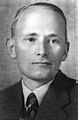
Oscar Werner Tiegs
-
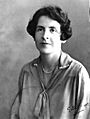
Ethel Mary Tiegs, 1927
-
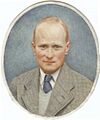
Oscar Werner Tiegs circa 1950s
-
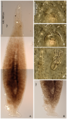
A worm of the family Protomicrocotylidae, created by Johnston and Tiegs in 1922
-
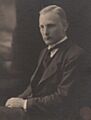
Oscar Werner Tiegs while in Adelaide
-
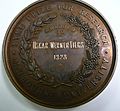
David Syme Medal
-
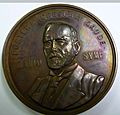
David Syme Medal (reverse)
-

Clarke Medal
-

Clarke Medal (reverse)
