
Redpath Museum facts for kids
 |
|
| Established | 1882 |
|---|---|
| Location | 859 Sherbrooke Street West, Montreal, Quebec, Canada |
| Type | Museum of natural history |
| Public transit access |   at Peel station at McGill station at Peel station at McGill station |

The Redpath Museum is a fascinating museum of natural history located at McGill University in Montreal, Quebec, Canada. It stands on Sherbrooke Street West. This special museum was built in 1882. It was a generous gift from a wealthy businessman named Peter Redpath.
The museum is home to incredible collections. These collections cover ethnology (the study of cultures), biology (the study of living things), paleontology (the study of fossils), and mineralogy/geology (the study of rocks and minerals). Some of these collections were started by the same people who helped create famous museums like the Smithsonian. The Redpath Museum building itself is very old and unique. It is the oldest building in Canada specifically built to be a museum. Its design is a mix of different Victorian styles.
Contents
Discover the Redpath Museum: A Journey Through Time
The Redpath Museum has many wonderful collections. They help us understand the natural world and human history. You can see everything from dinosaur skeletons to ancient tools.
-
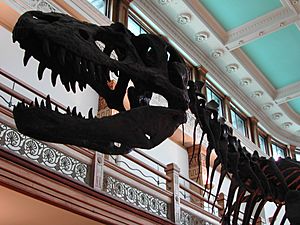
A dinosaur skeleton inside the Redpath Museum.
-
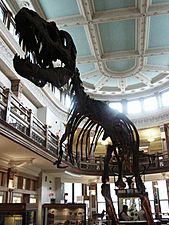
A Gorgosaurus skeleton in the main exhibit area.
-
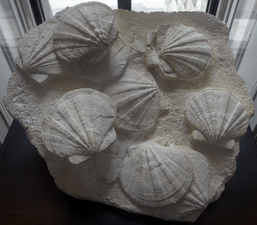
Fossilized scallops from the Redpath Museum Collection.
-
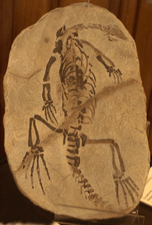
A Claudiosaurus germaini fossil.
-
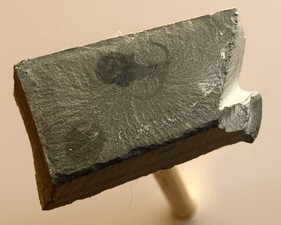
A Marrella splendens fossil.
-
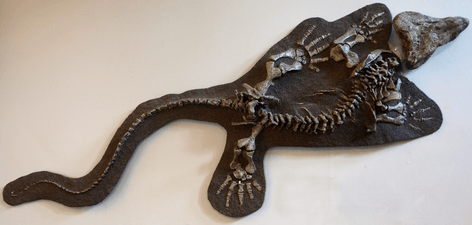
A cast of Limnoscelis.
-
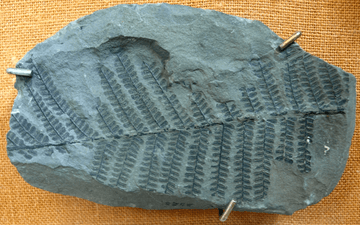
A Pecopteris bucklandi plant fossil.
-
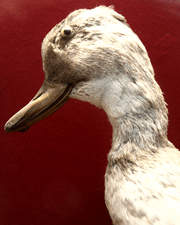
A specimen of the Labrador duck.
-
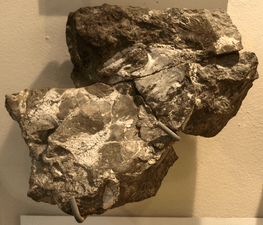
A skull of Dendrerpeton.
-
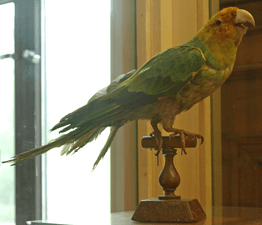
A specimen of the Carolina parakeet.
-
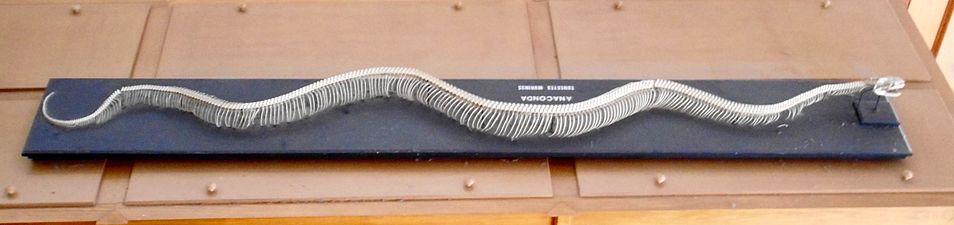
The skeleton of an anaconda.


.png)
-RedpathMuseumMontreal-June6-08.png)

-RedpathMuseumMontreal-June6-08.png)
-RedpathMuseumMontreal-June6-08.png)


Rocks and Minerals: Earth's Treasures
The museum's geology and mineralogy collections are truly impressive. They hold about 16,000 specimens from all over the world. These collections are named after the people who helped build them:
- Doell collection: Named for Dr. Donald Doell, who added many newer items.
- Ferrier collection: From Walter Frederick Ferrier, a famous mining engineer. It has many important minerals.
- Jeffrey collection: Contributed by Jeffrey de Fourestier, a mineralogist.
- Palache collection: From Charles Palache, a mineralogist and professor at Harvard University.
- Shirley Collection: Donated by the wife of Sir Hugh Graham in the 1880s.
- New System collection: This is the main collection. It includes items from the old Natural History Society of Montreal and from Lord Strathcona.
Insects and Bugs: The World of Entomology
The museum once had a large collection of insects, known as the Lyman entomology collections. Entomology is the scientific study of insects. In 1961, these collections were moved to the Macdonald Campus. They helped create the Lyman Entomological Museum and Research Laboratory.
Ancient Life: Exploring Paleontology
The museum has a very important collection of fossils. Paleontology is the study of ancient life through fossils. Many of these fossils were first gathered by Sir William Dawson. He brought many plant fossils from his home in Nova Scotia. He also found many other important fossils from around the world.
Dr. Thomas Clark also made big contributions. He was known for his important work on fossils from the Burgess Shale. These are some of the oldest known fossils anywhere on Earth.
Human History: The Ethnology Collection
The ethnology and archeology collection is one of the oldest in North America. Ethnology is the study of different cultures and their customs. This collection started with Sir William Dawson's items. It grew with more materials from the Natural History Society of Montreal.
Today, it has over 17,000 items. These come from places like Africa, ancient Egypt, Oceania, Europe (from the Stone Age), and South America. The artifacts from First Nations people that were once here are now kept at the nearby McCord Museum in Montreal.
How to Get There: Visiting the Museum
The museum is affiliated with the CMA, the CHIN, and the Virtual Museum of Canada.
The Redpath Museum is easy to reach. It's a short walk from many places in downtown Montreal. You can also take the Montreal Metro. The museum is close to the McGill station on the Green Line.
See also
 In Spanish: Museo Redpath para niños
- Redpath Library
- George Barnston
