
Storming of Shelford House facts for kids
Quick facts for kids Storming of Shelford House |
|||||||
|---|---|---|---|---|---|---|---|
| Part of the English Civil War | |||||||
|
|||||||
| Belligerents | |||||||
 Royalists Royalists |
 Parliamentarians Parliamentarians |
||||||
| Commanders and leaders | |||||||
| Sir Philip Stanhope (DOW) Lawrence Clifton † |
Sydnam Poyntz John Hutchinson Edward Rossiter |
||||||
| Strength | |||||||
| 150 cavalry 50 infantry |
4,000 cavalry 5,000 infantry |
||||||
| Casualties and losses | |||||||
| 160 men killed ~ 40 men captured |
60 men killed | ||||||
The Storming of Shelford House was an important battle during the English Civil War. It happened from November 1 to 3, 1645. In this fight, the Parliamentarian army, led by Sydnam Poyntz, attacked Shelford House. This house was a key outpost for the Royalists. It helped protect the important town of Newark-on-Trent.
Shelford House belonged to Philip Stanhope, 1st Earl of Chesterfield. His son, Sir Philip Stanhope, was in charge of its defense. Most of the soldiers defending the house were Catholic. Sir Philip refused to surrender, even when asked. The Parliamentarian forces, including troops led by Colonel John Hutchinson, then attacked. They overwhelmed the defenders. Most of the Royalist soldiers were killed. After the battle, the Parliamentarians burned Shelford House to the ground. Sir Philip Stanhope died soon after from his injuries.
After Shelford, Poyntz's army quickly took Wiverton Hall the next day. This was another Royalist stronghold near Newark. They also started to surround Belvoir Castle. By the end of November, Poyntz joined forces with the Scottish army. This army was led by General Alexander Leslie, 1st Earl of Leven. Together, they began to besiege Newark. Newark finally surrendered on May 8, 1646. The fight at Shelford House was very violent. About 80% of the Royalist defenders were killed. Because of this, neither side wanted to use the battle for propaganda. The Parliamentarians didn't want to seem too brutal. The Royalists didn't want to highlight the deaths of Catholic soldiers.
Contents
Why Shelford House Was Important
Shelford House was originally a priory, a type of monastery. The Stanhope family owned it since 1536. Around 1600, the priory was made into a large mansion with a moat (a ditch filled with water). When the English Civil War started in 1642, Philip Stanhope, 1st Earl of Chesterfield owned the estate. He supported the Royalist side.
Chesterfield's main home in Derbyshire was taken by Parliamentarian forces. So, he used Shelford House as a base. From there, he led cavalry patrols. Shelford was in Nottinghamshire, about 9 miles (14 km) east of Newark-on-Trent. Newark was very important because it sat at a crossroads of major roads. It was called the "Key to the North." The Royalists quickly took control of Newark in December 1642. They sent Sir John Henderson to make the town stronger.
Shelford House: A Royalist Stronghold
As part of Newark's defense, Shelford House became one of several strongholds. Other strongholds included Belvoir Castle, Wiverton Hall, and Thurgarton House. These four homes formed the first line of Royalist defense. They protected Newark from attacks by Parliamentarian towns like Nottingham, Derby, and Leicester. Shelford and Wiverton were the largest. However, none of them were expected to hold out for long against a big attack. Their main purpose was to delay any attack on Newark.
In January 1643, Chesterfield left Shelford. He gave command of the house to his son, Sir Philip Stanhope. Sir Philip was a lieutenant-colonel. He commanded the Duke of Gloucester's Regiment of Horse at Shelford. As governor, he also controlled the infantry soldiers there. Shelford House was used as a forward observation post. It was also a starting point for Royalist raids into Nottingham. These raids caused a lot of damage to Parliamentarian outposts and the countryside.
How Shelford House Was Defended
Shelford House became an official Royalist military base. Its defenses were improved. The moat around the house was made deeper. A palisade (a fence of strong wooden stakes) was built along the inner edge of the moat. Sharpened poles and spikes were placed in the moat and at the base of the walls. These were meant to slow down attackers.
Behind the main walls, half-moon shaped earthworks were built. Each had a ditch in front. These were for defenders to use if the outer walls were taken. The mansion itself was behind these earthworks. Musketeers inside the mansion could fire at attackers outside. These strong defenses meant that Colonel John Hutchinson, the governor of Nottingham, did not try to attack Shelford for the first two years of the war.
The Queen's Regiment Arrives
On September 24, 1645, Sydnam Poyntz's Parliamentarian army won a battle at Battle of Rowton Heath. After losing the Battle of Naseby in June, King Charles retreated to Newark in October. He had 2,400 cavalry soldiers. These soldiers were spread out in the area around Newark.
Shelford House received the Queen's Regiment of Horse. This regiment was originally made up of French and Walloon Catholic soldiers. They had escorted the Queen to England in 1643. By the time they reached Shelford, the regiment was much smaller due to fighting. They had a bad reputation for violent actions. These included events like the Battle of Burton Bridge and the attack on Leicester. Because they were foreign Catholics and known for violence, Parliamentarians disliked them. They often used the regiment's actions in their propaganda. The regiment was reinforced by Catholics from Lancashire. It had 150 men and was led by Major Lawrence Clifton. This made the total Shelford garrison about 200 soldiers.
The Attack on Shelford House
Poyntz was careful because of the Royalist forces near Newark. His army of 3,000 cavalry and 500 infantry got more help. A brigade of 1,000 cavalry came from London. Regional Parliamentarian commanders sent another 4,500 infantrymen. Colonel Hutchinson also provided 400 men from Nottingham. Even with these reinforcements, Poyntz's force was not big enough to fight the main Royalist army.
Poyntz was ordered to get closer to King Charles. He wanted to make sure Charles couldn't escape before larger Parliamentarian armies arrived. Also, his soldiers were not paid well and didn't have enough food. They might mutiny. So, Poyntz decided to attack. Shelford House had many cavalry soldiers. If left alone, they could attack Parliamentarian supply lines. Hutchinson urged Poyntz to attack Shelford first. After getting more help from Lincolnshire under Colonel Edward Rossiter, the Parliamentarians arrived at Shelford on November 1 with 2,000 men.
A Refusal to Surrender
Hutchinson, who was with the Parliamentarian force, was a cousin of Sir Philip Stanhope. He got permission to try and convince Stanhope to surrender peacefully. Despite their family connection, Stanhope refused. He even mocked Hutchinson. He said he would "lay Nottingham Castle as flat as a pancake." Stanhope had led a brutal raid on a fort guarding the bridges to Nottingham in April. His harsh refusal made the Parliamentarians very angry. They wanted revenge for Stanhope's past attacks. This anger, combined with their hatred for the Catholic troops at Shelford, made the situation very tense. Poyntz then began his assault on the house.
The Battle Begins

Poyntz first sent Hutchinson to capture the nearby village of Shelford. Stanhope had some men guarding the church tower there. The defenders pulled up their ladder. But the Parliamentarians started a fire below them, smoking them out. They were captured. One boy was recognized as a turncoat (someone who switched sides) from Nottingham's army. Fearing for his life, the boy told the Parliamentarians everything he knew. He described Shelford House's improved defenses. He also showed where the palisades were weakest.
With this new information, Poyntz made a final offer for Stanhope to surrender on November 3. Poyntz warned that if Stanhope refused, his men would be allowed to do whatever they wanted during the attack. This was part of the rules of war at the time. A garrison that refused to surrender peacefully lost its right to protection after the attack.
Poyntz feared that any more delays would allow Royalist forces from Newark and Belvoir to help Shelford. So, he launched his attack at 4 p.m. that same day. Hutchinson was in direct command of the attacking party. The attack happened from two sides. One group attacked the east walls, and the other attacked the west walls.

The ladders used by the attackers were too short. The Royalist defenders threw logs down on the climbing Parliamentarians. This made it almost impossible to climb up. A group of Londoners attacking the west walls were forced back first. This allowed Stanhope to send more troops to defend the east. The defense of the east walls was strong. Parliamentarian Colonel Richard Sandys later said they were "defended gallantly." But after half an hour of fierce fighting, Hutchinson's attackers managed to take the east walls. They suffered many casualties.
Hutchinson led his men over the captured position. They found that the Queen's Regiment had retreated into their half-moon earthworks. The Parliamentarians took the house's stable block. But they were fired upon by muskets from Shelford House. More Royalist reinforcements came from the west walls. Hutchinson was trapped inside Shelford's outer defenses. Sandys and Hutchinson's brother, George, tried hard to force open the house's gates to help him. Finally, a group of cavalry soldiers, led by Major Christopher Ennis, broke into Shelford's gatehouse. They opened the drawbridge over the moat. This allowed Poyntz to send more soldiers to help Hutchinson's trapped men.
It was already expected that no mercy would be given to Stanhope and his men. But now, Poyntz also worried that a Royalist relief force might arrive. This would trap his soldiers inside Shelford House. So, he pushed his men to fight even more fiercely. This quickly and violently ended the resistance of the defenders.
What Happened After the Battle
About 160 of the defenders were killed. This was 80% of Stanhope's original force. Most of the dead were from the Queen's Regiment, who received little mercy. The Parliamentarians lost about 60 men. They buried their dead in large mass graves at Shelford. The wounded were sent back to Nottingham for care.
Sir Philip Stanhope himself survived the battle but was badly wounded. He was unable to move. Parliamentarian troops looted him. He was found by Sandys or George Hutchinson. They took him to his bedroom in the house. The Hutchinson brothers stayed with their cousin until he died from his wounds, despite a surgeon's efforts. Clifton, from the Queen's Regiment, was also killed. The remaining 40 Royalists were taken as prisoners of war. That night, the house was burned down after being completely looted. The Parliamentarians finished the destruction by pulling down the charred remains with grappling hooks and ropes.

Poyntz had destroyed the Shelford garrison. He could now move on to other Royalist positions. However, his main goal of trapping King Charles failed. Charles fled to Oxford on November 3. Despite this, Poyntz continued his campaign. He advanced on Wiverton Hall. Its governor, Sir Robert Thervill, saw what happened at Shelford. To avoid the same fate, he surrendered a day after Shelford. Poyntz allowed him to leave the area peacefully.
However, the destruction of Shelford's garrison did not affect all strongholds in the same way. Belvoir Castle refused to surrender. Its governor, Sir Gervase Lucas, finally surrendered in January 1646. His soldiers had almost starved to death. Lucas was more diplomatic with Poyntz than Stanhope had been. His force was also mostly Protestants. So, Poyntz treated him kindly and did not attack. Meanwhile, a Scottish army under General Alexander Leslie, 1st Earl of Leven arrived near Newark on November 22. The town was besieged on November 26. It surrendered on May 6, 1646, a day after King Charles surrendered to Leven's army.
Despite the clear victory at Shelford, Parliamentarian writers did not talk much about it. They wanted to avoid comparisons to Royalist massacres of foreign forces. This would have hurt their image of being morally better. Chesterfield had pamphlets made to show how brutal the attack on his house was. But these were not very successful. Royalists were not interested in making the mostly Catholic garrison into martyrs. However, Stanhope was a Protestant. He was remembered as a martyr until about 1650. But when the Stuart Restoration happened in 1660, the story of Stanhope and others was forgotten. People were more focused on remembering the execution of Charles I.
Why This Battle Matters
The number of men killed at Shelford House was small compared to other massacres in the Civil War. For example, the Siege of Drogheda was much larger. However, the attack at Shelford was extremely violent. This violence was out of proportion to the battle's strategic importance. Despite this, the attack has often been overlooked in books about the English Civil War. Other more famous events were publicized by the Royalists or Parliamentarians to gain support.
The story of the storming of Shelford House was further forgotten. There was a campaign to erase the history of the Queen's Regiment. It was later recorded as Lord St Alban's Regiment. This was to hide its violent actions. In recent years, historians have researched the attack more. Historian David J. Appleby argues that it should be seen as equally violent as the storming of Bolton in 1644 and Leicester in 1645.
Images for kids
-
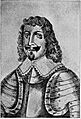
Colonel-General Sydnam Poyntz led the Parliamentarian attack.
-
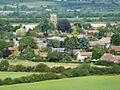
A view of Shelford village, showing the church tower. Some of Stanhope's men were based here.
-
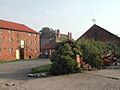
Shelford Manor today.
