
24 Hours of Le Mans facts for kids
.svg) |
|
 |
|
| FIA World Endurance Championship | |
|---|---|
| Venue | Circuit de la Sarthe |
| Location |  Le Mans, France Le Mans, France47°57′00″N 00°12′27″E / 47.95000°N 0.20750°E |
| First race | 1923 |
| First WEC race | 2012 |
| Last race | 2026 |
| Distance | 1 lap: 13.626 km (8.467 mi) |
| Duration | 24 hours |
| Most wins (driver) |  Tom Kristensen (9) Tom Kristensen (9) |
| Most wins (team) |  Joest Racing (13) Joest Racing (13) |
| Most wins (manufacturer) | Porsche (19) |
The 24 Hours of Le Mans (French: 24 Heures du Mans) is a famous sports car race held every year near Le Mans, France. It is the oldest active endurance race in the world, first run in 1923. Many people consider it one of the most important races globally. It is part of the "Triple Crown of Motorsport" along with the F1 Monaco Grand Prix and the Indianapolis 500. It is also part of the "Triple Crown of endurance racing" with the 24 Hours of Daytona and 12 Hours of Sebring.
Unlike races where the winner is the fastest to finish a set distance, at Le Mans, the winner is the car that travels the farthest distance in 24 hours. Cars on this track can reach incredible speeds, sometimes over 366 km/h (227 mph). In 1988, a car even reached 407 km/h (253 mph) on the main straight! To make racing safer, more turns (called chicanes) were added to the track to reduce these extreme speeds. Teams must make their cars fast but also strong enough to last for 24 hours without breaking down. The Automobile Club de l'Ouest (ACO) organizes the race. It takes place on the Circuit de la Sarthe, which uses both special race track sections and public roads that are closed for the event.
The 24 Hours of Le Mans was often part of the World Sportscar Championship for many years. Since 2012, it has been a key part of the FIA World Endurance Championship. A shorter, 10-hour version of the race, called Petit Le Mans, has been held in America since 1998. The 94th 24 Heures du Mans started on June 13, 2026.
Contents
Why the Race Exists
When it first began, most car races focused on which car could go the fastest. Le Mans was created to be different. It wanted to test how well car makers could build sports cars that were not only fast but also very reliable. This encouraged companies to invent new ways to make cars that could last a long time and use fuel efficiently. Cars that spend less time in the pits for repairs or refueling have a better chance to win.
The track itself also pushed for new ideas. Its long straight sections, like the famous Ligne droite des Hunaudières (also known as the Mulsanne Straight), meant cars needed excellent aerodynamics to be stable and fast at very high speeds.
In the 1970s, there was a global oil shortage. This led race organizers to create rules that limited how much fuel each car could use. Even though these specific rules changed later, saving fuel is still very important. New technologies, like hybrid systems, help cars go further on less fuel, reducing pit stop times. Many of these cool inventions first tested at Le Mans eventually find their way into the cars we drive every day!
How the Race Works

The race happens in mid-June, around the longest day of the year. This means the night is short, and it can get very hot for the drivers, especially in cars with closed roofs. Rain is also quite common. The race starts in the middle of the afternoon and finishes exactly 24 hours later.
Modern cars often travel more than 5,000 km (3,110 mi) during the race. The record, set in 2010, is 5,410 km (3,360 mi)! That's like driving across a huge country! Drivers and their teams must balance speed with keeping the car in good condition. They also need to manage fuel, tires, and brakes. It's a true test of endurance. Drivers often race for over two hours before another driver takes over during a pit stop. Current rules say that three drivers must share each car. Each driver can't drive more than 4 hours in any 6-hour period, and no more than 14 hours total.
Teams compete in different groups called "classes." Cars in the same class have similar features. They all race at the same time, but they also compete for the top spot within their own class. The race started with cars similar to those sold to the public. Over time, the cars became much more specialized. Today, there are three main classes:
- Hypercar: These are the fastest, specially built racing cars.
- Le Mans Prototypes (LMP): These are also purpose-built race cars, but a bit slower than Hypercars. The LMP2 class uses specific chassis and engines.
- Grand Touring (GT) cars: These cars are based on sports cars you can buy, like a supercar. They are generally not as fast as the prototype cars. The LMGT3 class is an example.

Teams come in all shapes and sizes. Some are from big car manufacturers who want to show off their products. Others are professional racing teams supported by sponsors. There are even amateur teams who just love to compete in this famous race.
Winning Le Mans is often seen as more important than winning the entire championship series it's part of. It's a huge achievement for any driver or team.
Special Cars: Garage 56
.jpg)
Sometimes, special "concept cars" that test new car technologies can join the race under the "Garage 56" banner. These cars are included in the race results, but they aren't expected to win. Their main goal is to show off new ideas and inventions. This program started in 2012.
Drivers
.jpg)
In the early days, there were no strict rules about how many drivers a car could have or how long they could drive. Some drivers even tried to race the whole 24 hours by themselves! This was later banned for safety reasons. By the 1980s, rules required at least three drivers per car.
Because the cars are so fast and racing for 24 hours is very tiring, rules were added in the 1990s to prevent drivers from getting too tired. Drivers cannot drive for more than 4 hours in a row and no more than 14 hours total in the entire race. These rules help keep everyone safe.
Traditions and Unique Rules
.jpg)
Le Mans has some special rules and traditions. For many years, cars had to race for at least an hour before they could add fluids like oil or coolant (except for fuel). This was to encourage car makers to build more reliable cars.
Another unique rule is that cars must turn off their engines while refueling in the pits. This is safer and also tests how well a car can restart many times during a race. Mechanics also can't work on the car while it's being refueled. This has led teams to find clever ways to make pit stops faster.
The race always starts with the waving of the French flag. Before this, jets often fly over, leaving trails of blue, white, and red smoke. At the end of the race, track marshals wave safety flags to congratulate the winners and all the cars that finish.
Le Mans is also famous for the first time a winning driver sprayed champagne instead of just drinking it! In 1967, driver Dan Gurney shook a bottle of champagne and sprayed everyone on the podium. This fun tradition is now common in many sports.
Race Schedule
.jpg)
The first race happened on May 26–27, 1923. Since then, it has usually been held in June. There have been a few exceptions, like in 1968 (September due to political events), 2020 (September due to the COVID-19 pandemic), and 2021 (August). The race was canceled ten times, once in 1936 due to strikes and from 1940 to 1948 because of World War II.
The race weekend usually starts with car inspections on Monday and Tuesday. Qualifying and practice sessions happen on Wednesday and Thursday evenings. Friday is a rest day, and there's a parade of all the drivers through the city of Le Mans.
The race typically starts at 4:00 p.m. local time on Saturday. However, there have been some exceptions:
| Year | Start Time | Reason |
|---|---|---|
| 1968 | 3:00 p.m. | Race moved to September due to protests in France. |
| 1969 | 2:00 p.m. | Due to the French presidential election. |
| 1984 | 3:00 p.m. | Due to the European Parliament election in France. |
| 1998 | 2:00 p.m. | Due to the French Open tennis final. |
| 2006 | 5:00 p.m. | To fit with FIFA World Cup games on TV. |
| 2007 | 3:00 p.m. | Due to the French legislative election. |
| 2009–2019 | 3:00 p.m. | Standard start time for these years. |
| 2020 | 2:30 p.m. | Race moved to September due to the COVID-19 pandemic. |
How Winners are Decided
The winner is the car that covers the greatest distance in 24 hours. If two cars complete the same number of laps, the one with the faster overall time wins. This rule was used in 2011 when the top two cars finished 355 laps, with only 13 seconds separating them!
To be officially counted as a finisher, a car must also:
- Complete the very last lap of the race and finish it faster than a certain maximum time.
- Complete at least 70% of the distance covered by the overall winner. This ensures that only reliable and fast cars are classified.
The Le Mans Start

The race used to begin with a unique "Le Mans start." Cars were lined up along the pits, and drivers stood on the opposite side of the track. When the French flag dropped, drivers would run across the track, jump into their cars, start them, and drive off.
This became a safety concern in the late 1960s because some drivers didn't take time to fasten their seatbelts properly. This led to accidents in the crowded start. In 1969, driver Jacky Ickx famously walked to his car to show his disapproval, taking time to buckle up before starting. He later won that race.
Because of these safety worries, the traditional Le Mans start changed in 1970. Drivers were already in their cars, strapped in, when the flag dropped. They just started their engines and drove away.

Since 1971, the race has used a "rolling start." Cars line up behind a safety car for a formation lap. When the safety car returns to the pits, the French flag waves, and the race officially begins.
The Race Track
The track for the 24 Hours of Le Mans is called the Circuit de la Sarthe. It's named after the area in France where Le Mans is located. This circuit is special because it uses both a permanent race track and public roads that are closed just for the race.
Since 1923, the track has been changed many times, mostly to make it safer. Today, it is 13.626 km (8.467 mi) long. One big change happened in 1990 on the famous Mulsanne Straight. This straight was originally about 6-kilometre-long (3.7 mi), allowing cars to reach incredibly high speeds. To slow them down and improve safety, two chicanes (sharp turns) were added, dividing the straight into three shorter sections. This change was made after a car reached 407 km/h (253 mph) in the 1988 race!
Because of these chicanes, the top speed cars reach at Le Mans now is around 366 km/h (227 mph). Most race cars usually hit speeds just under 320 km/h (200 mph) on the current track.
The public roads used for the race are different from the permanent track. They are not as smooth and offer less grip because they are used by regular traffic most of the year. These roads are closed only a few hours before practice and the race, and then opened again almost immediately after the race finishes. Workers have to set up and take down safety barriers every year for these sections.
A Look Back at History

The first 24 Hours of Le Mans race took place on May 26 and 27, 1923. It was run on public roads around Le Mans. In the early years, French, British, and Italian drivers and cars, like Bugatti, Bentley, and Alfa Romeo, were very successful. Car designs started to become more aerodynamic in the late 1930s to help cars go faster on the Mulsanne Straight. The race was canceled in 1936 due to strikes and then again from 1940 to 1948 because of World War II.
After the War (1949–1969)
.jpg)
The race returned in 1949, and major car manufacturers showed a lot of interest. Ferrari won for the first time that year. As the race became part of the World Sportscar Championship in 1953, big brands like Ferrari, Aston Martin, Mercedes-Benz, and Jaguar competed fiercely. This intense competition sometimes led to serious accidents. A major incident in 1955 resulted in many spectator and driver fatalities. This tragic event led to huge improvements in safety rules for both drivers and fans, not just at Le Mans but in motorsports worldwide. The entire pit area was rebuilt to be safer.
Cars continued to get faster, with speeds over 320 km/h (200 mph) on the Mulsanne Straight. Ford then entered the scene with its famous Ford GT40, winning four times in a row from 1966 to 1969, ending Ferrari's winning streak.
The 1970s and 1980s

In these decades, cars became even more extreme in speed and design. The traditional "Le Mans start" was replaced with a safer "rolling start." Specially built sports cars became the norm, while production-based cars raced in lower classes. Porsche was very dominant with its 917, 935, and 936 models. French manufacturers like Matra and Renault also achieved wins. In 1978, a turbocharged engine won for the first time with the Renault Alpine A443.
The 1980s were known for Porsche's continued dominance, especially with their 956 and 962 models, which were designed for fuel efficiency. Jaguar and Mercedes-Benz returned to sports car racing, with Jaguar breaking Porsche's winning streak in 1988 and 1990. Japanese manufacturers like Nissan and Toyota also started to compete. In 1991, Mazda made history by becoming the first Japanese manufacturer to win, using a unique rotary engine.
In 1990, the long Mulsanne Straight was changed to include two chicanes. This was done to prevent cars from reaching speeds over 400 km/h (250 mph) again, making the track safer.
Modern Era (1994–Present)

After the World Sportscar Championship ended, Le Mans saw more production-based grand tourer cars. In 1995, McLaren won with its F1 GTR supercar, showing that reliability could beat pure speed. This trend continued with many exotic supercars from brands like Porsche, Mercedes-Benz, and Toyota competing. In 1999, BMW won its first and only overall Le Mans victory. Around this time, Mercedes-Benz stopped its sports car program after some cars experienced aerodynamic issues, causing them to lift off the ground. While no drivers were seriously hurt, these events led to important changes in car design and safety regulations.
.JPG)
From 2000 to 2005, Audi dominated the race with its R8 car, winning five times. In 2003, Audi's partner, Bentley, also won with its Speed 8.

In 2006, Audi introduced a new challenge: a diesel engine-powered car called the R10 TDI. It was the first diesel car to win at Le Mans. This era also saw other alternative fuels, like bio-ethanol. Peugeot also joined with a diesel car in 2007. The 2008 race was a close battle between Audi and Peugeot, with Audi winning by less than 10 minutes. Peugeot won in 2009, but Audi returned to win in 2010, showing that reliability was key.
.jpg)
The 2011 and 2012 races saw several high-speed crashes, including cars becoming airborne and hitting barriers. These incidents, though drivers were largely protected by modern safety features like closed cockpits, reinforced the need for continuous safety improvements and led to new rules, such as requiring all top-class cars to have closed cockpits from 2014. Sadly, in 2013, driver Allan Simonsen passed away after a crash. This event led to further investigations and improvements in track safety. In 2012, a hybrid electric vehicle, the Audi R18 e-tron quattro, won for the first time.
.jpg)
Porsche returned to Le Mans in 2014 and won in 2015, 2016, and 2017 with its hybrid 919. Porsche remains the most successful manufacturer at Le Mans with 19 overall victories. Audi left the race in 2016. In 2018, Toyota won its first Le Mans race and continued to win until 2022. The 2020 race was held without spectators due to the COVID-19 pandemic.
The new Hypercar class was introduced in 2021, allowing for exciting new car designs. The former LMGTE class was replaced by LMGT3 in 2024. Looking ahead, there are plans to introduce hydrogen-powered prototype cars in the future, showing that Le Mans continues to be a place for new automotive innovations.
Cool Inventions from Le Mans
Le Mans has always been a testing ground for new car technologies. Many ideas first used in this tough race have later appeared in regular cars.
Aerodynamics

Because of the long straights at Le Mans, top speed is very important. This means cars need to be designed to cut through the air easily. Early cars were simple, but soon, designers like Bugatti started creating streamlined shapes. These cars, sometimes called "tanks," had smooth curves to cover all the mechanical parts and go faster. After World War II, most race cars had closed, aerodynamic bodies.
As years passed, car bodies became even more advanced and lighter. Spoilers and other parts were added to help cars stick to the track in turns without slowing them down too much on the straights. This led to "long tail" designs, where the back of the car was extended for better airflow. Aerodynamics reached its peak in 1989 before the Mulsanne Straight was changed. Cars were reaching speeds of over 400 km/h (249 mph)!
Engines

Many different types of engines have raced at Le Mans, all trying to be faster, use less fuel, and spend less time in the pits. Engine sizes have varied hugely, from tiny 569 cc engines to massive 8,000 cc ones. Early innovations included supercharging (1929) and turbocharging (1974) to boost power.

Some unusual engines have also competed. In the 1960s, gas turbine cars tried their luck, but they used too much fuel. The Wankel engine, or rotary engine, used by Mazda, also faced fuel economy challenges. However, after many years of development, Mazda made history in 1991 by winning with its rotary-powered 787B, the only non-piston engine to win Le Mans.
Alternative fuels have also been explored. The first diesel engine car raced in 1949. While diesel was used occasionally, it wasn't until 2006 that Audi made it a winning technology with its R10 TDI. Ethanol fuel and biodiesel have also been used.
Since 2009, hybrid vehicles have been allowed, using systems to recover energy from braking or heat. In 2012, the Audi R18 e-tron quattro became the first hybrid car to win Le Mans, using a flywheel hybrid system. Toyota also started racing hybrid cars that year.
Looking to the future, the Automobile Club de l’Ouest plans to introduce a hydrogen-electric prototype class. These cars could be powered by hydrogen fuel cells or even hydrogen combustion engines, aiming for top performance with zero emissions.
Brakes
With cars going so fast, having excellent brakes is crucial for safety and performance. Disc brakes first appeared at Le Mans in 1953 on the Jaguar C-Type. In 1955, the Mercedes-Benz 300 SLR introduced the "air brake," a large flap on the back of the car that popped up to help it slow down.
In the 1980s, anti-lock braking systems (ABS) became common on race cars, helping drivers maintain control during hard braking. By the late 1990s, special reinforced carbon-carbon brakes were adopted for even better stopping power.
Champions of Le Mans

Many car manufacturers have won the overall race, and even more have won in their specific classes. Porsche is the most successful brand, with 19 overall victories, including seven in a row from 1981 to 1987. They also have 107 class victories. Audi is next with 13 wins, and Ferrari has 11. Since 2000, Audi has been incredibly dominant, winning 13 times in 15 years. Jaguar has seven wins, while Toyota, Bentley, Alfa Romeo, and Ford have each won four times in a row. Mazda is unique as the only company to win with a rotary engine.
Three drivers stand out for their many victories. Jacky Ickx held the record with six wins between 1969 and 1982. But Tom Kristensen from Denmark broke that record with nine wins between 1997 and 2013, including six in a row!
Graham Hill is the only driver to win the "Triple Crown of Motorsport," which means winning the Indianapolis 500, the Monaco Grand Prix, and the 24 Hours of Le Mans.
Safety and Accidents
Le Mans has a long history, and like any high-speed motorsport, it has seen serious accidents. These events, though tragic, have always led to important safety improvements for both drivers and spectators.
One of the most significant incidents happened in 1955, which resulted in many spectator and driver fatalities. This tragedy led to widespread changes in safety regulations across all motorsports, making tracks and cars much safer.
Throughout the 1970s and 1980s, the incredibly high speeds on the Mulsanne Straight led to several very serious accidents. Some of these incidents resulted in fatalities for drivers and track marshals. Cars would sometimes leave the track at extreme speeds, and there were even fires. These events continuously pushed organizers to improve safety barriers and track design, eventually leading to the addition of chicanes on the Mulsanne Straight in 1990 to reduce speeds.
In 1999, some cars experienced unusual aerodynamic issues, causing them to lift off the ground and flip. While no drivers were seriously hurt, these events led to important changes in car design and safety regulations to prevent such incidents in the future.
More recently, the 2011 and 2012 races saw several high-speed crashes, including cars becoming airborne and hitting barriers. These incidents, though drivers were largely protected by modern safety features like closed cockpits, reinforced the need for continuous safety improvements. These events led to new rules, such as requiring all top-class cars to have closed cockpits from 2014, a decision credited with protecting drivers. Sadly, in 2013, driver Allan Simonsen passed away after a crash. This event led to further investigations and improvements in track safety, especially regarding barrier placement and design.
Every accident at Le Mans has taught valuable lessons, leading to the advanced safety measures we see in motorsport today.
How to Watch the Race
.jpg)
The 24 Hours of Le Mans is a huge event, and you can watch it in many ways! In Europe, Eurosport often broadcasts the entire race, including practice and qualifying sessions. In the United States, channels like Motor Trend have shown the race. Many online streaming services also offer live coverage.
For those who love listening, Radio Le Mans provides live English commentary of the entire race, which is very popular with fans around the world.
Classic Car Races
_-_Chevrolet_Corvette_(1960)_(18243362094).jpg)
Since 2001, the ACO has hosted the "Le Mans Legend" event. This is a special race for classic cars that have raced at Le Mans before, or are similar to them. It's a chance to see historic cars on the famous track again.

Starting in 2002, the "Le Mans Classic" has been held every two years. This event also takes place on the full 24-hour circuit. It features races for cars from different eras, allowing fans to see many generations of Le Mans cars in action. It's a big festival for classic car lovers!
Images for kids
-
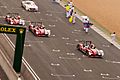
Marshals waving safety flags to congratulate Audi in 2010 race
-
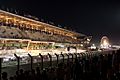
The pits at night
-
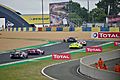
GTE cars approaching Dunlop Bridge
-
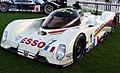
Peugeot 905 from 1993
-
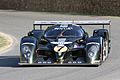
Bentley Speed 8
-
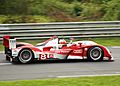
Audi R15 TDI
-
Peugeot 908 HDi FAP
-
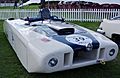
The 1950 Cadillac Le Monstre


.jpg)


.jpg)
See also
 In Spanish: 24 Horas de Le Mans para niños
- 24 Hours of Le Mans (motorcycle race)
- Petit Le Mans
- Road to Le Mans
- 24 Hours of LeMons
- Le Mans 24 Hours video games
- List of 24 Hours of Le Mans winners
- List of 24 Hours of Le Mans records
- Triple Crown of Motorsport
- Radio Le Mans
- Musée des 24 Heures du Mans
- FIA World Endurance Championship
- European Le Mans Series
- Le Mans Cup
- Asian Le Mans Series
