
Antipodean albatross facts for kids
Quick facts for kids Antipodean albatross |
|
|---|---|
 |
|
| Diomedea antipodensis antipodensis | |
| Conservation status | |
Scientific classification  |
|
| Kingdom: | Animalia |
| Phylum: | Chordata |
| Class: | Aves |
| Order: | Procellariiformes |
| Family: | Diomedeidae |
| Genus: | Diomedea |
| Species: |
D. antipodensis
|
| Binomial name | |
| Diomedea antipodensis Robertson & Warham, 1992
|
|
| Subspecies | |
|
Diomedea antipodensis antipodensis Robertson & Warham 1992 |
|
| Script error: The function "autoWithCaption" does not exist. | |
| Synonyms | |
|
Diomedea exulans antipodensis |
|
Script error: No such module "Check for conflicting parameters".
The Antipodean albatross (Diomedea antipodensis), also known as Toroa in Māori, is a large seabird from the albatross family. These amazing birds are a bit smaller than their relatives, the snowy albatrosses. Young Antipodean albatrosses have mostly brown feathers. It can be tricky to tell them apart from young snowy albatrosses, but snowy albatrosses get lighter as they grow older, while the Antipodean albatross keeps its darker look.
Contents
Discover the Antipodean Albatross!
What's in a Name?
The scientific name Diomedea antipodensis has a cool story. Diomedea comes from Diomedes, a hero from ancient Greek myths. His friends were said to have turned into birds! The second part, antipodensis, is a Latin word. It refers to the Antipodes Islands, which is where these albatrosses are found.
Albatross Family Tree
The Antipodean albatross belongs to a group of birds called Procellariiformes. All birds in this group have special tube-like nostrils on their beaks, called naricorns. They also have a unique mouth structure with several small bony plates.
This albatross is one of the "great albatrosses" in the Diomedea group. For a long time, it was thought to be just a type of wandering albatross. But in 1992, scientists decided it was different enough to be its own subspecies. By 1998, some experts even recognized it as a full species.
Not all scientists agree on this. Some still group it with the wandering albatross. However, a study in 2004 looked at the birds' DNA. This study supported the idea that the Antipodean albatross is indeed a separate species. Major bird organizations like BirdLife International now consider it a distinct species.
Meet the Subspecies
There are two main types, or subspecies, of the Antipodean albatross.
| Image | Subspecies Name | Where They Live |
|---|---|---|
| Diomedea antipodensis antipodensis | This type breeds on the Antipodes Islands and Campbell Island. | |
| Diomedea antipodensis gibsoni | This type breeds on the Auckland Islands. |
What Does it Look Like?
The Antipodean is a large bird, growing to about 110 centimeters (43 inches) long. When they are breeding, their feathers are a mix of brown and white. Young birds look similar to young snowy albatrosses.
Female albatrosses that are breeding have brown feathers on their upper bodies. Their backs have white patterns, like tiny squiggles. Their face, throat, and lower chest are white. Their belly is also white, but the feathers under their tail are brown. The underside of their wings is white with a dark tip.
Some younger birds and females have a dark tip on the lower part of their beak. This can make it look like the upper part of the beak also has a dark edge, especially in bright sunlight.
Male breeding albatrosses are whiter than the females. However, they are not as white as the snowy albatross. Both male and female Antipodean albatrosses have a pink beak. Females of the antipodensis type have a dark brown band across their chest. Males of this type have a darker cap, tail, and shoulder area than the gibsoni type.
Where Do They Live?
| Location | Number of Pairs | Year | Trend |
|---|---|---|---|
| Antipodes Island | 4,635-5,737 | 2007 | Declining |
| Auckland Islands | 5,800 | 2007 | Declining |
| Campbell Islands | 10 | 2007 | |
| Pitt Island | 1 | 2004 | |
| Total | 25,300 | 2007 | Declining |
Antipodean albatrosses fly across the southern Pacific Ocean. They can be found from Australia all the way to Chile. Their range stretches from the Tropic of Capricorn southwards. The gibsoni subspecies tends to stay east of Auckland Island. The antipodensis subspecies ranges further east towards Chile.
They build their nests and raise their young on the Auckland Islands, Antipodes Islands, and Campbell Island.
Daily Life of an Albatross
These albatrosses mainly eat cephalopods, like squid and cuttlefish. They also eat some fish. Unlike some other albatross species, they haven't been seen eating crustaceans (like crabs or shrimp). They have even been observed visiting areas where giant cuttlefish lay their eggs off New South Wales.
When it's time to nest, they choose ridges, slopes, or flat areas. They build their nests in open spaces or among patches of plants, such as tall tussock grassland.
Protecting These Amazing Birds
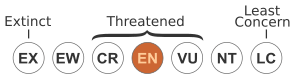
The IUCN (International Union for Conservation of Nature) lists the Antipodean albatross as an Endangered species. This means they are at a high risk of becoming extinct. They fly over a huge area of 37.4 million square kilometers (14.4 million square miles). However, their breeding grounds are much smaller, only about 670 square kilometers (259 square miles).
A population count from 2007 estimated between 4,635 and 5,757 breeding pairs on Antipodes Island. There were about 5,800 pairs on the Auckland Islands (including Adams Island, Auckland Island, and Disappointment Island). Only 10 pairs were found on Campbell Island. Since 2004, one pair has also been breeding on Pitt Island, part of the Chatham Islands. This brings the total estimated population to about 25,300 birds. Sadly, both their breeding success (only 25% of eggs hatch and survive) and adult survival rates (80% for females and 88% for males) have been decreasing.
Some animals, like pigs and wild cats, are harming the albatross population on Auckland Island. Longline fishing also poses a threat to these birds. Recent studies suggest that warmer ocean temperatures in the Tasman Sea might be affecting the gibsoni subspecies.
Scientists have been putting bands on the birds' legs to track them. Satellite tracking has also been used to follow their movements. Good news is that cattle and sheep have been removed from Campbell Island. All the islands where they breed are now nature preserves and have become World Heritage Sites. To help these albatrosses survive, it's important to continue efforts to remove cats and pigs from the Auckland Islands. Working with fishing industries and studying ocean temperature changes are also key steps.
See also
 In Spanish: Albatros de las Antípodas para niños
