
Ayrton Senna facts for kids
Quick facts for kids
Ayrton Senna
|
|
|---|---|

Senna at the 1988 German Grand Prix
|
|
| Born |
Ayrton Senna da Silva
21 March 1960 Santana, São Paulo, Brazil
|
| Died | 1 May 1994 (aged 34) Bologna, Emilia-Romagna, Italy
|
| Cause of death | Injuries sustained at the 1994 San Marino Grand Prix |
| Resting place | Cemitério do Morumbi |
| Spouse(s) |
Lilian de Vasconcelos Souza
(m. 1981; div. 1982) |
| Partner(s) |
|
| Relatives |
|
| Formula One World Championship career | |
| Nationality |  Brazilian Brazilian |
| Active years | 1984–1994 |
| Teams | Toleman, Lotus, McLaren, Williams |
| Entries | 162 (161 starts) |
| Championships | 3 (1988, 1990, 1991) |
| Wins | 41 |
| Podiums | 80 |
| Career points | 610 (614) |
| Pole positions | 65 |
| Fastest laps | 19 |
| First entry | 1984 Brazilian Grand Prix |
| First win | 1985 Portuguese Grand Prix |
| Last win | 1993 Australian Grand Prix |
| Last entry | 1994 San Marino Grand Prix |
| Signature | |
 |
|
Ayrton Senna da Silva (born March 21, 1960 – died May 1, 1994) was a famous Brazilian racing driver. He competed in Formula One from 1984 to 1994. Senna won three Formula One World Drivers' Championship titles with McLaren. He also held the record for most pole positions (65) when he passed away. He achieved 41 Grand Prix wins during his 11 seasons.
Senna was born and grew up in São Paulo, Brazil. He started competitive kart racing at age 13. His father built his first go-kart using a lawnmower engine. After success in karting, Senna moved to Formula Ford in 1981. He quickly won championships in both Britain and Europe. He then won the 1983 British Formula Three Championship and the 1983 Macau Grand Prix. Senna joined Toleman in 1984, making his Formula One debut. He later raced for Lotus, McLaren, and Williams.
Senna was known for his incredible speed and driving style. He was especially good in wet weather races. Sadly, Senna was killed in a crash during the 1994 San Marino Grand Prix. His death led to major safety improvements in Formula One. He is still remembered as a legend in motorsport and a national hero in Brazil.
Early Life and First Races

Ayrton Senna was born in São Paulo, Brazil, on March 21, 1960. He grew up in a comfortable family with an older sister, Viviane, and a younger brother, Leonardo. Ayrton had roots from Italy, Spain, and Portugal.
The house where Senna spent his early years was near an airport. He was very active and loved sports. By age four, he became very interested in cars and racing. At seven, he learned to drive a Jeep on his family's farm.
Starting in Karting (1973–1980)

Ayrton's dad built his first go-kart using a lawnmower engine. He started kart racing at 13, even getting pole position in his first race. He raced against drivers who were several years older than him. His father always supported his racing dreams.
Senna won the South American Kart Championship in 1977. He competed in the Karting World Championship five times. He finished second in both 1979 and 1980. He raced against Terry Fullerton, who he called his most satisfying rival. Senna loved karting because it was "pure racing" without much money or politics.
Moving Up in Racing (1981–1983)

In 1981, Senna moved to England to pursue his racing career. He started in Formula Ford 1600. He won the British and European championships in his first year.
He briefly thought about quitting racing to join his family's business. However, he decided to return to England to continue racing. Since "da Silva" is a very common Brazilian name, he started using his mother's last name, "Senna." In 1982, he won 15 out of 17 races in the British Formula Ford 2000.
In 1983, Senna raced in the British Formula 3 International Series. He had a close and exciting battle with Martin Brundle. Senna won the championship in the final race. That same year, he also won the first-ever 1983 Macau Grand Prix.
Formula One Career Highlights
Joining Toleman (1984)
Senna made his Formula One debut with the Toleman team in 1984. He raced at the 1984 Brazilian Grand Prix. He quickly showed his talent by scoring his first championship point in his second race.

His best result that season was at the 1984 Monaco Grand Prix. This race was held in very wet conditions. Starting 13th, he drove brilliantly to reach second place. The race was stopped early due to heavy rain. Senna was quickly catching the leader, Alain Prost, when the race ended.
Senna was known for giving very detailed feedback about his car. This skill helped his team improve their cars. He finished his rookie season ninth in the Drivers' Championship.
Success with Lotus (1985–1987)

In 1985, Senna joined the Lotus-Renault team. At the 1985 Portuguese Grand Prix, he achieved his first Formula One pole position. He then won his first race in very wet conditions, showing his amazing skill in the rain. He won by over a minute.
Senna continued to show his speed, taking seven pole positions that year. He won a second race in Belgium. Despite some car reliability issues, he finished fourth in the driver standings.

In 1986, Senna won the 1986 Spanish Grand Prix in a very close finish. He also won the 1986 Detroit Grand Prix. He finished fourth in the championship again. After winning races, Senna started a tradition of waving the Brazilian flag on his victory lap.

For 1987, Lotus used powerful Honda engines. Senna won two races in a row: the 1987 Monaco Grand Prix and the 1987 Detroit Grand Prix. His Monaco win was the first of his record six victories there. He finished third in the championship, his best result with Lotus.
Dominating with McLaren (1988–1993)
First World Championship (1988)

In 1988, Senna joined McLaren and became teammates with Alain Prost. They had a very powerful car, the McLaren MP4/4, with Honda engines. Together, they won 15 out of 16 races that season.

Senna won his first Formula One world championship title that year. He won eight races, setting a new record at the time. His 13 pole positions also set a new record. The rivalry between Senna and Prost was very intense, pushing both drivers to their limits.
.jpg)
The only race McLaren didn't win was the 1988 Italian Grand Prix. Senna was leading but collided with a slower car, forcing him to retire.
Rivalry and Second Title (1989–1990)

The rivalry between Senna and Prost grew even stronger in 1989. They had several dramatic moments on track. Senna won six races but faced some car reliability issues. The championship was decided at the 1989 Japanese Grand Prix. Senna needed to win, but he and Prost collided. Senna was later disqualified, and Prost won the title.

In 1990, Prost moved to Ferrari, and Gerhard Berger became Senna's new teammate and friend. Senna took a strong lead in the championship with six wins. Again, the title was decided at the 1990 Japanese Grand Prix. Senna and Prost collided at the first corner, ending both their races. This meant Senna became world champion for the second time.
Third World Championship (1991)

In 1991, Senna became the youngest three-time world champion. He won seven races and increased his pole position record. He started the season with four straight wins.
He had some exciting battles, like a wheel-to-wheel fight with Nigel Mansell at the 1991 Spanish Grand Prix. Senna secured his third title at the 1991 Japanese Grand Prix. He finished second, handing the victory to his teammate Berger as a thank you.
Challenging Times (1992–1993)

In 1992, the Williams team had a very advanced car, making it hard for McLaren to compete. Senna still managed to win three races: Monaco, Hungary, and Italy. He finished fourth in the championship.

During this time, Senna became more concerned about driver safety. At the 1992 Belgian Grand Prix, he stopped his car to help another driver, Érik Comas, who had crashed. This act showed his care for fellow racers.

In 1993, Senna raced for McLaren on a race-by-race basis. He drove with less powerful engines than his rivals. Despite this, he won three of the first six races. His victory at the 1993 European Grand Prix in rainy conditions is considered one of his best drives ever. He overtook many drivers on the first lap.

He also won his record-breaking sixth victory at the 1993 Monaco Grand Prix. Senna finished the season as runner-up to Prost. He then signed with Williams for the 1994 season.

Senna took his 41st and final Formula One win at the 1993 Australian Grand Prix. After the race, he famously pulled Prost onto the top step of the podium to celebrate Prost's retirement.
Joining Williams (1994)

Senna joined Williams for the 1994 season. New rules banned electronic driver aids like active suspension. Senna felt uneasy about the new car, the Williams FW16. He even said it would be a season with many accidents.
He took pole position in the first three races but retired from each. At the 1994 San Marino Grand Prix, Senna took pole again. Sadly, this was his last race.
A Tragic Day and Lasting Impact
1994 San Marino Grand Prix
The 1994 San Marino Grand Prix in Imola, Italy, was a very difficult race weekend. Several drivers had accidents, including a fatal crash involving Roland Ratzenberger during qualifying. Senna was deeply affected by these events. On the morning of the race, he talked with Alain Prost about improving driver safety.
On lap 7 of the race, Senna crashed at the high-speed Tamburello corner. He was taken to a hospital in Bologna, where he passed away. Investigations into the crash focused on a broken steering column in Senna's car. This led to important discussions about car design and safety.
Funeral and Legacy


Senna's body was flown back to Brazil. His funeral in São Paulo was attended by over a million people. The Brazilian government declared three days of national mourning. He was buried in the Morumbi Cemetery. His grave has an inscription that reads, "Nothing can separate me from the love of God."
The tragic events at Imola in 1994, including Senna's accident, became a turning point for Formula One. These events led to many new safety rules and changes to race tracks, making the sport much safer for drivers. Senna was the last driver to die in a Formula One World Championship race until 2015.
Senna was admired by fans worldwide. Honda's headquarters in Tokyo received so many flowers after his death that they filled the lobby. The Brazil national football team dedicated their 1994 World Cup victory to Senna.
Other Racing Adventures

Senna also took part in other types of racing. In 1984, he won an exhibition race at the new Nürburgring track. He drove a Mercedes 190E 2.3–16 against many famous drivers. He also tested an IndyCar in 1992.
Ayrton's Personal Side
Beliefs and Helping Others

Senna was a deeply religious person. He often read the Bible. He secretly gave millions of dollars to help poor children. Before he passed away, he started an organization to help Brazilian children. This organization later became the Instituto Ayrton Senna (IAS). The IAS helps children and teenagers develop their full potential.
Frank Williams, his team boss, once said that Senna was "actually a greater man out of the car than in it."
Family and Relationships
Senna married his childhood friend Lilian de Vasconcelos Souza in 1981, but they divorced in 1982. He later had relationships with Brazilian singer Xuxa and model Adriane Galisteu.
Senna's nephew, Bruno Senna, also became a Formula One driver. Ayrton believed Bruno had great talent. Bruno raced for the Williams team in 2012, which was very meaningful for the Senna family.
Wealth and Endorsements
.jpg)
Senna was a successful businessman. He owned several properties and a private jet. He had a close relationship with Honda and helped test their Honda NSX sports car. Honda even gave him a custom-made black NSX.
He also had his own merchandise brand with a double S logo. This logo represented an S-shaped corner on a race track. Many companies, like Hublot and TAG Heuer, have created special watches to honor him. Senna also appeared in video games like Ayrton Senna's Super Monaco GP II.
Hobbies and Interests


Senna enjoyed many physical activities, including running and jet skiing. He also loved flying real and model planes and helicopters. He enjoyed boating and fishing. For his 29th birthday, the Brazilian Air Force even gave him a flight in a jet fighter!
A Racing Legend's Legacy
Recognized as the Best
Near the end of his career, many people thought Senna was the best driver in Formula One. He was named L'Équipe International Athlete of the Year in 1990. Many polls after his death have also rated him as the best driver of all time.
Senna is especially praised for his driving in wet conditions. He has the highest ratio of wins in wet races. In 2000, he was inducted into the International Motorsports Hall of Fame. Many current F1 drivers, like Lewis Hamilton and Sebastian Vettel, say Senna was their idol.
Driver Safety Improvements
Senna became very concerned about safety in racing. On the morning of his death, he discussed with other drivers how to make Formula One safer.
After the tragic events of 1994, Formula One made many important safety changes. These included better crash barriers, redesigned tracks, and stronger car safety standards. Engine power was also reduced. These changes have made Formula One much safer for drivers today.
His Racing Style
Senna often spoke about driving as a way to learn about himself. He said, "The harder I push, the more I find within myself." He was very proud of his driving ability.
Despite his serious image, Senna was close friends with his McLaren teammate Gerhard Berger. They often played jokes on each other. Berger said, "He taught me a lot about our sport, I taught him to laugh."
Remembering Ayrton Senna
Ayrton Senna is a cultural icon and a national hero in Brazil. He was also very popular in Japan, where he helped make Formula One famous.
Formula One Memorials


Many race tracks have memorials to Senna. A statue of him stands near the Tamburello corner at the Imola circuit. Tracks like Interlagos and Monaco have renamed parts of their circuits after him.
From 1995 to 2021, the Williams team included a small "S" logo on their cars to honor Senna. In 2022, McLaren also announced they would permanently feature the Senna "S" logo on their cars.
Honda created a special audio tribute in 2013. They recreated Senna's record-setting lap at the 1989 Japanese Grand Prix using lights and sounds.
Lewis Hamilton, a seven-time world champion, idolized Senna. He has paid many tributes to Senna throughout his career. In 2017, when Hamilton matched Senna's 65 pole positions, Senna's family gave him a race-worn Senna helmet. Hamilton often waves the Brazilian flag after winning races, just like Senna did.
Permanent Memorials
Statues of Senna can be found in many cities around the world. A life-sized bronze statue is at the McLaren Technology Centre in England.
In Brazil, major roads and tunnels are named after Senna. Streets in other countries, like Portugal and England, also bear his name. Even a minor planet in space, 6543 Senna, is named after him.
Anniversary Tributes
Many tributes have taken place on anniversaries of Senna's death and birthday. In 2010, the BBC show Top Gear featured Lewis Hamilton driving Senna's 1988 championship-winning car. The documentary Senna was also released, telling his story.
In 2014, for the 20th anniversary of his death, many events took place. The Imola Circuit held a memorial ceremony. San Marino issued special commemorative stamps. Senna's birthday was even marked by a Google Doodle.
Senna Brand and Products
The Instituto Ayrton Senna sometimes licenses Senna's brand for commercial products. These often relate to motorsport.
- Ducati and MV Agusta have produced special Senna edition motorbikes.
- In 2017, McLaren Automotive created the McLaren Senna, a powerful hypercar.
- Nike and the Corinthians football team unveiled a special Senna kit in 2018.
Helmet Design

Senna's helmet design is very famous. It has a yellow background with green and light metallic blue stripes. These colors represent the flag of Brazil. The blue and green stripes symbolized movement and aggression.
He used different helmet brands throughout his career, including Bell, Rheos, and Shoei. His helmet design remained mostly the same, apart from sponsor logos.
Helmet Adaptations

Senna's nephew, Bruno Senna, wore a modified version of his uncle's helmet design during his Formula One career. Other drivers, like Rubens Barrichello and Lewis Hamilton, have also worn helmets inspired by Senna's design as a tribute.
Awards and Honours
- Brazil
 National Order of Merit (Brazil) - Grand Cross (1994)
 Order of Rio Branco - Commander (1992)
 Order of Ipiranga - Grand Cross (1994)
_-_ribbon_bar.png)


Karting Record
Karting Career Summary
| Season | Series | Team | Position |
|---|---|---|---|
| 1975 | Brazilian Championship — Junior | 2nd | |
| 1976 | Brazilian Championship — 100cc | 3rd | |
| 1977 | Brazilian Championship — 100cc | 2nd | |
| South American Championship — 100cc | 1st | ||
| 1978 | Brazilian Championship — 100cc | 1st | |
| CIK-FIA World Championship | DAP | 6th | |
| 1979 | Brazilian Championship — 100cc | 2nd | |
| South American Championship — 100cc | 2nd | ||
| CIK-FIA World Championship | DAP | 2nd | |
| 1980 | Brazilian Championship — 100cc | 1st | |
| South American Championship — 100cc | 1st | ||
| CIK-FIA World Championship | DAP | 2nd | |
| 1981 | CIK-FIA World Championship — FK | DAP | 4th |
| 1982 | CIK-FIA World Championship — FK | DAP | 14th |
| 1993 | Masters of Paris-Bercy — F1 Stars | N/A | 3rd |
| Sources: | |||
Racing Record
Racing Career Summary
| Season | Series | Team | Races | Wins | Poles | F/Laps | Podiums | Points | Position |
|---|---|---|---|---|---|---|---|---|---|
| 1981 | RAC Formula Ford 1600 | Van Diemen | 6 | 4 | 0 | 5 | 5 | N/A | 1st |
| Townsend-Thoresen Formula Ford 1600 | 13 | 8 | 3 | 5 | 13 | 210 | 1st | ||
| P&O Ferries British Formula Ford 1600 | 1 | 0 | 0 | 0 | 0 | 0 | NC | ||
| 1982 | British Formula Ford 2000 | Rushen Green | 17 | 15 | 7 | 16 | 17 | 378 | 1st |
| European Formula Ford 2000 | 8 | 6 | 6 | 7 | 6 | 138 | 1st | ||
| Formula Ford 2000 UK Celebrity Race | 1 | 1 | 0 | 1 | 1 | N/A | 1st | ||
| Marlboro British Formula Three | West Surrey Racing | 1 | 1 | 1 | 1 | 1 | N/A | NC | |
| 1983 | Marlboro British Formula Three | West Surrey Racing | 18 | 13 | 14 | 12 | 15 | 132 | 1st |
| FIA European Formula Three | 1 | 0 | 0 | 0 | 0 | 0 | NC | ||
| Macau Grand Prix | West Surrey Racing w/ Theodore Racing | 1 | 1 | 1 | 0 | 1 | N/A | 1st | |
| 1984 | Formula One | Toleman Motorsport | 14 | 0 | 0 | 1 | 3 | 13 | 9th |
| World Sportscar Championship | New-Man Joest Racing | 1 | 0 | 0 | 0 | 0 | 3 | 82nd | |
| Nürburgring Race of Champions | N/A | 1 | 1 | 0 | 1 | 1 | N/A | 1st | |
| 1985 | Formula One | John Player Special Team Lotus | 16 | 2 | 7 | 3 | 6 | 38 | 4th |
| 1986 | Formula One | John Player Special Team Lotus | 16 | 2 | 8 | 0 | 8 | 55 | 4th |
| 1987 | Formula One | Camel Team Lotus Honda | 16 | 2 | 1 | 3 | 8 | 57 | 3rd |
| 1988 | Formula One | Honda Marlboro McLaren | 16 | 8 | 13 | 3 | 11 | 90 | 1st |
| 1989 | Formula One | Honda Marlboro McLaren | 16 | 6 | 13 | 3 | 7 | 60 | 2nd |
| 1990 | Formula One | Honda Marlboro McLaren | 16 | 6 | 10 | 2 | 11 | 78 | 1st |
| 1991 | Formula One | Honda Marlboro McLaren | 16 | 7 | 8 | 2 | 12 | 96 | 1st |
| 1992 | Formula One | Honda Marlboro McLaren | 16 | 3 | 1 | 1 | 7 | 50 | 4th |
| 1993 | Formula One | Marlboro McLaren | 16 | 5 | 1 | 1 | 7 | 73 | 2nd |
| 1994 | Formula One | Rothmans Williams Renault | 3 | 0 | 3 | 0 | 0 | 0 | NC |
| Source: | |||||||||
Complete British Formula Three Championship Results
(key) (Races in bold indicate pole position) (Races in italics indicate fastest lap)
| Year | Entrant | Engine | 1 | 2 | 3 | 4 | 5 | 6 | 7 | 8 | 9 | 10 | 11 | 12 | 13 | 14 | 15 | 16 | 17 | 18 | 19 | 20 | DC | Pts |
|---|---|---|---|---|---|---|---|---|---|---|---|---|---|---|---|---|---|---|---|---|---|---|---|---|
| 1983 | West Surrey Racing | Toyota | SIL 1 |
THR 1 |
SIL 1 |
DON 1 |
THR 1 |
SIL 1 |
THR 1 |
BRH 1 |
SIL 1 |
SIL Ret |
CAD DNS |
SNE Ret |
SIL 1 |
DON 2 |
OUL Ret |
SIL 1 |
OUL Ret |
THR Ret |
SIL 2 |
THR 1 |
1st | 132 |
|
|
||||||||||||||||||||||||
Complete Macau Grand Prix Results
| Year | Team | Chassis/Engine | Qualifying | Race1 | Race2 | Overall Ranking | Ref |
|---|---|---|---|---|---|---|---|
| 1983 |  West Surrey Racing West Surrey Racing |
Ralt・Toyota | 1st | 1 | 1 | 1st |
Complete Formula One Results
(key) (Races in bold indicate pole position; races in italics indicate fastest lap)
| Year | Team | Chassis | Engine | 1 | 2 | 3 | 4 | 5 | 6 | 7 | 8 | 9 | 10 | 11 | 12 | 13 | 14 | 15 | 16 | WDC | Pts |
|---|---|---|---|---|---|---|---|---|---|---|---|---|---|---|---|---|---|---|---|---|---|
| 1984 | Toleman Group Motorsport | Toleman TG183B | Hart 415T 1.5 L4 t | BRA Ret |
RSA 6 |
BEL 6 |
SMR DNQ |
9th | 13 | ||||||||||||
| Toleman TG184 | FRA Ret |
MON 2‡ |
CAN 7 |
DET Ret |
DAL Ret |
GBR 3 |
GER Ret |
AUT Ret |
NED Ret |
ITA | EUR Ret |
POR 3 |
|||||||||
| 1985 | John Player Special Team Lotus | Lotus 97T | Renault EF15 1.5 V6 t | BRA Ret |
POR 1 |
SMR 7† |
MON Ret |
CAN 16 |
DET Ret |
FRA Ret |
GBR 10† |
GER Ret |
AUT 2 |
NED 3 |
ITA 3 |
BEL 1 |
EUR 2 |
RSA Ret |
AUS Ret |
4th | 38 |
| 1986 | John Player Special Team Lotus | Lotus 98T | Renault EF15B 1.5 V6 t | BRA 2 |
ESP 1 |
SMR Ret |
MON 3 |
BEL 2 |
CAN 5 |
DET 1 |
FRA Ret |
GBR Ret |
GER 2 |
HUN 2 |
AUT Ret |
ITA Ret |
POR 4† |
MEX 3 |
AUS Ret |
4th | 55 |
| 1987 | Camel Team Lotus Honda | Lotus 99T | Honda RA166E 1.5 V6 t | BRA Ret |
SMR 2 |
BEL Ret |
MON 1 |
DET 1 |
FRA 4 |
GBR 3 |
GER 3 |
HUN 2 |
AUT 5 |
ITA 2 |
POR 7 |
ESP 5 |
MEX Ret |
JPN 2 |
AUS DSQ |
3rd | 57 |
| 1988 | Honda Marlboro McLaren | McLaren MP4/4 | Honda RA168E 1.5 V6 t | BRA DSQ |
SMR 1 |
MON Ret |
MEX 2 |
CAN 1 |
DET 1 |
FRA 2 |
GBR 1 |
GER 1 |
HUN 1 |
BEL 1 |
ITA 10† |
POR 6 |
ESP 4 |
JPN 1 |
AUS 2 |
1st | 90 (94) |
| 1989 | Honda Marlboro McLaren | McLaren MP4/5 | Honda RA109E 3.5 V10 | BRA 11 |
SMR 1 |
MON 1 |
MEX 1 |
USA Ret |
CAN 7† |
FRA Ret |
GBR Ret |
GER 1 |
HUN 2 |
BEL 1 |
ITA Ret |
POR Ret |
ESP 1 |
JPN DSQ |
AUS Ret |
2nd | 60 |
| 1990 | Honda Marlboro McLaren | McLaren MP4/5B | Honda RA100E 3.5 V10 | USA 1 |
BRA 3 |
SMR Ret |
MON 1 |
CAN 1 |
MEX 20† |
FRA 3 |
GBR 3 |
GER 1 |
HUN 2 |
BEL 1 |
ITA 1 |
POR 2 |
ESP Ret |
JPN Ret |
AUS Ret |
1st | 78 |
| 1991 | Honda Marlboro McLaren | McLaren MP4/6 | Honda RA121E 3.5 V12 | USA 1 |
BRA 1 |
SMR 1 |
MON 1 |
CAN Ret |
MEX 3 |
FRA 3 |
GBR 4† |
GER 7† |
HUN 1 |
BEL 1 |
ITA 2 |
POR 2 |
ESP 5 |
JPN 2 |
AUS 1‡ |
1st | 96 |
| 1992 | Honda Marlboro McLaren | McLaren MP4/6B | Honda RA122E 3.5 V12 | RSA 3 |
MEX Ret |
4th | 50 | ||||||||||||||
| McLaren MP4/7A | Honda RA122E/B 3.5 V12 | BRA Ret |
ESP 9† |
SMR 3 |
MON 1 |
CAN Ret |
FRA Ret |
GBR Ret |
GER 2 |
HUN 1 |
BEL 5 |
ITA 1 |
POR 3 |
JPN Ret |
AUS Ret |
||||||
| 1993 | Marlboro McLaren | McLaren MP4/8 | Ford-Cosworth HBE7 3.5 V8 | RSA 2 |
BRA 1 |
EUR 1 |
SMR Ret |
ESP 2 |
MON 1 |
CAN 18† |
FRA 4 |
GBR 5† |
2nd | 73 | |||||||
| Ford HBA8 3.5 V8 | GER 4 |
HUN Ret |
BEL 4 |
ITA Ret |
POR Ret |
JPN 1 |
AUS 1 |
||||||||||||||
| 1994 | Rothmans Williams Renault | Williams FW16 | Renault RS6 3.5 V10 | BRA Ret |
PAC Ret |
SMR Ret |
MON | ESP | CAN | FRA | GBR | GER | HUN | BEL | ITA | POR | EUR | JPN | AUS | NC | 0 |
|
|
|||||||||||||||||||||
‡ Half points awarded as less than 75% of race distance was completed.
† Driver did not finish the Grand Prix but was classified as he completed over 90% of the race distance.
Complete World Sportscar Championship Results
(key) (Races in bold indicate pole position) (Races in italics indicate fastest lap)
| Year | Entrant | Class | Chassis | Engine | 1 | 2 | 3 | 4 | 5 | 6 | 7 | 8 | 9 | 10 | 11 | Pos. | Pts |
|---|---|---|---|---|---|---|---|---|---|---|---|---|---|---|---|---|---|
| 1984 | New-Man Joest Racing | C1 | Porsche 956 | Porsche Type-935 2.6 F6 t | MNZ |
SIL | LMS |
NÜR 8 |
BRH | MOS | SPA |
IMO | FUJ |
KYA | SAN | 82nd | 3 |
|
|
|||||||||||||||||
Formula One Records
Senna holds the following Formula One driver records:
| Record | Achieved | Ref | |
|---|---|---|---|
| Most consecutive pole positions | 8 | 1988 Spanish Grand Prix – 1989 United States Grand Prix | |
| Most consecutive front row starts | 24 | 1988 German Grand Prix – 1989 Australian Grand Prix | |
| Most consecutive wins at the same Grand Prix | 5 | Monaco Grand Prix (1989–1993) | |
| Most consecutive pole positions at the same Grand Prix | 7 | San Marino Grand Prix (1985–1991) | |
| Highest percentage of front row starts in a season | 100% | 1989 | |
Images for kids
-

Ayrton Senna's signature
-
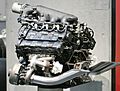
The Honda RA168E engine that powered Senna to his first world championship.
See also
 In Spanish: Ayrton Senna para niños
