
Captivity (animal) facts for kids

Animal captivity refers to the condition where animals are cared for and kept by humans instead of living freely in the wild. When animals live under human supervision and cannot wander away on their own, they are considered to be in captivity.
While the term often describes wild animals living in zoos, aquariums, and wildlife sanctuaries, it also includes domesticated creatures. Common pets like cats and dogs, along with livestock on farms such as cows and sheep, live in captive environments.
People keep animals in captivity for many different reasons. These include scientific research, species conservation, education, and farming. Understanding how captivity affects animals helps humans provide better care, design healthier environments, and protect species worldwide.
Contents
The History of Animals Living with Humans
.jpg)

For thousands of years, humans have kept animals close to their communities. Early human societies began by taming wild beasts to help with farm work, travel, and food production. Over generations, these animals developed into modern domestic species like horses, sheep, and dogs.
However, historical records show that ancient people also captured and kept wild animals that were never fully domesticated. Ancient rulers in Egypt, Mesopotamia, and China collected exotic animals from distant lands. Wealthy nobles created private animal collections known as menageries.
In these early menageries, kings and emperors kept lions, elephants, bears, and rare birds. These collections were status symbols that demonstrated personal wealth, power, and territorial reach. Unlike modern habitats, early animal quarters were small cages designed simply to display ferocious animals to visitors.
During the eighteenth and nineteenth centuries, ideas about keeping animals began to shift. The world's first modern public zoos opened in European cities like London and Paris. Instead of merely showing off royal collections, these institutions aimed to study animal biology and educate the general public.
Today, modern zoological parks and oceanariums focus heavily on wildlife preservation. Accredited institutions prioritize animal welfare, scientific study, and global breeding efforts to protect rare species from disappearing.
Understanding Animal Behavior in Captive Environments
Living in a managed environment is very different from living in nature. In the wild, animals spend most of their days searching for food, finding shelter, avoiding predators, and interacting with their social groups.
When an animal is provided with free meals and safety, its daily routine changes completely. Without proper mental and physical stimulation, some captive animals can develop abnormal behaviours.
Identifying Stereotypical Behaviors
One common sign of boredom or stress in captive wildlife is called stereotypical behavior. These are repetitive actions that have no clear purpose or practical function.
Common stereotypical actions include:
- Pacing back and forth along an enclosure fence
- Rocking the body or swaying from side to side
- Repeatedly tracing the exact same walking route
- Excessive grooming or rubbing against hard surfaces
Scientists and animal caretakers study these behaviors closely. They indicate that an animal may feel stressed, bored, or frustrated by its physical surroundings.
Stress and Coping Behaviors
When animals experience major changes in their social life or environment, they can develop distress behaviors. For example, some highly intelligent creatures might pull out their own fur or scratch their skin when they feel anxious.
Young animals that grow up without their mothers or away from other members of their species face the highest risk of stress-related habits. Primates, like chimpanzees and monkeys, need rich social connections to learn natural behaviors.
Nonsocial factors in an enclosure can also cause stress. Loud noises, poor weather, and large crowds of noisy visitors can overwhelm sensitive animals. For example, studies on gorillas have shown that crowded viewing windows cause animals to bang on barriers. When visitor areas are quiet, gorillas display calmer, more natural actions.
Environmental Enrichment and Solutions
To keep animals active and healthy, modern wildlife experts use environmental enrichment. Enrichment involves adding stimulating objects, puzzles, and sensory challenges to an animal's living space.
Key types of environmental enrichment include:
- Social enrichment: Housing social animals in compatible pairs or natural family groups.
- Occupational enrichment: Giving animals puzzle feeders, toys, or training sessions that challenge their problem-solving skills.
- Physical enrichment: Changing the layout of enclosures with climbing branches, ropes, water pools, tunnels, and digging pits.
- Sensory enrichment: Introducing new scents, sounds from nature, or novel textures for animals to explore.
- Nutritional enrichment: Hiding food across an enclosure or freezing snacks in ice blocks to encourage natural foraging behaviors.
Giving an animal choices throughout the day dramatically reduces stress. When animals can choose where to sleep, when to explore, and how to find food, their overall well-being improves significantly.
Why Are Wild Animals Kept in Captivity Today?
Modern wildlife facilities care for animals for several key purposes, ranging from survival programs to global education.

Protecting Species from Extinction
The loss of natural habitats, climate changes, and illegal hunting have pushed many animal species toward extinction. Captive facilities run by professional groups, such as the Association of Zoos and Aquariums (AZA), act as modern safety nets for wildlife.
Programs like AZA SAFE (Saving Animals From Extinction) coordinate conservation work across hundreds of institutions. Scientists, veterinarians, and wildlife biologists work together to develop recovery plans. By maintaining healthy captive populations, conservationists can ensure that endangered species do not vanish forever.
Scientific Research and Wildlife Education
Studying animals in managed care allows scientists to gather vital facts about wildlife biology. Biologists can monitor animal diets, track growth rates, study disease treatments, and learn about reproductive cycles up close.
These scientific discoveries help wildlife rangers manage wild populations in national parks. At the same time, seeing living animals inspires millions of school children and families every year to care about protecting global biodiversity.
The Wildlife Trade and Pet Industry
Not all animals in captivity live in accredited zoos or sanctuaries. Around the world, thousands of wild animals are caught or bred for the exotic pet trade.
Exotic pets include reptiles, birds, wild cats, and monkeys sold through pet markets, auctions, or online websites. Many of these animals end up in unsuitable homes or poorly equipped roadside attractions where caretakers lack the resources to meet their complex nutritional and behavioral needs.
Modern Zoos and Captive Breeding Programs

Modern accredited zoological parks serve as centers for captive breeding and animal rescue. When a wild population falls dangerously low, breeding animals under expert care can rebuild species numbers.
Several species that were once declared extinct in the wild now survive thanks to captive breeding:
- The California condor was saved when all remaining wild birds were brought into breeding facilities in the 1980s. Today, hundreds fly free again.
- The Black-footed ferret was reintroduced into North American grasslands after successful zoo breeding efforts.
- The Przewalski's horse, the last true wild horse, was successfully returned to the plains of Mongolia through international zoo partnerships.
While captive breeding offers vital benefits, caring for wild animals remains challenging. Transporting animals to unfamiliar spaces can cause temporary stress. High-quality facilities strive to replicate wild ecosystems as closely as possible to support healthy animal development.
Examples of Wild Animals Maintained in Captivity
Many different animal species live in managed environments across North America and around the world. The table below outlines key facts about several well-known animals, comparing their life spans in nature versus captive care.
| Name and Group | Description and Natural Habitat | Wild Lifespan | Captive Lifespan | Photo |
|---|---|---|---|---|
| Alligators | American alligators are large crocodilians that live in the wetlands, rivers, and swamps of the southeastern United States. They can grow over 12 feet (3.6 m) long and weigh up to 1,000 pounds (454 kg). Their skin is reinforced with bony plates called osteoderms. | 35 to 50 years | 65 to 80 years | |
| Bears | Bears live in diverse habitats across the world. They range in size from the 300-pound (136 kg) giant panda to the massive polar bear, which can weigh over 1,500 pounds (680 kg) and stand 11 feet (3.3 m) tall on its hind legs. | 20 to 30 years | Around 40 years | |
| Cougars | Also known as pumas or mountain lions, cougars are large wild cats native to North and South America. Adult males can weigh up to 200 pounds (91 kg) and measure nearly 8 feet (2.4 m) from nose to the tip of their long tail. | Around 12 years | Up to 20 years | |
| Chimpanzees | Chimpanzees are highly intelligent, social primates native to the tropical forests of Central and West Africa. They make tools, live in close family communities, and stand about 3 to 4 feet (0.9 to 1.2 m) tall when walking upright. | About 33 years | 35 to 40 years | |
| Lions | Lions are powerful social cats that live in family groups called prides across the grasslands of Africa and a small forest preserve in India. Adult males are recognized by their thick, dark manes and can weigh up to 500 pounds (227 kg). | 12 to 16 years | Around 25 years | |
| Ocelots | Ocelots are nocturnal spotted wild cats found in South America, Central America, and parts of Texas. Weighing about 30 pounds (14 kg), these stealthy hunters use their patterned coats for camouflage in dense brush. | About 12 years | Around 20 years | |
| Servals | Servals are slender, long-legged wild cats from the African savanna. Weighing 20 to 40 pounds (9 to 18 kg), they have large oval ears that help them detect rodents moving through tall grasses near streams. | 10 to 12 years | Up to 20 years | |
| Tigers | Tigers are the largest cat species on Earth. The giant Amur tiger can weigh up to 660 pounds (300 kg), while the island-dwelling Sumatran tiger is smaller, weighing around 310 pounds (140 kg). | 10 to 15 years | 18 to 20 years | |
| Wolves | Gray wolves are pack-living canines that inhabit forests, tundras, and plains across North America and Eurasia. Adults weigh between 60 and 145 pounds (27 to 66 kg) and communicate through vocal howls and body language. | 6 to 10 years | Up to 15 years | |
| Honey badgers | Honey badgers are fearless, thick-skinned members of the weasel family found in Africa and Asia. Weighing between 11 and 35 pounds (5 to 16 kg), they use sharp claws to dig burrows and forage for food. | 7 to 8 years | Around 24 years | |
| Giraffes | Giraffes are the tallest land animals on Earth, reaching heights over 18 feet (5.5 m). Native to African savannas, they use their long, prehensile tongues to pull leaves from thorny acacia branches. | Up to 25 years | 20 to 27 years | |
| Meerkats | Meerkats are small desert mongooses from southern Africa. They live in large underground colonies called mobs, taking turns standing guard on their hind legs to watch for predators while others look for insects. | 10 to 12 years | 15 to 20 years |


.jpg)
.jpg)

_Zoo_Itatiba.jpg)
_(8300229302).jpg)


Animal Welfare and Future Care Practices
As scientists learn more about animal intelligence and emotions, standards for animal care continue to improve. Modern facilities focus on creating natural habitats rather than traditional barred enclosures.
Good animal care today includes:
- Large, natural landscapes filled with live plants, climbing structures, and pools
- Professional veterinary healthcare and custom nutritional diets
- Positive reinforcement training that allows animals to participate willingly in medical checkups
- Social structures that match how species naturally live in the wild
By supporting well-run conservation parks and learning about wild habitats, young people can help ensure that animals—both in captivity and in the wild—are treated with respect and care.
Images for kids
-
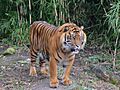
A Sumatran tiger exploring its surroundings

See also
 In Spanish: Zoocría para niños
|
Animal husbandry
Animal rights
|
Wild animal keeping
|
