
Sesame Street facts for kids

Quick facts for kids Sesame Street |
|
|---|---|
 |
|
| Genre |
|
| Created by | |
| Theme music composer |
|
| Country of origin | United States |
| Original language(s) | English |
| No. of seasons | 56 |
| No. of episodes | 4,744 (53 missing) |
| Production | |
| Executive producer(s) |
|
| Production location(s) |
|
| Running time |
|
| Production company(s) | Sesame Workshop |
| Release | |
| Original network | NET |
| Original release | November 10, 1969 – May 8, 1970 |
Sesame Street is a famous American TV show for children. It teaches kids through a mix of live actors, funny skits, cartoons, and amazing puppets. The show is made by Sesame Workshop and was created by Joan Ganz Cooney and Lloyd Morrisett. It is well-known for its friendly Muppets from Jim Henson, along with short films, jokes, and references to different cultures. The first episode aired on November 10, 1969. It quickly became very popular. The show has been on PBS in the United States since it started. New episodes were first shown on HBO starting January 16, 2016. Then they moved to HBO Max on November 12, 2020. This continued through its rebrand as Max in 2023 and back to HBO Max in 2025. Most recently, new episodes started airing on Netflix and PBS on November 10, 2025.
The way Sesame Street is put together uses many TV production ideas. These ideas have changed over time to match how American culture and kids' viewing habits have changed. It was the first children's TV show to use clear learning goals to create its content. It was also the first show whose teaching effects were carefully studied. The show's style and what it teaches have changed a lot over the years. This helps it stay fresh and helpful for new generations of kids.
Soon after the show began, its creators made a special way of working. This was called the CTW model. It involved producers, writers, teachers, and researchers all working together. They planned, made, and checked the show. At first, the government and private groups paid for the show. Later, it started earning money from selling toys, books, and other items. It also earned money from showing the program in other countries. By 2006, different versions of Sesame Street were made and shown in 20 countries. In 2001, over 120 million people watched these international versions. By 2009, for its 40th birthday, the show was seen in over 140 countries.
Since it first aired, Sesame Street has received many awards and praise. Many people think it is one of the best TV shows ever made. A survey in 1996 found that 95% of all American preschoolers had watched it by age three. In 2018, it was thought that 86 million Americans had watched it when they were kids. As of 2022, the show has won 222 Emmy Awards and 11 Grammy Awards. This is more than any other children's show. Sesame Street is still one of the longest-running shows in the world. In 2019, the Library of Congress chose the series to be saved in the American Archive of Public Broadcasting.
Contents
- How Sesame Street Began
- Growing and Changing Over the Years
- Sesame Street Today: Reaching More Kids
- The Show's Format
- Meet the Muppets of Sesame Street
- Evolving for Today's Young Viewers
- Show's geography
- Making the Show: Production Secrets
- Crafting Stories: The Writing Process
- Beyond TV: Books, Music, and Global Reach
- Related pages
- See also
- Images for kids
How Sesame Street Began
The idea for Sesame Street started in 1966. TV producer Joan Ganz Cooney and Lloyd Morrisett from the Carnegie Foundation talked about it. They wanted to make a children's TV show that used TV's power for good. Their goal was to help young children get ready for school. After two years of research, a new group called the Children's Television Workshop (CTW) was formed. They received a large amount of money from several foundations and the U.S. government. This money helped them create and produce the new children's TV show.
Sesame Street was officially announced on May 6, 1969. Joan Ganz Cooney, who led the Children's Television Workshop, explained the plan. She said Sesame Street would use fun TV tricks to teach young children. Short live-action videos and cartoons would teach the alphabet, numbers, words, shapes, and simple thinking skills. Repeating ideas in each episode would keep kids interested as they learned. Famous guest stars would also appear to attract older kids and parents. Cooney shared that the name Sesame Street came from "open sesame". This phrase suggests a magical place where exciting things happen. The show first aired for six months to see if it worked well and if it should continue.
The show first aired on public TV stations on November 10, 1969. It was the first educational TV show for young children to use scientific research. This research guided what was taught and how the show was made. People loved the show right away, and it had many viewers. There were some discussions about its style, but overall, it was a big hit.


I've always said of our original team that developed and produced Sesame Street: Collectively, we were a genius.
Growing and Changing Over the Years
By the mid-1970s, Sesame Street was a very important part of American culture. The team making the show grew, with more women and diverse people joining. The show stayed popular through the 1980s. In 1981, when government funding stopped, the CTW found new ways to earn money. They created magazines, earned money from books, and licensed products like toys. They also sold the show to other countries. The lessons taught on the show also grew. They started including topics like friendships, good behavior, and feelings. Many stories came from the real lives of the people who worked on the show. For example, the show talked about the passing of Will Lee, who played Mr. Hooper, in 1982. It also showed the wedding of characters Luis and Maria in 1988.
By the late 1990s, the show faced new challenges. Kids were watching TV differently, and there were more shows to choose from. Cable TV also became popular. So, the show made big changes as the 2000s began. Starting in 2002, episodes began to tell longer stories. They had ongoing plots that continued over time. After its 30th anniversary in 1999, the popular Muppet Elmo got his own segment called Elmo's World. In 2009, the show won a special Emmy Award for its amazing 40 years on TV.
Sesame Street Today: Reaching More Kids
In late 2015, the way people watched TV was changing a lot. To keep up, HBO started showing new episodes of Sesame Street first. This was part of a five-year agreement. These episodes then became available on PBS stations and websites nine months later. This deal allowed Sesame Workshop to make more episodes each season. It also helped them create new shows with the Sesame Street Muppets.
For its 50th anniversary in 2019, Sesame Street had made over 4,500 episodes. It also had two movies, 35 TV specials, 200 home videos, and 180 music albums. Starting in 2019, all the show's old episodes were saved in the American Archive of Public Broadcasting. You can watch some of them online. The show's YouTube channel has over 24 million subscribers. In October 2019, it was announced that new episodes would move to HBO Max starting in 2020. In August 2022, HBO Max removed 200 older episodes from its library. On December 13, 2024, it was announced that Max would not continue its contract for new Sesame Street episodes. This meant 2025 was the last year for episodes made with Max. Episodes remained in the HBO Max streaming library until 2027. Sesame Workshop said they would find new ways to share the show with as many children as possible.
On May 19, 2025, it was announced that Sesame Street would air new episodes on Netflix worldwide. New episodes also premiered on PBS on the same day. This agreement also included Netflix getting 90 hours of older episodes. Season 56 of Sesame Street premiered on Netflix and PBS on November 10, 2025. Starting in January 2026, the official YouTube channel began to host a very large collection of older episodes. The first 100 episodes of the series were uploaded to YouTube on January 15, 2026.
The Show's Format
From its very first episode, Sesame Street used a fun style. It had "strong visuals, fast action, humor, and music." It also included cartoons and short live-action films. When the show first started, many experts thought young children had short attention spans. The creators worried that an hour-long show might not keep their interest. At first, the "street scenes" were short interactions between characters. They were not long stories. Instead, they were quick lessons based on the curriculum. These were mixed with puppet skits, short films, and cartoons. This mix of styles and characters kept the show interesting and fast-paced for young viewers. However, by season 20, research showed that children could follow longer stories. So, the street scenes started to have evolving storylines, still mixed with other segments.
We basically deconstructed the show. It's not a magazine format anymore. It's more like the Sesame hour. Children will be able to navigate through it easier.
Meet the Muppets of Sesame Street
.jpg)
The Muppets are the famous puppet characters on Sesame Street. They are loved by many people.
- Kermit the Frog was one of the first Muppets Jim Henson ever made. Kermit is known for being funny and smart. He often acts as the calm and sensible one when things get crazy.
- Miss Piggy was a character played by Frank Oz for many years. She was even named one of the 50 Greatest TV Stars of All Time in 1996.
- Big Bird is a very tall, bright yellow bird. His best friend is Snuffy, whose full name is Snuffleupagus. Snuffy looks a bit like a mammoth without tusks.
- Oscar the Grouch lives in a trash can. He shares his home with his pet worm, Slimey, and his pet elephant, Fluffy. Oscar is always in a bad mood. He loves things that most people dislike, like mud and dirt.
- Bert and Ernie are two roommates. Ernie is full of energy and always ready to play games or make a mess. Bert is often quiet and likes to read. He enjoys keeping things clean and neat, and he loves pigeons.
- Cookie Monster is a blue monster who loves to eat lots and lots of cookies.
- Elmo is a furry red monster. He lives with his pet goldfish, Dorothy.
Evolving for Today's Young Viewers

.jpg)
Sesame Street kept its original format for many years. But in the 2000s, audiences changed. The creators decided to move to a more story-focused format. In 1998, Elmo's World, a 15-minute segment with Elmo, was created. Starting in 2014, for the show's 45th season, a half-hour version was introduced. This shorter version was shown in the afternoons and streamed online. In 2017, because toddlers' viewing habits changed, the full-hour version was stopped. The new half-hour version had fewer characters and fewer jokes for parents. It focused on one main topic per episode.
In October 2023, The Hollywood Reporter announced big changes for Sesame Street. The half-hour magazine-style format was completely dropped. The show moved to a longer, story-driven style with more live-action Muppet characters. This new format started with Season 56, which premiered on November 10, 2025. A new animated series, Tales from 123, also began.
Show's geography
.jpg)
Within the fictional world of the show, Sesame Street is placed in a recognizable New York City setting. Observant viewers can spot prop signs indicating East 104th Street, and the overall design of the set closely mirrors Lexington Avenue in the East Harlem neighborhood—an area that falls within the 10029 ZIP code. The beloved brownstone at 123 Sesame Street is situated on the northeast corner of this intersection.
In the real world, the city of New York made a meaningful gesture to honor the show's legacy. In 2019, to celebrate the 50th anniversary of Sesame Street, the intersection of West 63rd Street and Broadway was officially and permanently renamed "Sesame Street."
Making the Show: Production Secrets
Producer Joan Ganz Cooney once said, "Without research, there would be no Sesame Street." In 1967, when she and her team started planning, combining research with TV production was a new idea. The producers soon developed the CTW Model. This was a system for planning, making, and checking the show. It involved TV producers and child development experts working together. They created a specific learning plan for each age group. Research helped shape the show directly. Independent studies also measured how much viewers learned.
Cooney gave credit to Harvard professors Gerald S. Lesser and Edward L. Palmer for the high quality of the research. Lesser helped design the show's learning goals. Palmer conducted research that improved the show as it was being made. He also helped connect the producers and researchers. Cooney said they designed the show as an "experimental research project." Educators, researchers, and TV producers worked as equal partners. She called this teamwork an "arranged marriage."
Crafting Stories: The Writing Process
Sesame Street has had many writers over its long history. It is not easy to find adults who understand what preschoolers find interesting. Fifteen writers worked on the show's scripts each year. But very few stayed longer than one season. Norman Stiles, a head writer in 1987, said most writers would "burn out" after about a dozen scripts. The show did not hire teachers to write, which was common for educational TV then. Instead, Cooney felt it was easier to teach writers about the curriculum. It was harder to teach educators how to write comedy. Long-time writer Tony Geiss said in 2009, "It's not an easy show to write. You have to know the characters and the format and how to teach and be funny at the same time."

The research team created a "Writer's Notebook." This document helped connect the show's learning goals with script ideas. The notebook had many ideas for teaching specific lessons. It explained the learning goals in detail. This helped writers and producers turn ideas into TV content. The suggestions in the notebook did not mention specific characters. This allowed them to be used in many different ways.
The research team also met with writers to create a "curriculum sheet." This sheet described the show's goals for each season. After getting the goals, writers discussed ideas and story plans for the characters. An "assignment sheet" was made, suggesting how much time to spend on each goal. Once a script was finished, the research team checked it. They made sure all the learning goals were met. Then, each production department met to plan costumes, lights, and sets. Writers were present during filming. For the first 24 years, filming was in Manhattan. After 1992, it moved to the Kaufman Astoria Studios in Queens. Writers made last-minute changes when needed.
Beyond TV: Books, Music, and Global Reach
Early on, Sesame Street and the CTW looked for other ways to get money. They started creating products and licensing deals. They became a "multiple-media institution." In 1970, the CTW created a "non-broadcast" division. This group made and published books and Sesame Street Magazine. By 2019, Sesame Workshop had published over 6,500 book titles. They decided that all licensed products must support the show's learning goals. In 2004, over 68% of Sesame Street's money came from licenses and products like toys and clothes. By 2008, the Sesame Street Muppets brought in $15 million to $17 million each year. This money was shared between Sesame Workshop and The Jim Henson Company. By 2019, Sesame Workshop had over 500 licensing agreements. They had also produced over 200 hours of home videos. There have been two Sesame Street movies shown in theaters. These were Follow That Bird (1985) and The Adventures of Elmo in Grouchland (1999). In early 2019, a third movie, a musical with Anne Hathaway, was announced. In November 2019, Sesame Street launched an augmented reality app. This was part of the show's 50th anniversary.
Jim Henson, who created the Muppets, owned the rights to his characters. He was hesitant to market them at first. He agreed when the CTW promised that profits from toys, books, computer games, and other products would only fund the CTW. Cooney and the CTW had little marketing experience. But they demanded full control over all products. Any product linked to the show had to be educational and affordable. It also could not be advertised during the show. Cooney emphasized being careful and smart with their marketing.
Director Jon Stone said about the music of Sesame Street: "There was no other sound like it on television." For the first time in children's TV, the songs had a specific purpose. They supported the show's learning plan. To attract the best composers, the CTW let songwriters keep the rights to their songs. This earned them good money and kept the show popular. By 2019, 180 albums of Sesame Street music had been made. Its songwriters had received 11 Grammys. In late 2018, SW announced a deal with Warner Music Group. They relaunched Sesame Street Records in the U.S. and Canada. For the first time in 20 years, many Sesame Street recordings became available. These included CDs, vinyl, streaming, and downloads.
Sesame Street used cartoons and short films from other studios. These were shown throughout each episode. They helped teach basic ideas like numbers and letters. Jim Henson was one of many producers who made short films for the show. Soon after Sesame Street started in the U.S., producers from other countries wanted to make their own versions. These were called "co-productions." By 2001, over 120 million people watched international versions of Sesame Street. In 2006, there were twenty co-productions around the world. By its 50th anniversary in 2019, 190 million children watched over 160 versions of Sesame Street in 70 languages. In 2005, it was reported that money from co-productions and international licensing brought in $96 million. Sesame Street the Musical opened off Broadway on September 8, 2022.
Related pages
- Sesame Street characters
- List of Sesame Street Muppets
- History of Sesame Street
- Sesame Workshop
- Educational goals of Sesame Street
See also
 In Spanish: Sesame Street para niños
Images for kids
-

Deputy Secretary of State Antony Blinken meets Grover to talk about refugees in 2016.
-
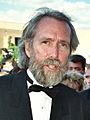
Jim Henson, creator of the Muppets, in 1989.
.jpg)
_headshot.jpg)

