
Herding dog facts for kids


A herding dog, also known as a stock dog or working dog, is a type of dog trained to manage herds of farm animals. People also use the term to describe dog breeds developed especially for this purpose. These talented animals help farmers and ranchers control and guide livestock, including sheep, cattle, goats, and even reindeer. A dog that works mostly with sheep is called a sheep dog or shepherd dog. A dog trained to handle cows is called a cattle dog or cow dog.
Herding dogs are among the most intelligent and energetic animals in the world. They use special instincts, sharp problem-solving skills, and great physical speed to move other animals across vast open fields. Today, they work on farms and also succeed in dog sports and search-and-rescue teams. Many also live as active family pets.
Contents
History of Herding Dogs and Farming
The history of herding dogs is tied closely to the history of agriculture and farming. When early humans stopped hunting and gathering, they began to domesticate wild animals.
Ancient Beginnings in Western Asia
Humans first domesticated sheep and goats around 9,000 to 8,000 BC in Western Asia, across modern Iran and Iraq. Managing these flocks was hard work. Early shepherds did not have domesticated horses or donkeys to ride. They had to walk everywhere on foot across rugged landscapes.

Dogs that once helped humans hunt game took on a new job: protecting and managing livestock. In those early days, dangerous wild predators roamed the land in large numbers. Dogs needed to be strong, brave, and protective to defend their herds.
Archaeological digs show that dogs worked alongside shepherds as early as 3685 BC in regions like modern Turkey, Iraq, and Syria. Roman writers such as Cato the Elder and Varro wrote detailed descriptions of shepherd dogs over two thousand years ago. The Romans valued these dogs highly for guarding estates and traveling with military supply herds.
Spread of Herding Across Europe and the Americas
As farming spread, herding dogs traveled along trade routes into Europe. By the 6th and 7th centuries BC, early herding breeds moved along the Danube and Rhine rivers into what is now Germany, northern France, and the Netherlands. Other dogs traveled by sea along the Mediterranean Sea coast to the Alps.
In South America, the ancient Chiribaya culture of Peru and Chile developed their own unique herding dog known as the Chiribaya dog. These dogs helped native people herd llamas and alpacas across high mountain plains. The Chiribaya people respected their dogs so much that they gave them special burials, wrapping them in blankets with food for the afterlife.
Evolution into Modern Working Breeds
Over time, human settlements grew and large wild predators became less common across Europe and Great Britain. Farmers divided land into crops and pastures, which changed the main job of herding dogs.
Instead of fighting wolves, dogs needed to keep livestock out of valuable crop fields and steer them along narrow roads. Medium-sized, agile dogs were ideal for this work. They could change directions quickly, run all day without tiring, and respond instantly to human signals. In northern regions, native people trained arctic dogs, known as spitz breeds, to manage herds of domesticated reindeer.
By the 16th and 17th centuries, many modern European shepherd breeds with pointed ears and weather-resistant coats had fully developed.
How Herding Dogs Think and Work
_9_semaines_sur_canards.jpg)
Herding is actually a modified version of a wild dog's natural hunting behavior. Through thousands of years of selective breeding, humans kept a dog's drive to stalk and chase, but removed the urge to harm or kill the animals. This creates a working partner that views the flock not as food, but as a group to gather and steer.
Different Working Styles: Headers, Heelers, and Tenders
Different breeds use distinct techniques to control livestock:
- Headers (Gathering Dogs): Breeds like the Border Collie run to the front or "head" of the animals. They use a focused stare known as "strong eye" to control the stock and turn them in different directions. Headers keep the flock together and bring them back to the handler.
- Heelers (Driving Dogs): Breeds like the Australian Cattle Dog and Welsh Corgis work from behind the herd. They push the animals forward by nipping quickly at their heels, ducking low to dodge any retaliatory kicks.
- Backers: Some agile dogs, such as the Australian Kelpie and Koolie, jump onto the tightly packed backs of sheep and run across them to reach the other side of the yard quickly.
- Tending Dogs: Breeds such as the German Shepherd Dog, Belgian Malinois, and Briard act as living fences. They patrol the edges of open pastures to keep sheep from wandering into farm crops or onto roads.
- Barkers: Breeds like the New Zealand Huntaway use a deep, loud bark to move large mobs of sheep across steep hills where handlers cannot see them.
Understanding Dog Communication and Handler Commands

Shepherds and stock handlers communicate with their dogs using short voice commands, hand signals, or distinctive whistle tones. Whistles carry sound over long distances and across windy fields.
Here are the most common herding commands used around the world:
- Come Bye (or By): Move clockwise around the livestock to the left.
- Away to Me (or Away): Move counterclockwise around the livestock to the right.
- Stand / Steady: Slow down or pause without losing focus on the stock.
- Lie Down / Sit: Drop to the ground instantly to release pressure on the animals.
- Cast: Run in a wide circle to gather a widely scattered group of livestock.
- Hold: Keep the animals grouped together in one spot.
- Get Out (or Back): Step back to give the livestock more space so they stay calm.
- Look Back: Turn around to find an animal that got left behind.
- Walk Up / Walk On: Move closer toward the animals to push them forward.
- That'll Do: Stop working and return to the handler. The job is complete.
Physical Traits and Health of Working Dogs

Herding dogs work long hours outdoors in harsh weather, so their physical build must be strong, functional, and durable.
Athletic Build and Adaptations
Herding dogs are generally medium to large, lean, and very muscular. Their paws have tough, thick pads and tight toes that protect them from sharp stones, cactus thorns, and rough ground.
Most working breeds have a double coat consisting of a soft, insulating undercoat and a tough, water-repellent outer coat. This fur keeps them warm in freezing snow and insulates them from blistering summer heat. Their eyelids, noses, and paw pads usually have dark pigmentation to protect against sunburn.
Differences Between Herding Dogs and Livestock Guardians
It is important not to confuse a herding dog with a livestock guardian dog.
- Herding Dogs: Active, agile animals that move, steer, and gather livestock at the command of a human handler.
- Livestock Guardian Dogs: Large, calm dogs (like the Great Pyrenees) that live full-time among the flock. Their sole job is to blend in and protect the herd from wolves, bears, or coyotes. They do not herd or direct the livestock.
Famous Herding Dog Breeds Around the World
Different regions developed unique breeds suited to their local geography, weather, and livestock.
-

A Samoyed
-
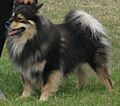
Finnish Lapphund
-

Patagonian Sheepdog
-

Belgian Shepherd varieties, clockwise from top left: Groenendael,Tervuren, Laekenois, Malinois
-
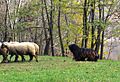
Bergamasco Sheepdog herding
-

Shetland Sheepdog
-

Pembroke and Cardigan Welsh Corgi


Arctic and Northern European Breeds
- Finnish Lapphund: Used for centuries by the indigenous Sámi people in northern Scandinavia to manage reindeer herds in sub-zero temperatures.
- Samoyed: Originating in Siberia, these fluffy white dogs helped nomadic tribes pull sleds and manage reindeer herds. Their warm shed wool was often spun into yarn for winter clothing.
British and Celtic Breeds
- Border Collie: Developed on the border between Scotland and England, this breed is widely considered one of the most intelligent dogs in the world.
- Shetland Sheepdog: A small, hardy dog from the windswept Shetland Islands of Scotland, bred to herd miniature sheep and keep birds out of gardens.
- Pembroke Welsh Corgi and Cardigan Welsh Corgi: Short-legged dogs from Wales that drove cattle by nipping heels while ducking under swinging hooves.
Continental European Breeds
- Belgian Shepherd: A group of four distinct varieties (Groenendael, Tervuren, Malinois, and Laekenois) known for their work ethic, speed, and versatility.
- Bergamasco Shepherd: An ancient Italian breed from the Alps featuring long, matted felt-like coats that protect against snow and wolf bites.
- German Shepherd Dog: Originally bred to tend large flocks of sheep across Germany, later becoming a leading service and working dog.
Oceanian and American Breeds
- Australian Kelpie: A tireless Australian breed that manages huge mobs of sheep on massive outback stations.
- Australian Cattle Dog: Also called the Blue or Red Heeler, bred in Australia to drive tough cattle over rugged terrain.
- Patagonian Sheepdog: A hardy, thick-coated dog bred in the cold, windy southern plains of Chile and Argentina.
Working Dogs in the Modern World

As farming technology has advanced, herding dogs have taken on diverse new roles in modern society.
Economic Value on Working Ranches
On large farms in Australia, New Zealand, and the Americas, trained stock dogs remain essential. Research shows that a well-trained herding dog does the work of several human farmhands, saving ranchers thousands of dollars every year in fuel, vehicle costs, and labor.
Dog Sports and Herding Trials

Many dogs show off their working skills in organized competitive events called sheepdog trials. In these competitions, handlers use whistles and voice commands to direct their dogs through complex courses. The dog must guide a small group of sheep through gates, across open fields, and into a small wooden pen within a strict time limit.
Outside of herding trials, their high intelligence and speed make herding breeds top competitors in dog sports like agility, flyball, disc catching, and competitive obedience.
Environmental and Service Work
Herding dogs also use their instincts to solve environmental and community challenges:
- Airport and Park Goose Patrols: Border Collies patrol golf courses, public parks, and airport runways to scare away Canada geese safely without harming them. This prevents bird strikes with airplanes and keeps parks clean.
- Search and Rescue: Breeds like German Shepherds and Belgian Malinois use their athletic builds and sharp noses to find lost hikers in the wilderness or locate people after natural disasters.
- Service and Assistance: Their trainability makes them attentive assistance animals for people with disabilities.
Life as Family Pets
Many herding breeds, such as the Australian Shepherd, Rough Collie, and Corgis, are popular family pets. Because they were bred to work hard all day, these dogs need plenty of daily exercise and mental challenges like puzzle toys and obedience training. When their minds and bodies are active, they are loyal, affectionate, and protective companions.
See also
- Dogs (Protection of Livestock) Act 1953 (in the UK)
- Livestock guardian dog
- Working dog
