
James Hector facts for kids
Quick facts for kids
Sir James Hector
|
|
|---|---|
 |
|
| Born | 16 March 1834 Edinburgh, Scotland
|
| Died | 6 November 1907 (aged 73) Lower Hutt, New Zealand
|
| Education | University of Edinburgh |
| Occupation | Geologist, naturalist, surgeon |
| Known for | Palliser's expedition, New Zealand Geological Survey |
| Spouse(s) | Maria Georgiana Monro |
| Children | 9 |
| Relatives | David Monro (father-in-law), Charles Monro (brother-in-law) |
| Awards | Lyell Medal (1877) Clarke Medal (1887) |
| Scientific career | |
| Institutions | Geological Survey of New Zealand, University of New Zealand (Chancellor) |
| Author abbrev. (zoology) | Hector |
Sir James Hector (16 March 1834 – 6 November 1907) was a Scottish-New Zealand geologist, naturalist, and medical doctor. He became famous for his daring adventures across North America and his pioneering scientific work in New Zealand.
As a young man, Hector joined the famous Palliser Expedition across the rugged wilderness of Canada. During this journey, he helped discover vital mountain routes through the Canadian Rockies. Later, he moved to New Zealand, where he became the country's most powerful and influential scientist of the nineteenth century. He mapped vast landscapes, founded major museums, and studied fascinating wildlife, including the rare Hector's dolphin.
Contents
Early Life and Medical Education in Scotland
Childhood in Edinburgh
James Hector was born on 16 March 1834 in Edinburgh, Scotland. His father, Alexander Hector, worked as a legal writer, and his mother was Margaret Macrostie. Growing up in Edinburgh, young James developed a keen curiosity about the natural world around him.
He attended the prestigious Edinburgh Academy between 1844 and 1845. When he turned fourteen, he began working in his father's office to train in business calculations. However, desk work could not satisfy his adventurous spirit and love of nature.
Medical Training and Scientific Curiosity
Hector entered the University of Edinburgh to study medicine. Medical training in the nineteenth century required deep knowledge of botany, chemistry, and human anatomy. Hector excelled in all of these subjects.
While at university, he also attended lectures by famous geologists and naturalists. He learned how to identify rock layers, examine mineral samples, and classify plants and animals. In 1856, at the young age of twenty-two, he earned his Doctor of Medicine degree.
The Palliser Expedition: Exploring the Canadian Wilderness
Joining the Great Canadian Survey
Shortly after graduating, Hector received a life-changing opportunity. Sir Roderick Murchison, head of the British Geological Survey, recommended him for an expedition to British North America (now Canada). The government wanted to explore uncharted western lands.
The adventure was led by Captain John Palliser and lasted from 1857 to 1860. Hector served as both the team's doctor and its chief geologist. The expedition's main goals were to assess land for farming, map mountain passes, and find suitable routes for a future transcontinental railway.

The Famous Kicking Horse Incident
In 1858, while exploring the high peaks of the Canadian Rockies, the expedition faced dangerous conditions. Hector's team was trying to cross a difficult mountain pass near the continental divide.
During the journey, a packhorse fell into a fast-flowing mountain river. As the team worked together to pull the animal out, Hector's own horse wandered off. Hector ran after it, but the startled horse kicked him hard in the chest, knocking him completely unconscious.
According to popular legend, his frightened companions believed he had died from the blow. They began preparing a burial spot for him. Just in time, Hector woke up and stopped the process. Because of this dramatic event, the pass was named Kicking Horse Pass and the nearby river became the Kicking Horse River. Today, this mountain pass is famous as the route used by the Canadian Pacific Railway and the Trans-Canada Highway.
Discoveries and Scientific Records in North America
The Palliser Expedition was a massive success for science and geography. Hector kept detailed diaries about the landscape, rock formations, and native plant life.
- He recorded the layers of rock across the Great Plains and the Rocky Mountains.
- He collected rare botanical specimens to send back to scientific societies in Britain.
- He mapped out difficult river valleys and high mountain trails.
- He learned survival skills from local First Nations guides and Métis hunters.
When the expedition ended, Hector returned to Britain as an accomplished explorer. In 1866, he was elected a Fellow of the prestigious Royal Society of London for his outstanding scientific contributions.
Pioneering Science in New Zealand
The Otago Gold Rush and Geological Survey
In 1861, gold was discovered in the Otago region of New Zealand's South Island. Thousands of prospectors rushed to the area, creating a need for professional geological surveys.
With recommendations from top British scientists, Hector was hired by the provincial government of Otago. He arrived in Dunedin in April 1862 on a three-year contract. His mission was to explore the rugged southern mountains, map mineral deposits, and assess the land for settlement.
Hector organized a dedicated team of experts to assist him:
- William Skey, an expert chemist who analyzed mineral and rock samples.
- John Buchanan, a talented botanical artist and draftsman who drew maps and plants.
- Richard Gore, an organized clerk who handled records and weather observations.
Hector explored remote valleys, fiords, and alpine passes on foot and by boat. In 1865, he produced the first comprehensive geological map of Otago, which earned international praise.
Becoming New Zealand's Chief Government Scientist
In 1865, the central government recognized Hector's extraordinary abilities and appointed him to found the New Zealand Geological Survey. He moved to the new capital city of Wellington to lead government scientific research.

Hector supervised the construction of the Colonial Museum, which served as the headquarters for scientific exploration and public education. For the next forty years, Hector sat at the center of New Zealand science:
- He directed the Colonial Museum, gathering specimens of rocks, fossils, plants, and animals.
- He ran the New Zealand Geological Survey, creating the first complete geological map of New Zealand in 1869.
- He managed the New Zealand Institute (now the Royal Society Te Apārangi), publishing research from across the country.
- He served as the manager of the Wellington Botanic Garden for twenty-two years, introducing useful trees and plants.
- He served as Chancellor of the University of New Zealand, helping shape higher education.
Practical Science for a Growing Colony
Hector believed that science should solve everyday problems for people. Government leaders frequently consulted him on practical issues.
He gave scientific advice on improving the strength of New Zealand flax fibers, finding coal deposits to power steamships, and testing soil quality for farming. He also established a network of weather stations across the islands to record temperatures, rainfall, and wind patterns, laying the groundwork for modern meteorology in New Zealand.
Family Life and Later Years
Marriage and Children
In 1868, James Hector married Maria Georgiana Monro in Nelson. She was the daughter of Sir David Monro, the Speaker of the New Zealand House of Representatives.
The couple had nine children together. In 1882, they built a large family home called Ratanui in the Western Hutt hills, overlooking Petone and Wellington Harbour. Hector loved spending time in his gardens and showing his children the wonders of nature.
Retirement and Legacy
Hector retired from his official government positions in 1903 after four decades of public service. He had built the nation's major scientific institutions almost from scratch.
Sir James Hector died on 6 November 1907 in Lower Hutt at the age of seventy-three. He was buried at Taitā Cemetery. Today, historians remember him as the founding father of organized science in New Zealand.
Awards, Honors, and Eponymy
Prestigious Awards
During his long career, Sir James Hector received many high honors from around the world:
- Lyell Medal (1877): Awarded by the Geological Society of London for his outstanding geological discoveries.
- Clarke Medal (1887): Awarded by the Royal Society of New South Wales for major scientific achievements.
- Knight Commander of the Order of St Michael and St George (1887): Awarded by Queen Victoria for his public service.
Geographic Places Named After Hector
Many locations in Canada and New Zealand bear Hector's name in honor of his exploration work:
- Mount Hector, a towering peak in Banff National Park, Canada.
- Mount Hector, a prominent mountain in New Zealand's Tararua Range.
- Hector, a coastal township on the West Coast of the South Island.
- The James Hector Pinetum and Memorial Lookout in the Wellington Botanic Garden.
Animals and Plants Named After Hector
Because Hector collected and described so many natural specimens, scientists named several species in his honor:
| Scientific Name | Common Name | Type of Organism | Description |
|---|---|---|---|
| Cephalorhynchus hectori | Hector's dolphin | Marine mammal | A small, endangered dolphin native to the coastal waters of New Zealand. |
| Mesoplodon hectori | Hector's beaked whale | Marine mammal | A rare, deep-diving whale found in Southern Hemisphere oceans. |
| Gallirallus australis hectori | Buff weka | Flightless bird | A subspecies of the curious New Zealand rail bird. |
| Hectorella | Hectorella | Alpine plant | A genus of hardy flowering cushion plants found in high alpine zones. |
| Huonodon hectori | Hector's land snail | Mollusc | A small native land snail unique to New Zealand forests. |
See Also
Images for kids
-
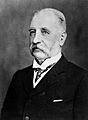
Sir James Hector in his later years.
-
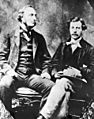
Expedition leaders Captain John Palliser and Dr James Hector.
-
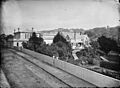
The Colonial Museum in Wellington, built under Hector's leadership.
