
Apollo Lunar Module facts for kids
_on_the_moon.jpg)
Apollo 14 Lunar Module Antares on the Moon's surface, February 1971
|
|
| Manufacturer | Grumman |
|---|---|
| Designer | Thomas J. Kelly |
| Country of origin | United States |
| Operator | NASA |
| Applications | Crewed lunar landing |
| Specifications | |
| Spacecraft type | Lunar lander |
| Design life | 75 hours (extended) |
| Launch mass |
|
| Dry mass |
|
| Crew capacity | 2 |
| Volume | 235 cu ft (6.7 m3) |
| Power | 28 V DC, 115 V 400 Hz AC |
| Batteries | Six or seven 28–32-volt, 296-416 ampere hour silver zinc battery |
| Regime | |
| Dimensions | |
| Length | 23 ft 1 in (7.04 m) |
| Diameter | 13 ft 10 in (4.22 m) without landing gear |
| Width | 31 ft (9.4 m), landing gear deployed |
| Production | |
| Status | Retired |
| Built | 15 |
| Launched | 10 |
| Operational | 10 |
| Retired | 1972 |
| Failed | 0 |
| Lost | 0 |
| Maiden launch | January 22, 1968 |
| Last launch | December 7, 1972 |
| Last retirement | December 14, 1972 |
| Related spacecraft | |
| Flown with | Apollo Command and Service Module |
| Configuration | |
 |
|
The Apollo Lunar Module (often called the LM) was a special spacecraft. It was like a small spaceship designed to land astronauts on the Moon. It also helped them get back into orbit around the Moon. The United States used it during the Apollo program. The LM was the first spacecraft ever to carry people only in space, not through Earth's atmosphere. It is still the only vehicle that has landed humans on another celestial body besides Earth.
The Lunar Module had two main parts, or stages. It could not fly through Earth's air. So, it traveled to the Moon attached to a larger spacecraft called the Apollo command and service module (CSM). Two astronauts flew the LM from lunar orbit down to the Moon's surface. When it was time to leave, the bottom part (descent stage) stayed on the Moon. The top part (ascent stage) launched back into orbit to meet the command module. After the astronauts moved back to the command module, the ascent stage was also left behind.
The company Grumman built the LM. Its development had some challenges, causing delays. However, the LM became a very reliable part of the Apollo missions. Building and developing the LM cost a lot of money, but it was essential for reaching the Moon.
Ten Lunar Modules were launched into space. Six of these successfully landed astronauts on the Moon between 1969 and 1972. The first two LMs were test flights in Earth's orbit. Apollo 5 flew without a crew, and Apollo 9 flew with astronauts. Apollo 10 was a practice flight around the Moon, getting ready for the first landing. The Apollo 13 Lunar Module became a "lifeboat." It kept the crew safe and alive when their main spacecraft was damaged on the way to the Moon.
The six descent stages that landed are still on the Moon. Their ascent stages either crashed into the Moon or were sent into space. The other LMs were destroyed when they re-entered Earth's atmosphere.
Contents
How the Lunar Module Worked
Journey to the Moon
At launch, the Lunar Module was folded up. It sat inside the Saturn V rocket, right below the command and service module (CSM). It stayed there as the rocket launched from Earth. It also remained there during the burn that sent the spacecraft towards the Moon.
Soon after leaving Earth's orbit, the CSM separated. It then turned around and docked with the Lunar Module. This pulled the LM out of the rocket. During the trip to the Moon, astronauts could enter the LM. They would turn on and test its systems, except for the main engines. The Lunar Module pilot acted like an engineer, checking both spacecraft.
Landing on the Moon
Once in orbit around the Moon, the commander and LM pilot entered the LM. They turned on its systems and prepared it for landing. They unfolded and locked its landing legs. Then, they separated from the CSM and flew the LM on its own. The commander controlled the flight and engine speed. The LM pilot managed other systems and gave updates. After the command module pilot checked the landing gear, the LM moved away. It then rotated so its descent engine pointed forward. A short engine burn slowed the LM down. This lowered its orbit to about 15 kilometers (9 miles) above the Moon's surface.

As the LM got closer to the Moon, the descent engine started again. This began the powered descent. The crew flew on their backs, relying on the computer to slow the craft. They used engine power and small thrusters to control its direction. The LM descended to about 3 kilometers (1.8 miles). Then, it moved into its final approach, dropping to about 210 meters (700 feet). During this final stage, the LM tilted upright. This allowed the crew to see the lunar surface for the first time.
Astronauts took manual control during the final part of the lunar landing. This started about 600 meters (2,000 feet) from the landing spot. The commander could hover for up to two minutes. This allowed them to check the landing area and make changes. If needed, they could stop the landing at almost any time. They would jettison the descent stage and fire the ascent engine. This would send them back into orbit for an emergency return to the CSM. Finally, probes extending from the landing legs touched the surface. This lit a light, telling the commander to shut off the engine. The LM then settled gently onto the Moon.
Life on the Moon and Return
The first plans for moonwalks allowed only one astronaut to leave the LM. The other would stay inside to keep communications open. But communications became very reliable. So, both crew members were allowed to walk on the Moon. Mission Control on Earth could remotely monitor the spacecraft.
Starting with Apollo 14, more fuel was available for landing. This was done by using the CSM engine to lower the orbit first. After the LM separated, the CSM would raise its orbit again.
When it was time to leave the Moon, the LM's ascent engine fired. It left the descent stage behind on the lunar surface. After a few small engine burns, the LM met up with the CSM. It docked so the crew and rock samples could be transferred. Once its job was done, the ascent stage separated. The Apollo 10 ascent stage was sent past the Moon into orbit around the Sun. All later ascent stages (except Apollo 13's) were intentionally crashed into the Moon. This helped scientists get readings from seismometers placed on the surface.
History of the Lunar Module
Why the LM Was Created

The Lunar Module was first called the Lunar Excursion Module (LEM). It was designed after NASA decided on a specific way to reach the Moon. This method was called Lunar Orbit Rendezvous (LOR). Other ideas involved landing a much heavier spacecraft directly on the Moon. With LOR, a separate, lighter craft was needed to go from lunar orbit to the surface and back.
Building the LM
In 1962, NASA asked companies to propose designs for the LEM. Grumman won the contract on November 7, 1962. Grumman had already studied lunar orbit missions. The contract was expected to cost around $350 million. Several other companies built important parts, like the engines and life support systems. The main guidance computer was developed by the MIT Instrumentation Laboratory. The Apollo Lunar Module was put together at a Grumman factory in Bethpage, New York.
Design Changes and Improvements

Thomas J. Kelly, an engineer at Grumman, led the LM's design. Early designs looked different. One idea was a cone-shaped cabin like the command module. Another had large curved windows and seats, like a helicopter.
As the program went on, many changes were made. These changes aimed to save weight, make it safer, and fix problems. The heavy cockpit windows and seats were removed. Astronauts would stand while flying the LM, using smaller triangular windows. Later, an extra docking port was removed. This meant the Command Module Pilot handled docking. A simpler front hatch made it easier for astronauts to get in and out while wearing bulky spacesuits.
The final design for the engines was chosen in April 1963. Initially, fuel cells were planned for power, like in the CSM. But in 1965, batteries were chosen instead. The first designs had three landing legs, then five. Designers finally settled on four landing legs. This was a good balance between weight and stability.
In June 1966, the name changed from Lunar Excursion Module to Lunar Module (LM). NASA felt "excursion" sounded too lighthearted for such a serious mission. However, many people still called it "LEM."
Astronaut Training

Landing on the Moon was like "a hovering operation," according to astronaut Gus Grissom. NASA needed a way to train astronauts for this unique challenge. In 1964, Bell Aerosystems built the Lunar Landing Research Vehicle (LLRV). This vehicle used a jet engine to cancel out five-sixths of its weight. This simulated the Moon's weaker gravity. It also had thrusters to mimic the LM's engines.
Successful tests led to three more training vehicles (LLTVs). These were used to train astronauts in Houston. These aircraft were quite tricky to fly, and three of the five crashed. Luckily, they had ejection seats, so the pilots survived. This included Neil Armstrong, the first person to walk on the Moon.
Test Flights and First Landings

The first uncrewed LM flight, Apollo 5, happened on January 22, 1968. It tested the propulsion systems in Earth orbit. LM-3 became the first crewed LM, flying on Apollo 9 on March 3, 1969. This mission tested all systems and practiced separating, meeting, and docking. Apollo 10 launched on May 18, 1969. It was a "dress rehearsal" for the lunar landing. The LM descended very close to the Moon, then returned to the CSM.

The first crewed lunar landing was on July 20, 1969. This was Apollo 11 with LM-5, named Eagle. Four days later, the Apollo 11 crew returned to Earth. This achieved President John F. Kennedy's goal of landing a man on the Moon and bringing him safely home.
More landings followed with Apollo 12 (LM-6 Intrepid) and Apollo 14 (LM-8 Antares). In April 1970, the Apollo 13 LM-7 Aquarius saved the lives of three astronauts. An oxygen tank in their main spacecraft exploded, disabling it. Aquarius became a "lifeboat" for the astronauts. Its engine helped guide them home. Its batteries powered their journey and recharged the Command Module's batteries. The astronauts splashed down safely on April 17, 1970. The LM's systems were designed for two astronauts for 45 hours. They managed to support three astronauts for 90 hours.
Extended Missions

The last three missions, Apollo 15, Apollo 16, and Apollo 17, used an upgraded Lunar Module. This was called the Extended Lunar Module (ELM). Its descent engine had more thrust. The fuel tanks were also made larger. A waste storage tank was added. These changes allowed astronauts to stay on the Moon for up to 75 hours. These missions also carried the Lunar Roving Vehicle. This special car was folded up in the LM and deployed by the astronauts after landing.
Lunar Module Design Details


The Lunar Module had two main parts: the ascent stage and the descent stage.
Ascent Stage
The ascent stage was the top part of the LM. It held the crew cabin with all the controls and instrument panels. This stage had its own engine and fuel tanks. These were used to launch the astronauts back into lunar orbit. There, they would meet the Apollo command and service module. It also had small thrusters for steering and moving in space.
The ascent stage had a hatch for exiting onto the Moon's surface. Another hatch on top allowed docking with the Command Module. Inside, it had a system to control the air and temperature (life support). It also had communication systems to talk with the Command Module and Earth. There were guidance systems to help navigate. Astronauts also used a special telescope to check their position.
The ascent stage stored batteries, cooling water, and breathing oxygen. These supplies were enough for a Moon stay of 48 hours, later extended to 75 hours. During rest times on the Moon, the crew would sleep in hammocks inside the cabin. This stage also carried the lunar rock and soil samples collected by the crew. It could bring back up to 108 kilograms (238 pounds) of samples.
Descent Stage

The descent stage was the bottom part of the LM. Its main job was to land the spacecraft safely on the Moon. After the moonwalks, it served as the launch pad for the ascent stage. It had an octagonal shape and four folding landing legs. It also contained a powerful engine that could be throttled (speed adjusted). This engine had four fuel tanks. A radar antenna on the bottom sent altitude and speed data to the guidance system during landing.
Most of the outer surfaces were covered in special foil blankets. These provided thermal insulation to protect the spacecraft from extreme temperatures. The front landing leg had a platform, often called the "porch." It also had a ladder for astronauts to climb down to the surface. Each landing leg had a probe that touched the surface first. This probe signaled the commander to turn off the engine. On landing missions, the probe on the ladder leg was removed. This was to prevent it from possibly puncturing an astronaut's suit.
Equipment for exploring the Moon was stored in a special drawer. This was called the modular equipment stowage assembly (MESA). It held tools for digging and collecting samples. It also had a television camera on a tripod. When the commander opened the MESA, the camera turned on automatically. This sent the first pictures of astronauts on the Moon back to Earth. A United States flag was also carried on each landing mission. Astronauts would set it up on the surface.
Other compartments held scientific experiments (ALSEP). Later missions also carried a deployable S-band antenna for better communication. On Apollo 14, a hand-pulled cart called the Modular Equipment Transporter (MET) helped carry tools. For the extended missions (Apollo 15 and later), the Lunar Roving Vehicle was carried. It was folded up on an external panel. These compartments also held extra batteries and filters for the astronauts' life support systems.
Lunar Modules Built
| Serial number | Name | Use | Launch date | Location | Image |
|---|---|---|---|---|---|
| LTA-1 | Not flown | Cradle of Aviation Museum (Long Island, New York) |  |
||
| LTA-2R | Apollo 6 | April 4, 1968 | Re-entered Earth's atmosphere | |
|
| LTA-3A | Not flown | Kansas Cosmosphere and Space Center |  |
||
| LTA-3DR | Non-flight descent stage | Franklin Institute |  |
||
| LTA-5D | Not flown | White Sands Test Facility | |||
| LTA-8A | Thermal-vacuum tests | Ground tests in 1968 | Space Center Houston |
|
|
| LTA-10R | Apollo 4 | November 9, 1967 | Re-entered Earth's atmosphere | ||
| MSC-16 | Lunar Module Trainer | Museum of Science and Industry (Chicago) |  |
||
| TM-5 | Non-flight | Museum of Life and Science (Durham, North Carolina) |  |
||
| PA-1 | Not flown | White Sands Test Facility | |||
| LM-1 | Apollo 5 | January 22, 1968 | Re-entered Earth's atmosphere | -7_in_the_Kennedy_Space_Center%27s_Manned_Spacecraft_Operations_Building.jpg) |
|
| LM-2 | Intended for second uncrewed flight, used instead for ground testing. Landing gear added for drop testing. Lacks Alignment Optical Telescope and flight computer | National Air and Space Museum (Washington, D.C.) |  |
||
| LM-3 | Spider | Apollo 9 | March 3, 1969 | Descent and ascent stages reentered Earth's atmosphere separately |  |
| LM-4 | Snoopy | Apollo 10 | May 18, 1969 | Descent stage may have hit the Moon, ascent stage in heliocentric orbit. Snoopy is the only flown LM ascent stage known to have survived intact (possibly asteroid 2018 AV2). |  |
| LM-5 | Eagle | Apollo 11 | July 16, 1969 | Descent stage on lunar surface in Sea of Tranquility, ascent stage left in lunar orbit (could be still orbiting the moon) |  |
| LM-6 | Intrepid | Apollo 12 | November 14, 1969 | Descent stage on lunar surface at Ocean of Storms, ascent stage deliberately crashed into Moon |  |
| LM-7 | Aquarius | Apollo 13 | April 11, 1970 | Successfully served as a lifeboat for the crew for four days after the critical failure of the Service module. Re-entered Earth's atmosphere and burned up over Fiji |  |
| LM-8 | Antares | Apollo 14 | January 31, 1971 | Descent stage on lunar surface at Fra Mauro, ascent stage deliberately crashed into Moon |  |
| LM-9 | Not flown, intended as Apollo 15, last H-class mission | On display at the Kennedy Space Center (Apollo/Saturn V Center) |  |
||
| LM-10 | Falcon | Apollo 15, first ELM | July 26, 1971 | Descent stage on lunar surface at Hadley–Apennine, ascent stage deliberately crashed into Moon |  |
| LM-11 | Orion | Apollo 16 | April 16, 1972 | Descent stage on lunar surface at Descartes Highlands, ascent stage left in lunar orbit, crashed on Moon |  |
| LM-12 | Challenger | Apollo 17 | December 7, 1972 | Descent stage on lunar surface at Taurus-Littrow, ascent stage deliberately crashed into Moon |  |
| LM-13 | Not flown, intended as Apollo 19 |
Partially completed by Grumman, restored and on display at Cradle of Aviation Museum (Long Island, New York). Also used during 1998 miniseries From the Earth to the Moon. |  |
||
| LM-14 | Not flown, intended as Apollo 20 | Incomplete, most likely scrapped | |||
| LM-15 | Not flown, intended for modification into Apollo Telescope Mount | Incomplete, scrapped | |||
| * For the location of LMs left on the Lunar surface, see list of artificial objects on the Moon. | |||||

Future Ideas for the Lunar Module
Apollo Telescope Mount

One idea for using extra Apollo parts was an orbital solar telescope. This would have been built from a spare LM. The LM's descent engine would be replaced with a telescope. Astronauts in the ascent stage cabin would control it. This project was called the Apollo Telescope Mission (ATM). It was later changed and became part of the Skylab space station.
LM Truck
The Apollo LM Truck was another idea. It was a modified LM descent stage. Its purpose was to deliver up to 5,000 kilograms (11,000 pounds) of supplies to the Moon. This would have been for a future permanent crewed lunar base. The "truck" would land without a crew. Astronauts at the base would then unload the equipment.
The Lunar Module in Movies and TV
The 1995 film Apollo 13 tells the story of that mission. It used realistic models of the Aquarius LM and the Command Module Odyssey. The 1998 TV miniseries From the Earth to the Moon also showed the LM's development. One episode was called "Spider," named after the LM used on Apollo 9. The unused LM-13 was used in the show to represent other LMs.
The Apollo 11 Lunar Module Eagle is shown in the 2018 film First Man. This movie is about Neil Armstrong. The 2024 film Fly Me to the Moon is set during the Apollo 11 mission. In the film, a character is tasked with creating a fake moon landing. This would be a backup plan if the real mission failed.
Images for kids
-
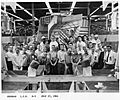
Grumman Aircraft Engineering Corporation manufacturing team with Lunar Module TM-5 ascent stage fuselage.
-
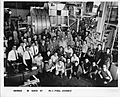
Grumman Aircraft Engineering Corporation manufacturing team with Lunar Module PA-1 ascent stage fuselage.
-
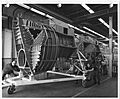
Two Grumman Aircraft Engineering Corporation Lunar Module ascent stage fuselages being moved to final assembly.
-
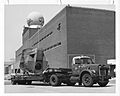
A Lunar Module ascent stage fuselage being transported from Grumman Aircraft Engineering Corporation Plant 5 facility in Bethpage, Long Island, New York.
-
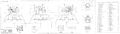
Equipment location plans (1 of 2)
-
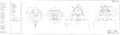
Equipment location plans (2 of 2)
-
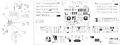
Controls plans
-
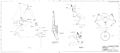
Landing gear plans
-

World map showing locations of Apollo Lunar Modules (along with other hardware)


See also
 In Spanish: Módulo lunar para niños
- Lanyue
- LK (spacecraft)
- List of crewed lunar lander designs
- Lunar escape systems
- Rolls-Royce Thrust Measuring Rig, the 'Flying Bedstead'
